
Tue,Jun 3,2014
 Chinese Kung Fu charms Silicon Valley
 Tranquil Yankou ancient town
 Lake Geneva: A show of swans
 Beautiful sunset over the Irtysh River
 Qingjing Mosque: Witness of the ancient Maritime Silk Road
 Neiliansheng – more than 100 years of fashion
 Golden retriever feeds baby African lions
 Strange rocks in Lama Mountain
 First overseas "China-standard" electric railway laid
 College graduate launches organic agricultural cooperative in hometown
Continue forward into the green life
During the second session of the 10th People’s Congress of the Tibetan Autonomous Region, Qiangba Puncog, vice chairman of the Standing Committee of the National People’s Congress, thought highly of Lhasa when joining the deliberation session of the Lhasa group, saying that “Lhasa comes with new updates each day and new changes each year, that its social programs have been developing satisfactorily, and that its position as the capital city has become more impressive”. Meanwhile, Qiangba Puncog emphasized the importance to improve the motivation of people from all ethnicities in protecting the ecological environment with their shared responsibility to protect the green water and blue sky of Tibet.
Indeed, just as it has been highlighted by deputy chairman Qiangba Puncog, the environmental performance of a region relates itself to the cells of the land---the people.
Years ago Lhasa used to impress people with its “dirtiness, chaos and disorder,” amid which people defecated by the roadside and dropped litter carelessly. Such phenomenon existed because the people had not been environmentally conscious enough.
In order to change this situation, Lhasa has kept improving itself in its daily work, while motivating the citizens to be more environmentally conscious. Last year, Lhasa boosted up its environmental campaign efforts much more greater than years ago by utilizing the June 5 - World Environment Day, the April 18 - Urban Health and Clean-up Day, as well as events banning white pollution or activities during the science and technology week, during which more than 5,000 books and campaign materials, and 2,000 reusable bags were distributed.
A resident of Lhasa, Rob Tashi, could still recall the campaign scenes during last year’s World Environment Day on June 5, “I did not know that our daily habits could be so harmful to the environment. Such white pollution as plastic bags and bottles is damaging to the environment because plastics cannot be decomposed in several decades, it is harmful not only to us, but to our heirs.” Rob Tashi went on to talk about the importance of environmental protection, “right now I persuade my friends to use baskets instead of plastic bags when they do shopping, so that our descendants can enjoy a better environment.”
With such strong mobilization nearby, numerous people from Lhasa have started from the minor matters: during the class, teachers would ask questions and provide examples of environmental protection for the students, assign homework related to environmental protection, and teach songs of environmental themes to combine the illustration of knowledge and the environmental consciousness together, so that the students will learn knowledge with the entertainment from nature and better behave and cultivate themselves unconsciously; on the clean and tidy streets of Lhasa, there are no more people who throw their litter away, even if some are sitting on the street for a little while, they would collect their trash before leaving the spot; some people would throw their finished drink bottles to the trash bin several yards away instead of getting rid of the litter unscrupulously like they did before…
With the development of the time, people have gradually enlarged and extended the scope of environmental participation. Efforts to build the green neighborhood, schools and families have involved the public by and infiltrate into the details of their social life. The idea of green life has become the life ethos and behavioral standards of the people. By November 30 last year, the Lhasa environmental hotline has received 131 offense reports from the citizens, among which 11 was related to water pollution, 57 was related to air pollution, 48 was related to noise pollution, eight was related to solid waste, five was related to ecological damage, and two was related to other pollutions. Lhasa has managed to deal with such environmental issues closely related to the people’s livelihood with 100% efficiency.
The highly efficient response has also increased the credibility of the Municipal Government. “This is a virtuous cycle, once the offense reports were filed and dealt with in time, we would be more confident to report the cases without worrying about their falling into oblivion when similar cases happen for a second time.” Rob Tashi commented.
The flowing river of Lhasa looks like a winding jade, while the far mountains reflected through the water interpret the natural landscape that “lies beside heaven and distances itself from pollution”. Some kids are playing in the shoal waters; some adults are lying on the rugs, drinking buttered tea while having delicious food; some are lying on the beach, basking in the sun… such things are the detailed changes of life that provide people of the coziness and comfort of life.
This is the green Lhasa and the happy Lhasa! (Enzer)
 |
 Opening ceremony of 67th Cannes Film Festival
 Pulse of Xiamen - Int'l Yoga art festival in May
 Photo story: Life of a scrap metal recycle worker
 Training of the PLA's first female honor guard
 China's 10 must-see animations
 Female bodybuilders show their beauty of fitness
 A taste of Harbin cuisine
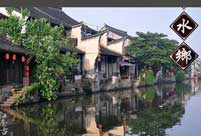 A bite of Jiang Nan
 Who is China's campus beauty queen?
 8 great movies to watch with your mom
 China's most luminous celebrities
 Newly recruited police in Hetian hold drill
 Bird-men compete flying in Hong Kong
 The 'Chinese Dad'
 Shanghai locals bid farewell to childhood memories
Day|Week|Month