



Chengdu: Where poetry flows through everyday life
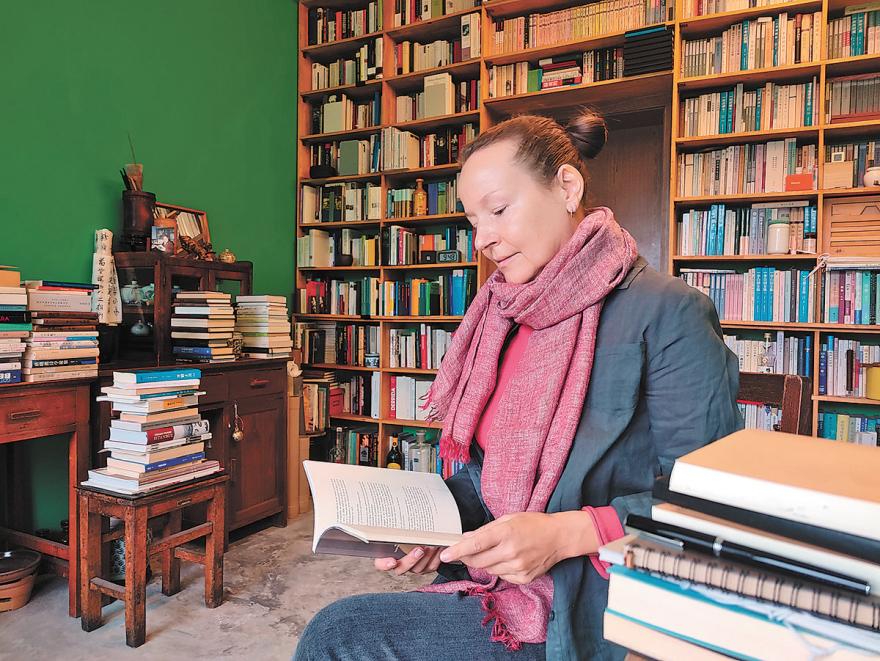
German poet and painter Margarete Werner reads at home. (Photo/Dai Guangyu)
The Minjiang River has carved its path through the landscape for millennia, but it was human ingenuity that truly tamed it. The Dujiangyan irrigation system, engineered over two thousand years ago in southwest China's Sichuan province, channels the river's waters across the fertile Chengdu Plain. For centuries, this marvel of hydraulic engineering has shielded the region from catastrophic floods and prolonged droughts, laying the foundation for what became known as the "Land of Abundance."
Long before modern infrastructure, Sichuan attracted scholars and poets, earning the enduring belief that the land itself inspires verse. Chengdu holds a rare distinction in Chinese history: it has occupied the same site and kept the same name for roughly three thousand years. Today, it stands as a living testament to this continuity -- a metropolis where deep-rooted traditions and dynamic innovation thrive side by side.
Nestled among the misty peaks of Qingcheng Mountain, a quiet cottage belongs to Margarete Werner, a German painter and poet who goes by the Chinese name Lei Zhen. Inside, floor-to-ceiling shelves hold Chinese classics alongside Western literary works, reflecting a mind shaped by two cultures. Surrounded by emerald hills and terraced tea gardens, she finds inspiration at the intersection of Eastern and Western thought.
Werner grew up in the foothills of the Alps. Ink and wash paintings collected by her grandmother first introduced her to the aesthetics of the East.
At 19, while studying in London, she happened upon Chinese classics in a bookstore in Chinatown. From then on, she felt drawn to this distant land.
After graduation, she moved to China, eventually settling on Qingcheng Mountain with her husband to focus fully on her writing.
"I've always felt that Li Bai is a profoundly universal poet. His verses speak directly to the human experience, transcending time and borders," she said.
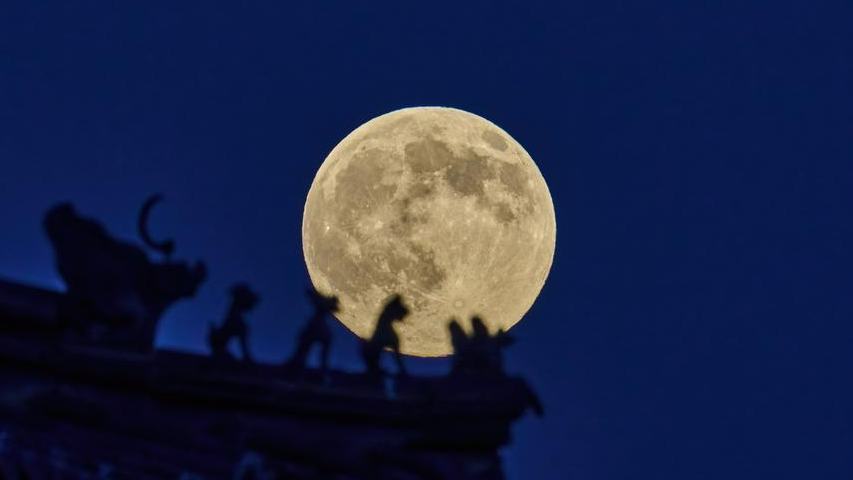
She often recites poetry while hiking mountain trails. One line from Li Bai's Dulu Pian resonates deeply with her: "A bright moon shines straight down, revealing all without concealment." Its unguarded honesty mirrors the tranquil, grounded life she has cultivated here.
Sichuan has long had a close connection with poetry. Famous Chinese poets Du Fu, Li Bai, and Lu You all composed celebrated works in Chengdu, helping shape the city's cultural character.
For Werner, however, the city's poetic spirit is not confined to the pages of books. It is also alive in everyday speech. Residents still use words like luo yu (falling rain) and niao huan (birds singing), preserving the musicality of ancient Chinese in daily conversation.
"Standing at the foot of Qingcheng Mountain, I feel that the rhythms of Tang and Song poetry have returned to their original form," Werner said.
This poetic atmosphere extends beyond literature. Since the launch of the Chengdu International Poetry Week in 2017, more than 110 foreign poets from over 50 countries and regions have visited the city to seek inspiration.
Their works offer glimpses of Chengdu through the eyes of foreign poets, with some featured in a collection titled "A city in the depths of time: Chengdu through the eyes of foreign poets."
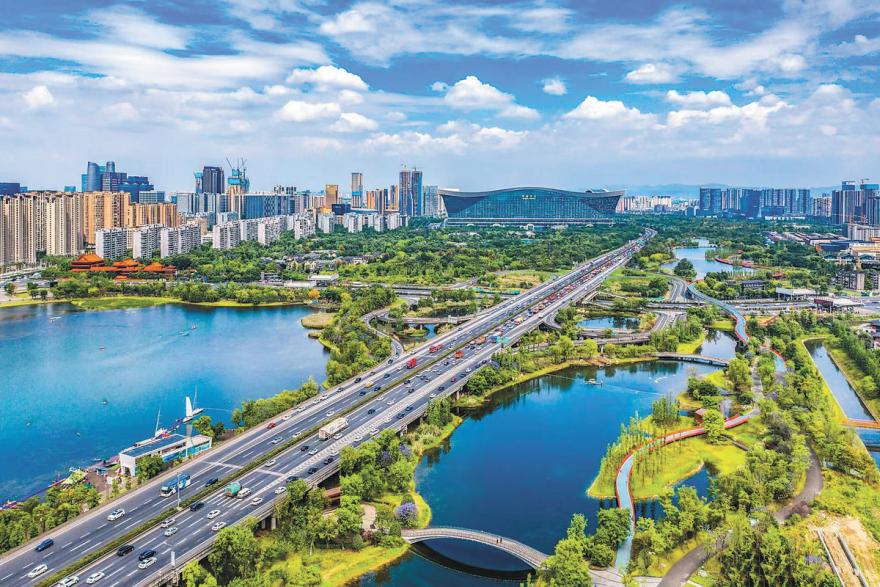
An aerial view of Jincheng Lake in Chengdu, southwest China's Sichuan province. (Photo/Jiang Xiaoyi)
To Werner, "poetry is like green bamboo, with the vitality to pierce through concrete."
A relaxed lifestyle and an inclusive, open-minded spirit are among Chengdu's most appealing qualities.
James Ayala, a young American and conservation biology expert at the Chengdu Research Base of Giant Panda Breeding, has spent years studying giant pandas in the city. Along the way, he has picked up a remarkably authentic Sichuan-accented Mandarin.
Familiar with the characteristics of individual giant pandas, Ayala can tell them apart by their nose prints and gait. He has also taken part in habitat improvement and giant panda conservation research.
He has received both the Tianfu Friendship Award and the Jinsha Friendship Award, which recognize foreign experts for their outstanding contributions to Sichuan and Chengdu, respectively. He also served as a torchbearer at the World Games 2025 in Chengdu.
In his spare time, Ayala loves exploring the city's streets and alleys.
The Chunxi Road commercial area is bustling with activity, with the iconic giant panda sculpture at Chengdu International Finance Square, the traditional tiled roofs and eaves of Taikoo Li shopping center, glasses-free 3D screens, and traditional markets all within easy reach of one another. Modern trends blend seamlessly with the charm of the city's historical heritage here.
The auspicious animal carvings on the ancient buildings of Wenshu Monastery reflect the Chinese ideal of harmony between humanity and nature.
When he needs a break from walking, Ayala likes to find an old teahouse, settle into a bamboo chair, sip tea from a lidded bowl, and watch Sichuan opera. At local restaurants, he often asks the chef to add a little more chili.
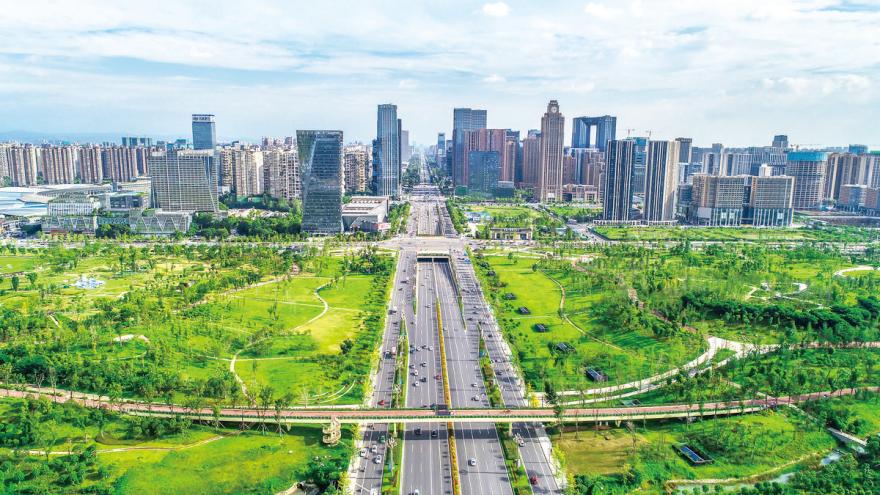
Photo shows an aerial view of a section of Tianfu Greenway in Chengdu, southwest China's Sichuan province. (Photo courtesy of Chengdu Tianfu Greenway Construction Investment Group Co., Ltd.)
Chengdu continues to develop as a park city, with more than 10,000 kilometers of Tianfu Greenway connecting parks and green spaces across the city.
The city's urban renewal projects follow the principle of avoiding large-scale demolition and reconstruction, while preserving the original layout and vitality of established neighborhoods.
Its relaxed and inclusive atmosphere has attracted a growing number of foreigners who choose to settle in the city.
Chengdu is also fertile ground for creativity and innovation. Its rich cultural heritage provides fertile soil for Chinese-style cultural intellectual property, from which the "Ne Zha" animated film series has emerged.
At the same time, the city has brought together extensive scientific and technological resources, with emerging industries such as robotics, artificial intelligence (AI), and advanced manufacturing gaining momentum.
Amin Naboureh, a young Iranian, came to Chengdu in pursuit of his dream of studying mountains. He is now an associate research fellow at the Institute of Mountain Hazards and Environment, Chinese Academy of Sciences, in Chengdu.
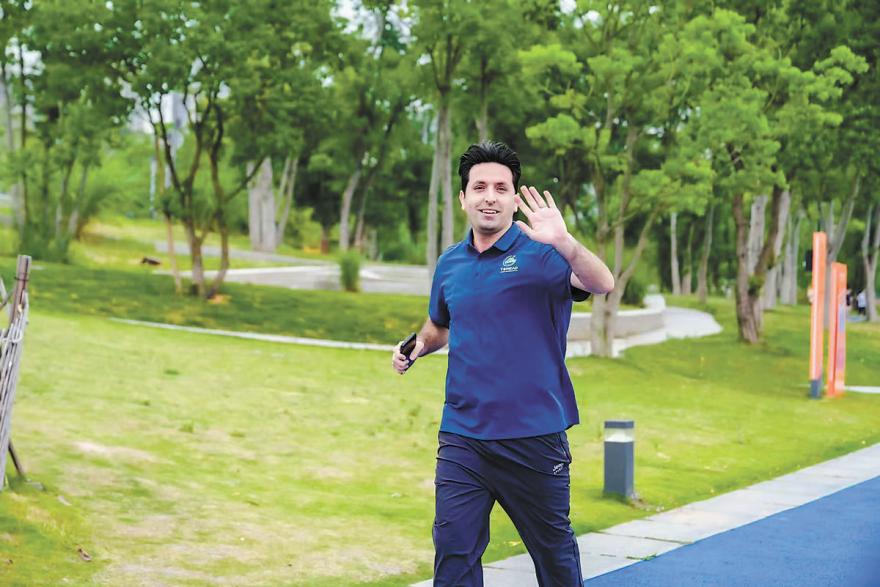
Amin Naboureh, an Iranian associate research fellow at the Institute of Mountain Hazards and Environment, Chinese Academy of Sciences, takes part in a public fitness running event at Xinglong Lake in Chengdu, southwest China's Sichuan province. (Photo courtesy of the interviewee)
Hossin Md Altab, a young Bangladeshi, teaches at the Entrepreneurship College of Chengdu University and is also an entrepreneur. He developed a smart Chinese language learning platform, which combines AI with Chinese-language learning to provide digital learning tools for learners from different countries. The platform now has more than 30,000 registered users.
"Whether Chinese or foreign, anyone with a good idea can find plenty of opportunities and platforms for development in Chengdu," he said.
By providing an open platform and bringing together creative talent from China and abroad, the city has created an environment where diverse ideas meet and take shape.
From a cradle of classical verse to a forward-looking metropolis, Chengdu welcomes the world with its poetic charm, relaxed rhythm, and relentless creativity. Here, people of different backgrounds and ambitions come together to build their lives. As the bilingual American poet Jami Proctor Xu once wrote: "If I tell everyone I meet that Chengdu is my paradise, all of the above is why."
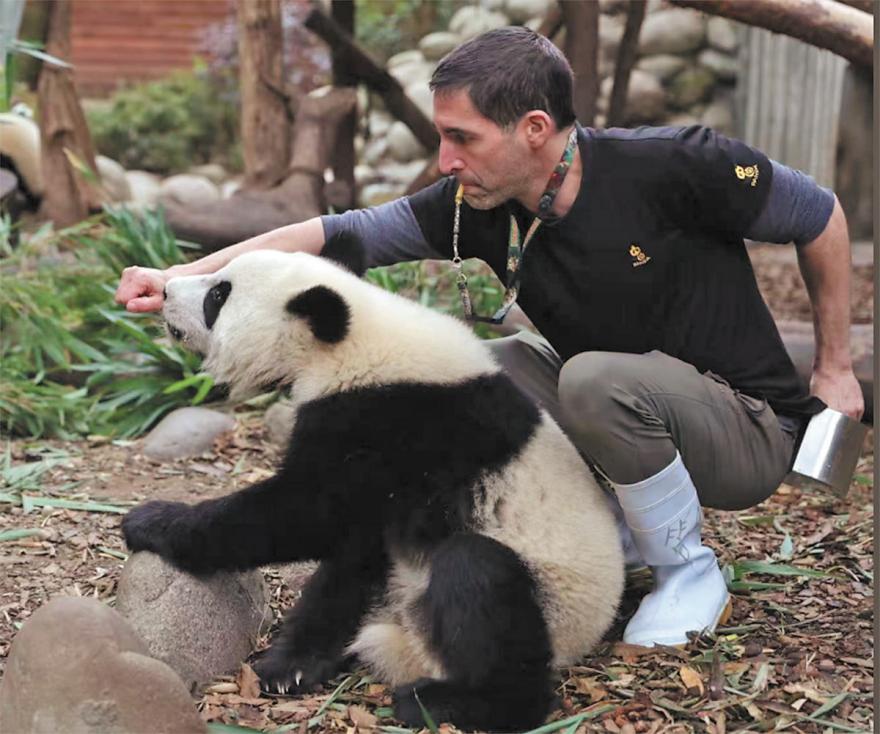
James Ayala, a young American and conservation biology expert at the Chengdu Research Base of Giant Panda Breeding, conducts behavioral training for a giant panda. (Photo courtesy of the interviewee)
Photos
Related Stories
- Charming China – Vibrant Chengdu
- China's Chengdu develops comprehensive robotics ecosystem
- 2026 Global Mayors Dialogue - Chengdu held in SW China
- View of peach blossoms in Chengdu, China's Sichuan
- Temple fair held in Chengdu to mark ongoing Chinese New Year
- 71-year-old braves icy river to rescue drowning man
- Annual passenger throughput of Chengdu International Aviation Hub surpasses 90 million for 1st time
- Parkson renews 20-year tenancy of Chengdu retail space
- China starts construction of water diversion project to quench thirst of metropolis
- Glasses-free 3D panda becomes iconic local attraction in Chengdu, SW China
Copyright © 2026 People's Daily Online. All Rights Reserved.
