



Tokens hit e-commerce shelves, highlighting shifts in China's consumption pattern
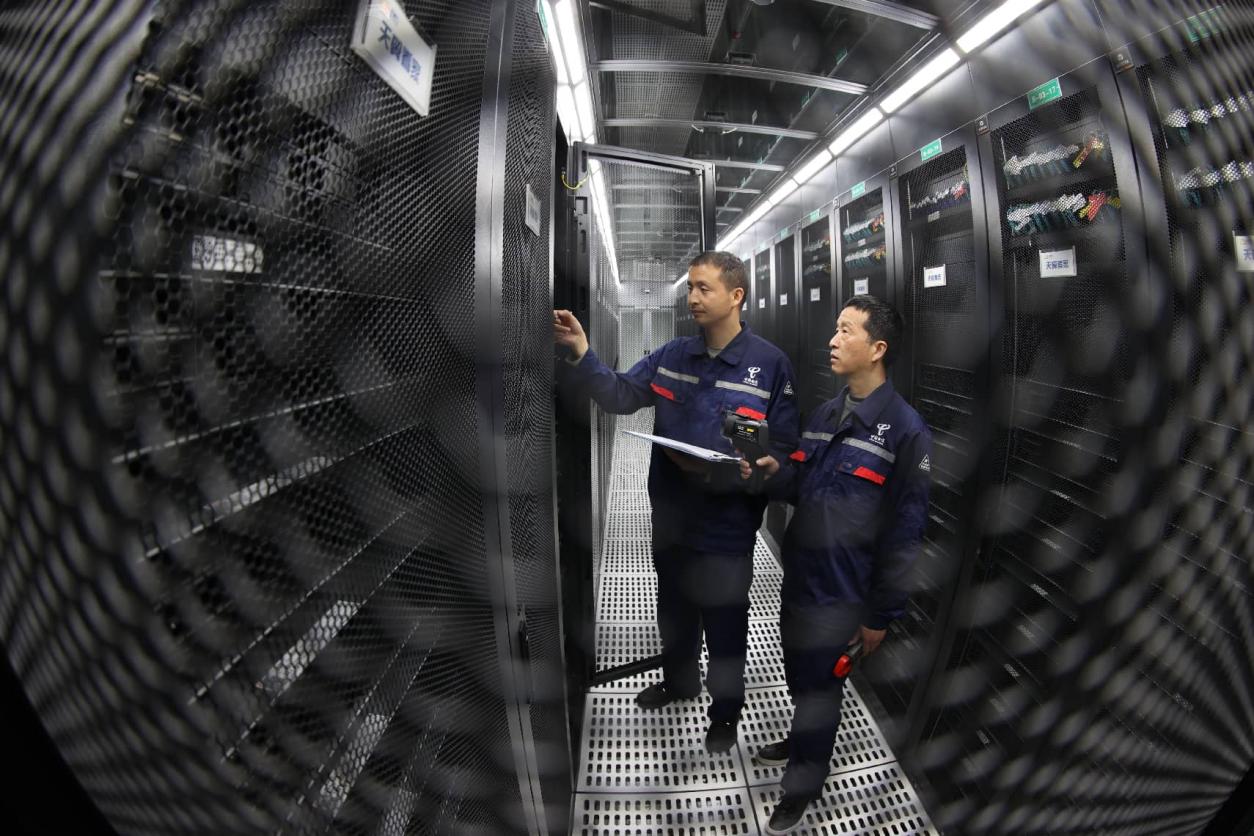
Staff members inspect cabinet racks at a data center in Xiangyang, central China's Hubei province. (Photo/Wang Hu)
This year's "Double 11" shopping festival in China welcomed a new addition to consumers' shopping carts. Alongside traditional goods such as daily necessities, digital products, and home appliances, intangible tokens have made their way onto e-commerce platforms, emerging as a popular new item.
Tokens are the basic units for measuring large language model inference.
Data from e-commerce platform JD.com shows that during a two-hour livestream hosted by JD.com's 3C digital sales team on Nov. 2, sales of token packages surged 20-fold month-on-month.
Data from Alibaba's online marketplace Tmall shows that on the same day, a livestreaming room on the platform set a sales record of 2 trillion tokens in half an hour.
The appearance of tokens on e-commerce platforms vividly reflects how artificial intelligence (AI) is rapidly integrating into production and daily life. It also offers a glimpse into China's innovation-driven pursuit of high-quality development.
Looked at from a closer perspective, it serves as a powerful testament to consumption structure upgrading.
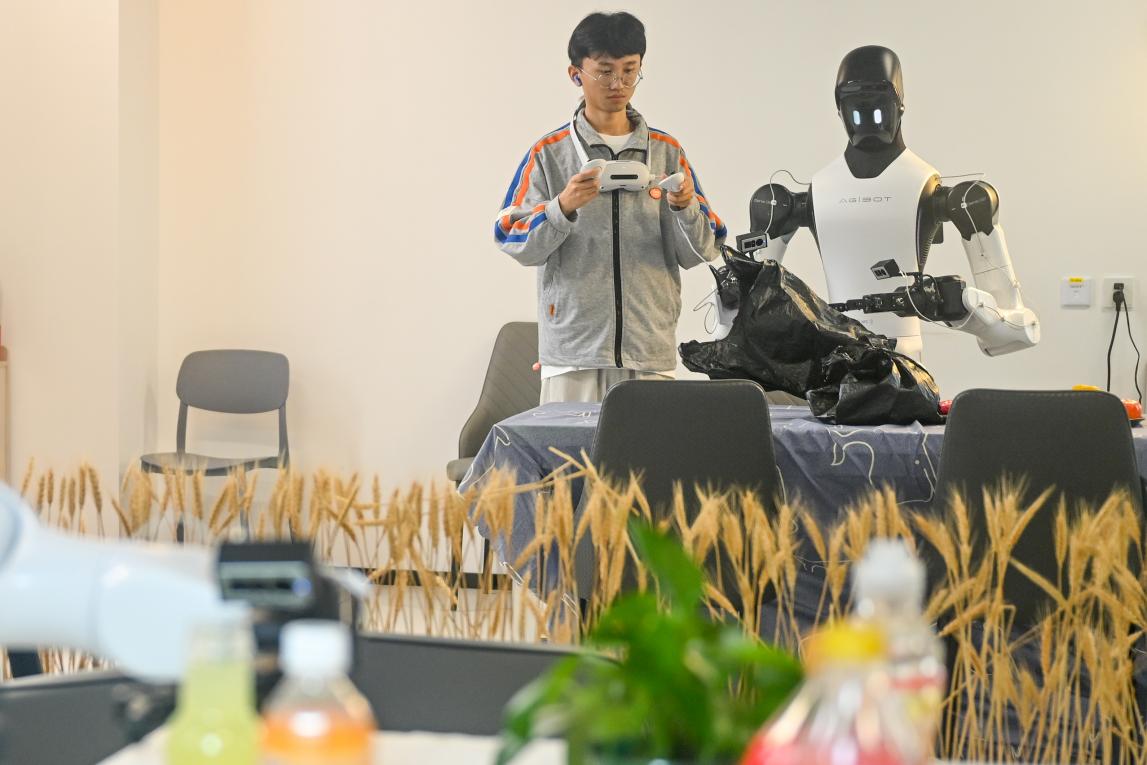
A staff member trains a robot to collect garbage at the Guizhou Artificial Intelligence Data Factory in Guiyang, southwest China's Guizhou province. (Photo/Yuan Fuhong)
An expanding number of consumption scenarios are deeply integrating with AI, including human-computer interaction powered by wearable smart devices, and AI agents assisting with daily office work.
Paying for tokens is, in essence, paying for greater efficiency, creative empowerment, and intelligent services. It reflects a shift in consumer demand from traditional physical goods to digital services and intelligent experiences.
Data from China's National Bureau of Statistics shows that in the first three quarters of this year, total retail sales of consumer goods and services rose 2.6 percent year-on-year, with retail sales of services growing by 5 percent.
Highlights of structural shifts in consumption were particularly striking.
Big data released by the country's Ministry of Commerce shows that in the first three quarters, sales revenue of smart glasses on major platforms surged 1.1 times, exoskeleton assistive devices increased 46.4 percent, and embodied AI robots grew by 22.6 percent.
As consumers willingly invest in intelligent lifestyles and production methods, their willingness to spend on tokens follows naturally. As consumption extends from traditional physical goods to smart devices and services, it not only meets upgraded consumer demands, but also expands the breadth and depth of domestic demand.
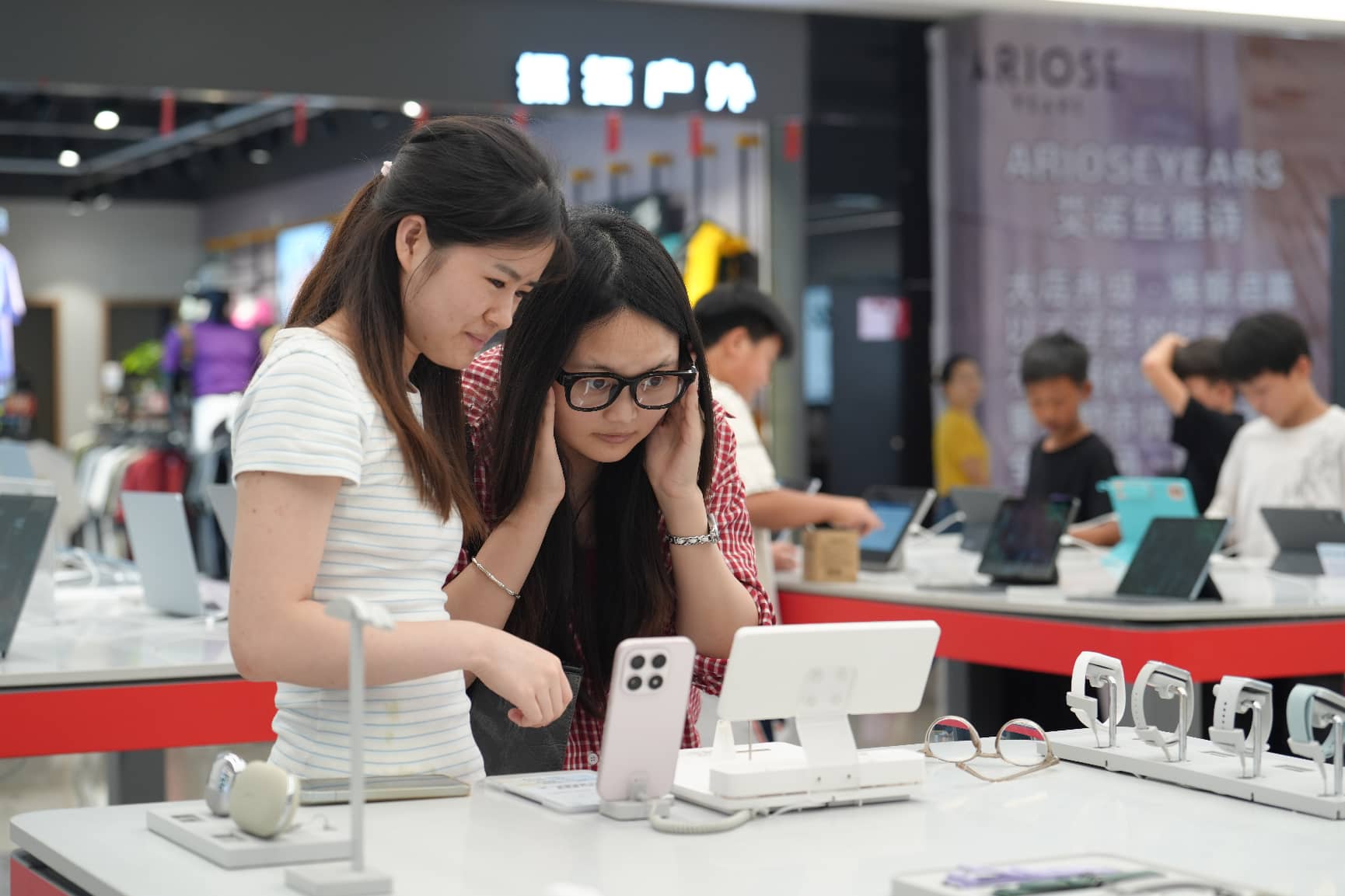
Citizens shop for smart glasses at a store in Tongren city, southwest China's Guizhou province. (Photo/Shen Yikai)
Looked at from a practical perspective, paying for tokens is a vivid practice of accelerating the creation of new quality productive forces.
The entities that stockpile tokens are not only individuals, but also micro, small, and medium-sized enterprises.
Spanning software development and product design to marketing and promotion, the application scenarios of AI among small and medium-sized enterprises are continuously expanding. Behind this trend lies the real economy's pressing demand for intelligent transformation.
Against the backdrop of the deep integration of scientific and industrial innovation, AI is emerging as a critical force reshaping future development patterns.
In trade and logistics, smart product selection and multi-language real-time translation are boosting the quality and efficiency of cross-border trade. On production floors, industrial quality inspection and supply chain scheduling have become more precise and efficient thanks to AI.
AI is no longer merely an option but an increasingly essential tool, accelerating digital transformation across industries.
As large models move from laboratories to production floors, computing power has become an indispensable factor of production, much like electricity during the industrial age, injecting strong momentum into the transformation from old growth drivers into new ones.
Looked at from a deeper perspective, paying for tokens is a concentrated manifestation of the advantages of China's super-large market.
As large AI models continuously iterate through R&D and find widespread application in production and consumption, China's massive market serves as both an expansive testing ground for emerging products and business formats, and a fertile breeding ground for the rise of new forms of the intelligent economy.
The strong sales of tokens during the "Double 11" shopping festival vividly show that a massive user base is proactively embracing intelligent production and lifestyles.
Data offers compelling proof. China's average daily token calls skyrocketed from 100 billion at the beginning of 2024 to over 140 trillion in March this year.
In a super-large market, massive application scenarios can support large models in achieving rapid iteration at lower costs, fully unlocking the scale advantages of the intelligent economy.
The interplay between market advantages and innovation vitality is making computing power increasingly accessible to ordinary users, rather than just businesses, while strengthening China's competitive edge in the AI era.
Putting tokens on e-commerce shelves is merely a starting point. Improving safety governance and strengthening after-sales service to ensure that intelligent consumption truly benefits everyone remains a task that requires the joint efforts of all sides.
As AI technology continues to advance and application scenarios keep expanding, converging growth drivers will continuously fuel China's high-quality economic development.
Photos




Related Stories
Copyright © 2026 People's Daily Online. All Rights Reserved.
