



China's Weihe River flows with renewed vitality
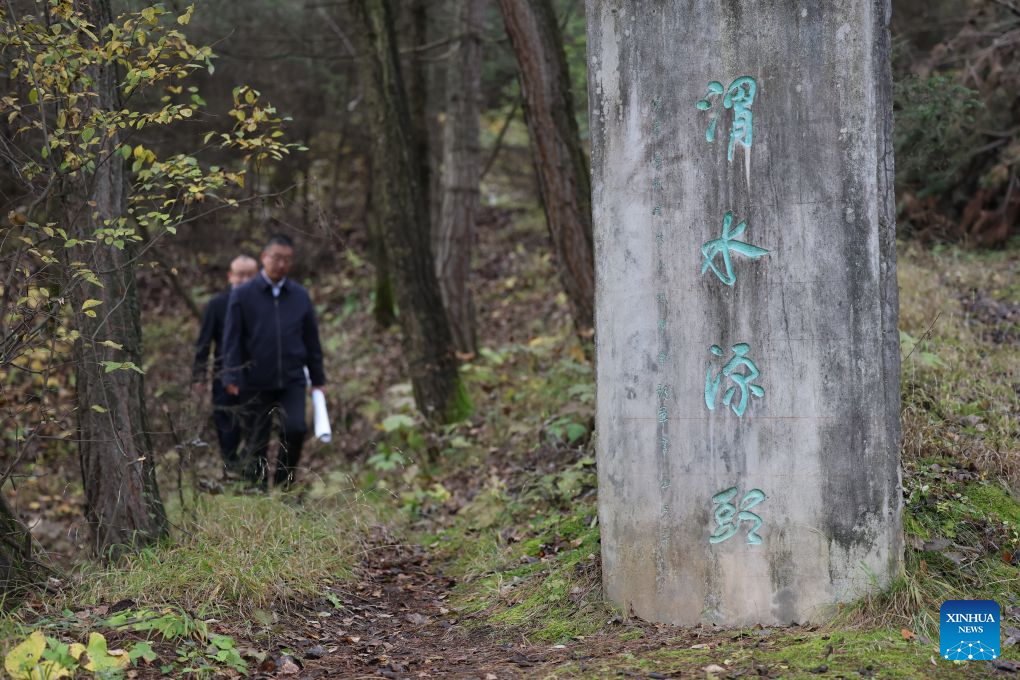
Visitors trace the source of the Weihe River deep in the Niaoshu Mountains in Weiyuan County, northwest China's Gansu Province, Oct. 20, 2026. The Weihe River, the largest tributary of the Yellow River, rises in the Niaoshu Mountains in Weiyuan County, Dingxi City of northwest China's Gansu Province, and empties into the Yellow River in Tongguan County, Weinan City of northwest China's Shaanxi Province. Stretching 818 kilometers with a drainage area of over 134,000 square kilometers, the river and its basin span more than ten cities across northwest China's Shaanxi, Gansu provinces and Ningxia Hui Autonomous Region.
The Weihe River basin is an important birthplace of the Chinese civilization, home to capitals of several ancient Chinese dynasties, and a key passage along the eastern section of the ancient Silk Road.
Today, the river flows broad and mighty, flocks of waterbirds gather in large numbers, and the region's rich cultural traditions are thriving with renewed vitality. (Xinhua/Li Yibo)
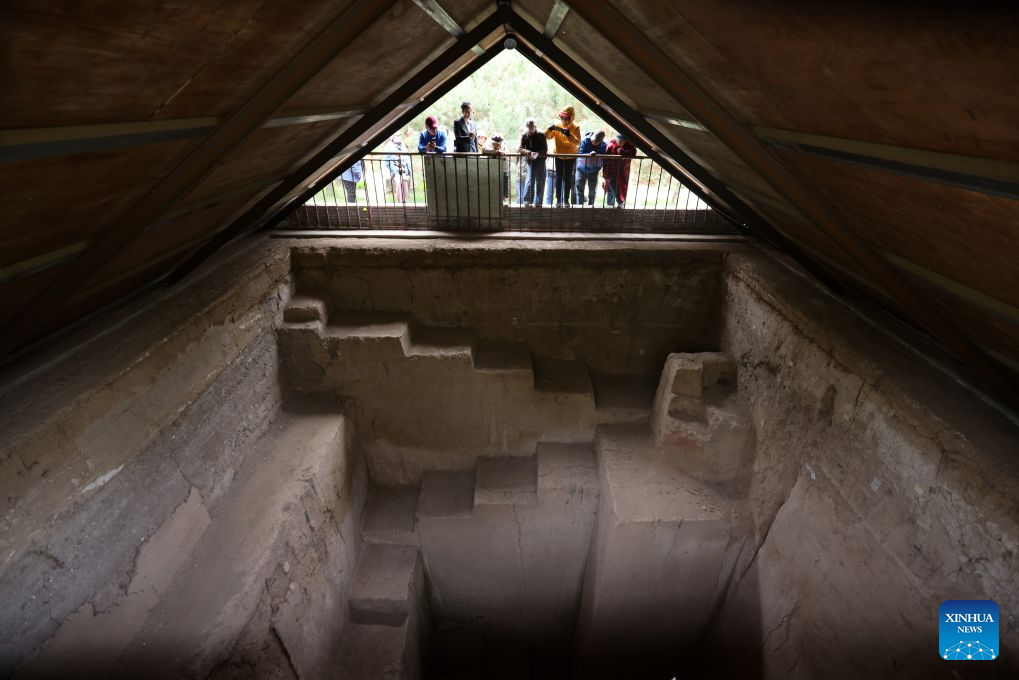
People visit the Dadiwan Site, a Neolithic site dating back to approximately 7,800 to 4,800 years ago, in Qin'an County, northwest China's Gansu Province, Oct. 21, 2026. The site sits on a terrace on the bank of the upper reaches of the Hulu River, a tributary of the Weihe River. The Weihe River, the largest tributary of the Yellow River, rises in the Niaoshu Mountains in Weiyuan County, Dingxi City of northwest China's Gansu Province, and empties into the Yellow River in Tongguan County, Weinan City of northwest China's Shaanxi Province. Stretching 818 kilometers with a drainage area of over 134,000 square kilometers, the river and its basin span more than ten cities across northwest China's Shaanxi, Gansu provinces and Ningxia Hui Autonomous Region.
The Weihe River basin is an important birthplace of the Chinese civilization, home to capitals of several ancient Chinese dynasties, and a key passage along the eastern section of the ancient Silk Road.
Today, the river flows broad and mighty, flocks of waterbirds gather in large numbers, and the region's rich cultural traditions are thriving with renewed vitality. (Xinhua/Li Yibo)
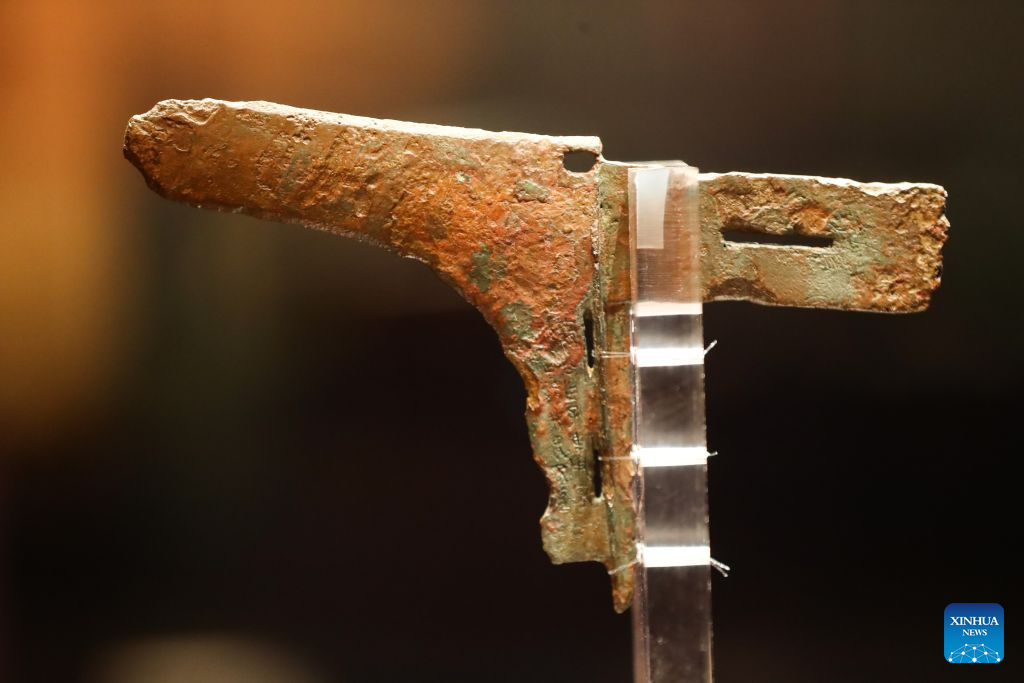
This photo taken on May 18, 2025 shows a bronze ware exhibited at the Gansu Jiandu Museum in Lanzhou, northwest China's Gansu Province. The Weihe River, the largest tributary of the Yellow River, rises in the Niaoshu Mountains in Weiyuan County, Dingxi City of northwest China's Gansu Province, and empties into the Yellow River in Tongguan County, Weinan City of northwest China's Shaanxi Province. Stretching 818 kilometers with a drainage area of over 134,000 square kilometers, the river and its basin span more than ten cities across northwest China's Shaanxi, Gansu provinces and Ningxia Hui Autonomous Region.
The Weihe River basin is an important birthplace of the Chinese civilization, home to capitals of several ancient Chinese dynasties, and a key passage along the eastern section of the ancient Silk Road.
Today, the river flows broad and mighty, flocks of waterbirds gather in large numbers, and the region's rich cultural traditions are thriving with renewed vitality. (Xinhua/Lang Bingbing)
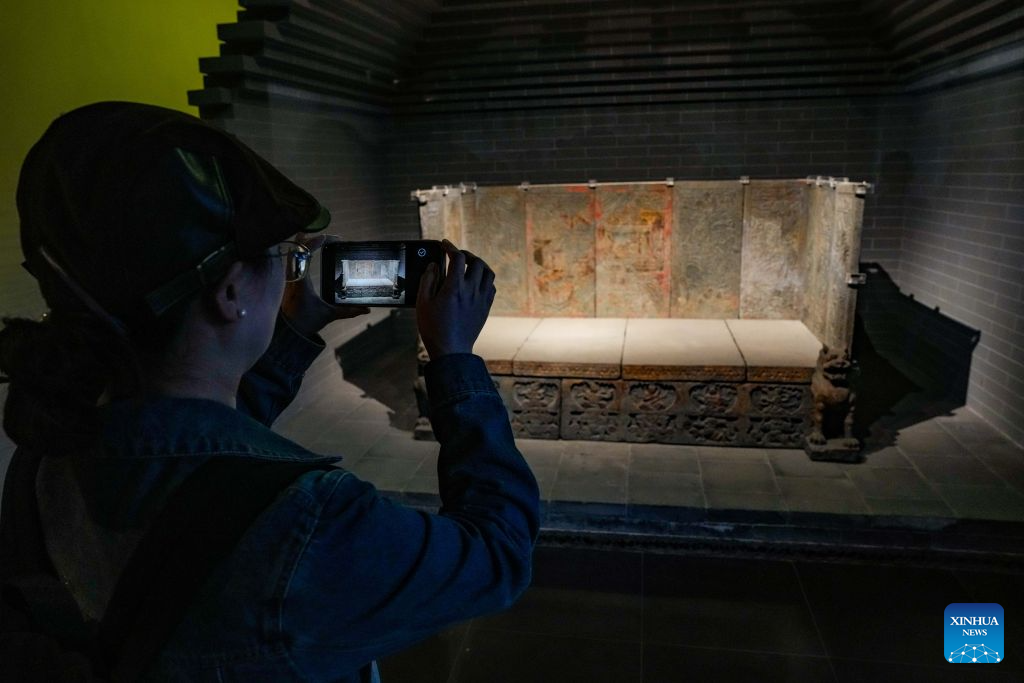
A visitor takes pictures of an exhibit at Tianshui Museum in Tianshui, northwest China's Gansu Province, Oct. 20, 2026. The Weihe River, the largest tributary of the Yellow River, rises in the Niaoshu Mountains in Weiyuan County, Dingxi City of northwest China's Gansu Province, and empties into the Yellow River in Tongguan County, Weinan City of northwest China's Shaanxi Province. Stretching 818 kilometers with a drainage area of over 134,000 square kilometers, the river and its basin span more than ten cities across northwest China's Shaanxi, Gansu provinces and Ningxia Hui Autonomous Region.
The Weihe River basin is an important birthplace of the Chinese civilization, home to capitals of several ancient Chinese dynasties, and a key passage along the eastern section of the ancient Silk Road.
Today, the river flows broad and mighty, flocks of waterbirds gather in large numbers, and the region's rich cultural traditions are thriving with renewed vitality. (Xinhua/Lang Bingbing)
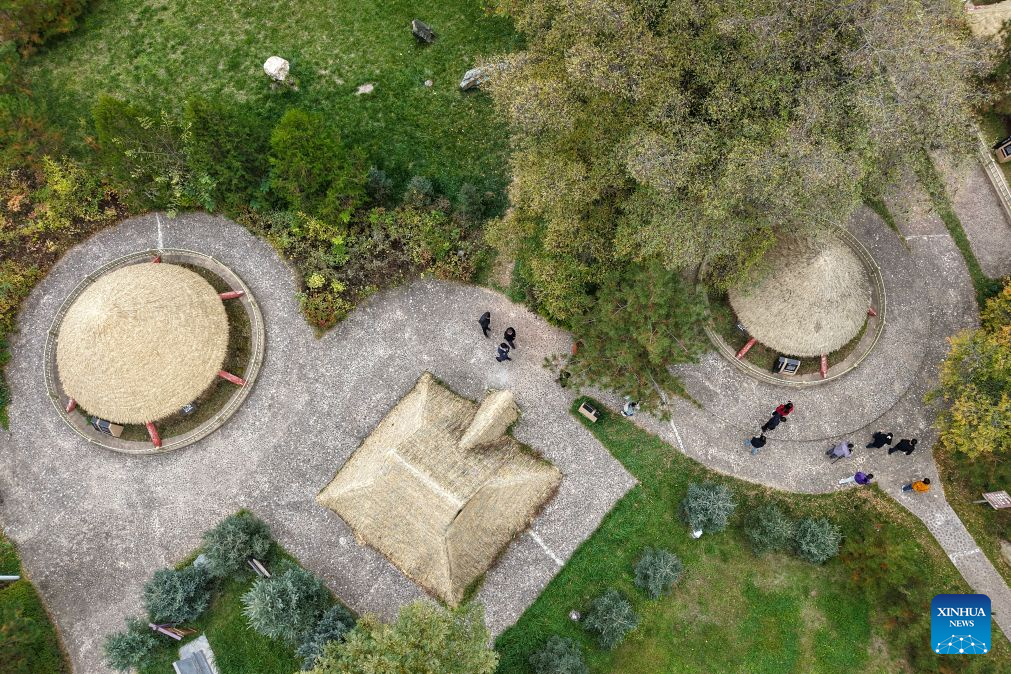
An aerial drone photo taken on Oct. 21, 2026 shows a view of the Dadiwan Site, a Neolithic site dating back to approximately 7,800 to 4,800 years ago, in Qin'an County, northwest China's Gansu Province. The site sits on a terrace on the bank of the upper reaches of the Hulu River, a tributary of the Weihe River. The Weihe River, the largest tributary of the Yellow River, rises in the Niaoshu Mountains in Weiyuan County, Dingxi City of northwest China's Gansu Province, and empties into the Yellow River in Tongguan County, Weinan City of northwest China's Shaanxi Province. Stretching 818 kilometers with a drainage area of over 134,000 square kilometers, the river and its basin span more than ten cities across northwest China's Shaanxi, Gansu provinces and Ningxia Hui Autonomous Region.
The Weihe River basin is an important birthplace of the Chinese civilization, home to capitals of several ancient Chinese dynasties, and a key passage along the eastern section of the ancient Silk Road.
Today, the river flows broad and mighty, flocks of waterbirds gather in large numbers, and the region's rich cultural traditions are thriving with renewed vitality. (Xinhua/Lang Bingbing)
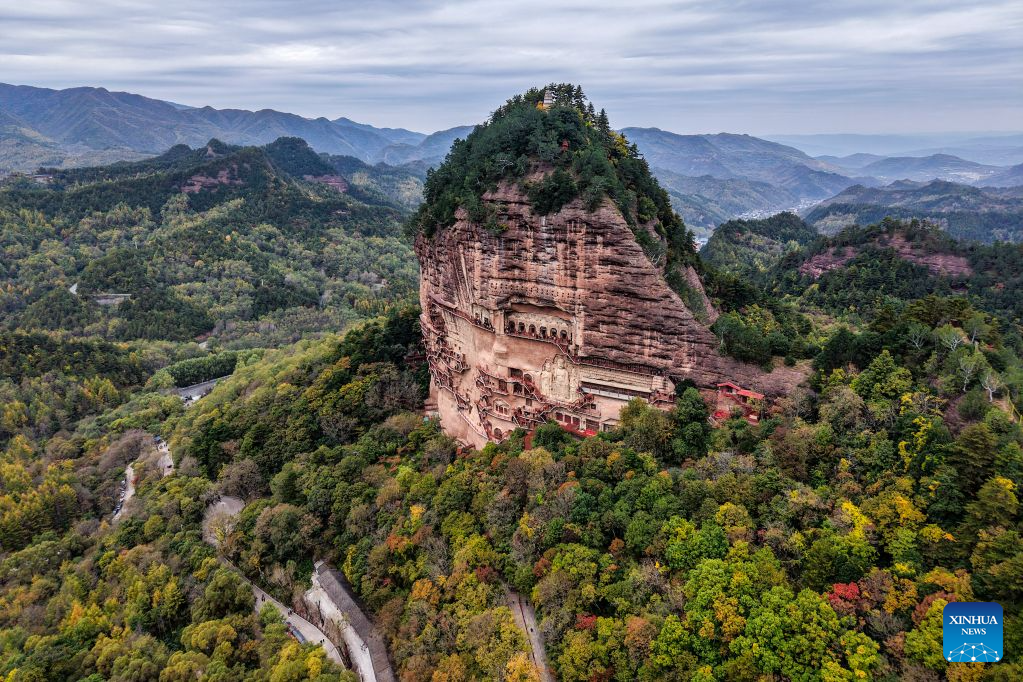
A drone photo taken on Oct. 21, 2026 shows a view of the Maiji Mountain Grottoes in Tianshui City, northwest China's Gansu Province. Situated in the upper reaches of the Weihe River, these grottoes are an artistic treasure along a key route of the ancient Silk Road, bearing witness to the exchanges between Eastern and Western civilizations. The Weihe River, the largest tributary of the Yellow River, rises in the Niaoshu Mountains in Weiyuan County, Dingxi City of northwest China's Gansu Province, and empties into the Yellow River in Tongguan County, Weinan City of northwest China's Shaanxi Province. Stretching 818 kilometers with a drainage area of over 134,000 square kilometers, the river and its basin span more than ten cities across northwest China's Shaanxi, Gansu provinces and Ningxia Hui Autonomous Region.
The Weihe River basin is an important birthplace of the Chinese civilization, home to capitals of several ancient Chinese dynasties, and a key passage along the eastern section of the ancient Silk Road.
Today, the river flows broad and mighty, flocks of waterbirds gather in large numbers, and the region's rich cultural traditions are thriving with renewed vitality. (Xinhua/Lang Bingbing)
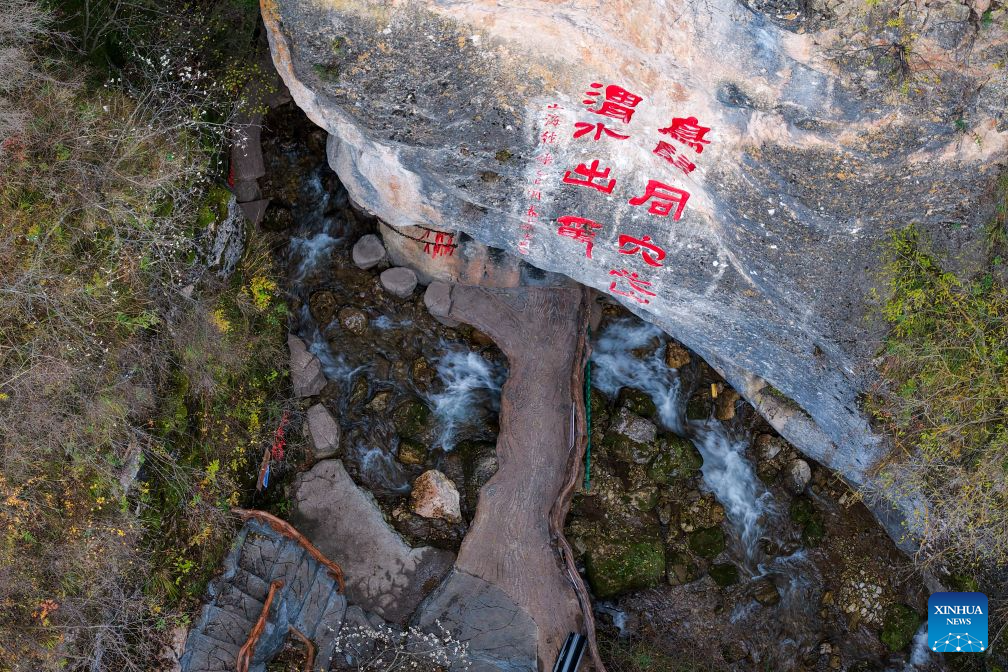
An aerial drone photo taken on Oct. 19, 2026 shows a stream deep in the Niaoshu Mountains in Weiyuan County, northwest China's Gansu Province. The Weihe River, the largest tributary of the Yellow River, rises in the Niaoshu Mountains in Weiyuan County, Dingxi City of northwest China's Gansu Province, and empties into the Yellow River in Tongguan County, Weinan City of northwest China's Shaanxi Province. Stretching 818 kilometers with a drainage area of over 134,000 square kilometers, the river and its basin span more than ten cities across northwest China's Shaanxi, Gansu provinces and Ningxia Hui Autonomous Region.
The Weihe River basin is an important birthplace of the Chinese civilization, home to capitals of several ancient Chinese dynasties, and a key passage along the eastern section of the ancient Silk Road.
Today, the river flows broad and mighty, flocks of waterbirds gather in large numbers, and the region's rich cultural traditions are thriving with renewed vitality. (Xinhua/Lang Bingbing)
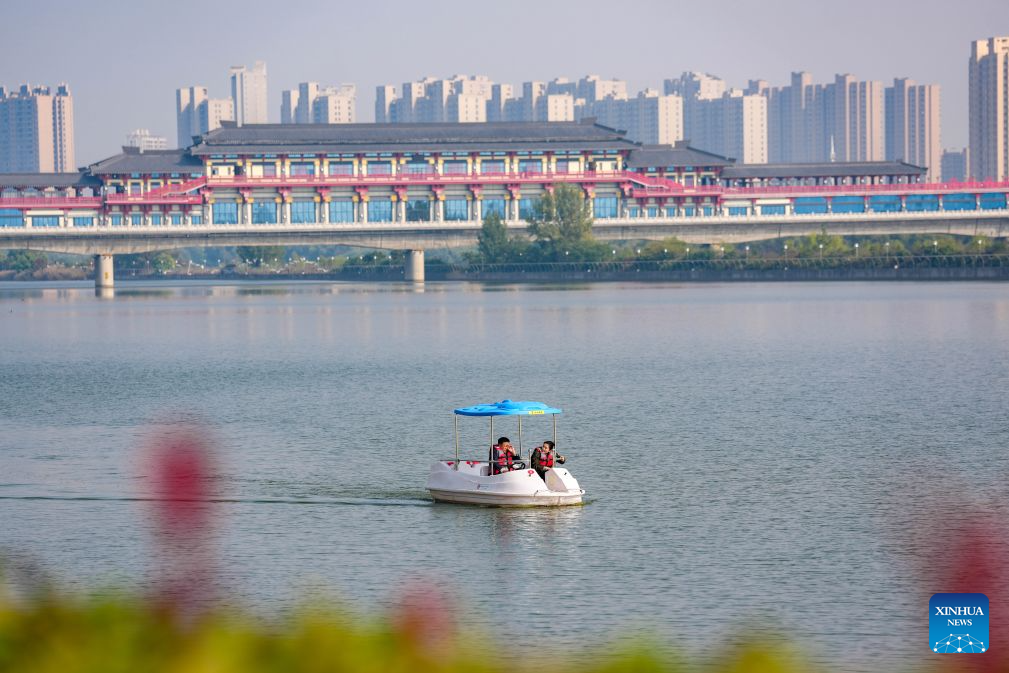
Tourists enjoy boating at Xianyang Lake, a scenic area on the urban section of the Weihe River, in Xianyang, northwest China's Shaanxi Province, Oct. 23, 2026. The Weihe River, the largest tributary of the Yellow River, rises in the Niaoshu Mountains in Weiyuan County, Dingxi City of northwest China's Gansu Province, and empties into the Yellow River in Tongguan County, Weinan City of northwest China's Shaanxi Province. Stretching 818 kilometers with a drainage area of over 134,000 square kilometers, the river and its basin span more than ten cities across northwest China's Shaanxi, Gansu provinces and Ningxia Hui Autonomous Region.
The Weihe River basin is an important birthplace of the Chinese civilization, home to capitals of several ancient Chinese dynasties, and a key passage along the eastern section of the ancient Silk Road.
Today, the river flows broad and mighty, flocks of waterbirds gather in large numbers, and the region's rich cultural traditions are thriving with renewed vitality. (Xinhua/Lang Bingbing)
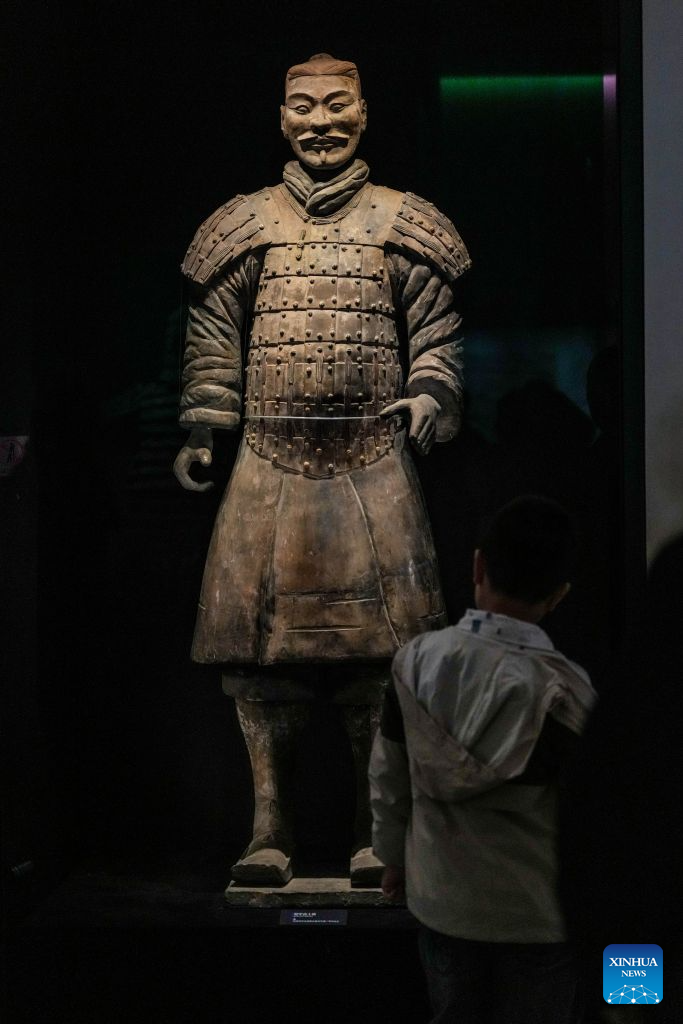
A terracotta warrior is displayed at the Qin Han Museum of Shaanxi History Museum in Xi'an, capital of northwest China's Shaanxi Province, Oct. 24, 2026. The Weihe River, the largest tributary of the Yellow River, rises in the Niaoshu Mountains in Weiyuan County, Dingxi City of northwest China's Gansu Province, and empties into the Yellow River in Tongguan County, Weinan City of northwest China's Shaanxi Province. Stretching 818 kilometers with a drainage area of over 134,000 square kilometers, the river and its basin span more than ten cities across northwest China's Shaanxi, Gansu provinces and Ningxia Hui Autonomous Region.
The Weihe River basin is an important birthplace of the Chinese civilization, home to capitals of several ancient Chinese dynasties, and a key passage along the eastern section of the ancient Silk Road.
Today, the river flows broad and mighty, flocks of waterbirds gather in large numbers, and the region's rich cultural traditions are thriving with renewed vitality. (Xinhua/Lang Bingbing)
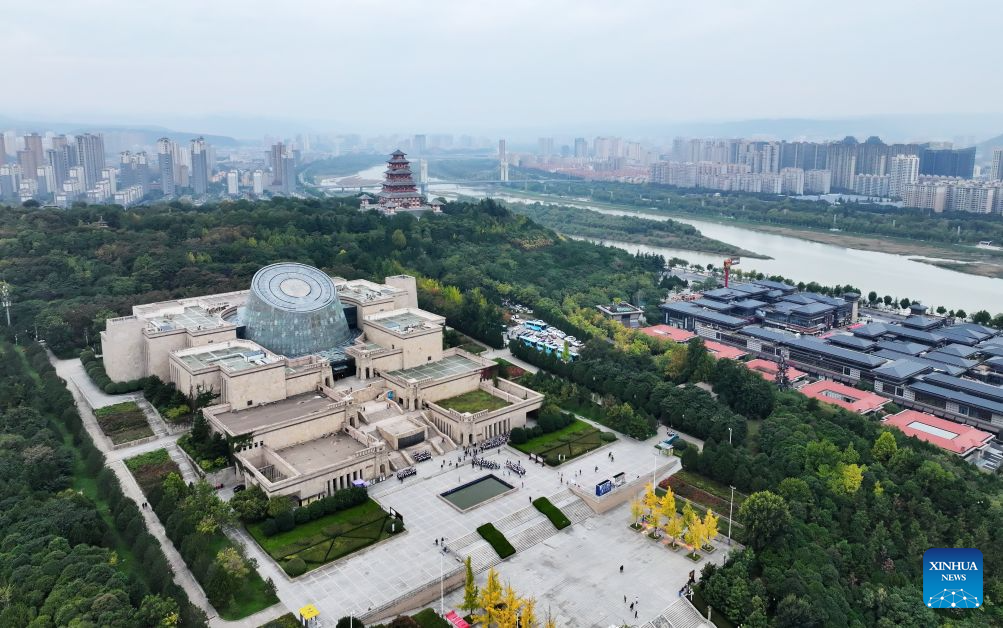
An aerial drone photo taken on Oct. 22, 2026 shows the Baoji Bronze Ware Museum in Baoji City, northwest China's Shaanxi Province. The Weihe River, the largest tributary of the Yellow River, rises in the Niaoshu Mountains in Weiyuan County, Dingxi City of northwest China's Gansu Province, and empties into the Yellow River in Tongguan County, Weinan City of northwest China's Shaanxi Province. Stretching 818 kilometers with a drainage area of over 134,000 square kilometers, the river and its basin span more than ten cities across northwest China's Shaanxi, Gansu provinces and Ningxia Hui Autonomous Region.
The Weihe River basin is an important birthplace of the Chinese civilization, home to capitals of several ancient Chinese dynasties, and a key passage along the eastern section of the ancient Silk Road.
Today, the river flows broad and mighty, flocks of waterbirds gather in large numbers, and the region's rich cultural traditions are thriving with renewed vitality. (Xinhua/Li Yibo)
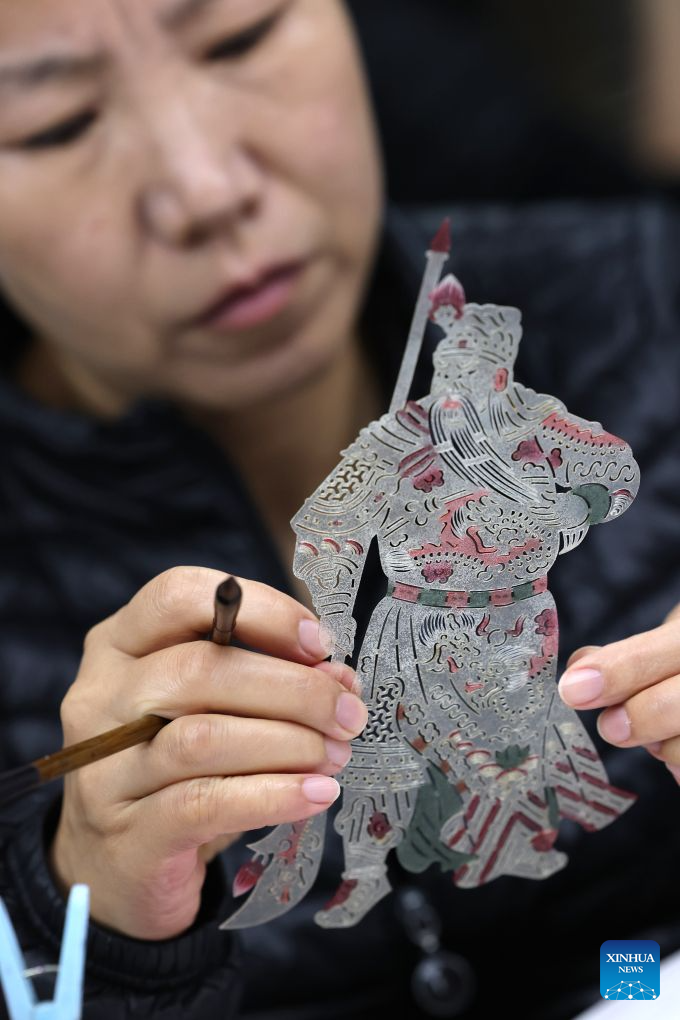
An artisan applies color to a shadow puppet at a shadow puppet themed park in Huazhou District, Weinan City, northwest China's Shaanxi Province, Oct. 25, 2026. The Weihe River, the largest tributary of the Yellow River, rises in the Niaoshu Mountains in Weiyuan County, Dingxi City of northwest China's Gansu Province, and empties into the Yellow River in Tongguan County, Weinan City of northwest China's Shaanxi Province. Stretching 818 kilometers with a drainage area of over 134,000 square kilometers, the river and its basin span more than ten cities across northwest China's Shaanxi, Gansu provinces and Ningxia Hui Autonomous Region.
The Weihe River basin is an important birthplace of the Chinese civilization, home to capitals of several ancient Chinese dynasties, and a key passage along the eastern section of the ancient Silk Road.
Today, the river flows broad and mighty, flocks of waterbirds gather in large numbers, and the region's rich cultural traditions are thriving with renewed vitality. (Xinhua/Li Yibo)
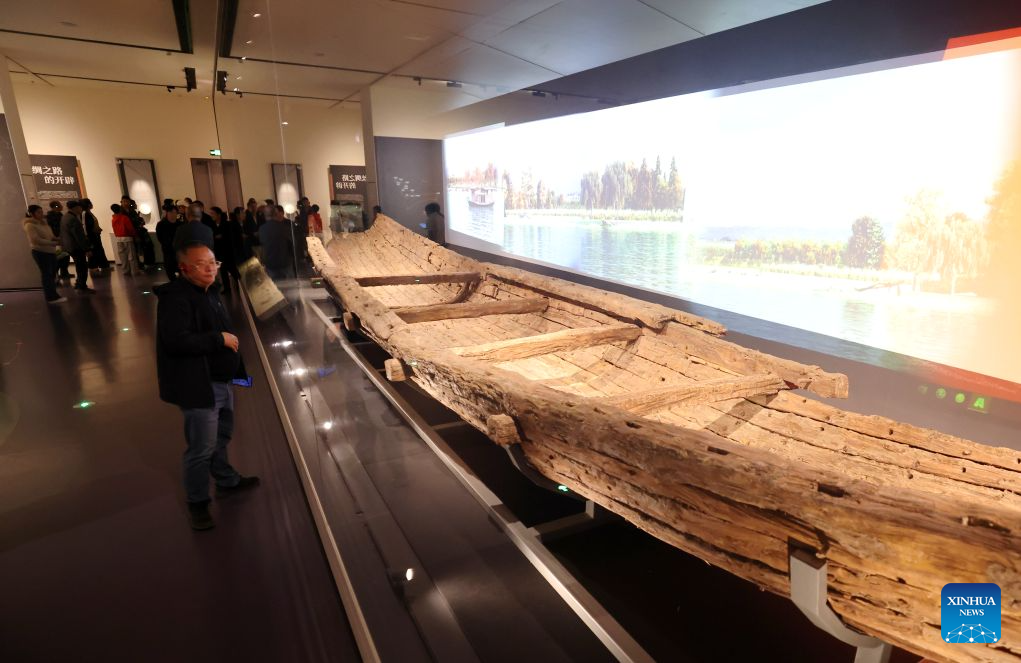
People visit an ancient ship displayed at the Qin Han Museum of Shaanxi History Museum in Xi'an, capital of northwest China's Shaanxi Province, Oct. 24, 2026. The Weihe River, the largest tributary of the Yellow River, rises in the Niaoshu Mountains in Weiyuan County, Dingxi City of northwest China's Gansu Province, and empties into the Yellow River in Tongguan County, Weinan City of northwest China's Shaanxi Province. Stretching 818 kilometers with a drainage area of over 134,000 square kilometers, the river and its basin span more than ten cities across northwest China's Shaanxi, Gansu provinces and Ningxia Hui Autonomous Region.
The Weihe River basin is an important birthplace of the Chinese civilization, home to capitals of several ancient Chinese dynasties, and a key passage along the eastern section of the ancient Silk Road.
Today, the river flows broad and mighty, flocks of waterbirds gather in large numbers, and the region's rich cultural traditions are thriving with renewed vitality. (Xinhua/Li Yibo)
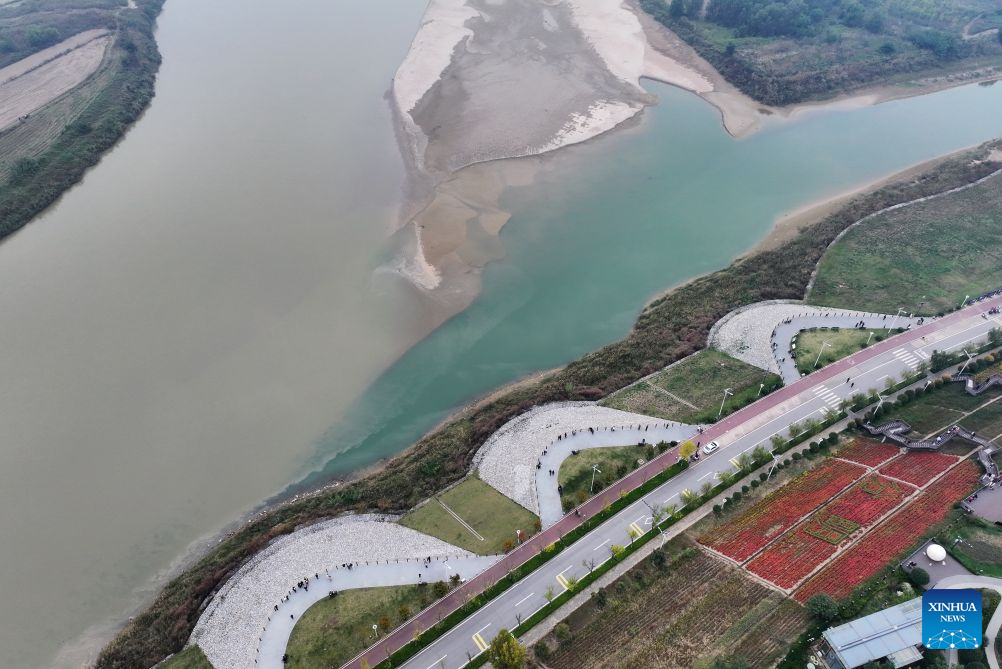
An aerial drone photo taken on Oct. 24, 2026 shows the Jinghe and Weihe rivers converging with waters distinct in color, in Gaoling District, Xi'an, northwest China's Shaanxi Province. The Weihe River, the largest tributary of the Yellow River, rises in the Niaoshu Mountains in Weiyuan County, Dingxi City of northwest China's Gansu Province, and empties into the Yellow River in Tongguan County, Weinan City of northwest China's Shaanxi Province. Stretching 818 kilometers with a drainage area of over 134,000 square kilometers, the river and its basin span more than ten cities across northwest China's Shaanxi, Gansu provinces and Ningxia Hui Autonomous Region.
The Weihe River basin is an important birthplace of the Chinese civilization, home to capitals of several ancient Chinese dynasties, and a key passage along the eastern section of the ancient Silk Road.
Today, the river flows broad and mighty, flocks of waterbirds gather in large numbers, and the region's rich cultural traditions are thriving with renewed vitality. (Xinhua/Li Yibo)

A woman visits the Gansu Jiandu Museum in Lanzhou, northwest China's Gansu Province, May 18, 2025. The Weihe River, the largest tributary of the Yellow River, rises in the Niaoshu Mountains in Weiyuan County, Dingxi City of northwest China's Gansu Province, and empties into the Yellow River in Tongguan County, Weinan City of northwest China's Shaanxi Province. Stretching 818 kilometers with a drainage area of over 134,000 square kilometers, the river and its basin span more than ten cities across northwest China's Shaanxi, Gansu provinces and Ningxia Hui Autonomous Region.
The Weihe River basin is an important birthplace of the Chinese civilization, home to capitals of several ancient Chinese dynasties, and a key passage along the eastern section of the ancient Silk Road.
Today, the river flows broad and mighty, flocks of waterbirds gather in large numbers, and the region's rich cultural traditions are thriving with renewed vitality. (Xinhua/Lang Bingbing)
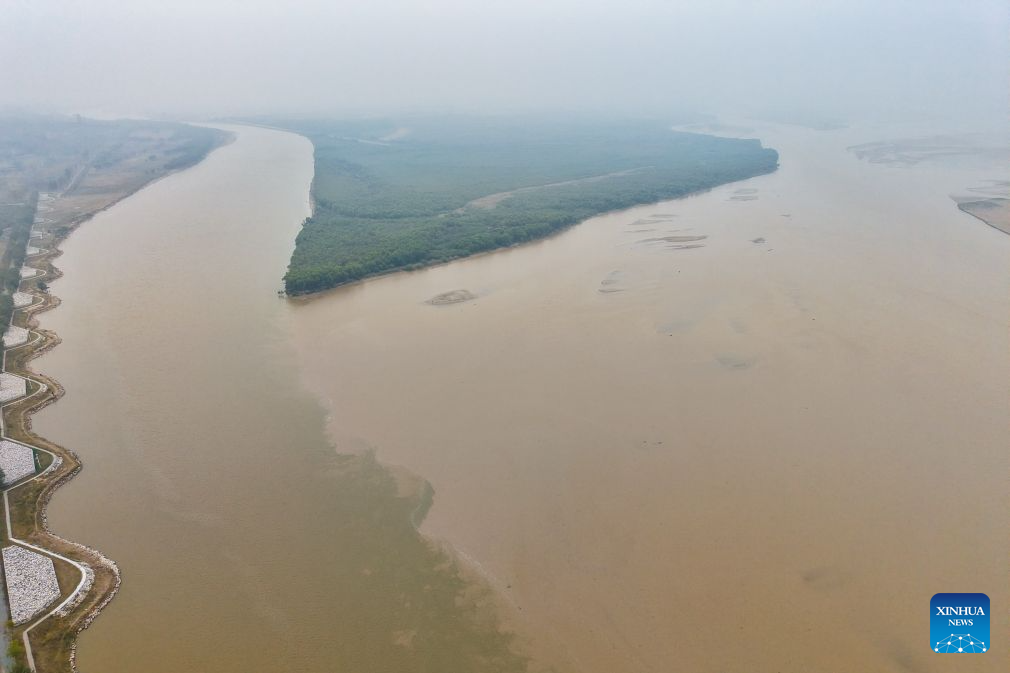
An aerial drone photo taken on Oct. 25, 2026 shows a view of the Weihe River joining the Yellow River (R) in Tongguan County, Weinan City, northwest China's Shaanxi Province. The Weihe River, the largest tributary of the Yellow River, rises in the Niaoshu Mountains in Weiyuan County, Dingxi City of northwest China's Gansu Province, and empties into the Yellow River in Tongguan County, Weinan City of northwest China's Shaanxi Province. Stretching 818 kilometers with a drainage area of over 134,000 square kilometers, the river and its basin span more than ten cities across northwest China's Shaanxi, Gansu provinces and Ningxia Hui Autonomous Region.
The Weihe River basin is an important birthplace of the Chinese civilization, home to capitals of several ancient Chinese dynasties, and a key passage along the eastern section of the ancient Silk Road.
Today, the river flows broad and mighty, flocks of waterbirds gather in large numbers, and the region's rich cultural traditions are thriving with renewed vitality. (Xinhua/Lang Bingbing)
Photos


Related Stories
Copyright © 2026 People's Daily Online. All Rights Reserved.
