



Long March heritage along Chishui River fuels tourism in China's Guizhou
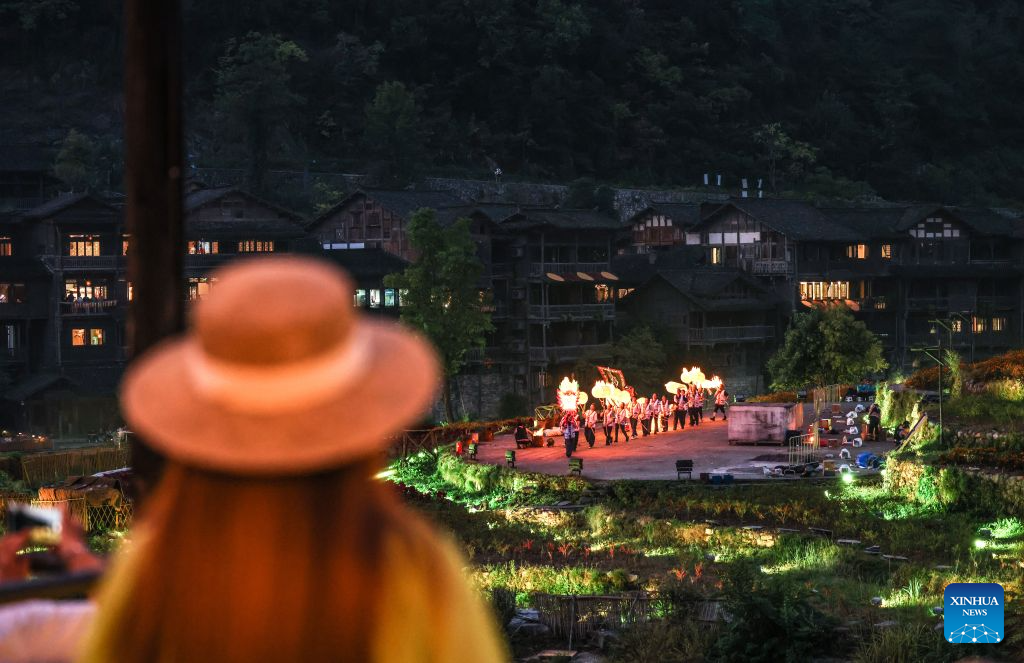
A tourist watches a dragon dance performance at Wujiangzhai scenic spot in Zunyi, southwest China's Guizhou Province, Sept. 29, 2026. More than 90 years ago, the Red Army crossed the Chishui River four times during the Long March, breaking out of enemy encirclement.
Today, new bridges and roads have improved transportation along the Chishui River, while rural industries have continued to develop. Red tourism is also developing in the area, attracting more people to visit revolutionary sites. (Xinhua/Yang Wenbin)
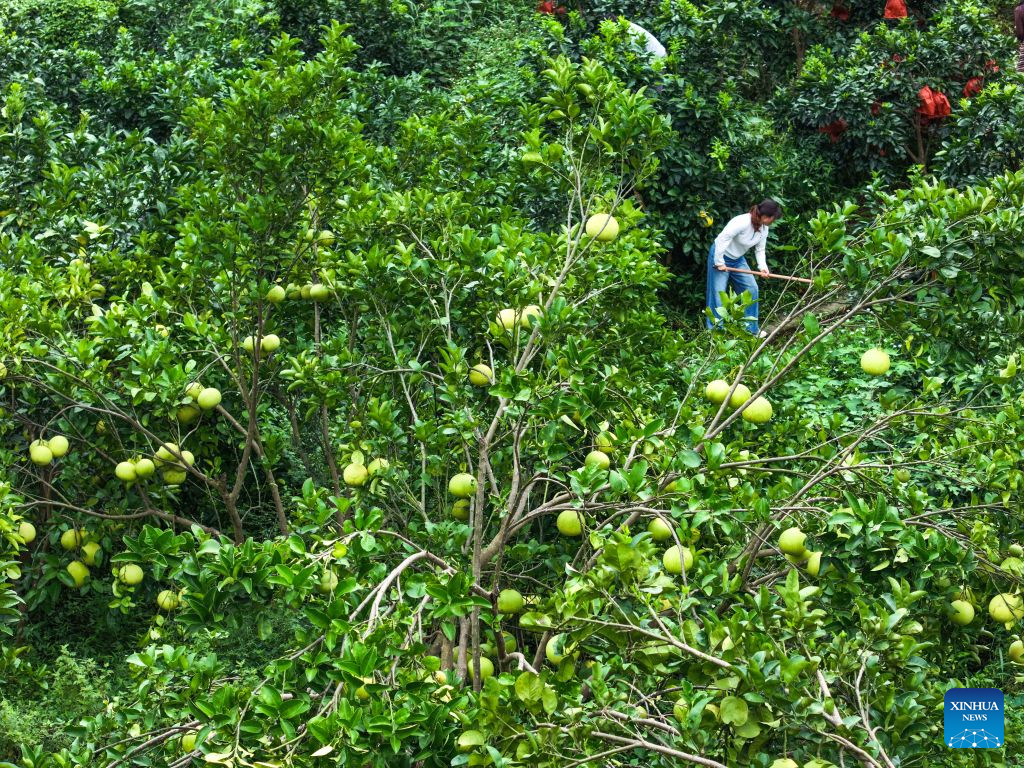
A drone photo shows a villager working at a pomelo plantation base in Tucheng Town of Xishui County, southwest China's Guizhou Province, Sept. 11, 2026. More than 90 years ago, the Red Army crossed the Chishui River four times during the Long March, breaking out of enemy encirclement.
Today, new bridges and roads have improved transportation along the Chishui River, while rural industries have continued to develop. Red tourism is also developing in the area, attracting more people to visit revolutionary sites. (Xinhua/Yang Wenbin)
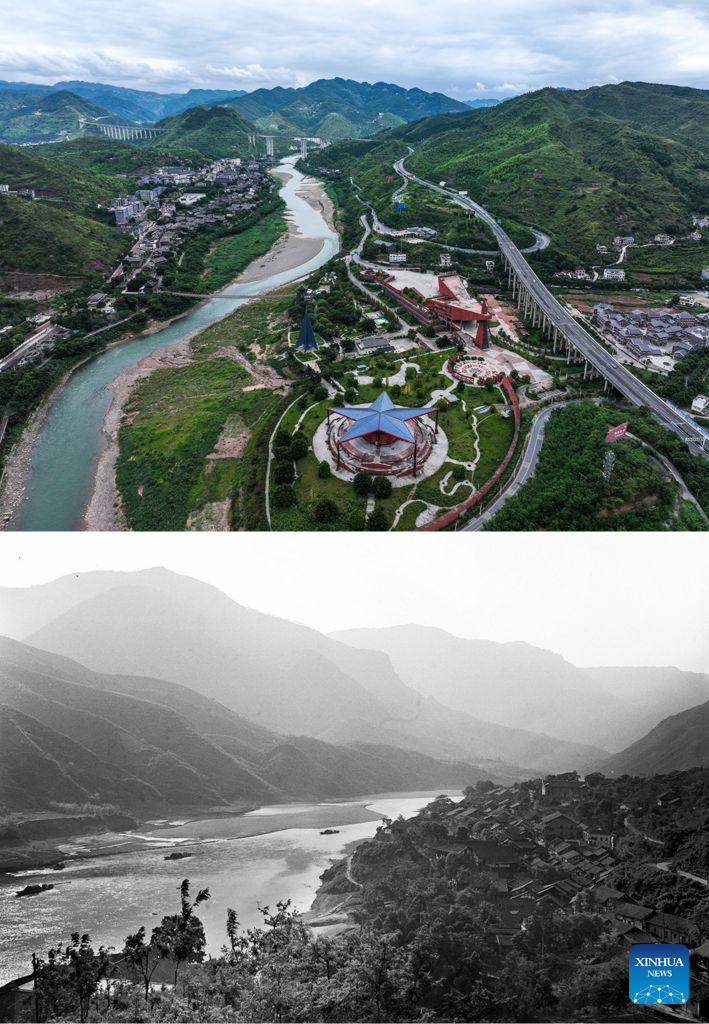
This combo photo shows a view of Tucheng Town in Xishui County, southwest China's Guizhou Province, home to the Tucheng ferry crossing, a site of the Four Crossings of the Chishui River, Sept. 11, 2026 (above, drone photo by Xinhua photographer Yang Wenbin), and a view of the Tucheng ferry crossing (released on Oct. 17, 1975, by Xinhua photographer Ren Yongzhao). More than 90 years ago, the Red Army crossed the Chishui River four times during the Long March, breaking out of enemy encirclement.
Today, new bridges and roads have improved transportation along the Chishui River, while rural industries have continued to develop. Red tourism is also developing in the area, attracting more people to visit revolutionary sites. (Xinhua/Yang Wenbin)
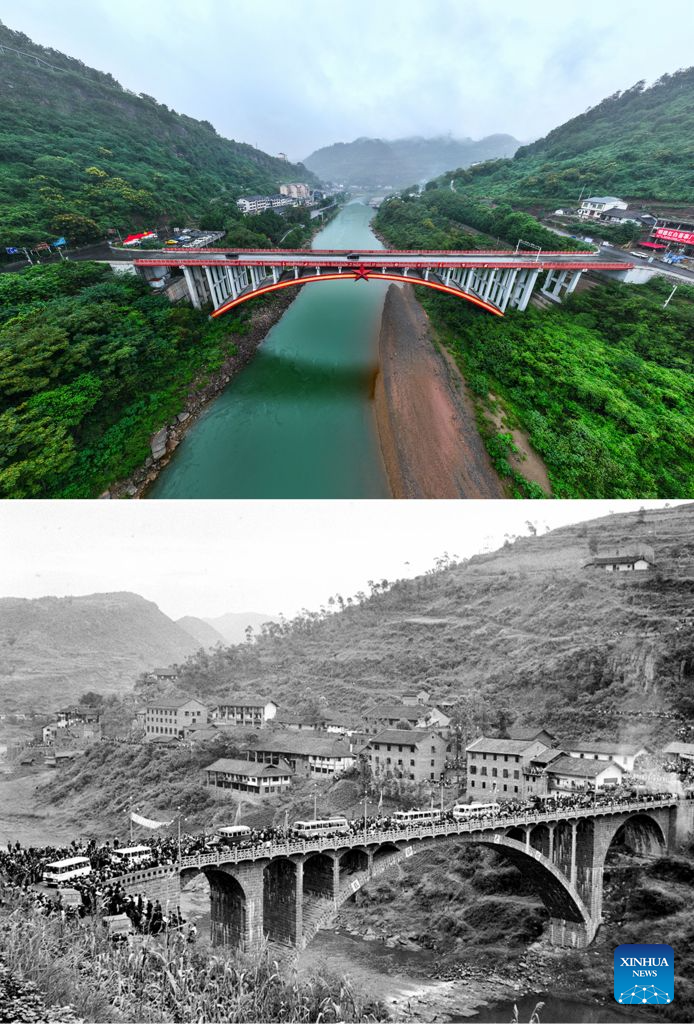
This combo photo shows the Taipingdu bridge near the Taipingdu ferry crossing, a site of the Four Crossings of the Chishui River, Sept. 10, 2026 (above, drone photo by Xinhua photographer Yang Wenbin), and a bridge near the Taipingdu ferry crossing (released on Oct. 14, 1981, by Chen Yongkang). More than 90 years ago, the Red Army crossed the Chishui River four times during the Long March, breaking out of enemy encirclement.
Today, new bridges and roads have improved transportation along the Chishui River, while rural industries have continued to develop. Red tourism is also developing in the area, attracting more people to visit revolutionary sites. (Xinhua/Yang Wenbin)
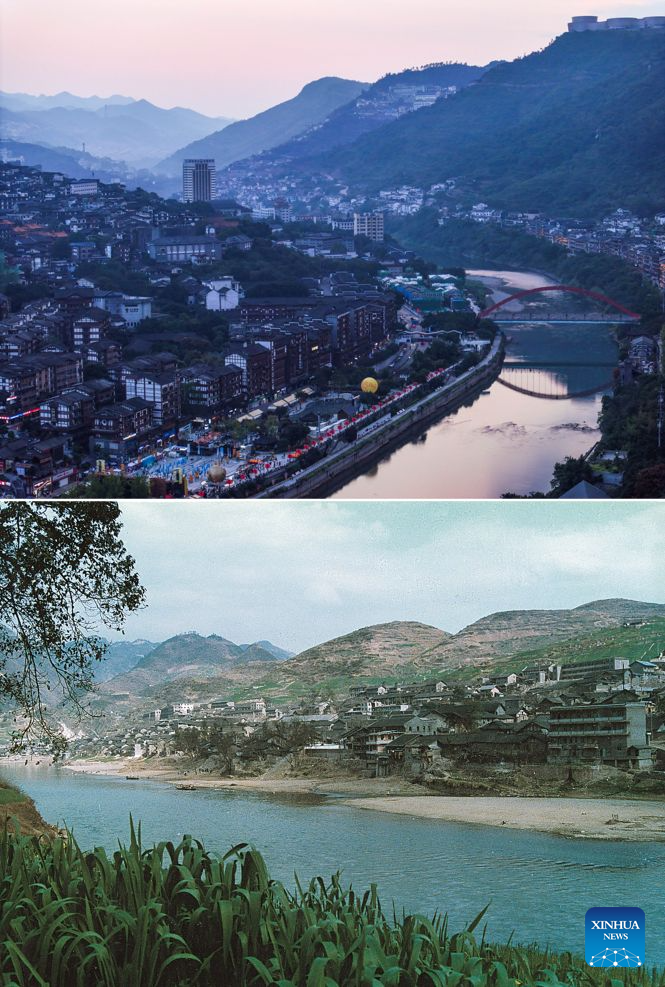
This combo photo shows the Maotai ferry crossing, a site of the Four Crossings of the Chishui River, in Maotai Town of Renhuai City, southwest China's Guizhou Province, Oct. 16, 2026 (above, drone photo by Xinhua photographer Yang Wenbin), and the former site of the Maotai ferry crossing (file photo). More than 90 years ago, the Red Army crossed the Chishui River four times during the Long March, breaking out of enemy encirclement.
Today, new bridges and roads have improved transportation along the Chishui River, while rural industries have continued to develop. Red tourism is also developing in the area, attracting more people to visit revolutionary sites. (Xinhua/Yang Wenbin)
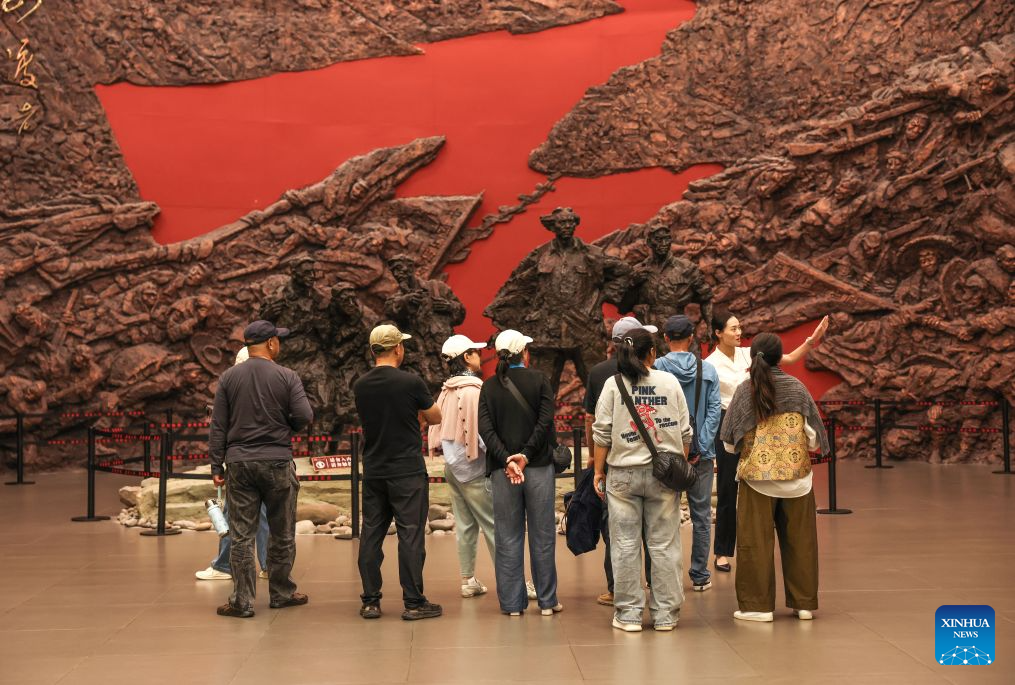
People visit the memorial hall of the Four Crossings of the Chishui River in Xishui County, southwest China's Guizhou Province, Sept. 11, 2026. More than 90 years ago, the Red Army crossed the Chishui River four times during the Long March, breaking out of enemy encirclement.
Today, new bridges and roads have improved transportation along the Chishui River, while rural industries have continued to develop. Red tourism is also developing in the area, attracting more people to visit revolutionary sites. (Xinhua/Yang Wenbin)
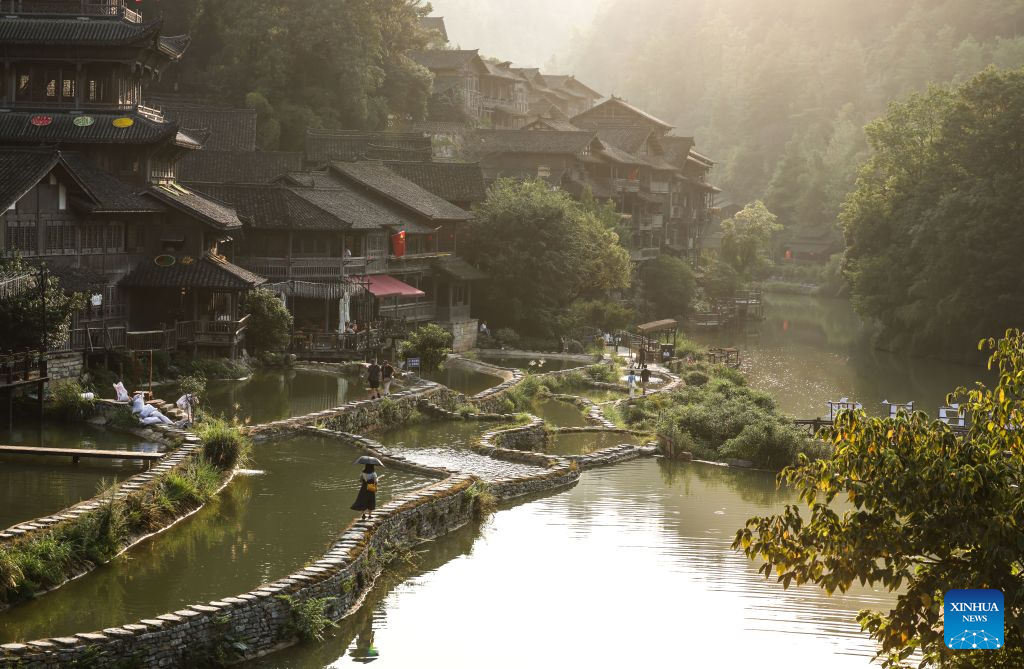
People visit Wujiangzhai scenic spot in Zunyi, southwest China's Guizhou Province, Sept. 29, 2026. More than 90 years ago, the Red Army crossed the Chishui River four times during the Long March, breaking out of enemy encirclement.
Today, new bridges and roads have improved transportation along the Chishui River, while rural industries have continued to develop. Red tourism is also developing in the area, attracting more people to visit revolutionary sites. (Xinhua/Yang Wenbin)
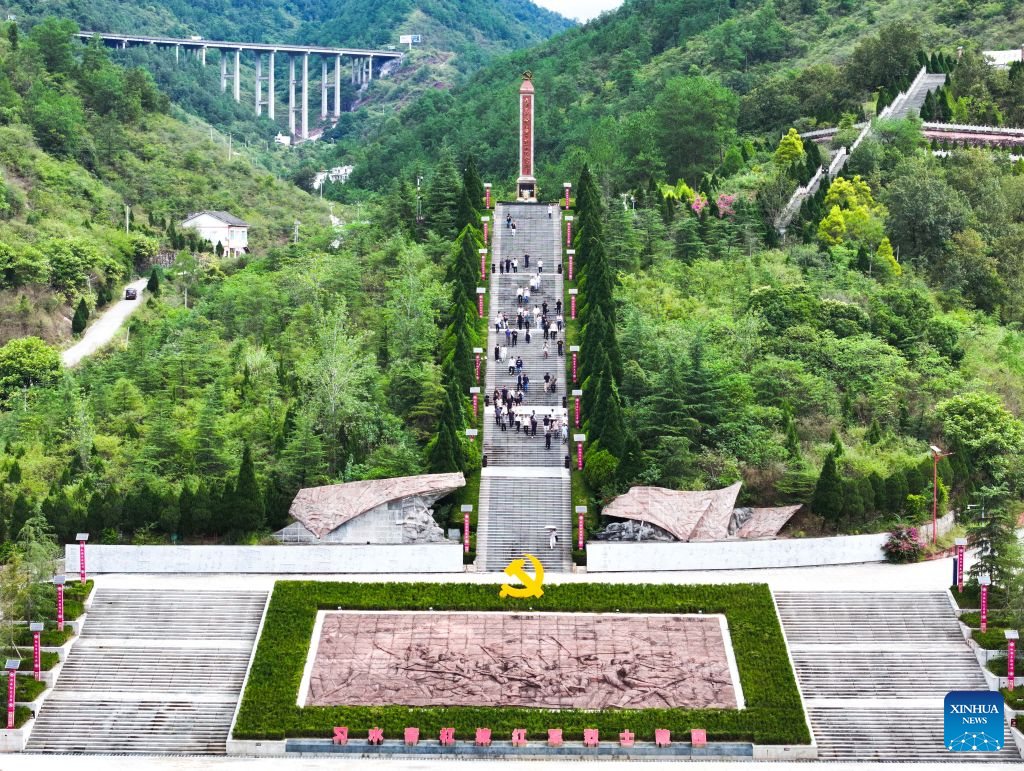
A drone photo shows people visiting the revolutionary site of the Battle of Qinggangpo in Xishui County, southwest China's Guizhou Province, Sept. 11, 2026. More than 90 years ago, the Red Army crossed the Chishui River four times during the Long March, breaking out of enemy encirclement.
Today, new bridges and roads have improved transportation along the Chishui River, while rural industries have continued to develop. Red tourism is also developing in the area, attracting more people to visit revolutionary sites. (Xinhua/Yang Wenbin)
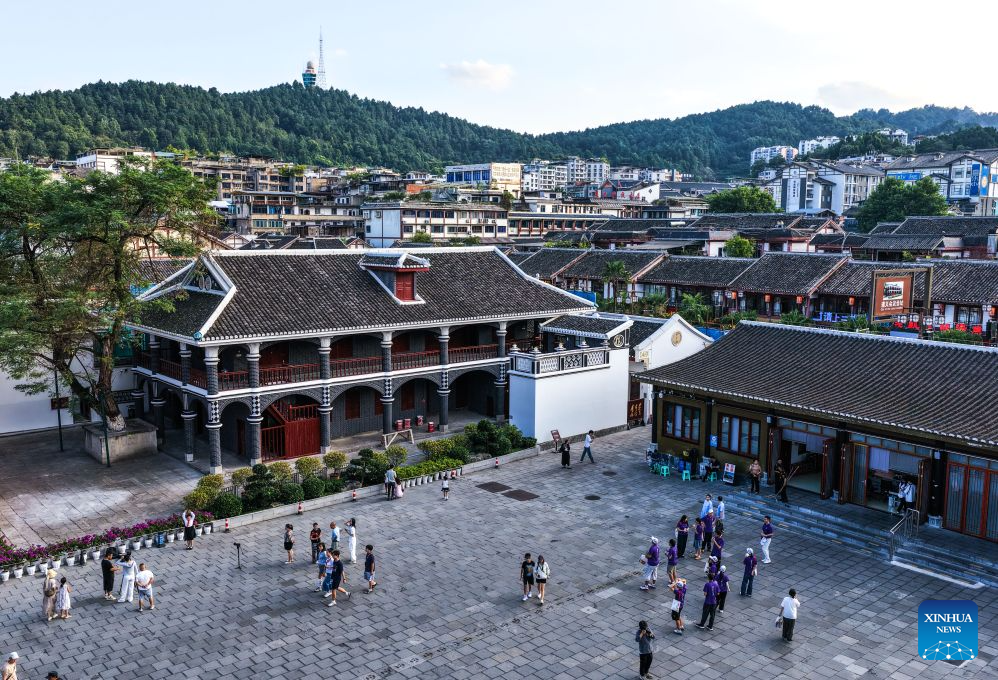
A drone photo shows people visiting the historical site of the Zunyi Meeting in Zunyi City, southwest China's Guizhou Province, Aug. 17, 2026. More than 90 years ago, the Red Army crossed the Chishui River four times during the Long March, breaking out of enemy encirclement.
Today, new bridges and roads have improved transportation along the Chishui River, while rural industries have continued to develop. Red tourism is also developing in the area, attracting more people to visit revolutionary sites. (Xinhua/Yang Wenbin)
Photos


Related Stories
Copyright © 2026 People's Daily Online. All Rights Reserved.
