



International tourists take home China's homegrown brands
Data shows that inbound trips to China by foreign nationals reached 22.91 million in the first half of the year, up 20.4 percent year on year. As more foreign tourists arrive, the Chinese souvenirs they take home are quietly changing.
At a store of homegrown footwear brand PANE at Sanlitun in Beijing, Italian tourist Medea tries on a pair of shoes. The Shanghai-based brand specializes in retro German Army trainers and targets the 800-yuan (about $119) to 1,000-yuan price range, gaining popularity overseas.
"My friends and I think the designs are very stylish. I came to China this time specifically to check them out. I'm going to buy two pairs, one for a friend as a specialty from China," Medea said.
In the past, tea, silk and panda plush toys were the three major souvenirs bought by foreign tourists in China. Today, emerging consumer brands such as PANE, along with trendy tech products such as foldable smartphones, AI glasses, drones and smart bands, have become the new "Chinese specialties."
Statistics show that an average of nearly 8,000 foreign buyers have visited Shenzhen's mega electronics marketplace Huaqiangbei daily to source products since the beginning of this year. From January to July, sales of AI products across all categories in Huaqiangbei rose by more than 55 percent year on year, while AI glasses sales doubled and drone and robot sales grew by 60 to 70 percent.
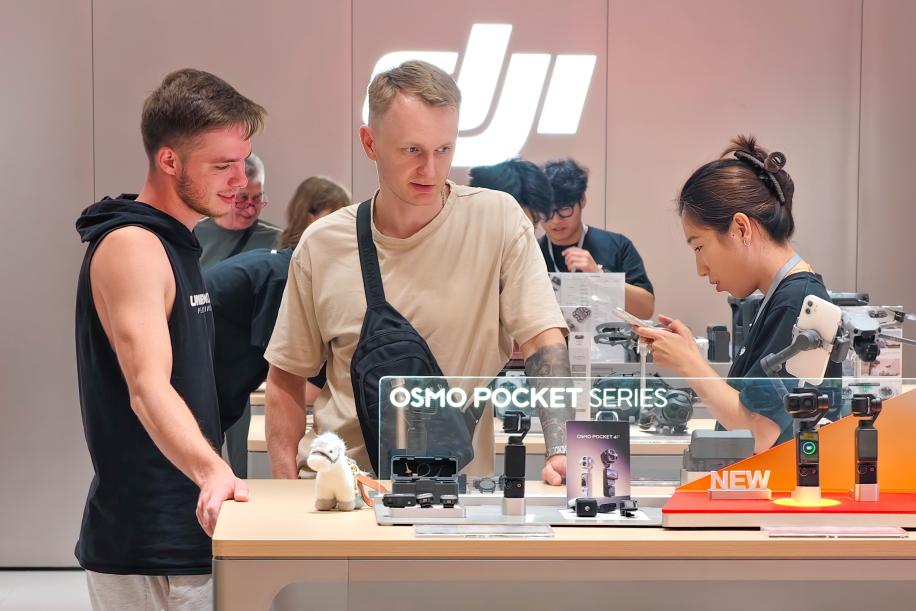
Foreign tourists check out a pocket gimbal camera at a store of Chinese commercial drone manufacturer DJI in Pudong New Area, Shanghai. (People's Daily Online/Wang Chu)
"Tech products command significantly higher prices and enjoy higher repurchase rates than traditional local specialties. Overseas consumers increasingly see China as a source of quality products worth coming back for, rather than simply a place to pick up souvenirs. By sharing their purchases on social media, they also help generate a positive word-of-mouth effect," said Dai Mingfeng, a researcher at the Chinese Academy of International Trade and Economic Cooperation under the Ministry of Commerce.
Meanwhile, many foreign tourists now place bulk online orders during their trips, have them delivered to their hotels, and simply pack their purchases into their luggage before leaving China.
British tourist Simon said that buying the same products from overseas can mean waiting weeks, paying international shipping fees and risking lost packages. By contrast, when he orders during a trip to China, deliveries can arrive the next day, returns and exchanges are hassle-free, and he can simply pack everything into his luggage before leaving.
Ye Tanglin, executive dean of the Institute for Metropolitan Economic and Social Development at Capital University of Economics and Business, said the combined strength of tourism resources, domestic brands and internationalized services is driving inbound tourism beyond simple sightseeing toward a more diverse sightseeing plus shopping experience.
"What tourists take home is not just individual products, but also a direct impression of Chinese manufacturing and Chinese services. Inbound consumption has also become an important window for showcasing the vitality of Chinese cities and fostering people-to-people exchanges," Ye said.
Photos



Related Stories
Copyright © 2026 People's Daily Online. All Rights Reserved.
