



Forest treasures become art in N China's Inner Mongolia
With her nose brushing against the dense pine needles, Fu Lihong seems to catch a glimpse of the vast pine forests before her. Each stroke in these artworks is not painted, but in fact created by carefully arranging pine needles, pine cones, and dried bark collected from the Greater Khingan Mountains, north China's Inner Mongolia Autonomous Region.
As a representative inheritor of the intangible cultural heritage of Mengxiaosong pine cone painting, Fu has a deep bond with the forest.
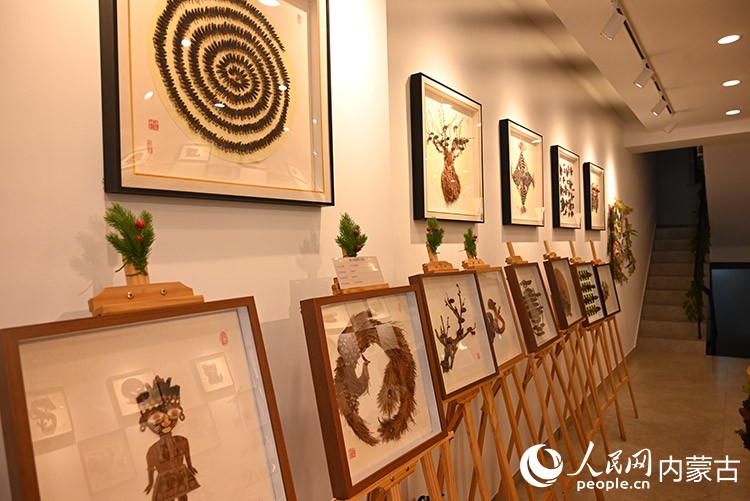
Photo shows pine cone paintings created by Fu Lihong displayed at the forest culture art museum she founded. (People's Daily Online/Liu Yilin)
Fu's father was a forestry worker. As a child, she often followed her father into the forest, where pine nuts were her favorite snack. Those childhood memories of running through the woods later became the inspiration for her creations.
Since the 1950s, Arxan has carried out large-scale afforestation efforts. Fu's father was among those who planted trees at the time. By 1992, the preserved area of Arxan's artificial forests had reached 1 million mu (about 66,667 hectares).
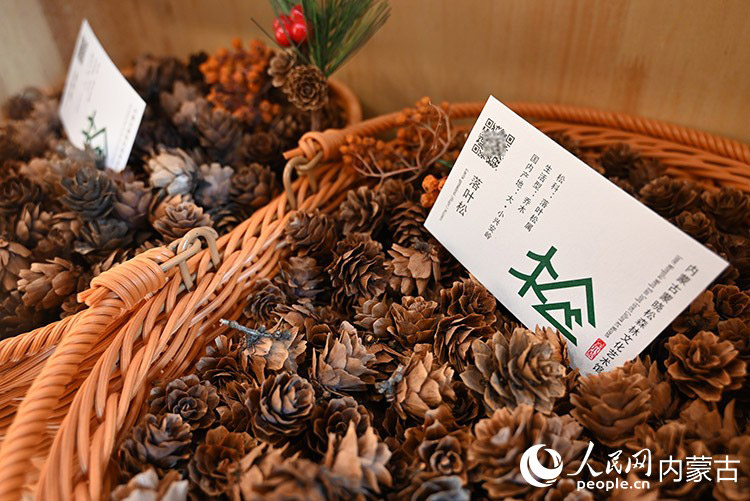
Materials used for making pine cone paintings are displayed at the art museum. (People's Daily Online/Liu Yilin)
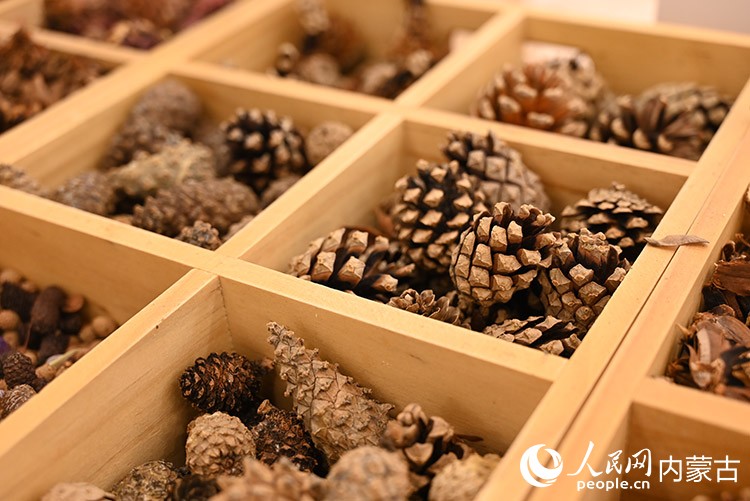
Materials used for making pine cone paintings are displayed at the art museum. (People's Daily Online/Liu Yilin)
Trees planted by previous generations now provide shade for those who follow. What others see as withered branches and fallen leaves have become treasures in Fu's hands.
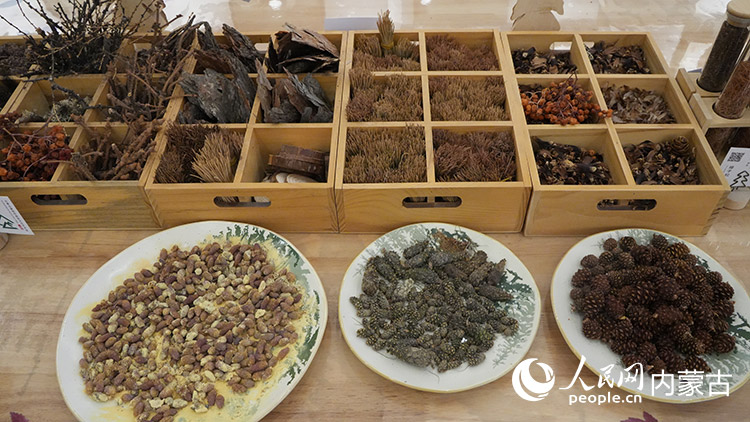
Materials used for making pine cone paintings are displayed at the art museum. (People's Daily Online/Zhang Liyang)
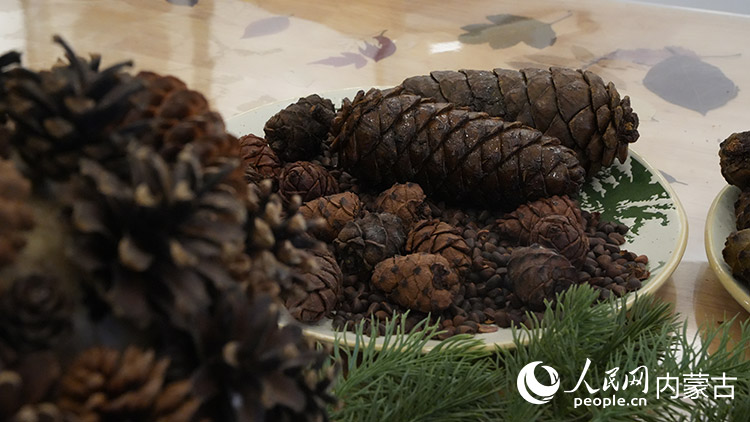
Materials used for making pine cone paintings are displayed at the art museum. (People's Daily Online/Zhang Liyang)
Over three years, Fu traveled through the forest across all four seasons, collecting large quantities of pine cones and leaves. After gathering nearly 1 million pine needles, she created a series of one-of-a-kind artworks. In 2021, Fu founded the Mengxiaosong Forest Culture Art Museum, the only museum in Inner Mongolia dedicated to pine tree culture.
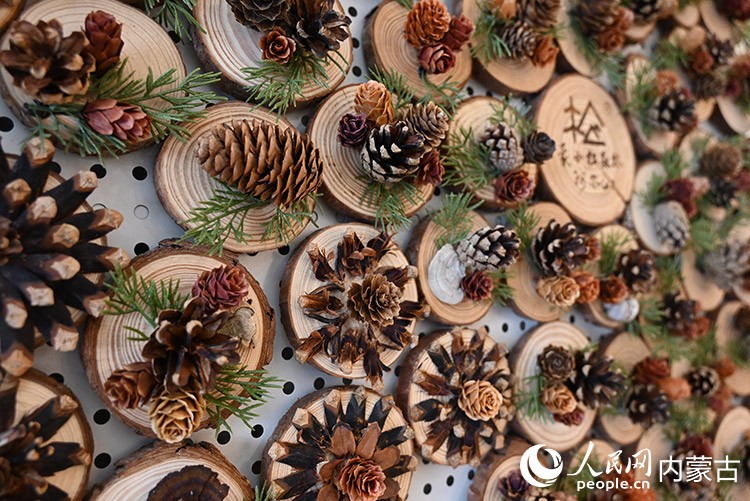
Photo shows pine cone creative cultural products displayed at the art museum. (People's Daily Online/Liu Yilin)
The museum is more than just an exhibition space: Fu developed an art course which takes children into the forest to learn about plants in the Greater Khingan Mountains before returning to the museum to create their own pine cone paintings. In 2024, the course was recognized as an outstanding study-tour program in Inner Mongolia Autonomous Region.
The museum has also created jobs for local residents. Fu hires forestry workers with spare time to collect pine cones and pine needles, which are then used in her creations. She is also training inheritors of the intangible cultural heritage craft, helping more people master the technique.
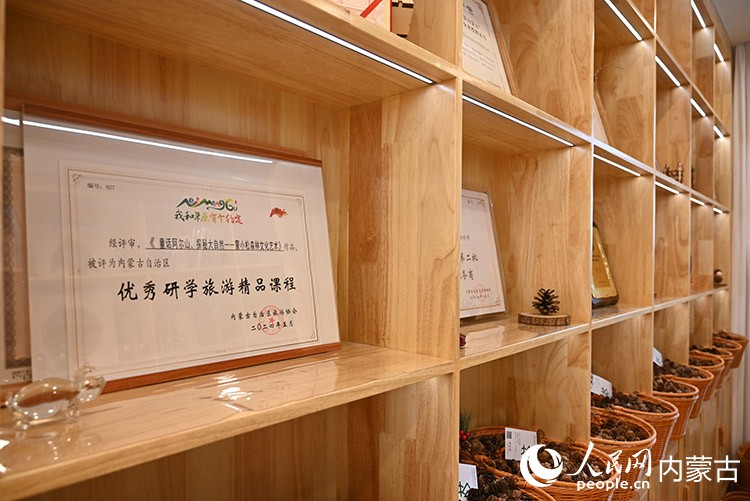
An art course, developed by Fu Lihong, which takes children into the forest to learn about plants in the Greater Khingan Mountains, is an outstanding study tour program in Inner Mongolia Autonomous Region. (People's Daily Online/Liu Yilin)
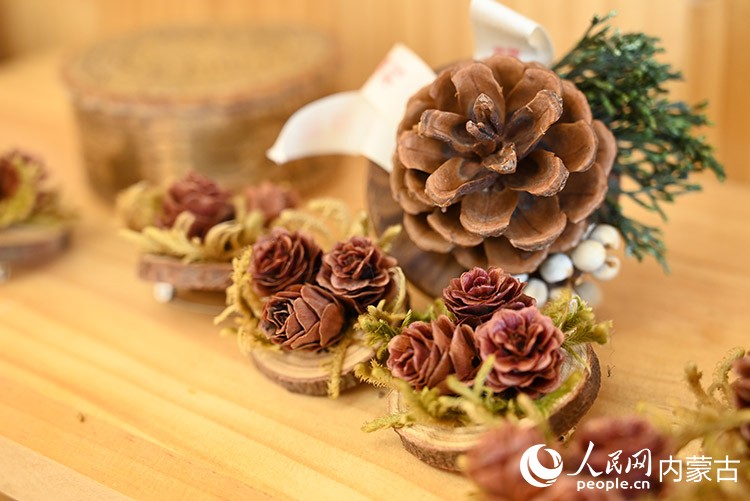
Photo shows pine cone creative cultural products displayed at the art museum. (People's Daily Online/Liu Yilin)
Photos


Related Stories
- 20-second journey from then to now: Arxan's one-million-mu planted forest
- How centuries-old rule sustains ancient cypress forest in China
- Chinese vice premier urges solid work to advance shelterbelt forest program
- Xiong'an New Area sees significant forest coverage growth
- China sees sustained progress in land greening
- China's forest, grass coverage rate surpasses 56 pct: report
- China averages 100 trees per person as nation accelerates greening efforts
- China takes lead in global reforestation efforts
- Saihanba secures "green pass" to international market
- Crimson splendor: the bald cypress forests of southern Anhui
Copyright © 2026 People's Daily Online. All Rights Reserved.
