



Xi's commitment to the people: Sci-tech self-reliance key to building great modern socialist country
Technology drives development, and innovation shapes the future.
In February this year, Chinese President Xi Jinping, also general secretary of the Communist Party of China (CPC) Central Committee and chairman of the Central Military Commission, made his first local inspection tour of 2026, the first year of China's 15th Five-Year Plan (2026-2030) period. Visiting a national information technology innovation park in Beijing, he once again stressed that self-reliance and strength in science and technology are the "key" in China's efforts to build a great modern socialist country.
To accelerate efforts to achieve high-level self-reliance and strength in science and technology, China must maintain the strategic resolve to run its own affairs well.
Amid profound changes unseen in a century that are reshaping the global landscape, scientific and technological innovation has become a key variable.
Xi has emphasized that self-reliance in science and technology is the foundation of national prosperity and the key to national security, and that China cannot ask for, buy or beg for core technologies in key fields.
By intensifying efforts to advance scientific and technological innovation, China will be able to keep the future of national development and progress firmly in its own hands.
In February 2023, during the third group study session of the Political Bureau of the CPC Central Committee on strengthening basic research, Xi called for greater policy support to promote the high-quality development of basic research.
In April this year, at a symposium on strengthening basic research, Xi urged greater efforts and more concrete measures to strengthen basic research, enhance China's capacity for original innovation, and further solidify the foundation for building the country's strength in science and technology.
Persistent efforts are essential because basic research is the origin of the entire scientific system and the master switch for all technological issues.
"Strengthening basic research is an urgent requirement for achieving greater self-reliance and strength in science and technology, and it is the only way to become a world leader in science and technology," Xi noted.
Since the beginning of the new era, Xi has made a series of major strategic arrangements to accelerate China's efforts to achieve high-level self-reliance and strength in science and technology.
The country has emerged as a major global hub of innovation, transforming itself from the "world's factory" into an "innovation laboratory" that has drawn worldwide attention.
By speeding up efforts to achieve high-level self-reliance and strength in science and technology, China has solidified the technological foundation for its new development paradigm.
In the spring of 2020, disruptions to global industrial and supply chains had a direct impact on China's domestic economic circulation.
At that critical moment, Xi pointed out that the conditions that supported a development model featuring large-scale flows of imports and exports had changed, and that new approaches to guiding development must be developed in response to the new circumstances.
This led to the formulation of the country's new development paradigm of "dual circulation," in which domestic and overseas markets reinforce each other with the domestic market as the mainstay.
The most essential feature of building a new development paradigm is achieving high-level self-reliance and self-improvement, according to Xi.
He stressed at a symposium in August 2020 that China must vigorously enhance its capacity for independent innovation and make breakthroughs in key core technologies as soon as possible. This, he noted, is a major issue affecting China's overall development and is also crucial to making domestic circulation the mainstay.
Domestic chip ecosystems are evolving faster, shield tunneling machines now have large-diameter main bearings, and breakthroughs have been made in key laser components. China has turned its list of "chokepoint" technologies into a list of challenges to overcome.
As external shocks become more pronounced, the far-reaching significance and strategic importance of building a new development paradigm based on China's evolving comparative advantages have become increasingly evident. Independent innovation enhances effective supply capacity, removes obstacles to economic circulation, and overcomes bottlenecks and constraints.
Accelerated efforts to achieve high-level self-reliance and strength in science and technology play a vital role in unleashing the strong momentum behind the development of new quality productive forces.
In January this year, while presiding over a group study session of the Political Bureau of the CPC Central Committee, Xi noted that the extent of scientific and technological breakthroughs largely determines the speed, breadth and depth of the development of future industries.
This clear-eyed assessment is rooted in profound consideration.
During the Political Bureau's 11th group study session on making solid progress in promoting high-quality development, which was held on Jan. 31, 2024, Xi pointed out that scientific and technological innovation can generate new industries, new models and new momentum, and is the core element for developing new quality productive forces.
Xi has frequently visited the front lines of scientific and technological innovation, from research institutions and laboratories to factory workshops and production lines, offering guidance and pointing out directions for future development.
In May 2020, during an inspection visit to Shanxi Taigang Stainless Steel Precision Strip Co., Ltd. in north China's Shanxi Province, Xi praised the company's "hand-tearable steel," saying, "The workmanship is indeed excellent. With all the thinness of tinfoil, this tempered steel is pliable enough to wrap around your finger."
In May 2025, during a visit to Luoyang Bearing Group Co., Ltd. in central China's Henan Province, Xi stressed that modern manufacturing relies on sci-tech empowerment, calling for greater efforts in the quest for core technological breakthroughs and pursuit of a path of independent innovation.
In March this year, during the "two sessions," China's annual sessions of its top legislature and political advisory body, Xi emphasized the importance of the integrated development of education, science and technology, and talent. New approaches should be explored to promote the integration of the innovation, industrial, capital and talent chains, and to accelerate the efficient commercialization and application of sci-tech achievements, he said.
Since the beginning of the new era, under the strong leadership of the CPC Central Committee with Comrade Xi Jinping at its core, every strategic deployment made by the country has enabled it to gain the initiative for future development and keep pace with the times, ushering the country into a period of rapid advances in scientific and technological innovation.
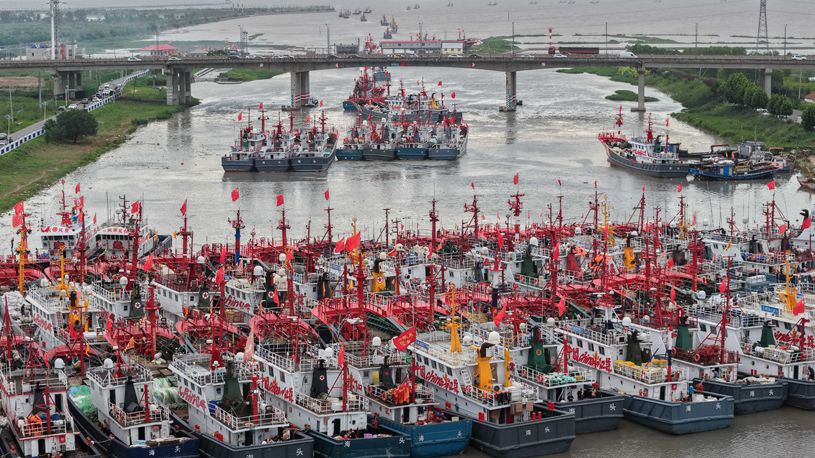
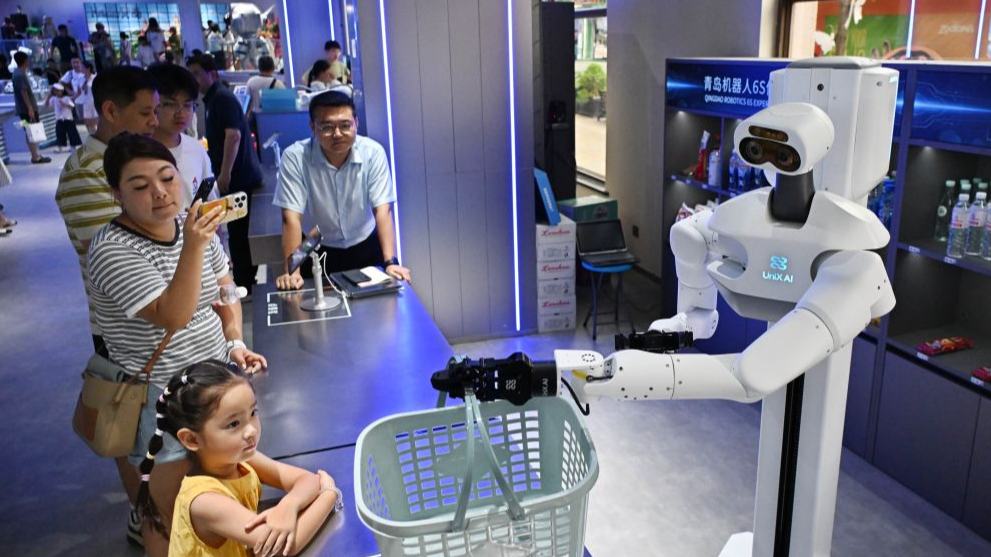
Traditional industries such as steel, textiles and mining are undergoing transformation and upgrading, emerging industries including new energy vehicles, photovoltaics and lithium batteries are taking the lead globally, and future industries such as embodied intelligence, quantum computing and biomanufacturing are beginning to take root. Together, they show the robust momentum of industrial innovation.
High-level self-reliance and strength in science and technology provide strategic support for China's high-quality development. As Xi said, powerful technologies are a necessity for China if it wants to become stronger and create a better life for its people.
With firm confidence and unremitting efforts, China will create new achievements on its journey toward building a great modern socialist country in all respects.
Photos


Related Stories
Copyright © 2026 People's Daily Online. All Rights Reserved.
