



China's desert-control expertise contributes to solutions for a global challenge
YINCHUAN, Aug. 3 (Xinhua) -- As desertification threatens ecosystems and livelihoods across many parts of the world, China's experience in combating advancing sands is offering new insights to countries seeking to restore degraded land.
Surrounded by deserts on three sides, Ningxia Hui Autonomous Region in northwest China has spent decades battling desertification. Decades of desert-control efforts have transformed the once sand-threatened region into a model of ecological restoration. Today, those practices are helping regions beyond China's borders tackle similar challenges.
Established in 2025, the China-Central Asia desertification prevention and control cooperation center, based in Ningxia, serves as a platform for technical exchanges, joint research and pilot projects, helping connect China's experience with the ecological conditions and development needs of partner nations.
Among the techniques attracting international attention is the straw checkerboard, a method developed and widely applied in China in which straw is arranged in a grid pattern and partially buried in shifting sand to stabilize dunes and create conditions for vegetation growth.
Yet Chinese experts emphasize that there is no one-size-fits-all approach to desertification control. "Whether an approach works depends on local conditions," said Huang Wei, deputy director of the cooperation center and a senior engineer.
Huang said that, while integrated windbreak and sand-fixation techniques have been tested and refined through decades of practice in Ningxia, they must be adapted to the unique ecological conditions, governance capacities and development priorities of each partner country.
During an anti-desertification workshop held last month in Dushanbe, Tajikistan, Huang tailored the curriculum to address the country's mountainous terrain and severe soil erosion, adding sessions on mountain afforestation, soil conservation, forest pest management and wildfire prevention.
The same demand-driven approach underpins the center's pilot projects now under development, including an urban green-space demonstration zone in Uzbekistan, a seedling propagation base in Kyrgyzstan, and a program involving smart greenhouses in Kazakhstan.
Cooperation also extends beyond technologies themselves. According to Deng Xue, who oversees training and exchanges at the cooperation center, the center organizes exchange and training programs that bring together technical experts, scholars and policymakers from partner countries, fostering dialogue and helping translate field experience into long-term ecological planning and cooperation.
Gulom Bekmirzaev, a professor at Uzbekistan's Green University specializing in desertification control and desert economy studies, has attended several training programs in China. He hopes to organize similar programs in Uzbekistan so that more people can benefit from shared experience.
Over the years, China, as one of the earliest signatories to the United Nations Convention to Combat Desertification, has shared its desertification-control technologies and expertise with partners across Asia, Africa and the Middle East through international cooperation and capacity-building programs.
The latest example came in late July, when a three-week training program opened in Yinchuan, the regional capital, bringing together 34 ecological experts and officials from Iraq, Jordan, Tunisia and three other Arab countries.
"We are here to explore how China's experience can be adapted to our own conditions," said Saifeddine Eturki, a researcher at Tunisia's Arid Regions Institute.
China's desert-control experience has also provided insights that benefit ecological restoration efforts in other parts of the world. In Saudi Arabia, China's integration of photovoltaic development with desert restoration has offered new ideas for balancing renewable energy development and land rehabilitation. Lessons from China's Three-North Shelterbelt Forest Program have also been shared to support the Great Green Wall Initiative on the African continent.
"Sandstorms know no borders," said Feng Zhanwen, director of the cooperation center. "Sharing experience and solutions is essential as countries work together to address this common challenge." Enditem
(Mao Junling, Jiang Siyu, Liu Yinian, Chang Keyan, Zheng Zihang, Xu Jiayuan, Chen Xueying, Ma Yibin and Zhang Ziyang also contributed to the story.)
Photos
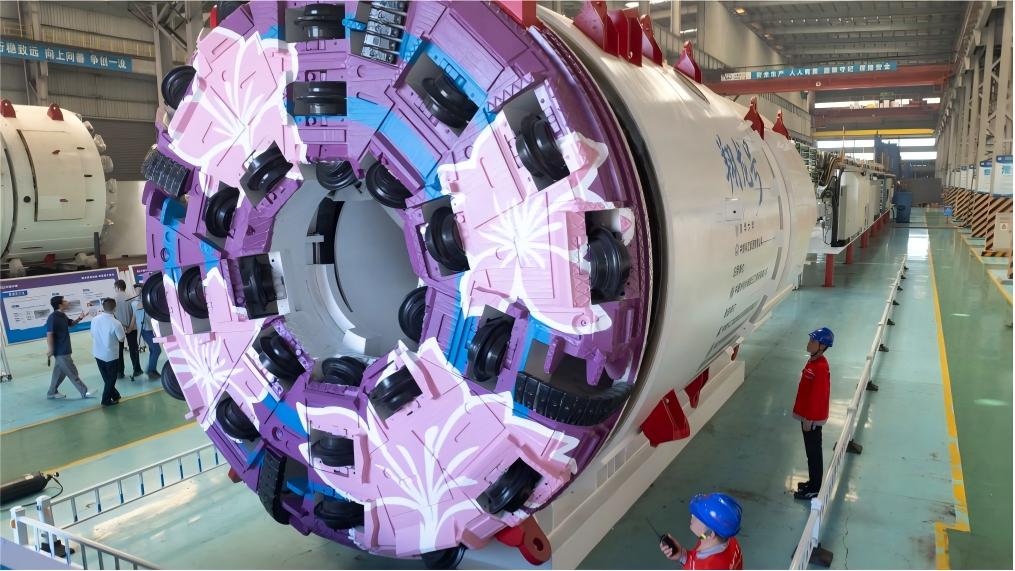 China's first boring and blasting machine rolls off production line in Wuhan, China's Hubei
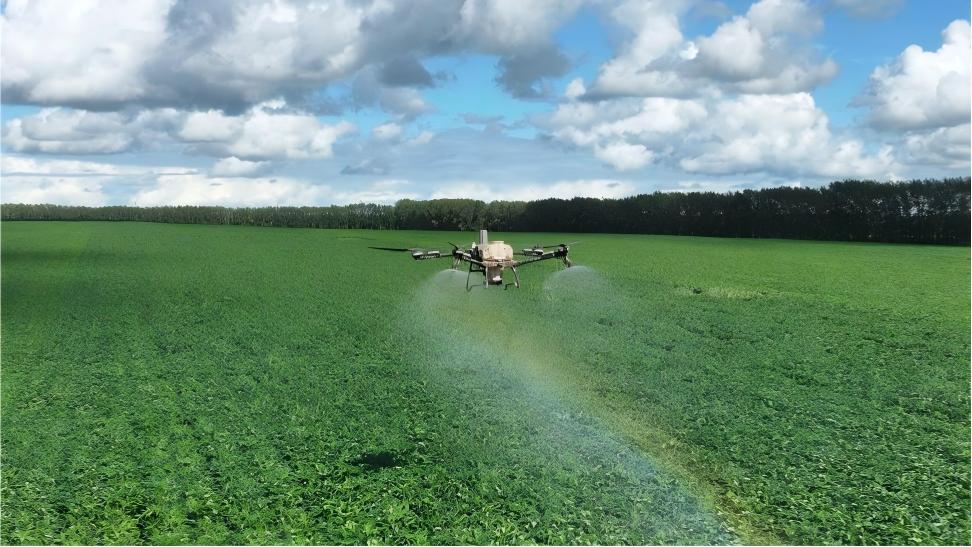 Aerial crop protection operations launched in fields of NE China's Heilongjiang
 Parade celebrating intangible cultural heritage held in Yushu, NW China's Qinghai
 In pics: Beautiful scenery in the Qilian Mountains
Related Stories
- Chinese desert fighter reunites online with U.S. donor after 27 years to see forest grown from his support
- New study proposes scientific basis for improving concrete reinforcement in desert environments
- China expands green belt around its largest desert
- China desert turns green via 25 years of youth-led efforts
- Inner Mongolia in north China controls desert area equal to 2.7 Beijings in five years
- Where sand once blew, apple harvest in full swing
- "Desert ginseng" anchors sand, new economy in north China
- A story of symbiosis that stills spread of dust bowl
- Straw checkerboards push back desert in Zhongwei, NW China's Ningxia
- Progress made holding back desert
Copyright © 2026 People's Daily Online. All Rights Reserved.
