



Stability seen amid shift in growth drivers
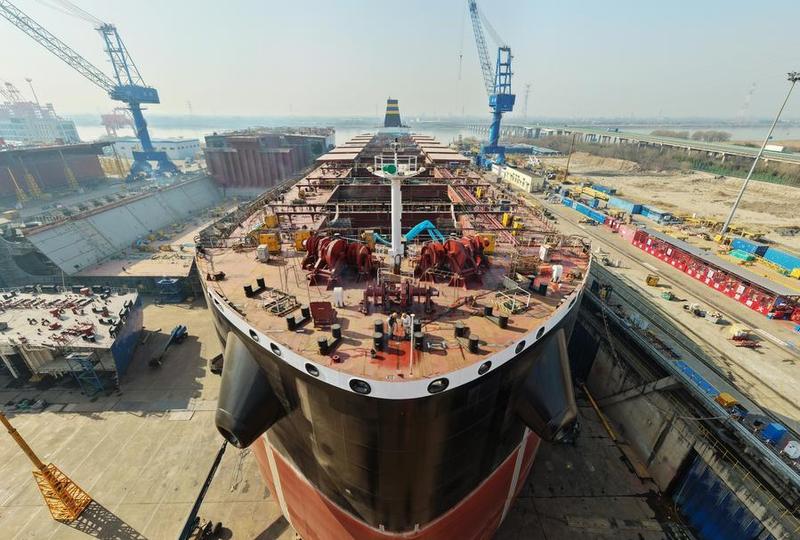
A drone photo taken on Jan 13, 2026 shows a ship under construction at a shipyard of Cosco Shipping Heavy Industry (Yangzhou) Co Ltd in Yangzhou, East China's Jiangsu province. [Photo/Xinhua]
China's economic growth is expected to further stabilize in the second half of the year, as policymakers step up efforts to address structural challenges arising from the transition in growth drivers while strengthening support for domestic demand, experts and executives said.
The comments came after a meeting on Thursday of the Political Bureau of the Communist Party of China Central Committee, presided over by Xi Jinping, general secretary of the CPC Central Committee. The meeting called for efforts to accelerate the transition from old growth drivers to new ones and effectively implement a more proactive fiscal policy and an appropriately accommodative monetary policy.
Economists said the meeting addressed a major challenge facing China's economy, as rapidly expanding new industries have yet to fully offset the slowdown in traditional sectors, insufficient domestic demand and growing structural divergence.
Policy focus should not only be on stepping up macro policy stimulus and accelerating investment in emerging industries and industrial upgrading, but also on bolstering employment and income to foster broader growth, they added.
Zhu Feng, China chief economist at JPMorgan, said that growth momentum in the third and fourth quarters will likely improve from the second one, but divergence could persist amid the transition from old to new growth drivers.
New growth engines, led by artificial intelligence and the smart economy, are likely to continue buoying related investment, high-tech manufacturing and some export sectors, while domestic demand, real estate, private investment and durable goods consumption still need time to recover, Zhu said.
China's economy expanded 4.7 percent year-on-year in the first half, driven by resilient exports and industrial output as high-tech manufacturing sectors benefited from a global wave of AI-related capital expenditure. By comparison, retail sales remained subdued, while fixed-asset investment contracted.
GDP growth weakened to 4.3 percent in the April-June period. In July, the official manufacturing purchasing managers index fell to 49.2, the National Bureau of Statistics said, indicating that falling market demand has caused factory activity to contract for the first time in five months.
"The key to meeting the annual growth target lies in accelerating fiscal policy implementation and, if necessary, introducing incremental fiscal measures, while better translating policy resources into growth in household employment and income, thereby boosting consumption and private investment," Zhu said.
The meeting on Thursday said that pragmatic and effective incremental policies will be introduced in a timely manner, and it called for intensified efforts to effectively safeguard and improve people's well-being.
The People's Bank of China, the country's central bank, pledged at a meeting on Saturday to comprehensively utilize monetary policy tools and make timely adjustments to keep ample liquidity.
Yin Yanlin, deputy director of the Committee on Economic Affairs of the 14th National Committee of the Chinese People's Political Consultative Conference, said additional treasury bond issuance should be considered when necessary, and monetary policy should cut the reserve requirement ratio and interest rates at a proper time as imported inflation pressure eases.
Ming Ming, chief economist at CITIC Securities, said an 800 billion yuan ($118.5 billion) policy-based financial tool is likely to ramp up support for new types of infrastructure, including synergy between computing and electricity networks.
According to the National Development and Reform Commission, investment in computing network infrastructure in China could reach 4 trillion yuan during the 15th Five-Year Plan (2026-30) period. It also said that new growth drivers, including high-end manufacturing, the digital economy and modern services, had contributed more than 40 percent of economic growth in the first half of this year.
Such momentum is underpinning international institutions' confidence in China's economic transition. Moody's Ratings said in a commentary that credit conditions in China are expected to remain stable in the second half as fiscal and monetary support, strong exports and technological advances offset weak domestic demand.
Goldman Sachs has forecast that China's economy will grow 4.6 percent this year, within the annual target range of 4.5 to 5 percent.
Wang Keju contributed to this story.
Photos
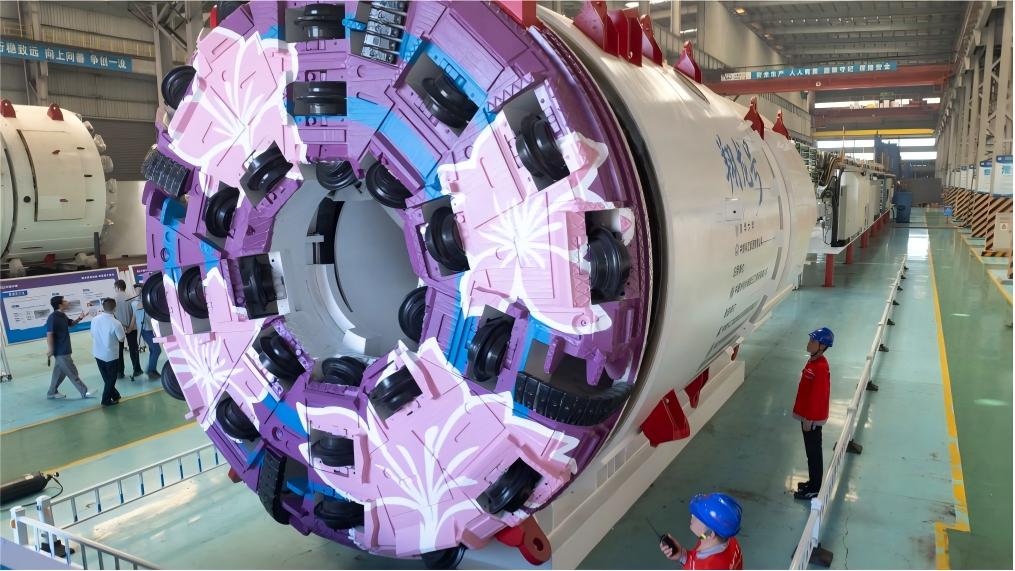 China's first boring and blasting machine rolls off production line in Wuhan, China's Hubei
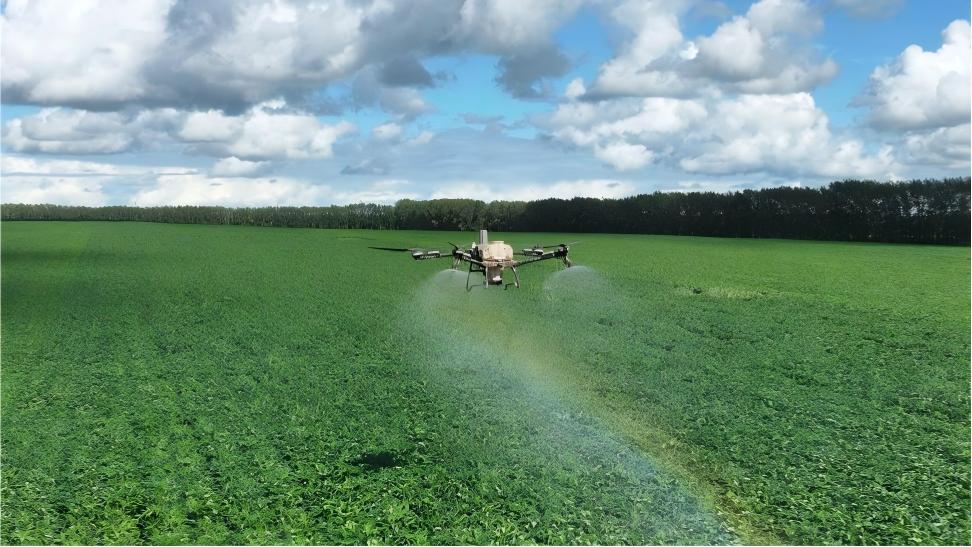 Aerial crop protection operations launched in fields of NE China's Heilongjiang
 Parade celebrating intangible cultural heritage held in Yushu, NW China's Qinghai
 In pics: Beautiful scenery in the Qilian Mountains
Related Stories
- China's long-termism is built on constant reform, not fixed blueprint
- Spring forums signal certainty, stability
- China always a force for peace, stability, progress: spokesperson
- China will remain staunch force for peace, stability, progress of world
- Experts optimistic on overall price stability this year
- Chinese envoy calls for int'l support for West Africa, Sahel
- Draft law on financial stability targets risk
- Commentary: China is a consistent stabilizing force in a changing world
- China expected to play growing role in global development, stability
- China urges relevant countries not to disrupt regional peace, stability
Copyright © 2026 People's Daily Online. All Rights Reserved.
