



Bread fuels a 30-billion-yuan industry in Zixi, E China's Jiangxi

Photo shows Zixi county, Fuzhou, east China's Jiangxi Province. (Photo courtesy of the media convergence center of Fuzhou)
You've probably never been to Zixi county, Fuzhou city, east China's Jiangxi Province, but chances are that, if you've spent much time in China, you've eaten bread made by a baker from Zixi.
Across China, many well-known bakery brands trace their roots to Zixi. Some Zixi natives run bakeries, others develop products, manage supply chains, operate central kitchens or have even taken their brands overseas.
This small mountainous county has fewer than 100,000 permanent residents and a forest coverage rate of 87.7 percent. Rolling green mountains stretch as far as the eye can see. What you won't find are vast wheat fields.
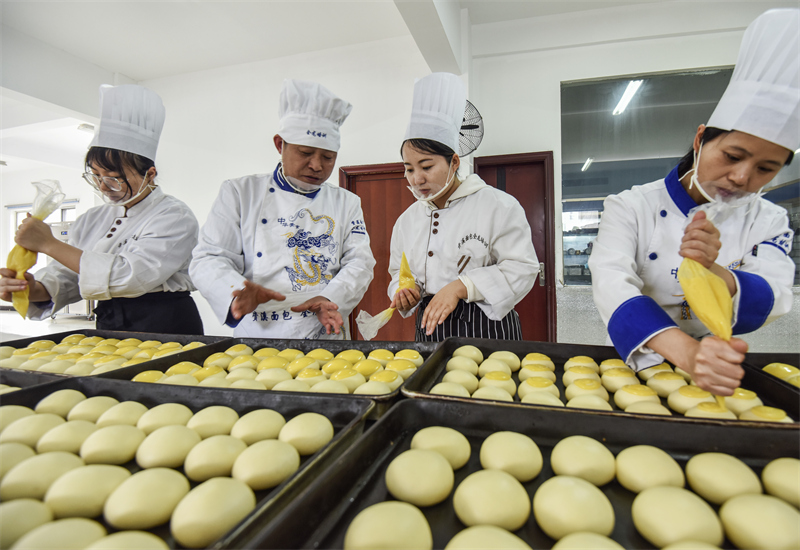
A baking training session is held in Zixi county, Fuzhou, east China's Jiangxi Province. (Photo courtesy of the media convergence center of Fuzhou)
Yet this county, which produces virtually no wheat, has built a nationally renowned bread industry. Over the past 39 years, the aroma that first drifted from a neighborhood bakery has spread to more than 1,000 cities across China, giving rise to an industry worth over 30 billion yuan (about $4.43 billion).
In the 1980s, Zixi native Zhang Xiewang learned the art of breadmaking. After returning home and launching a successful business, he didn't keep the craft to himself. Instead, he taught fellow villagers, trained apprentices and helped aspiring entrepreneurs open their own bakeries.
As more Zixi residents ventured beyond the mountains, Zixi bakeries took root across the country. Before long, it wasn't uncommon to find several bakeries on the same street all owned by people from Zixi.
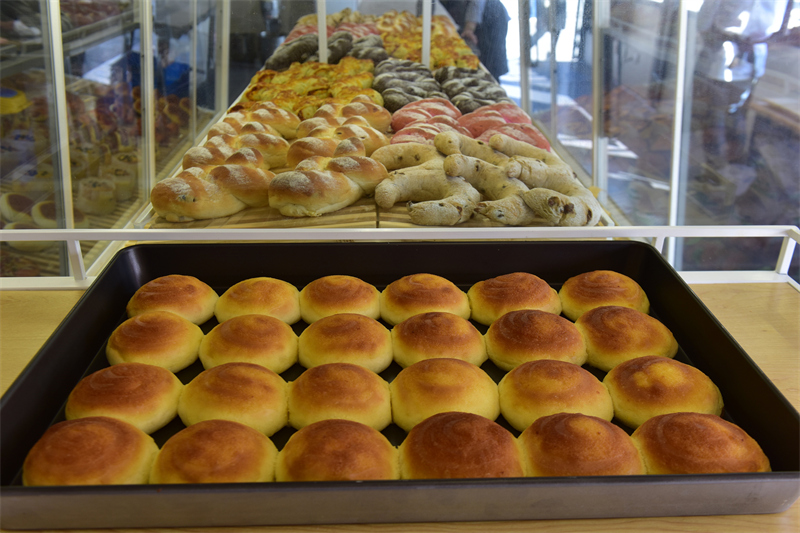
Photo shows freshly baked bread in Zixi county, Fuzhou, east China's Jiangxi Province. (Photo courtesy of the media convergence center of Fuzhou)
But Zixi entrepreneurs soon realized that owning bakeries alone wasn't enough. The raw materials came from elsewhere, the factories were elsewhere, and the brands belonged to others. Zixi had become known for exporting bakery owners rather than building an industry of its own. As the business grew, little of the industry's value stayed in the county.
Zixi's answer was simple: bring the industry home. It established China's first county-level bakery industry association, launched the "Zixi Bread" regional public brand, founded a bakery technology development company, and built the country's first bakery industrial park.
Today, the bakery industrial park in Zixi is home to a complete modern baking supply chain. Businesses producing premixed flour, cream, jam, meat floss, chocolate and frozen dough operate alongside central kitchens, R&D and training centers, cold-chain logistics and brand management services.
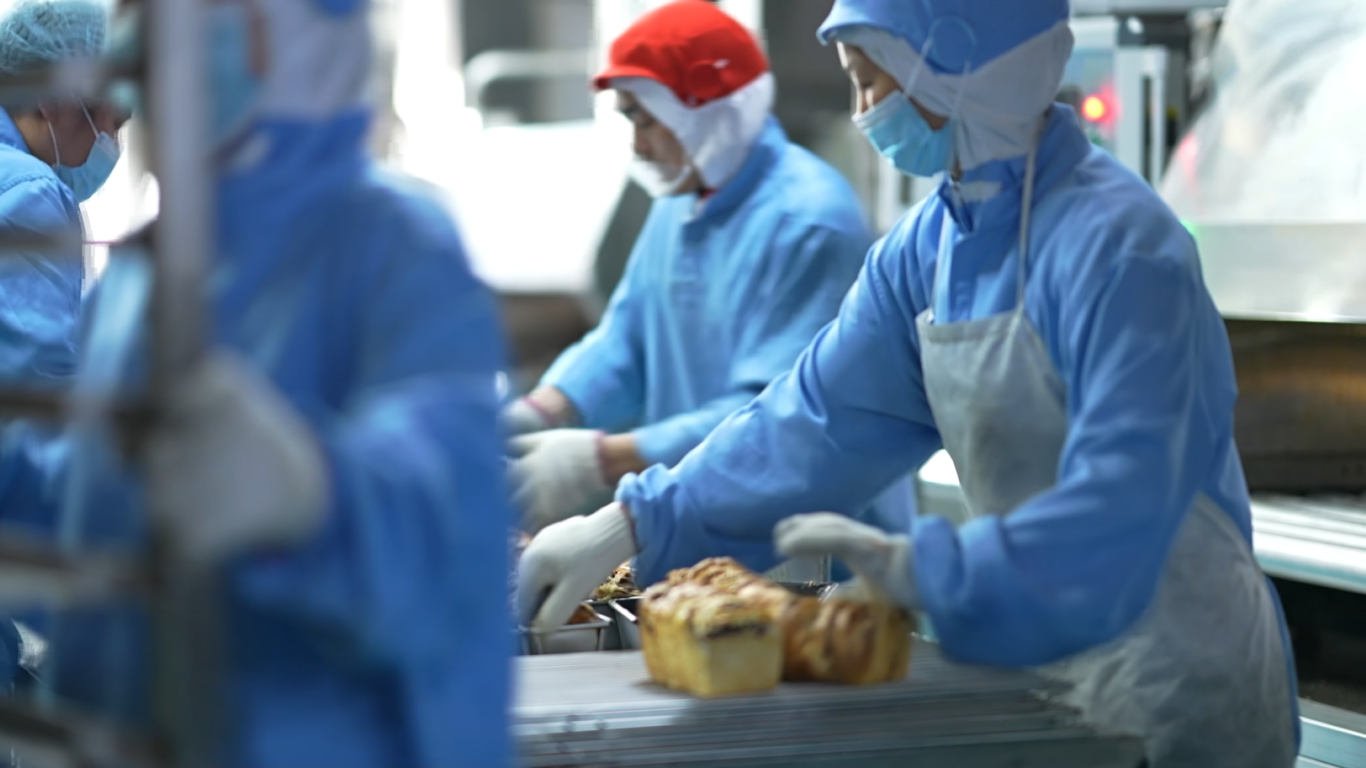
Workers make bread in Zixi county, Fuzhou, east China's Jiangxi Province. (Photo courtesy of the media convergence center of Fuzhou)
The industrial park now hosts 21 companies and produces more than 1,300 products. It has built a fully integrated supply chain covering raw materials, manufacturing, logistics and distribution, and retail, supplying bakeries within a 300-kilometer radius.
In the past, many Zixi entrepreneurs built brands for others. Today, Zixi is building brands of its own. The "Zixi Bread" regional public brand continues to grow, while more bakeries are adopting standardized, branded and professional operations, shifting from selling bread to building brands.
As the industry grows, so does the need for skilled workers. Zixi established a bakery academy and introduced a school-enterprise training model. Young people, military veterans and people with disabilities can all receive professional baking training before moving on to internships and jobs at bakeries across the country. The county has also introduced a loan program, offering interest-free loans of up to 500,000 yuan to help aspiring entrepreneurs open their own bakeries.
Photos

Related Stories
Copyright © 2026 People's Daily Online. All Rights Reserved.
