



Mother and sons dedicated to protection of red deer
In Riwoche county, Qamdo, southwest China's Xizang Autonomous Region, dawn breaks over the Nadengtong Pasture. A long, familiar call echoes across the grassland. In the morning mist, Rinchen Tsephel cups his hands around his mouth. From deep within the woods, the gentle calls of red deer drift through the fog as several brown-gray figures emerge, trot over, and nuzzle his arms.
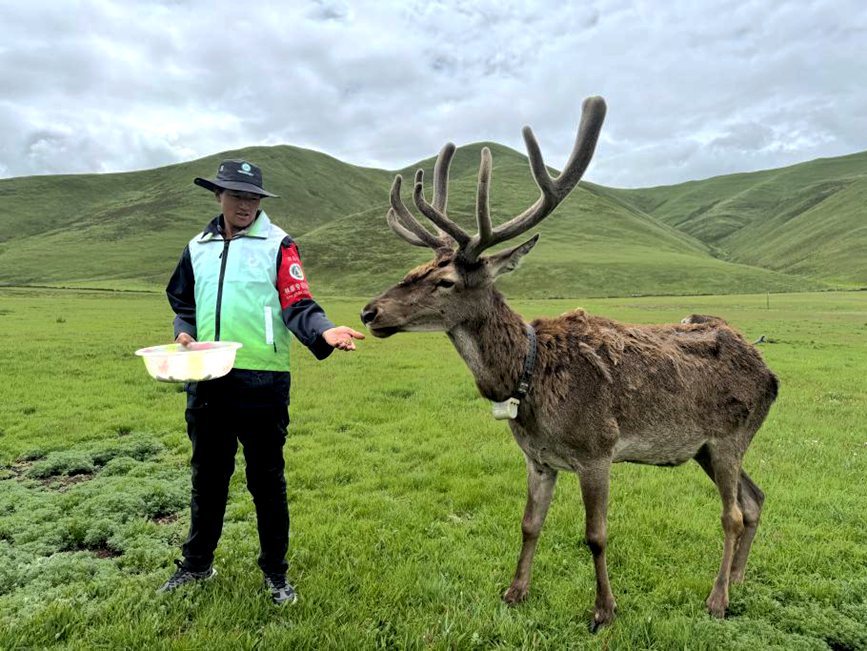
Rinchen Tsephel feeds a red deer. (Photo/Luo Yuxin)
Walking along a mountain path wet with dew, Rinchen Tsephel points to an old wooden cabin in the distance. In the winter of 1970, his mother, Changchub Lhamo, brought home three fawns that were frozen and barely alive. No one believed wild deer could be raised by people, but the determined Tibetan woman never gave up. She fed them yak milk spoon by spoon and held them close at night to keep them warm. The fawns gradually grew up and came to see the family as home.
Changchub Lhamo, who had only attended primary school for two years, joined the Communist Party of China (CPC) in 1974. When the Riwoche Red Deer Nature Reserve was established in 1993, she became a caretaker there. When asked why she chose a job with no official position and little financial support, she replied: "I know every one of them. I know which one is pregnant and which one is sick. They are not just animals; they are my 'children.'"
In early spring 2008, heavy snowstorms sealed off the mountains, covering the pasture in deep snow. Changchub Lhamo organized her family and neighbors to load hay onto yaks and trek through the snow to feed the deer.
Despite repeated pleas from others to turn back, she said: "The deer on the mountain are still hungry. I can't leave. When they are in trouble, we cannot abandon them." When they reached the feeding site, the trembling deer stood up and licked her frost-cracked hands.
After 15 years caring for the deer, Rinchen Tsephel can now identify each one by its markings and body shape.
In August 2024, Changchub Lhamo passed away at the age of 69. In her final moments, she called her two sons to her side and left them with one reminder: "Don't forget to prepare more salt for winter." Salt is vital for the deer to survive the cold season.
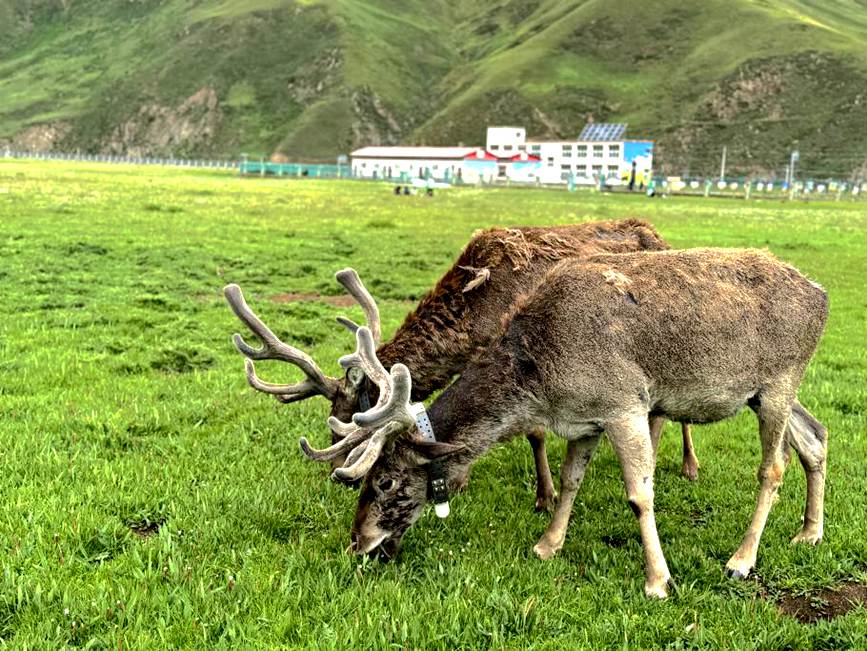
Photo shows red deer at the Riwoche Red Deer Nature Reserve in Riwoche county, Qamdo, southwest China's Xizang Autonomous Region. (Photo/Luo Yuxin)
Today, the two brothers have taken up their mother's backpack and whistle. Over the years, the red deer population in Riwoche has grown from about 500 when the reserve was established to more than 8,000, with over 90 percent now living within the protected area.
Photos




Copyright © 2026 People's Daily Online. All Rights Reserved.
