



Commentary: Jointly advancing sound, safe, orderly AI development for human well-being
SHANGHAI, July 16 (Xinhua) -- As artificial intelligence develops at an unprecedented pace, the 2026 World AI Conference (WAIC) & High-Level Meeting on Global AI Governance is poised to be a milestone event, championing the sound, safe, and orderly advancement of AI to serve global development and human well-being.
Chinese President Xi Jinping will attend the opening ceremony of the conference in Shanghai, scheduled from July 17 to 20, and deliver a keynote speech, in which he will systemically elaborate on China's policies, position, visions and propositions regarding AI development and governance.
AI is a strategic technology driving a new round of technological revolution and industrial transformation. It is profoundly reshaping humanity's modes of production and daily life. Today, a surge of breakthroughs in AI innovation presents the international community with both immense opportunities and complex challenges. Consequently, global AI governance has emerged as a universal imperative that bears upon the shared future of all nations.
China upholds a people-centered approach and the principle of AI for good and for all. It attaches great importance to AI development and governance. Capitalizing on its abundant data resources, comprehensive industrial ecosystem, vast application scenarios, and immense market potential, China is actively deepening AI technological integration with industrial innovation. This has fostered and expanded smart industries, empowering high-quality development and improving the quality of life for its people.
In recent years, China has made systematic and comprehensive progress in AI capabilities. The country's large models, intelligent agents, and AI chips are undergoing accelerated iteration, with several major models reaching new performance milestones and embodied intelligence starting large-scale commercial application. In 2025, China's core AI industry, comprising over 6,200 enterprises, surpassed 1.2 trillion yuan (176.7 billion U.S. dollars) in scale. Notably, the country's annual output of humanoid robots is projected to exceed 100,000 units this year.
China has also engaged extensively in international cooperation to ensure that the dividends of intelligent development benefit people worldwide. Through its Global AI Governance Initiative, China calls on all countries to collaborate on risk prevention and the development of governance frameworks, norms, and standards based on broad consensus. This ensures that AI technologies are more secure, reliable, controllable, and equitable. China has consistently striven to provide global public goods in the AI sector, vigorously nurturing open-source ecosystems and promoting the global sharing of technological progress.
To bridge the AI and digital divides and ensure equitable benefits for the Global South, China has launched and implemented the AI Capacity-Building Action Plan for Good and for All. A prime example is China's AI-powered MAZU early warning system, now used by over 40 countries to better anticipate and respond to extreme weather events.
AI should serve as an international public good for the benefit of all humanity. It should not be reduced to a game dictated by a few wealthy countries or a tool for maintaining technological hegemony. Attempts to obstruct other countries' AI development through exclusive blocs or supply chain disruptions will only harm this burgeoning sector and should be opposed.
Global AI development now stands at a crucial crossroads. It is imperative to uphold the people-centered, AI-for-good principle, balance development with security, and practice multilateralism. The goal is to build a global AI governance system rooted in broad consensus, steering AI toward a beneficial, secure, and fair trajectory, and ensuring it better serves all of humanity.
For eight consecutive years, China has hosted the WAIC as a key platform to accelerate AI development. This year's conference, themed "AI Partnership for a Brighter Future," is expected to pool new wisdom for developing open, fair, and efficient AI governance mechanisms. It will mark a milestone in this era-defining field.
Photos
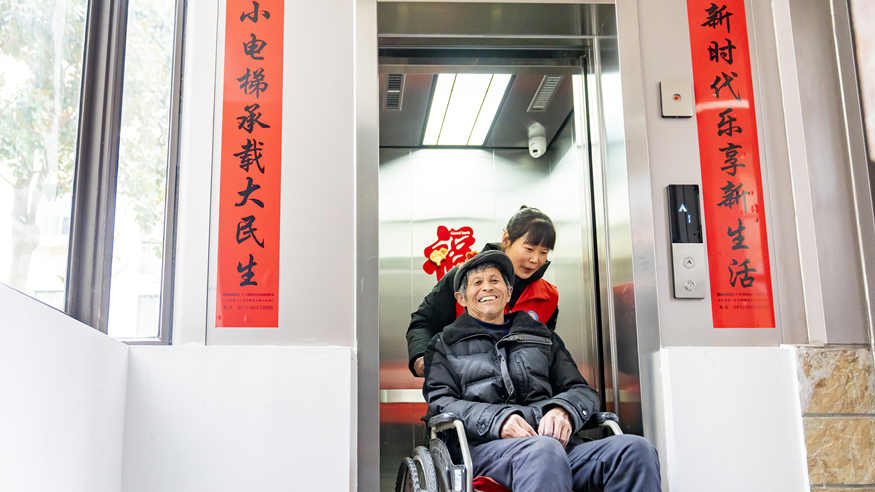 China steps up renewal of old urban residential compounds
 Night market of Xishuangbanna sees surge in visitor arrivals during summer peak tourism season
 Pulu weaving tradition thrives in Kyimxi township, SW China's Xizang
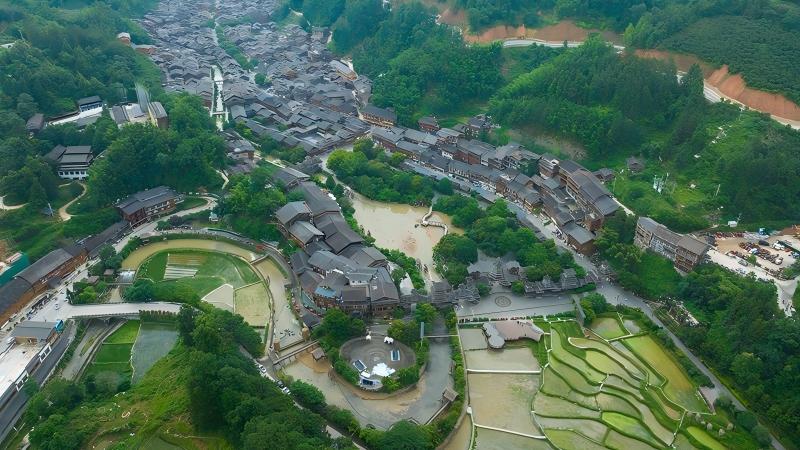 Intangible cultural heritage breathes new life into Dong village in SW China's Guizhou
Related Stories
- China's AI advances can benefit people worldwide: Australian scientist
- AI emerges as new growth engine for China's industries
- China introduces rules to rein in AI companion bots amid emotional dependency concerns
- Shanghai enters "AI moment" with upcoming 2026 World AI Conference
- Beyond Sputnik: what truly defines the DeepSeek Moment
Copyright © 2026 People's Daily Online. All Rights Reserved.
