



Traditional ceramics find new possibilities in fashion and trends
In Jingdezhen, east China's Jiangxi Province, ceramics blend tradition with modernity, taking on countless forms and offering a window into an industry that is growing more innovative and driving toward high-quality development.
Jingdezhen's ceramic industry reached a milestone in 2025 with total output value reaching 102.7 billion yuan ($15.1 billion), up 9.3 percent.
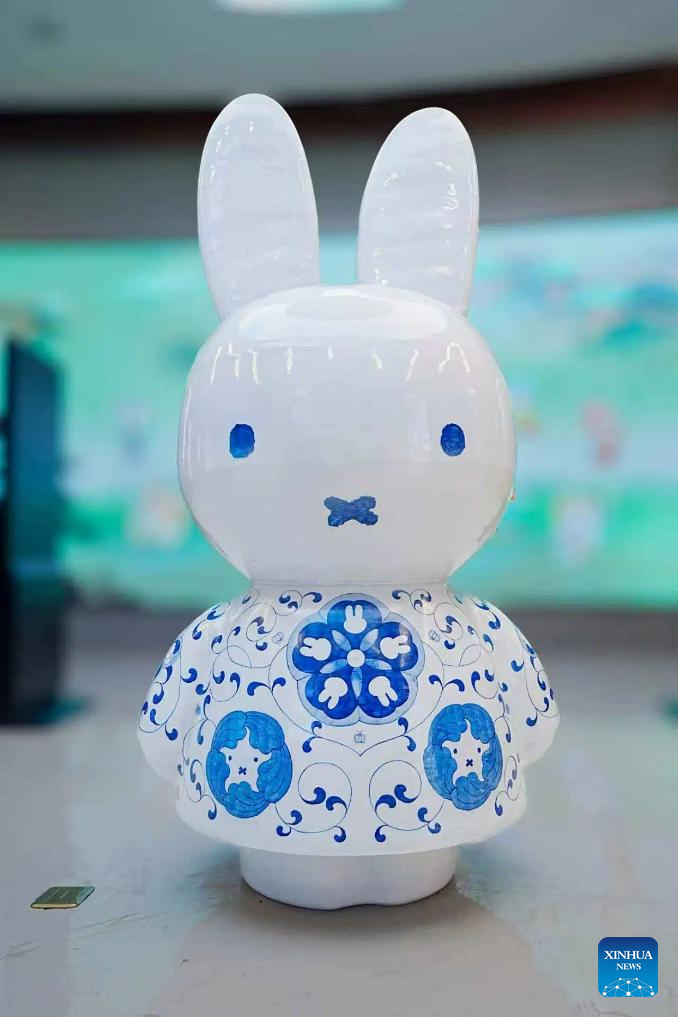
This photo taken on May 8, 2026 shows a ceramic toy co-branded with Miffy in Jingdezhen, east China's Jiangxi Province. (Xinhua)
One of the most notable changes is how traditional ceramics have evolved from exquisite handicrafts into culturally inspired lifestyle products and trendy collectibles with strong market appeal, attracting a wider and more diverse consumer base.
Among those bringing new possibilities to Jingdezhen ceramics are a growing community of young people who have moved to the city to pursue their dreams.
Wang Xu, born in the 1990s, is one of them. After earning her master's degree in 2024, she chose to stay in Jingdezhen and founded Mengzheng Handmade Studio.
For Wang, innovation is not only about creating distinctive shapes but also about refining craftsmanship and aesthetics.
"Recently, we combined sterling silver with ceramic jewelry, and the products have been warmly received by consumers. Since the launch, our monthly revenue has nearly doubled," she said.
In a trendy toy market, a ceramic version of Pop Mart's flagship IP Molly has become a striking example of how ceramics can merge with pop culture. The ceramic Molly figure sold out 40,000 sets just two seconds after launch. A limited-edition version featuring Jingdezhen's traditional carved decoration technique was limited to 199 pieces worldwide and sold out immediately.
Chentian Ceramics, Pop Mart's only ceramic collaboration partner, has also received customized orders from other popular IPs. According to Xu Wan, the company's general manager, its annual output value is expected to exceed 50 million yuan this year.
At Jingde Xianyunju Ceramic Culture Co., Ltd., a Möbius cup co-developed with renowned British designer Robin Levien has become a bestseller, winning customers over with its flowing lines and minimalist aesthetic. Since its launch in July 2024, the product has generated more than 7 million yuan in sales.
At the production facility of Micro Ceramic Technology (Jiangxi) Co., Ltd., industrial-grade ceramic 3D printers are constantly at work. As an innovative company specializing in ceramic 3D printing and intelligent manufacturing, the company uses advanced materials and new production techniques to overcome the limitations of traditional ceramic design and manufacturing.
Fang Tao, head of the company, said the technology excels in producing complex structures. With only a digital design file, operators can print ceramic forms directly, significantly lowering the barrier to customized production. The technology has broad market potential in areas such as decorative tiles, high-end home furnishings, and precision ceramic components.
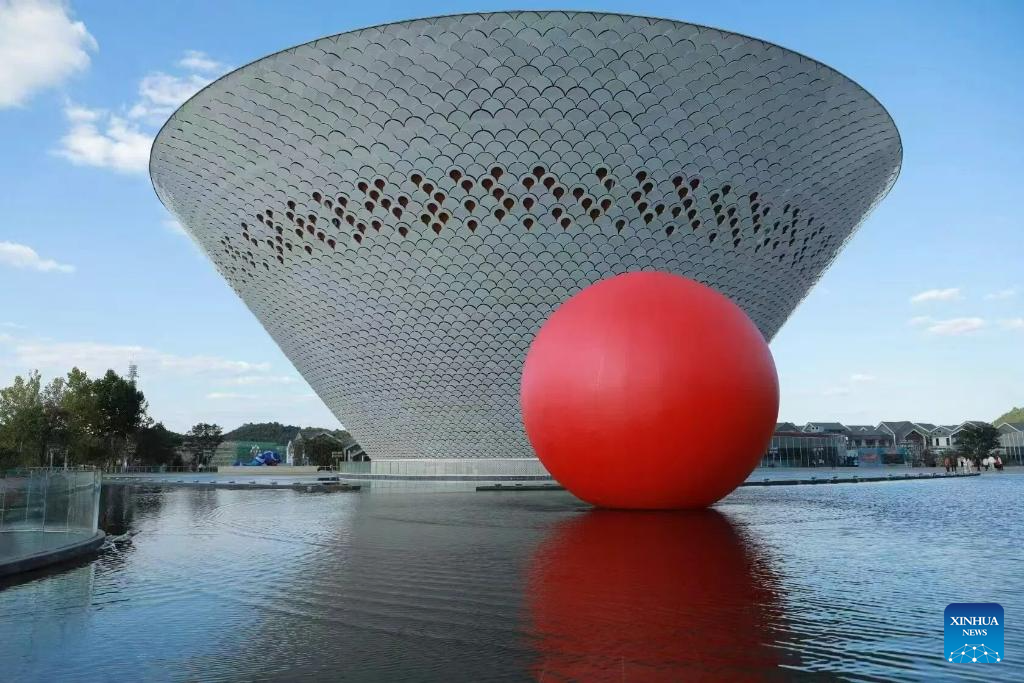
This photo taken on May 8, 2026 shows a bowl-shaped building in Jingdezhen, east China's Jiangxi Province. (Xinhua)
Beyond artworks and decorative pieces, advanced ceramics — also known as industrial, technical or high-tech ceramics — are playing an increasingly important role in industries such as communications, electronics, and new energy. Their low energy consumption, minimal material waste and high added value make them key materials for emerging industries.
Since 2021, Jingdezhen has made advanced ceramics a major industrial priority, with targeted applications in communications electronics, new energy, aerospace and biomedicine. Today, advanced ceramics account for 34 percent of the city's ceramic industry output value.
At the Imperial Kiln Museum in Jingdezhen, a porcelain figure known online as the "Ducktor Sui," or "Sui Sui Duck," has become a new cultural sensation.
According to Weng Yanjun, curator of the museum, the original piece dates back more than 500 years. Made as a royal order at Jingdezhen's imperial kiln, it was rejected for a minor flaw and subsequently smashed and buried underground.
The "Sui Sui Duck" IP was launched by the Imperial Kiln Museum in Jingdezhen in February 2024 and quickly attracted widespread attention. Later that year, the museum held a design competition themed on the IP, drawing more than 10,000 participants.
Photos


Related Stories
- Francisco Freire Jorge: The beauty of Song ceramics transcends time
- Trending in China | Porcelain's dazzling dance of colors: The art of overglaze decoration
- Young intangible cultural heritage inheritor revives China's long-lost legacy of Liao Dynasty ceramics
- Trending in China | Dehua white porcelain: Blanc de Chine
- Stacey Pierson: An encounter with Chinese ceramics
- Broken porcelain pieces become stunning artworks at China's Jingdezhen Imperial Kiln
- Recycled products shatter old ideas about ceramic waste
- Trending in China | Eternal white moonlight: Moon white
- Trending in China | Linglong porcelain
- Artists from home and abroad chase dreams in Jingdezhen, China's porcelain capital
Copyright © 2026 People's Daily Online. All Rights Reserved.
