



China intensifies farmland protection efforts
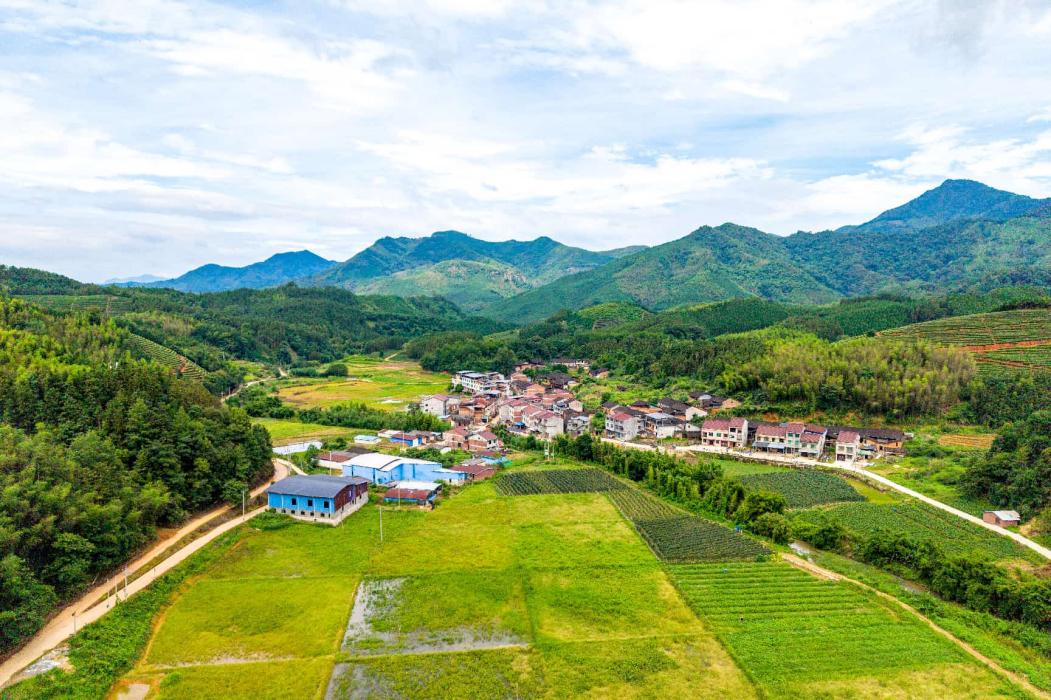
Photo shows a high-standard farmland development project in Damiao village, Xiaosong township, Jian'ou, southeast China's Fujian province. (Photo/Wang Defeng)
Farmland constitutes the cornerstone of food security in China. With approximately 124 million hectares of arable land, including 103 million hectares designated as permanent basic farmland, the integrity of every watershed and stretch of soil directly impacts food security for over 1.4 billion people.
As China advances its high-quality development agenda, nationwide initiatives are exploring innovative approaches to land conservation. Since 2012, China has implemented unprecedented measures for farmland protection, soil pollution prevention, and soil quality enhancement, simultaneously advancing three critical objectives: safeguarding the quantity of farmland, improving its quality, and enhancing its ecological sustainability.
China has achieved declines in three key indicators related to the risk of heavy metal contamination in agricultural soils. More than 80,000 potential sources of soil pollution have been eliminated, 1,406 contaminated sites have been removed from official remediation and control lists, and many historically polluted areas have been restored and brought back to life.
China continues its drive to keep farmland soil free from pollution. In November 2024, seven government departments, including the Ministry of Ecology and Environment, jointly issued an action plan on strengthening the prevention and control of sources of soil pollution, outlining 82 specific tasks and establishing a comprehensive, whole-process framework for preventing pollution at its source.
According to Zhao Shixin, head of the department of soil ecology and environment at the Ministry, relevant authorities are working together to optimize industrial layouts, promote green transformation among enterprises, strengthen oversight of key polluting entities, and continue reducing emissions in industries such as steel, coking, cement, and coal-fired power generation. Efforts are also underway to trace and address heavy metal contamination in agricultural soils.
"Risks associated with soil pollution nationwide have been effectively controlled, and overall soil environmental quality has remained stable, with conditions improving in some areas," said Guo Guanlin, an official with the department.
During the 15th Five-Year Plan period (2026-2030), China will prioritize source pollution prevention and end-to-end risk control. The country will integrate treatment, utilization, and conservation measures. Efforts will be made to steadily lift the environmental quality of farmland and fully safeguard the safety of agricultural produce.
China maintains some of the world's strictest farmland protection regulations. August 2025 saw the implementation of "red line" protection measures for permanent basic farmland, introducing a dynamic management mechanism that permits quality-based land exchange.
This year marks the 40th anniversary of the promulgation of China's Land Administration Law. A draft law on farmland protection and quality improvement has completed its second review by the Standing Committee of the National People's Congress. Meanwhile, China's Environmental Code, which will take effect on Aug. 15 this year, incorporates the basic national policy of "cherishing and rationally utilizing land and effectively protecting farmland."
Integrated measures covering farmland quantity, quality and ecology are already yielding solid results. Barren land is being turned into new-grain-producing areas.
In Dongying, east China's Shandong province, local authorities have rolled out an innovative, phased approach to rehabilitating saline-alkali land. More than 6,667 hectares of such land have been improved, reducing soil salinity from 16 to 3 parts per thousand. The National Center of Technology Innovation for Comprehensive Utilization of Saline-Alkali Land has developed 87 new varieties and strains of salt-tolerant crops, turning increasing areas of formerly unproductive land into fertile fields.
In Lishu county, northeast China's Jilin province, farmer Tao Yong has farmed the land for decades and seen dramatic changes. In the past, strong winds could easily blow away the nutrient-rich topsoil. Today, conservation farming practices such as straw mulching and no-till planting have been widely adopted, making the land increasingly fertile.
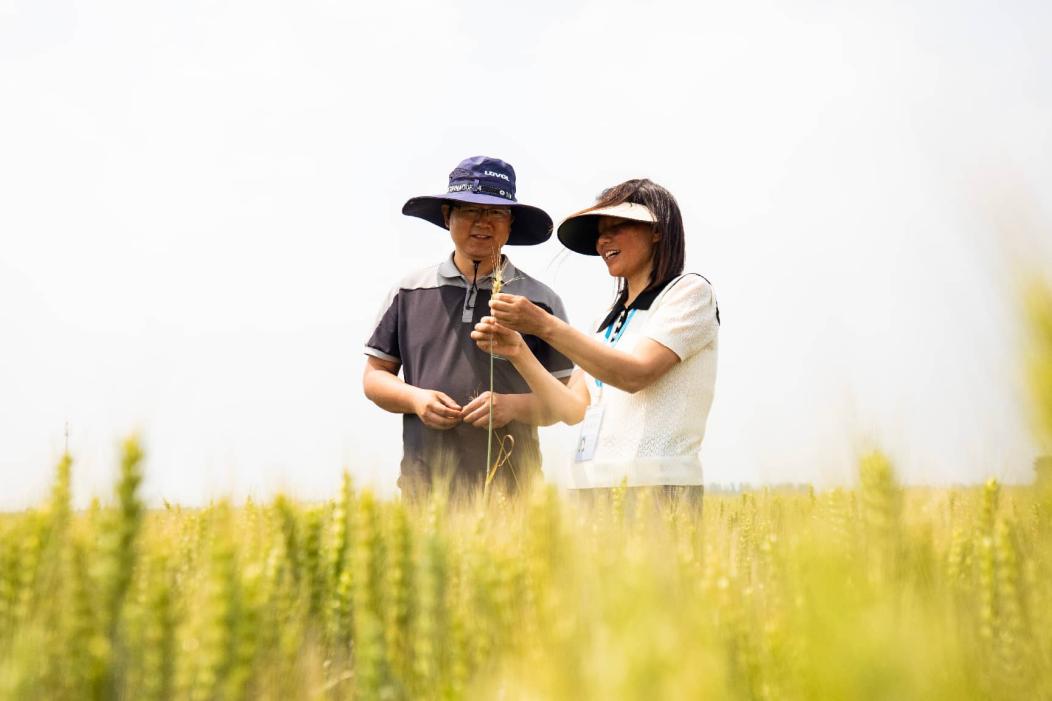
A technician and a major grain grower have a talk over the growth of wheat in Liaolan township, Qingdao, east China's Shandong province. (Photo/Yang Xuemei)
Years of monitoring data indicate that over nearly two decades, trial plots following the Lishu model have boosted soil water retention by 20 percent and raised deep soil water storage capacity by 40 percent. Wind and water erosion have been effectively curbed, cutting soil loss by 80 percent.
From pollution control and risk management to quality improvement and ecological restoration, and from black-soil conservation to the rehabilitation of saline-alkali land, China has introduced a broad range of measures to reinforce both food security and overall development security.
Land connects mountains, rivers, forests, farmland, lakes, grasslands, and deserts. It also underpins a future of harmonious coexistence between humanity and nature.
China's approach to land management is no longer confined to restoring individual fields or plots of land. Instead, it seeks to coordinate ecological conservation, industrial development, and spatial planning on a much broader scale, pursuing systematic, integrated, and source-based governance.
In Shishou, central China's Hubei province, one of the demonstration sites for ecological restoration projects along the Jingjiang stretch of the Yangtze River, ducks paddle through rice paddies while frogs croak among the fields.
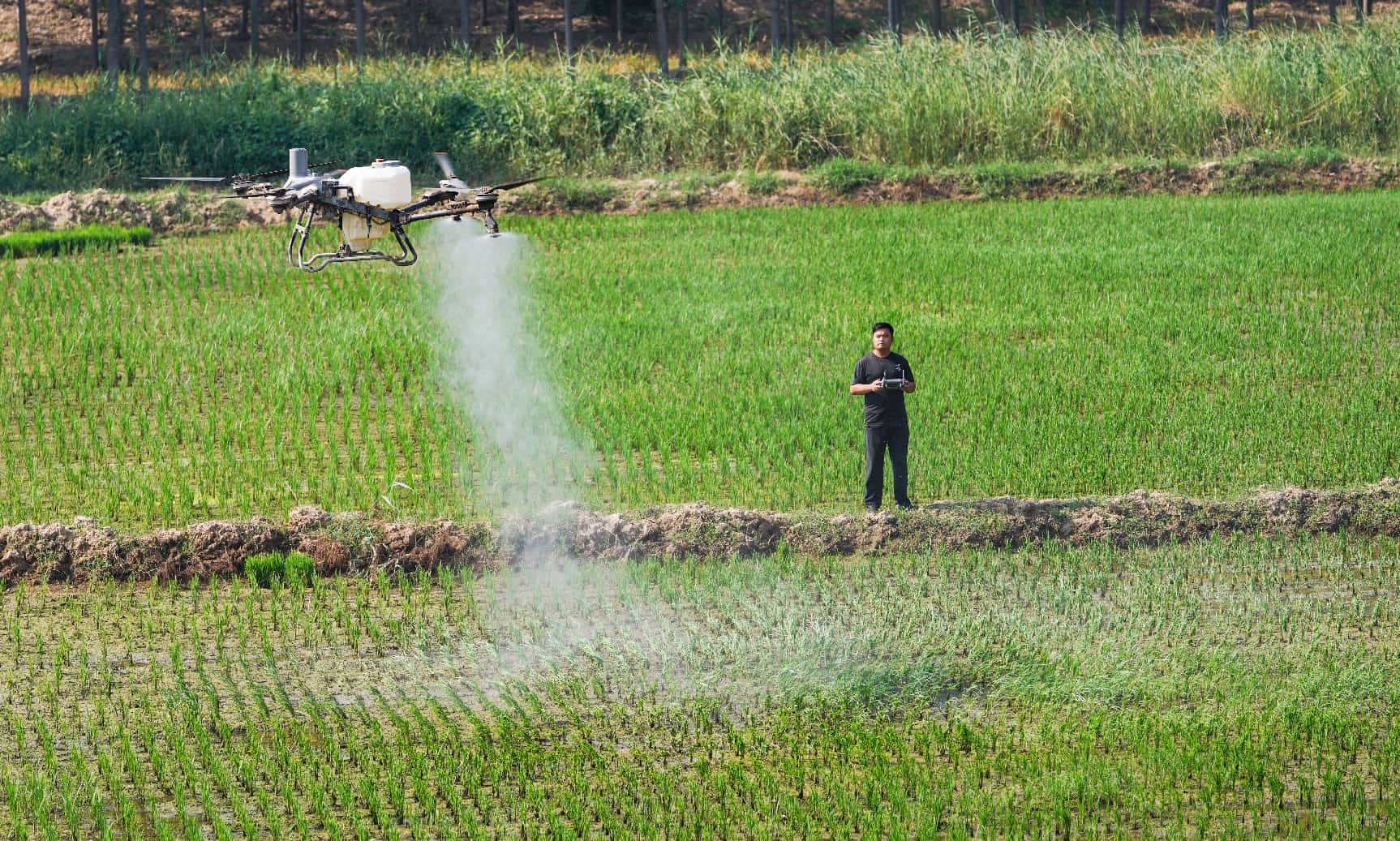
A man operates a drone to spray pesticide on a paddy field on saline-alkali land in Taizi township, Zouping, east China's Shandong province. (Photo/Dong Naide)
The area has pioneered an ecological farming model that combines ducks, frogs, and rice cultivation. Ducks help control weeds and pests, while frogs continue the natural pest-control process. As a result, the use of chemical fertilizers and pesticides has fallen by more than 70 percent, grain output has increased by 7 percent, and average earnings per mu have risen by 20 percent.
More than 3,000 hectares have now adopted this farming model, which has also spawned a range of regional brands, including rice, rice wine, and traditional rice cakes, generating annual profits of 9.6 million yuan ($1.41 million). A single field now produces not only grain, but also healthier ecosystems and greater prosperity for local communities.
Across China, integrated ecological restoration projects covering mountains, rivers, forests, farmland, lakes, grasslands, and deserts are moving forward smoothly. According to Lu Lihua, deputy director-general of the land space ecological restoration department at the Ministry of Natural Resources, China had launched 52 such projects across 29 provincial-level regions as of 2025, restoring more than 8 million hectares of land with central government funding totaling 103 billion yuan.
Photos



Related Stories
- China completes spring irrigation on over 100 mln mu farmland, with tech boosting efficiency
- Technology boosts spring farmland management across China
- View of farmlands in SW China
- Chinese premier calls for high-quality construction of high-standard farmlands
- China firmly upholds red line for farmland protection
- Chinese premier stresses development of water conservancy, high-standard farmlands
- Xi stresses strengthening farmland protection, quality improvement to expand room for agricultural production
- China furthers stringent crackdown on illegal occupation of farmlands
- China's policy bank establishes special loan program for farmland development
- View of farmlands in Rongxian County, SW China's Sichuan
Copyright © 2026 People's Daily Online. All Rights Reserved.
