



Gucheng County in China's Hebei boosts development along Grand Canal
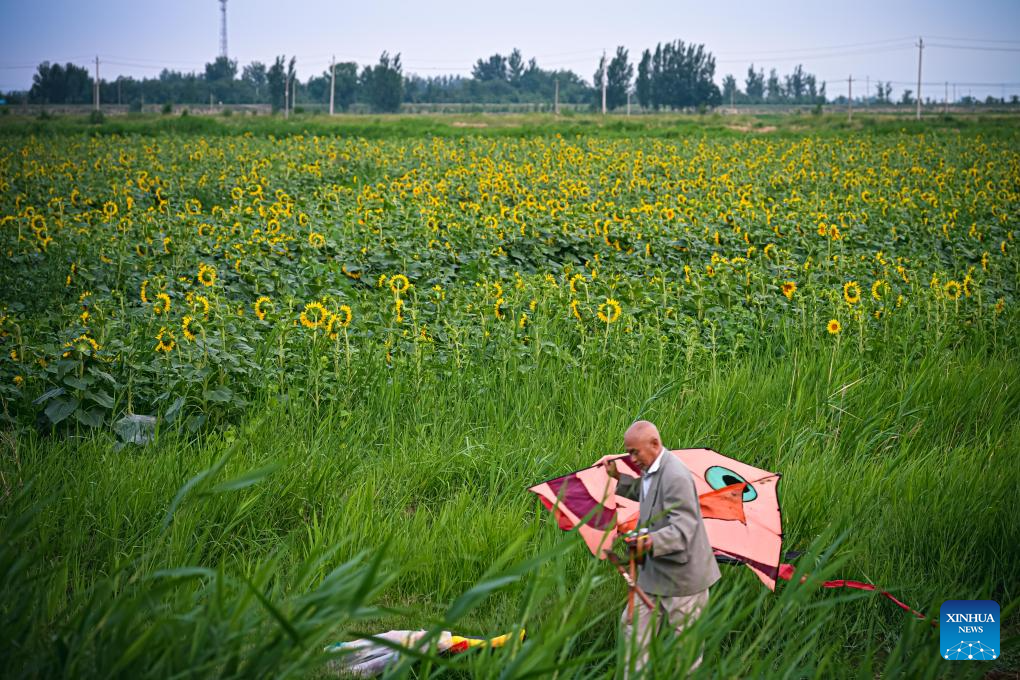
A senior resident walks with a kite along the Grand Canal in Gucheng County, Hengshui City, north China's Hebei Province, June 5, 2026.
Connecting the Chinese capital Beijing and Hangzhou in east China's Zhejiang Province, the Grand Canal, which was listed as a UNESCO World Heritage Site in 2014, is the world's longest artificial waterway.
Stretching approximately 75.1 kilometers, the Gucheng section of the Grand Canal has nourished the land along its banks for centuries and given rise to multiple provincial-level intangible cultural heritages.
In recent years, Gucheng County has boosted environmental conservation and cultural tourism development along the Grand Canal, transforming its banks into an ecological corridor with cultural richness. (Xinhua/Sun Huanjie)
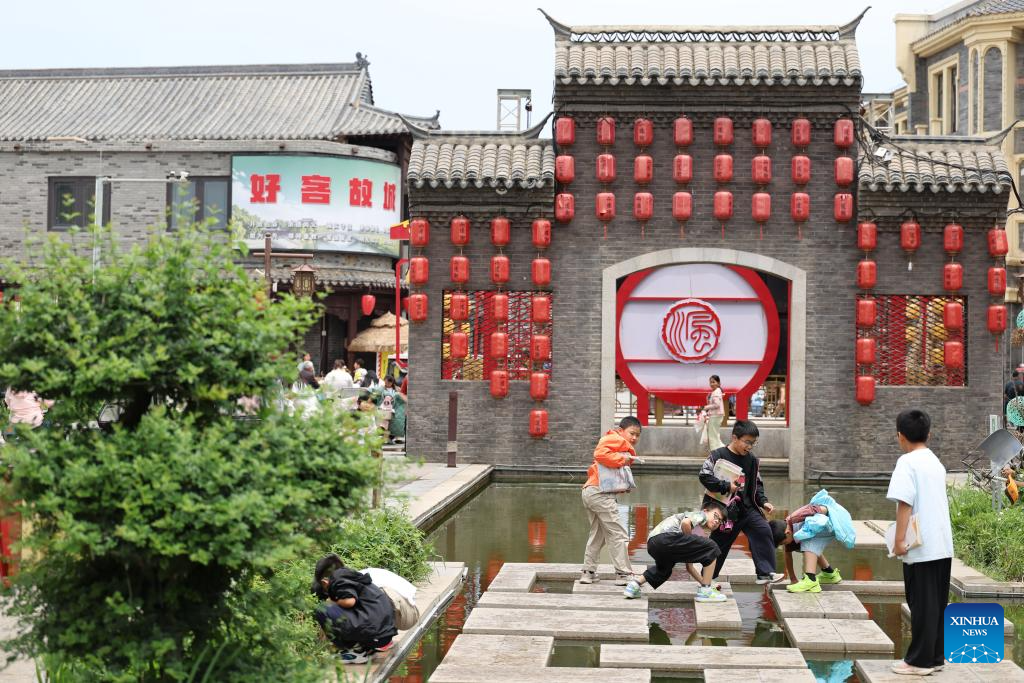
Children have fun at the Erdaojie tourist spot along the Grand Canal in Gucheng County, Hengshui City, north China's Hebei Province, June 5, 2026.
Connecting the Chinese capital Beijing and Hangzhou in east China's Zhejiang Province, the Grand Canal, which was listed as a UNESCO World Heritage Site in 2014, is the world's longest artificial waterway.
Stretching approximately 75.1 kilometers, the Gucheng section of the Grand Canal has nourished the land along its banks for centuries and given rise to multiple provincial-level intangible cultural heritages.
In recent years, Gucheng County has boosted environmental conservation and cultural tourism development along the Grand Canal, transforming its banks into an ecological corridor with cultural richness. (Xinhua/Li Ran)
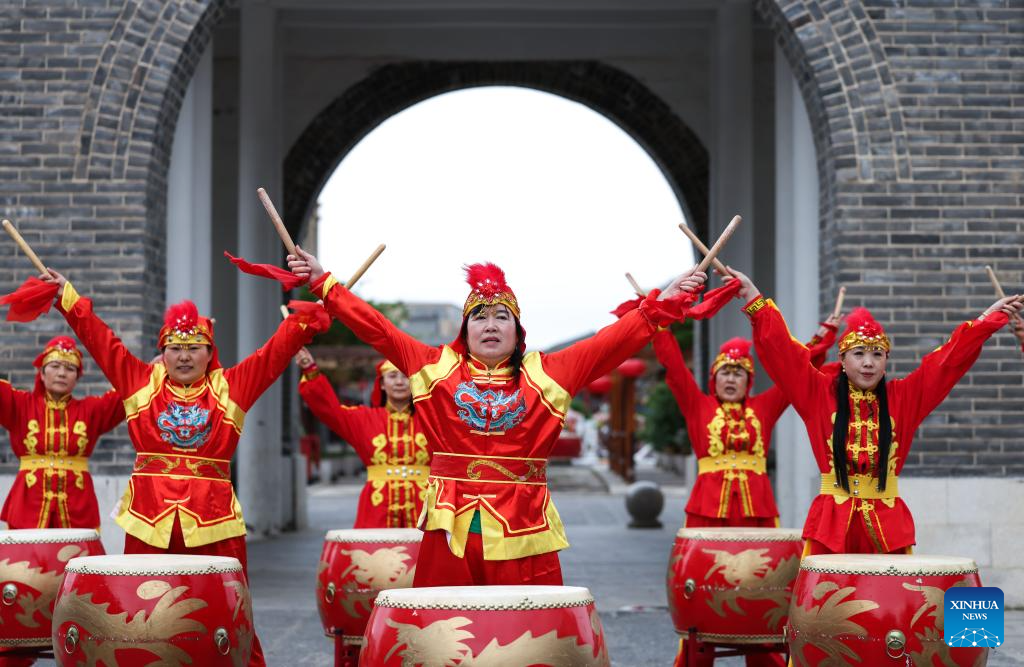
A drum performance is staged at the Erdaojie tourist spot along the Grand Canal in Gucheng County, Hengshui City, north China's Hebei Province, June 5, 2026.
Connecting the Chinese capital Beijing and Hangzhou in east China's Zhejiang Province, the Grand Canal, which was listed as a UNESCO World Heritage Site in 2014, is the world's longest artificial waterway.
Stretching approximately 75.1 kilometers, the Gucheng section of the Grand Canal has nourished the land along its banks for centuries and given rise to multiple provincial-level intangible cultural heritages.
In recent years, Gucheng County has boosted environmental conservation and cultural tourism development along the Grand Canal, transforming its banks into an ecological corridor with cultural richness. (Xinhua/Yang Wenbin)
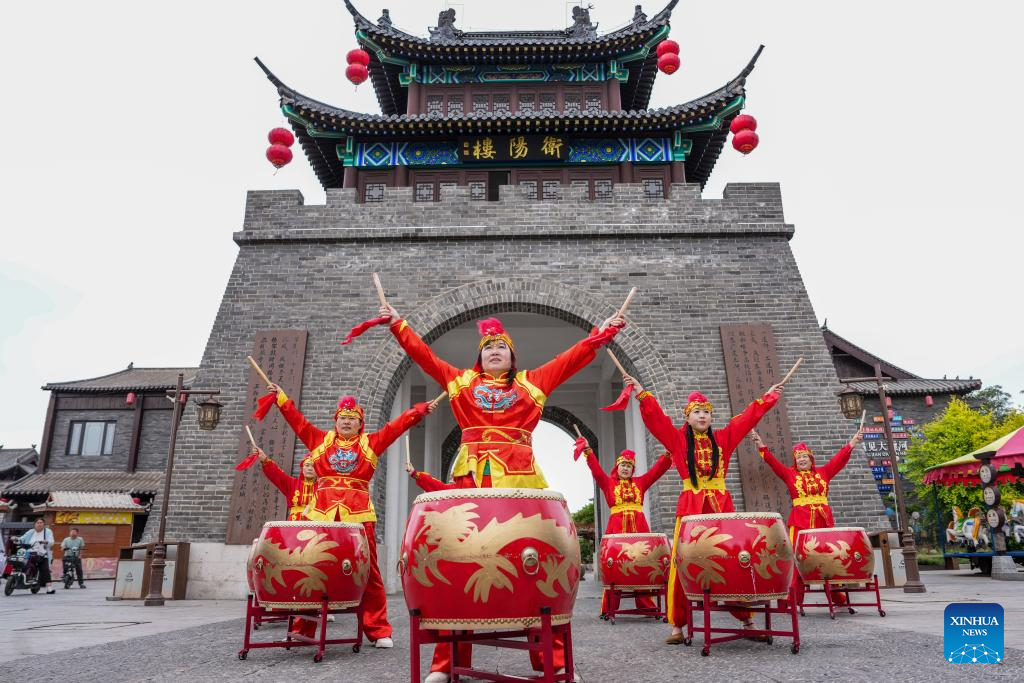
A drum performance is staged at the Erdaojie tourist spot along the Grand Canal in Gucheng County, Hengshui City, north China's Hebei Province, June 5, 2026.
Connecting the Chinese capital Beijing and Hangzhou in east China's Zhejiang Province, the Grand Canal, which was listed as a UNESCO World Heritage Site in 2014, is the world's longest artificial waterway.
Stretching approximately 75.1 kilometers, the Gucheng section of the Grand Canal has nourished the land along its banks for centuries and given rise to multiple provincial-level intangible cultural heritages.
In recent years, Gucheng County has boosted environmental conservation and cultural tourism development along the Grand Canal, transforming its banks into an ecological corridor with cultural richness. (Xinhua/Lang Bingbing)
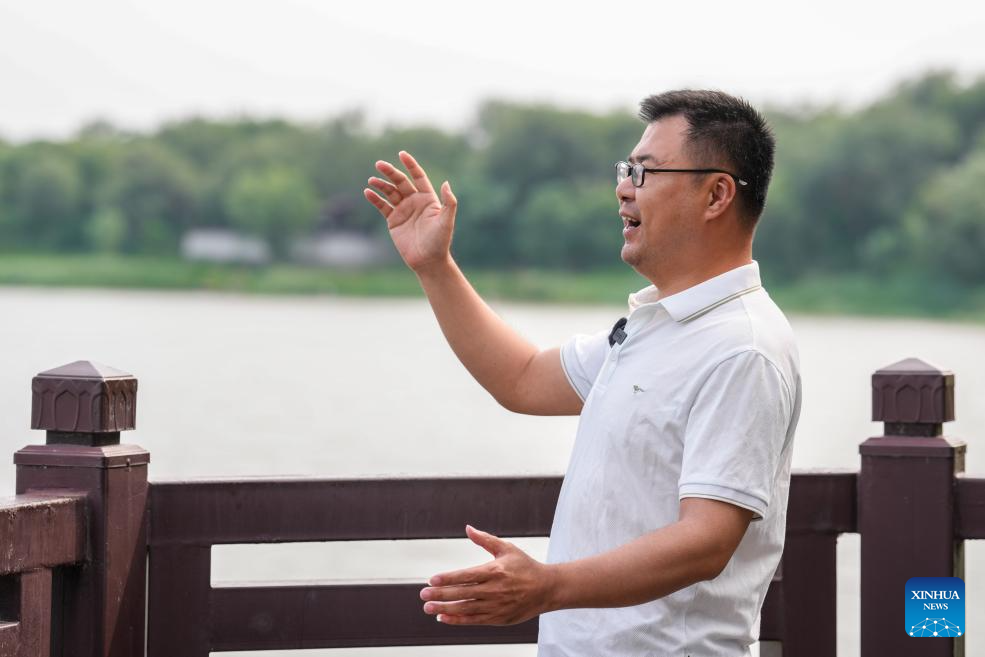
A resident sings a local chantey along the Grand Canal in Gucheng County, Hengshui City, north China's Hebei Province, June 5, 2026.
Connecting the Chinese capital Beijing and Hangzhou in east China's Zhejiang Province, the Grand Canal, which was listed as a UNESCO World Heritage Site in 2014, is the world's longest artificial waterway.
Stretching approximately 75.1 kilometers, the Gucheng section of the Grand Canal has nourished the land along its banks for centuries and given rise to multiple provincial-level intangible cultural heritages.
In recent years, Gucheng County has boosted environmental conservation and cultural tourism development along the Grand Canal, transforming its banks into an ecological corridor with cultural richness. (Xinhua/Lang Bingbing)
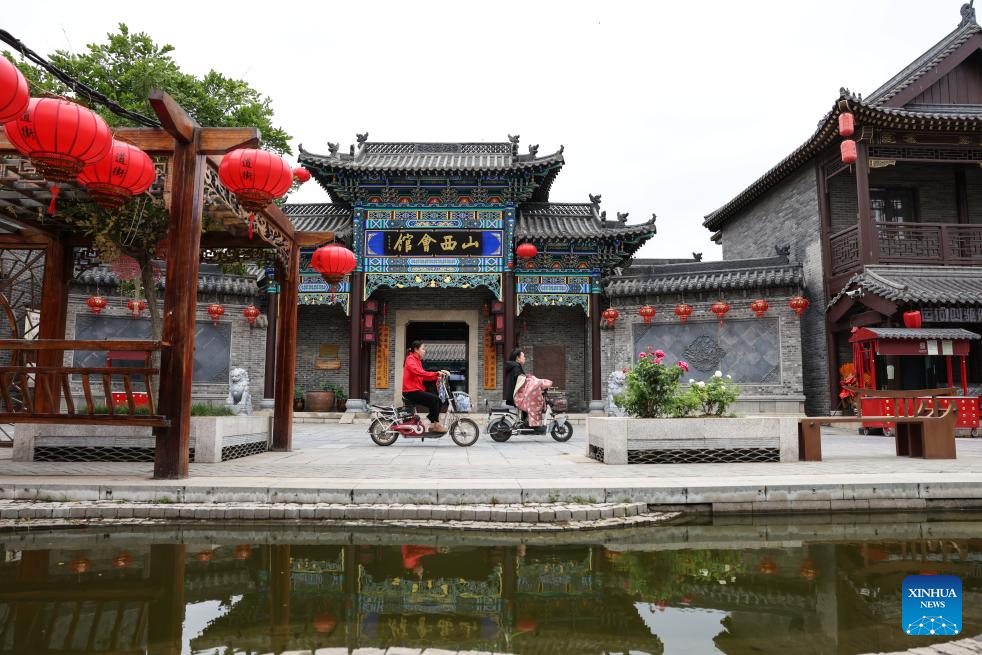
Residents ride electric bikes at the Erdaojie tourist spot along the Grand Canal in Gucheng County, Hengshui City, north China's Hebei Province, June 5, 2026.
Connecting the Chinese capital Beijing and Hangzhou in east China's Zhejiang Province, the Grand Canal, which was listed as a UNESCO World Heritage Site in 2014, is the world's longest artificial waterway.
Stretching approximately 75.1 kilometers, the Gucheng section of the Grand Canal has nourished the land along its banks for centuries and given rise to multiple provincial-level intangible cultural heritages.
In recent years, Gucheng County has boosted environmental conservation and cultural tourism development along the Grand Canal, transforming its banks into an ecological corridor with cultural richness. (Xinhua/Yang Wenbin)
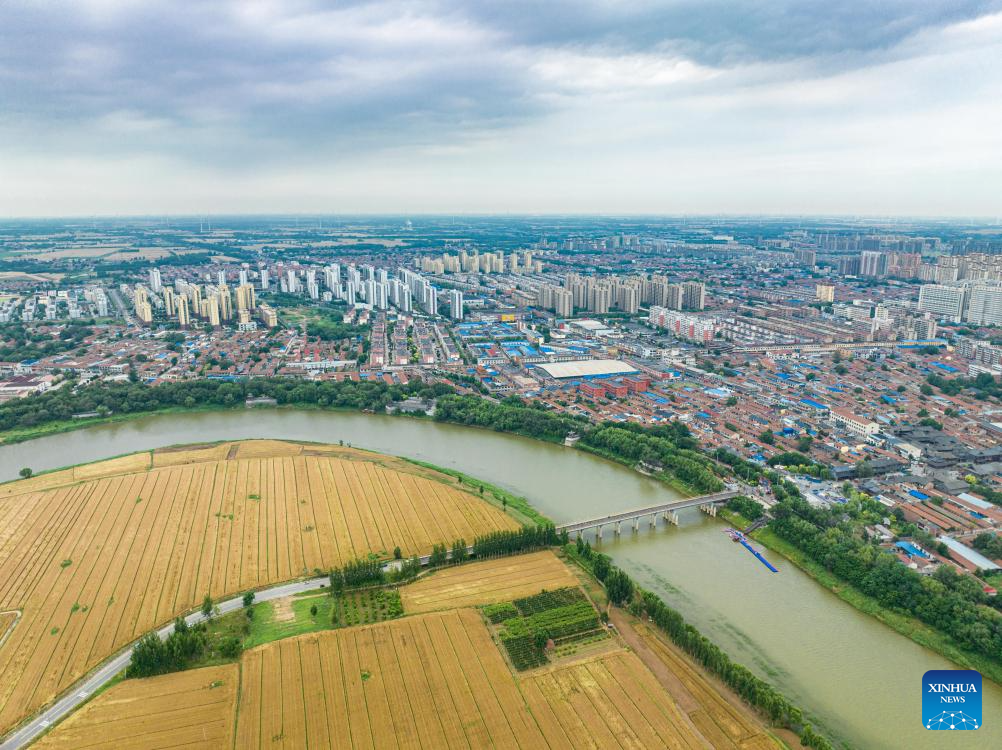
An aerial drone photo taken on June 5, 2026 shows a view of the Grand Canal in Gucheng County, Hengshui City, north China's Hebei Province.
Connecting the Chinese capital Beijing and Hangzhou in east China's Zhejiang Province, the Grand Canal, which was listed as a UNESCO World Heritage Site in 2014, is the world's longest artificial waterway.
Stretching approximately 75.1 kilometers, the Gucheng section of the Grand Canal has nourished the land along its banks for centuries and given rise to multiple provincial-level intangible cultural heritages.
In recent years, Gucheng County has boosted environmental conservation and cultural tourism development along the Grand Canal, transforming its banks into an ecological corridor with cultural richness. (Xinhua/Jiang Han)
Photos

Related Stories
- Scenery of Great Wall in north China's Hebei
- Scenery of Yudaokou pasture in Chengde, N China's Hebei
- View along Hutuo River in China's Hebei
- North China county builds cashmere hub via equipment sharing, global exchanges
- Hebei section of Xiong'an-Shangqiu High-speed Railway kicks off coordinated debugging and test
Copyright © 2026 People's Daily Online. All Rights Reserved.
