



Subnational collaboration: Anchoring China-CEEC partnership for sustained growth
Vast oceans and lofty mountains never keep kindred nations apart. Deeply rooted in its traditional bonds of friendship and enriched by fruitful subnational engagements, the tree of friendship between China and Central and Eastern European countries (CEECs) is flourishing with vigor and vitality in the new era.
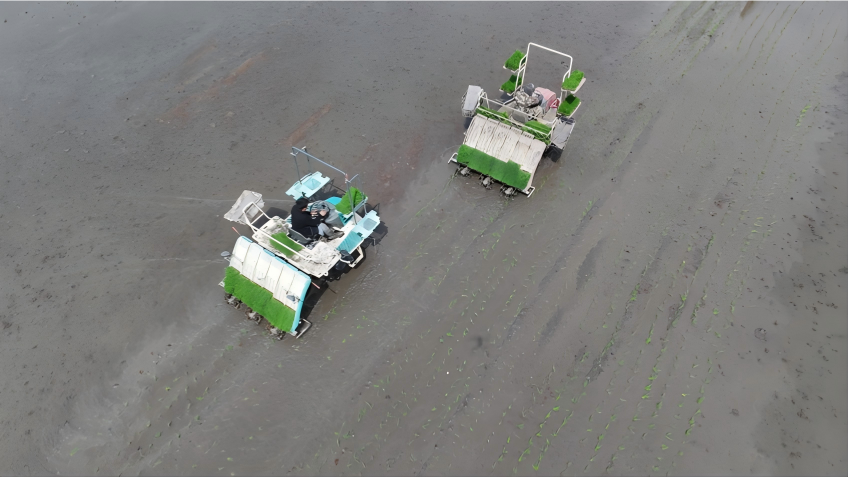
China and CEECs share a long and rich history of subnational exchanges. In the early days of the People's Republic of China, CEECs stood among the first to recognize and establish official diplomatic ties with New China. At a time when Western powers led sweeping economic blockades and trade embargoes against China, the Sino-Polish Joint Stock Shipping Company was launched in 1951. Originally headquartered in Tianjin, China, with an operational branch in Gdynia, Poland, the company made history as China's first cross-border joint venture, delivering critical supplies to help rebuild the national economy. In 1956, late Vice Chairman Zhu De led a high-level delegation to Czechoslovakia, which generously donated 670 sets of farming machinery capable of cultivating 7,000 hectares of land. To commemorate this gesture of friendship, Premier Zhou Enlai named the receiving farm the Sino-Czech Friendship Farm. Seven decades later, the once barren saline-alkali land tract along Hebei's Bohai coast has evolved into a modern industrial hub. Today, the Sino-Czech Industrial Park stands as a compelling demonstration of China's opening up and cooperation with CEECs.
Subnational cooperation between China and CEECs have delivered tangible dividends that are widely visible across industries and regions. In 2021, President Xi Jinping hosted the virtual Summit of China and CEECs in Beijing, where it was clearly proposed to strengthen subnational economic and trade cooperation and continue advancing the construction of China-CEEC Economic and Trade Cooperation Demonstration Zone. The Demonstration Zone in Ningbo has posted a total import and export volume exceeding 330 billion yuan, with an average annual growth rate of 17.2 percent. It has established a full array of pivotal platforms — including a Cross-border Customs Information Center, Green Channel for the import of CEEC goods, and permanent exhibition venues for CEEC commodities — charting a steady course for win-win trade. Positioned as the gateway for CEEC products to enter the Chinese market, Ningbo has aligned China-CEEC Expo with the demonstration zone's development strategy, injecting new momentum into economic and trade exchanges.
Launched in 2012, China-CEEC Cooperation emerged as a key cross-regional platform for pragmatic collaboration. Designed to elevate bilateral relations and fuel inclusive growth, the mechanism boasts subnational exchanges such as the Local Leaders' Meeting, Association of Provincial Governors, Mayors' Forum and Capital Cities Forum. They have widened avenues for mutual understanding, strengthened people-to-people bonds, and advanced balanced and mutually beneficial cooperation across all sectors. The 7th China-CEEC Local Leaders' Meeting will open on May 26 in Jinan, Shandong Province under the theme “Shaping the Future Together.” Far more than a routine high-level gathering, the event will foster genuine people-to-people connections, marking a vivid grass-root implementation of top-tier strategic planning.
This meeting features result-oriented cooperation. The blueprints drawn at the top must ultimately translate into concrete dividends for local development, making subnational engagement the most dynamic and promising component of China-CEEC Cooperation. From Czech crystal pieces shining in Ningbo's showrooms to Greek olive oil gracing Chinese dining tables; from HBIS Group reviving a century-old Serbian steel mill to BYD electric buses running through the streets of Budapest; from the Budapest-Belgrade railway greatly enhancing regional connectivity, to the Peljesac Bridge linking the long-separated territories of Croatia—these vivid scenes best illustrate how cooperation between China and CEECs improves the livelihoods of ordinary people. The upcoming meeting of local leaders features over 20 events such as governor and mayor dialogues, B2B matchmaking, industry-education-research integration, and imports of CEEC agri-food products, all aimed at deepening cooperation to improve the well-being of people on both sides.
This meeting features heart-to-heart exchange. With the facilitation of China-CEEC mechanism, a growing number of Chinese and CEEC cities have forged sister-city partnerships. At the 2025 China-CEEC Mayors' Forum, multiple new friendship pacts were signed: Hefei paired with Novi Sad, Yantai with Laktasi, Ningbo with Rijeka, and Xiangshan County with Kiskunfelegyhaza. The total number of sister-cities has reached 225, laying a solid public foundation for long-term bilateral collaboration and expanding converging interests across regions. Coinciding with the Local Leaders' Meeting, the 2026 Shandong International Friendship City Cooperation Week will gather provincial and municipal representatives from nearly 40 countries worldwide, creating a major platform for inclusive international exchange.
This meeting features shared development. Amid a turbulent and complex global landscape, isolation and confrontation offer no viable solution, while openness and cooperation remain the irreversible trend of our times. Subnational cooperation between China and CEECs always follows market rules and international norms, upholding the principles of transparency, inclusiveness and mutual benefit. It seeks not exclusive geopolitical cliques, but an open, inclusive community for shared development. As a responsible major country, China firmly believes that development for all is development indeed. It continues to upgrade China-CEEC Cooperation framework as a reliable platform to tackle common challenges and seize emerging opportunities, bringing much-needed stability and certainty to a volatile world. During the Jinan meeting, participating parties will share best practices in digital economy, green energy, smart cities and modern agriculture, exploring new cooperation drivers to bolster economic recovery and long-term sustainable development. The partnership will set an example for open global cooperation.
From time-honored friendship to a new era of interconnected development, subnational engagement has long served as the most solid foundation, the most vibrant link, and the warmest undertone of China-CEEC relations. Moving forward, China and CEECs will join hands to write a new chapter of subnational cooperation. Empowered by deepened local exchanges, this partnership will grow more solid, pragmatic and resilient, advancing steadily toward shared prosperity.
The author is an observer of international affairs.
Photos



Related Stories
- Zagreb symposium deepens China-CEEC cooperation
- Bulgaria hosts conference marking decade of China-CEEC agricultural cooperation
- Senior official says China will deepen cooperation with CEECs
- China, CEEC agree to advance cooperation between political parties
- China-CEEC forum boosts digital cultural trade
- China-CEEC music forum promotes int'l art collaboration
- Conference assesses BRI's role in boosting China-CEEC cooperation
- China, central and eastern Europe share rosy development prospects
- Belt and Road Initiative fosters shared growth between China, Central and Eastern Europe
- Over 10 bln yuan of intent purchase deals inked at 3rd China-CEEC expo
Copyright © 2026 People's Daily Online. All Rights Reserved.
