



China's small county pioneers the film studio of tomorrow
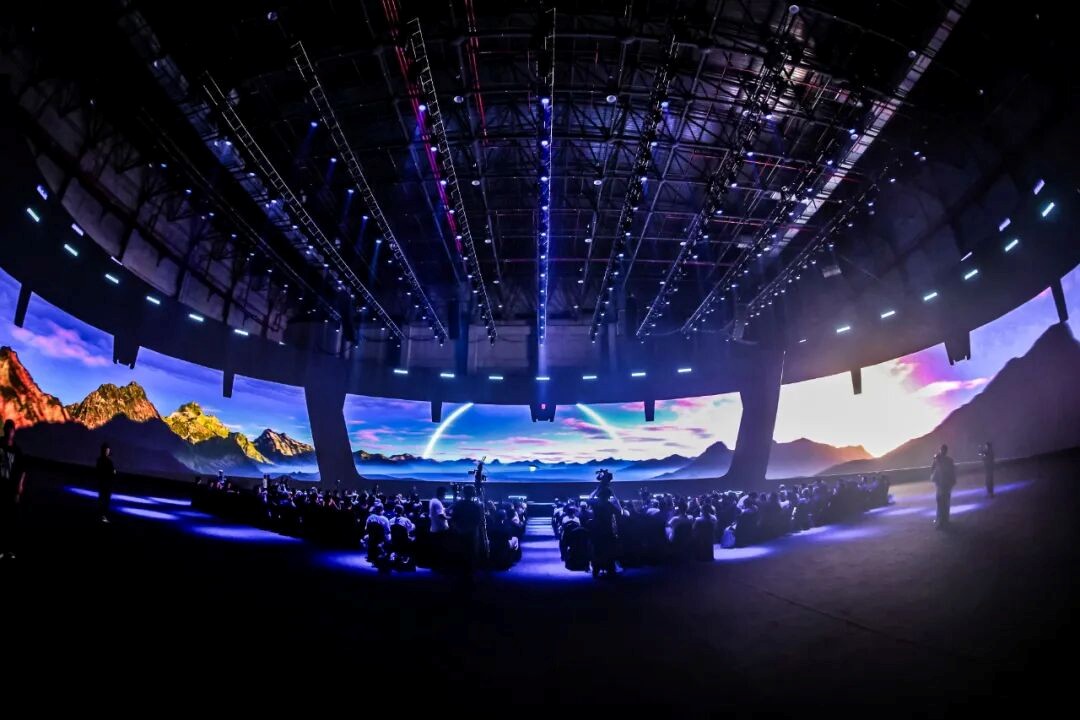
Photo shows an LED virtual studio at Versatile BoCai AI Virtual Production Base in Deqing, east China's Zhejiang province. (Photo from Zhejiang Daily)
Deqing County, located in Huzhou, east China's Zhejiang province, is transforming filmmaking through its Moganshan AI Film City. At its core facility, the Versatile BoCai AI Virtual Production Base, virtual production technology is revolutionizing the industry.
Inside the Base's soundstages, expansive curved LED screens create immersive environments. Production teams can instantly access diverse digital backdrops -- from forests and mountains to palaces—drastically reducing the need for physical sets and props. This shift cuts costs, minimizes waste, and has led to the facility being fully booked through June.
An integrated system further enhances efficiency and safety. Using a proprietary automated control system, robotic arms synchronize seamlessly with virtual environments. This allows complex, high-risk scenes, like vehicles careening off cliffs, to be filmed safely within the controlled studio environment, eliminating the need for elaborate and dangerous on-location shoots.
Despite lacking a history in camera manufacturing or major film studios, Deqing has emerged as a national center for virtual production. Over the past four years, the county has strategically leveraged its unique geography and strengths in geospatial information and AI. By developing the Moganshan AI Film City, Deqing is positioning itself as a premier digital cultural entertainment hub in the Yangtze River Delta, unlocking new economic growth.
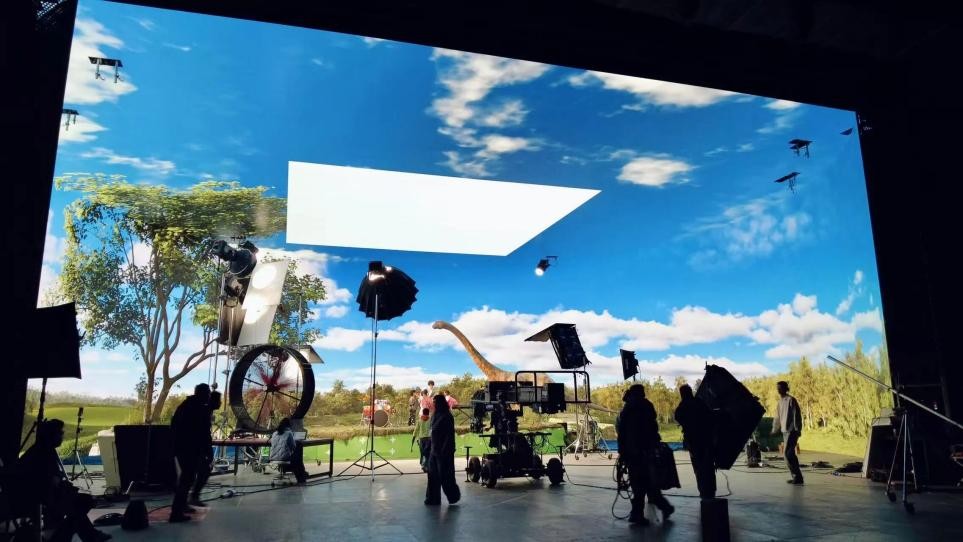
A crew films at Versatile BoCai AI Virtual Production Base in Deqing, east China's Zhejiang province. (Photo from Zhejiang Daily)
Virtual production, though still an emerging sector, offers vast potential. Deqing has leveraged intellectual resources from institutions like the Zhejiang University of Technology's Moganshan campus to roll out a suite of tailored support policies. This approach has drawn in over 40 high-quality film and culture enterprises specializing in content creation and technical production. By building on its comparative strengths and pursuing differentiated development, the county has rapidly built a new competitive edge.
Attracting businesses is only the first step; ensuring their success is crucial. Deqing embodies this principle with the motto: "Enterprises focus on imagination, the government helps make it real."
To support industry needs, the county partnered with the Versatile AI Virtual Film Base to launch an initial 100-million-yuan ($14.46 million) "virtual production previsualization fund" supporting mature film projects. Support extends to practical details: when a studio company plans renovations, local authorities coordinate utilities (electricity, internet, etc.) for one-stop service, significantly reducing operational costs.
Looking further ahead, Deqing is strengthening its talent pipeline for the long term. It has facilitated cooperation between Perfect World Education's Deqing base and over 100 vocational institutions, training more than 7,000 professionals in technology and cultural creativity.
This industry-education integration provides vital support for new cultural industries. In February this year, the county released a three-year action plan for the film city, laying out a clear roadmap for its high-quality development.
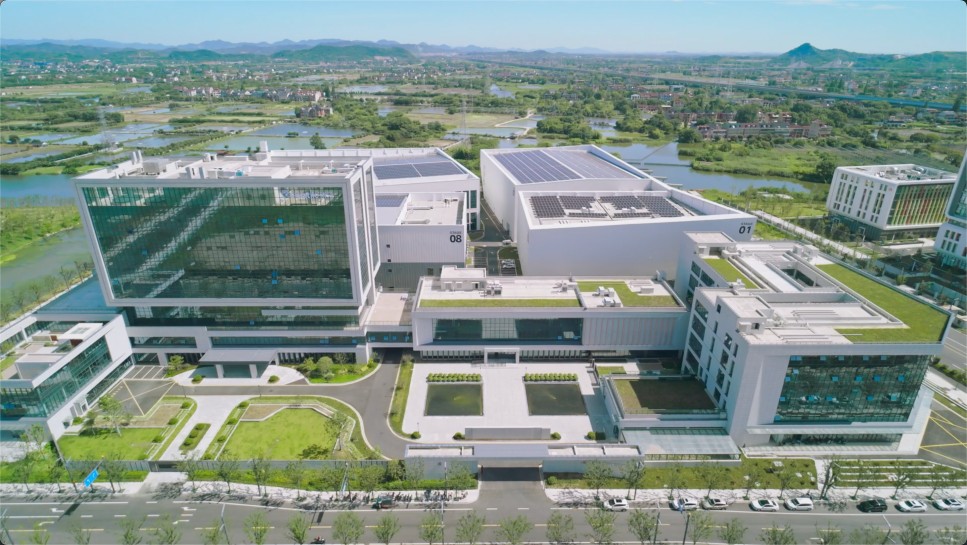
Photo shows the Versatile BoCai AI Virtual Production Base in Deqing, east China's Zhejiang province. (Photo from Zhejiang Daily)
In addition, Deqing is advancing key technological capabilities. In collaboration with national-level film research institutions, it has established joint innovation laboratories focused on improving digital asset efficiency, real-time rendering, and camera tracking--critical technologies for virtual production. These efforts aim to develop efficient, replicable workflows that can benefit the entire production chain.
Deqing is part of a broader transformation. Other regions, including Qingdao in east China's Shandong province and Yongchuan district of southwest China's Chongqing municipality, are also building high-tech "studios of the future," offering one-stop services for virtual production.
Yongchuan, for example, partnered with vocational institutions and leading film enterprises to establish four industrial colleges and 36 training bases, creating strong employment pathways for digital media students.
In Qingdao, the China Movie Metropolis offers comprehensive production facilities, including a temperature-controlled underwater studio. It has attracted a wide range of upstream and downstream businesses, creating a full-industry chain ecosystem that extends beyond film production. The cluster now drives an industry scale exceeding 10 billion yuan ($1.44 billion).
Photos




Related Stories
- China's box office surpasses 10 bln yuan
- China's Spring Festival box office hits 5.75 bln yuan, led by racing comedy
- Ride with films: Year of the Horse sees movie-inspired tourism surge in China
- Chinese cinema builds bridges at Berlin Int'l Film Festival
- Kenya woos Chinese investors to boost film sector
Copyright © 2026 People's Daily Online. All Rights Reserved.
