



China's major trading provinces showcase economic resilience and vitality
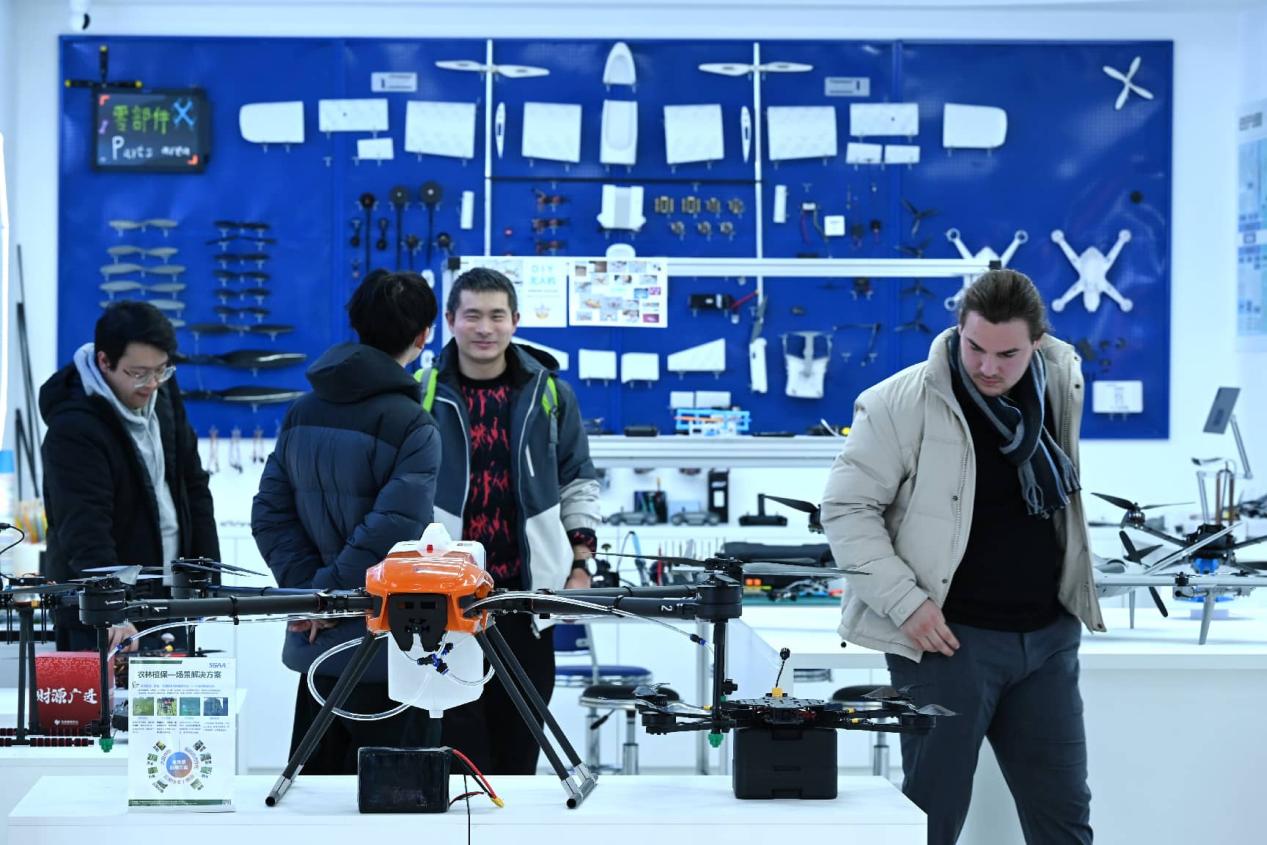
Chinese and foreign merchants buy industrial drones at the Global Digital Trade Center in Yiwu, east China's Zhejiang province. (Photo/Lyu Bin)
In a landmark development for Chinese automotive exports, BYD's vehicle carrier Changzhou recently delivered over 5,800 new energy vehicles (NEVs) to Argentina's Port of Zarate.
This shipment represents both the largest single import of Chinese-branded electric vehicles into Argentina and marks BYD's pioneering entry into the market through a vertically integrated approach featuring a self-operated fleet, direct sales model, and full product lineup.
This achievement reflects China's broader foreign trade momentum. In 2025, the country's total goods imports and exports reached 45.47 trillion yuan (about $6.59 trillion), up 3.8 percent year on year, consolidating the country's position as the world's largest trader in goods.
Leveraging their geographic advantages and industrial strengths, provincial-level regions across the country reported robust trade performance.
Guangdong, China's leading province in foreign trade, recorded 9.49 trillion yuan in total foreign trade in 2025, ranking first nationwide for the 40th consecutive year. A significant milestone was achieved as high-tech product exports exceeded 1 trillion yuan for the first time, reaching 1.14 trillion yuan, signaling a clear move up the value chain.
Demonstrating industrial cluster strength, Jiangsu's trade transformation is exemplified by shipments like the 36 wind turbine blades recently exported from Jiangyin Comprehensive Bonded Zone by Chinese company Envision. In 2025, mechanical and electrical products exceeded 70 percent of the province's exports for the first time, with leading sectors including electrical equipment and shipbuilding.
Digital trade is reshaping Zhejiang's commerce, highlighted by the launch of the Global Digital Trade Center in Yiwu. In 2025, the sampled transaction value at the Yiwu International Trade market is expected to exceed 320 billion yuan, with a daily average of over 4,000 international buyers, the highest level in a decade. Zhejiang's total foreign trade reached 5.55 trillion yuan in 2025, with digital transformation emerging as a defining feature.
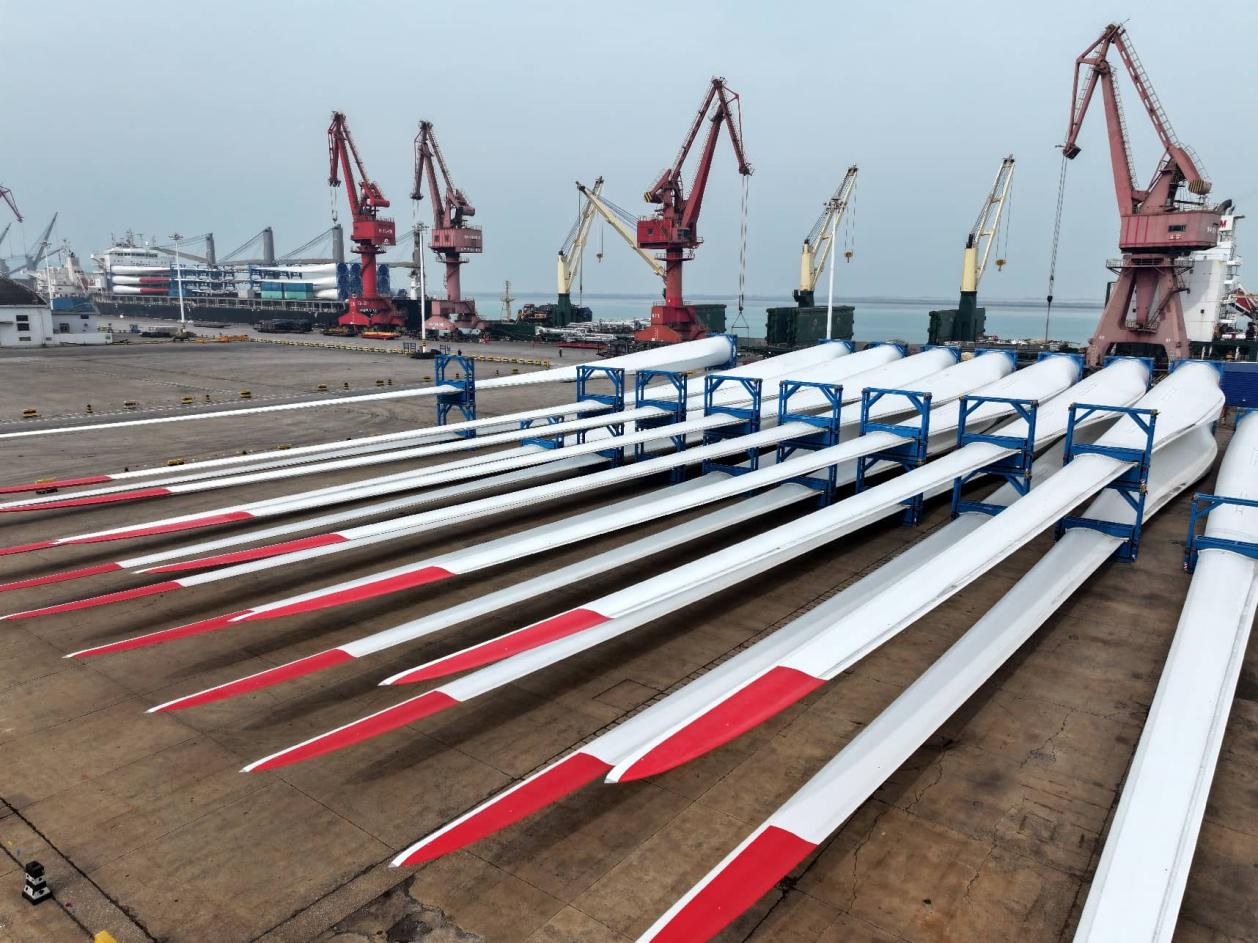
Wind turbines are loaded onto vessels bound for overseas destinations at a terminal in Lianyungang, east China's Jiangsu province. (Photo/Wang Chun)
According to Jiang Zhao, associate research fellow at the Chinese Academy of International Trade and Economic Cooperation under the Ministry of Commerce, Guangdong, Jiangsu, Zhejiang, Shanghai, Shandong, Beijing and Fujian together recorded 34.11 trillion yuan in foreign trade in 2025, contributing more than half of the country's total trade growth.
China's exports, he noted, are shifting from a focus on expanding volume to pursuing both scale and quality, with high-tech and technology-intensive products playing an increasingly prominent role.
Amid a shifting and increasingly complex global trade landscape, regions across China are accelerating their push for greater international market diversification. By deepening engagement, they have effectively hedged against the risks of overreliance on any single market.
After a 14-day journey across Eurasia, the first China-Europe freight train of the year departing from the Guangdong-Hong Kong-Macao Greater Bay Area arrived in Malaszewicze, Poland. Among the 110 standard containers were semiconductor display panels and key components of Chinese home appliance giant TCL, which were swiftly transferred to the company's television factory in Zyrardow in central Poland.
In recent years, TCL has focused on exporting industrial capabilities rather than just products, extending the strengths of Chinese manufacturing to major global markets and building a more open, collaborative and mutually beneficial innovation ecosystem with local partners, said Li Dongsheng, chairman of TCL.
Zhejiang's trade expansion has been driven in particular by emerging markets. In 2025, ASEAN surpassed the European Union for the first time to become Zhejiang's largest trading partner, with trade value reaching 869.07 billion yuan, up 16.5 percent.
Yiwu's small commodities were shipped to more than 20 countries in Central Asia and Europe via the "Yiwu-Xinjiang-Europe" freight train service, which has helped form a global trading network where the city sources from the world and sells to the world.
As an international shipping hub, Shanghai has strengthened its role in linking domestic and global markets. In 2025, its trade with Belt and Road partner countries grew 12.1 percent year on year, supported by coordinated China-Europe freight train service and ocean shipping routes.
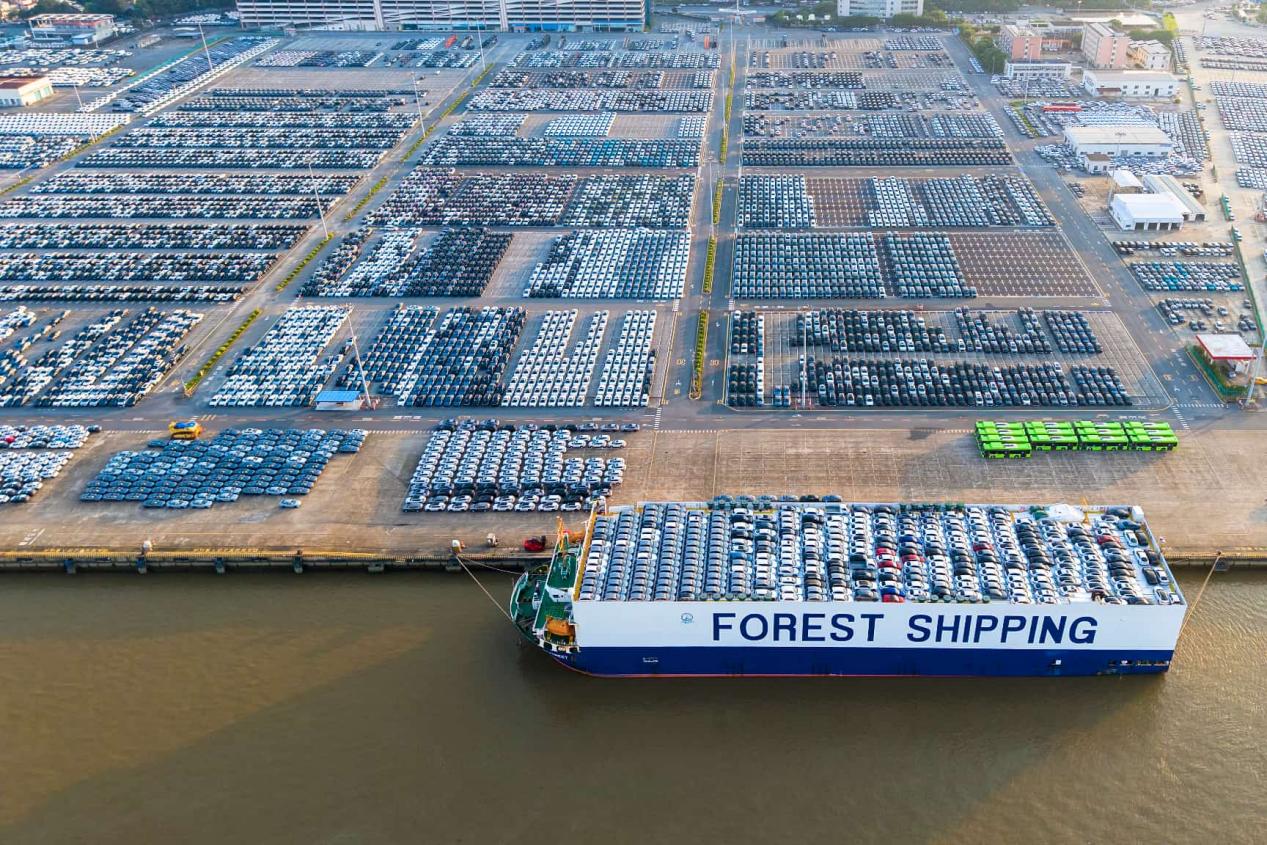
Chinese-branded vehicles are parked at a terminal of the Guangzhou Port, south China's Guangdong province, ready to be shipped overseas. (Photo/Lyu Huadang)
Empowered by digital technologies, upgraded logistics systems and an improved policy environment, Chinese foreign trade enterprises are overcoming traditional constraints in time and space, enabling more firms to participate in global competition.
Jiangsu has pioneered a model combining industrial e-commerce with supply chain finance. A comprehensive cross-border e-commerce service platform in the province's Suzhou integrates customs clearance, logistics, tax rebates and financing services, driving a 35 percent increase in cross-border e-commerce exports among small and medium-sized enterprises in 2025.
Zhejiang has advanced new trade formats powered by digital trade and market procurement. In 2025, exports through market procurement, cross-border e-commerce and bonded maintenance exceeded 900 billion yuan, ranking first nationwide.
"China's foreign trade innovation is gaining stronger momentum, with its advantages becoming more pronounced, trading partners more diversified, and resilience more robust. This will inject greater certainty into global economic and trade development," said Liao Bingguang, a researcher with the Guangdong Academy of Social Sciences.
Photos



Related Stories
- Yingge dance staged in S China's Guangdong to convey best wishes for new year
- New Year on the Frontlines: Three firs bear witness to 56 years of devotion
- Pop toy industry gallops into global market for Year of the Horse
- Small village sets example for China's beautiful countryside
- Traditional folk activities held to welcome upcoming Chinese New Year in China's Zhejiang
Copyright © 2026 People's Daily Online. All Rights Reserved.
