



China's Science and Technology Backyard program contributes to global green transformation of agriculture
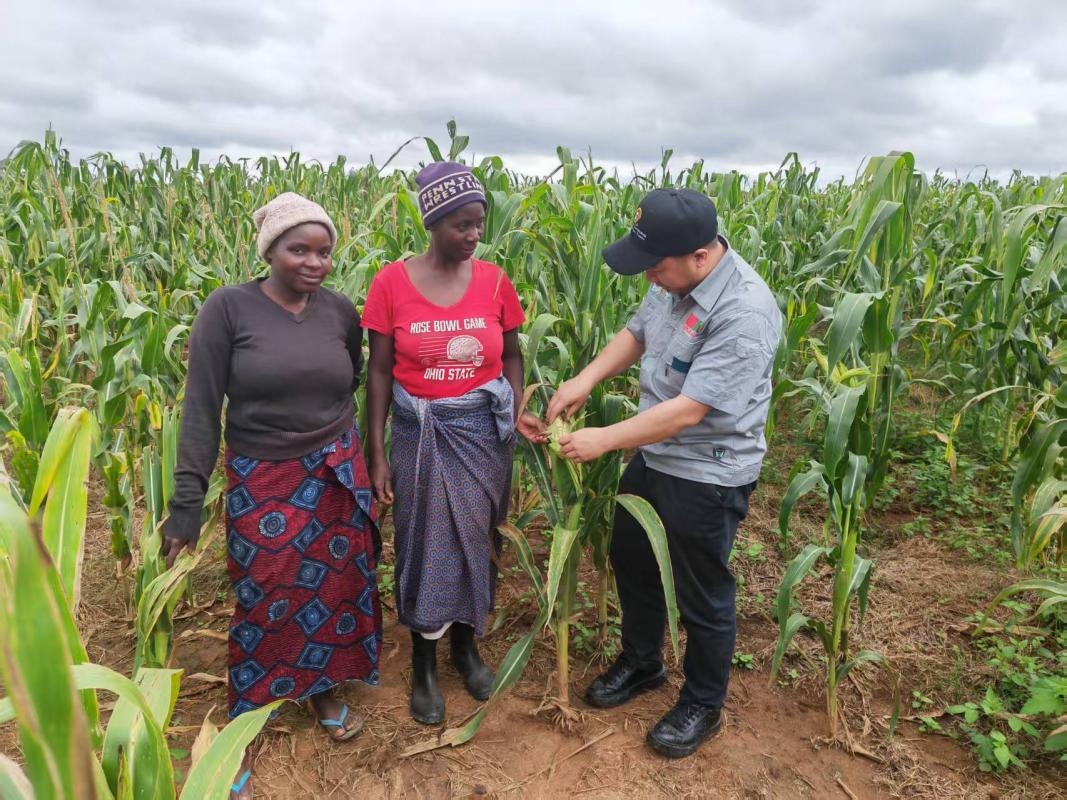
An expert of Science and Technology Backyard specializing in soy bean cultivation in Zambia shares experiences with local farmers. (Photo/Huang Xiaodong)
China's Science and Technology Backyard (STB) program, an agricultural innovation and service platform featuring university-farmer cooperation, is a new integrated model that combines scientific and technological innovation, social services, and talent cultivation.
By connecting university laboratories with agricultural fields, it breaks down barriers between research and teaching, between scholars and farmers, and between academic disciplines and real-world needs.
At the same time, it builds bridges linking theory with practice, universities with rural communities, and youth development with social progress.
Since its 2009 launch in Quzhou County, Hebei Province, the STB model has effectively addressed the "last mile" challenge in agricultural technology adoption. It has expanded nationwide and internationally, now operating in 11 countries. As a China-originated approach, it supports sustainable farming across the Global South and exemplifies efforts to build a shared future for humanity through high-quality Belt and Road cooperation.
By cultivating local talent in partner countries and drawing on China's successful experience to stimulate endogenous agricultural development, the STB model helps countries explore development paths suited to their own conditions, offering a systematic solution for agricultural development in the Global South.
International students trained through the program can return home to lead local farmers in adopting new technologies and increasing productivity and incomes. This people-centered, results-oriented approach has won recognition from host-country governments, experts, farmers, and international organizations.
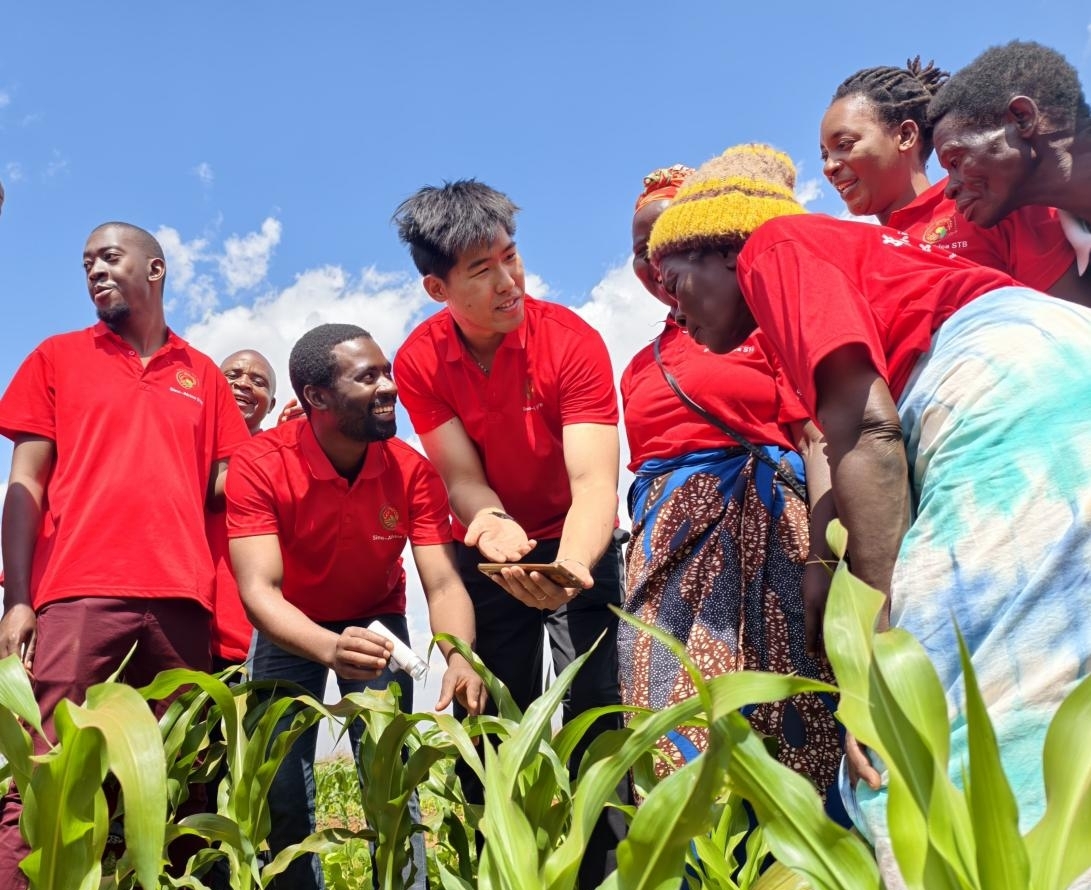
A Chinese expert of Science and Technology Backyard in Malawi discusses corn maize yield-improvement techniques with local students. (Photo provided by China Agricultural University)
As the founder of the STB program, I have, through more than a decade of exploration, established and validated a viable pathway for the model's global expansion. We pioneered a "1+1+1" training model: Year 1 in China for foundational knowledge, Year 2 for home-country STB application, and Year 3 in China for refinement—ensuring seamless integration of learning and implementation.
In multiple African nations, STB graduates have launched a "1-3-5-1" initiative: tackling one regional agricultural challenge, mentoring 30 farmers in field trials, training five extension agents, and establishing a 100-mu (6.67-hectare) demonstration plot. This adapts Chinese methodologies to local contexts while building capacity and delivering measurable outcomes.
In Malawi, for instance, the STB program helped 90 local farmers quadruple their maize yields in its very first year, enhancing food security across 18 villages. Recognized for its tangible impact, the STB program has been featured by the Food and Agriculture Organization of the United Nations as a leading case study for worldwide promotion.
From a locally developed innovation in China, overseas STBs first took root in African countries and have since been expanded in Brazil, Malaysia, and beyond, with cooperation models becoming increasingly diverse.
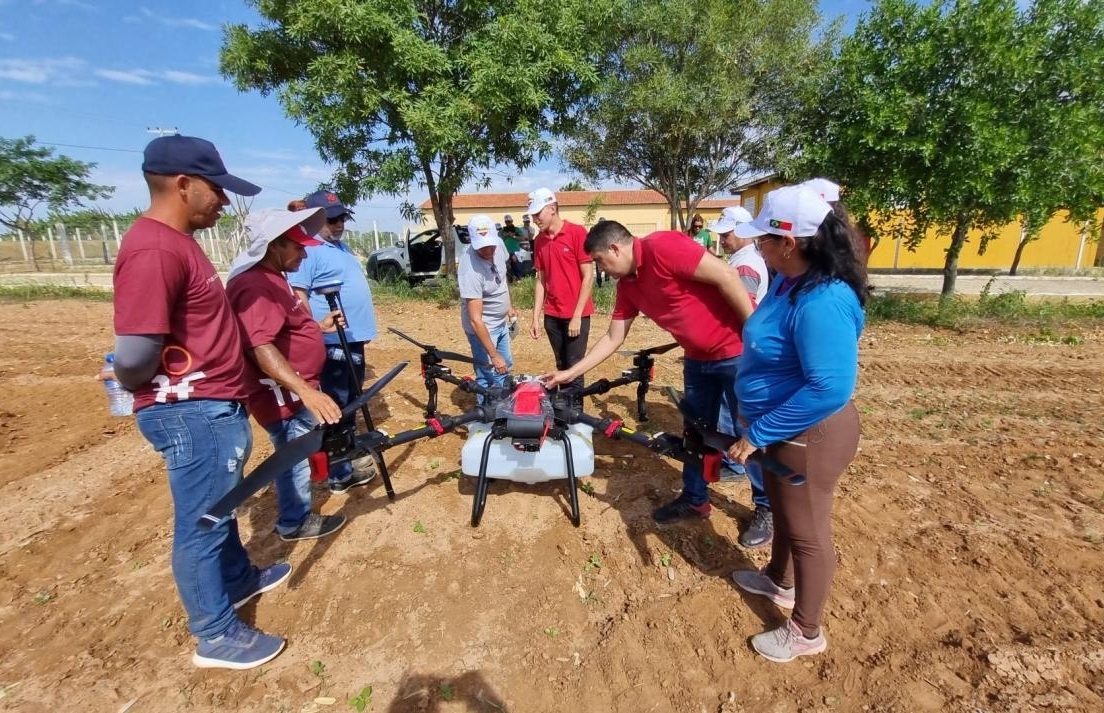
Brazilian students of Science and Technology Backyard in the State of Rio Grande do Norte, Brazil, as well as local farmers, learn to operate a drone manufactured in China. (Photo by Diogense Nobrega)
The STB program emphasizes that technological innovation must advance in tandem with talent cultivation and that green development must deliver tangible benefits to farmers. Successful overseas practices have fully demonstrated the feasibility and effectiveness of China's path toward green agricultural development.
Today, as the world grapples with food security and climate change, advancing the green transformation of agriculture has become a global priority.
China is ready to work with international partners to develop the STB program into an open network for cooperation -- sharing experience, contributing solutions, and promoting collaborative innovation.
Plans are underway to establish an STB global center to systematically summarize and disseminate successful practices, support countries in cultivating local talent, and empower agricultural transformation worldwide. This will enable the STB model -- originating in China -- to serve as an effective pathway for global green transformation of agriculture.
(Zhang Fusuo is an academician of the Chinese Academy of Engineering, professor at China Agricultural University, and vice chairman of the China Rural Special Technology Association.)
Photos




Related Stories
- China details measures to further advance agricultural modernization, rural revitalization
- China's top grain-producing province enhances agricultural returns via expanded contract farming
- Interview: China emerging as key hub for agricultural innovation, says Syngenta CEO
- China's grain output hits new high in 2025
- Tech innovation reshapes NW China's agriculture landscape
- China's sunflower seeds find global appetite
- Feature: Determined partnership makes farming pay handsomely in east China
- China maps cotton's evolutionary secrets to build better crops
- Scientists uncover mechanism behind natural "fertilizer factory" in plants
- Chinese vice premier stresses importance of wheat field management
Copyright © 2026 People's Daily Online. All Rights Reserved.
