



American glaciologist decodes secrets of glaciers on Qinghai-Xizang Plateau
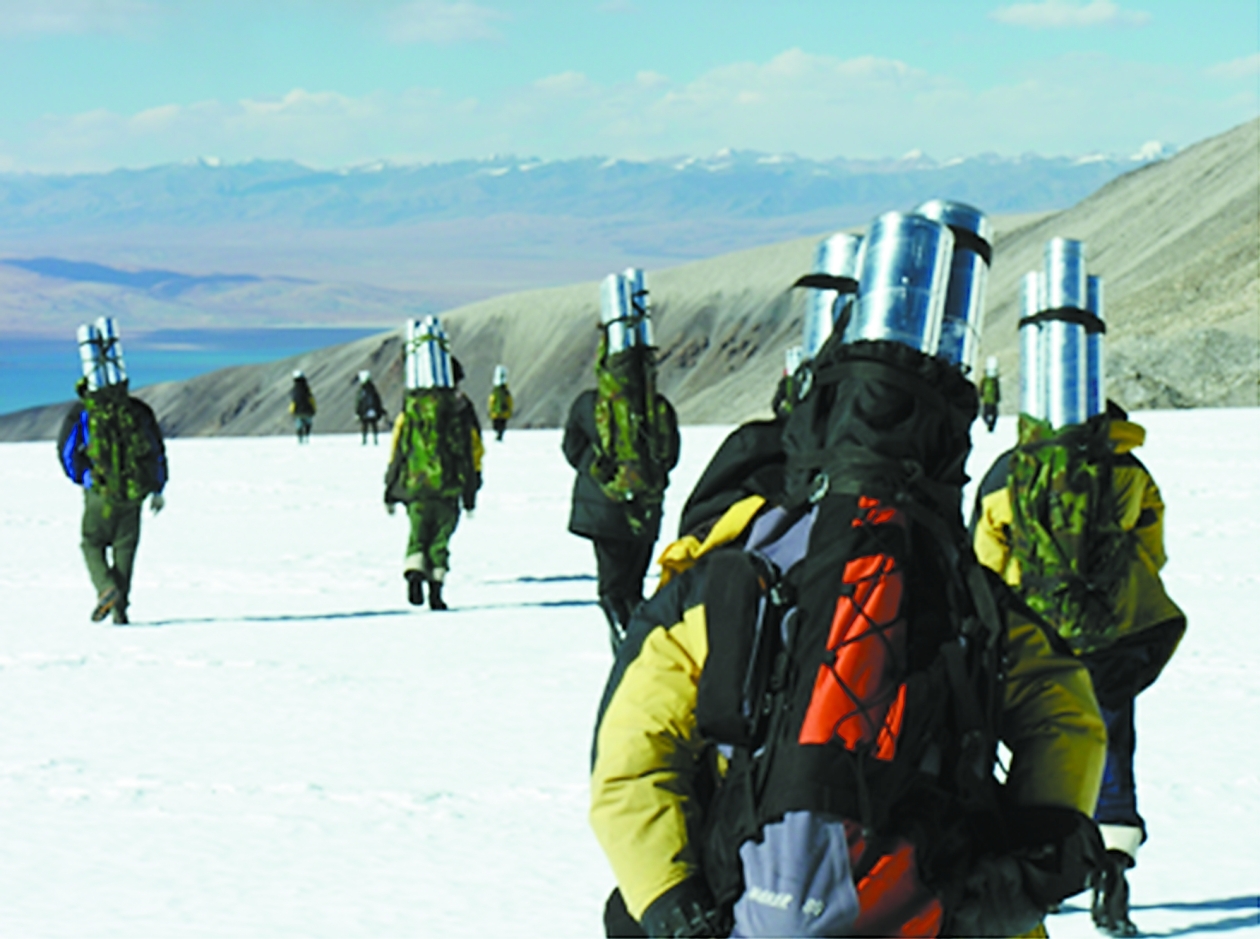
In 2006, members of the China-US joint expedition team carry ice cores from Naimona'nyi back to their base camp. Courtesy of the Institute of Tibetan Plateau Research, Chinese Academy of Sciences
Nestled beneath the campus of Ohio State University in the United States lies a unique repository: an underground "ice core bank." Within its chambers, thousands of gleaming silver tubes are neatly arranged on steel racks. This vault safeguards the world's most extensive collection of ice-core archives -- irreplaceable records chronicling Earth's climate fluctuations across an extraordinary 700,000-year timespan.
The visionary behind this initiative is Lonnie Thompson, a member of the American Academy of Sciences and distinguished professor of the School of Earth Sciences at Ohio State University.
Prof. Thompson presents a polite and scholarly figure, often seen with silver-rimmed glasses. However, when discussing glaciers, his demeanor transforms, revealing profound passion and encyclopedic knowledge, as if recounting tales of cherished companions.
Demonstrating remarkable foresight over four decades ago, Prof. Thompson diverged from the prevailing focus on polar regions. He recognized the critical scientific importance of glaciers in mid- and low-latitude areas. This insight propelled him to lead 50 challenging expeditions to remote highlands across nearly 20 countries.
Through the collection and analysis of ice-core samples, he pioneered the reconstruction of global paleoclimate patterns. These foundational contributions earned him recognition as the founder of mid- and low-latitude alpine paleoclimatology.
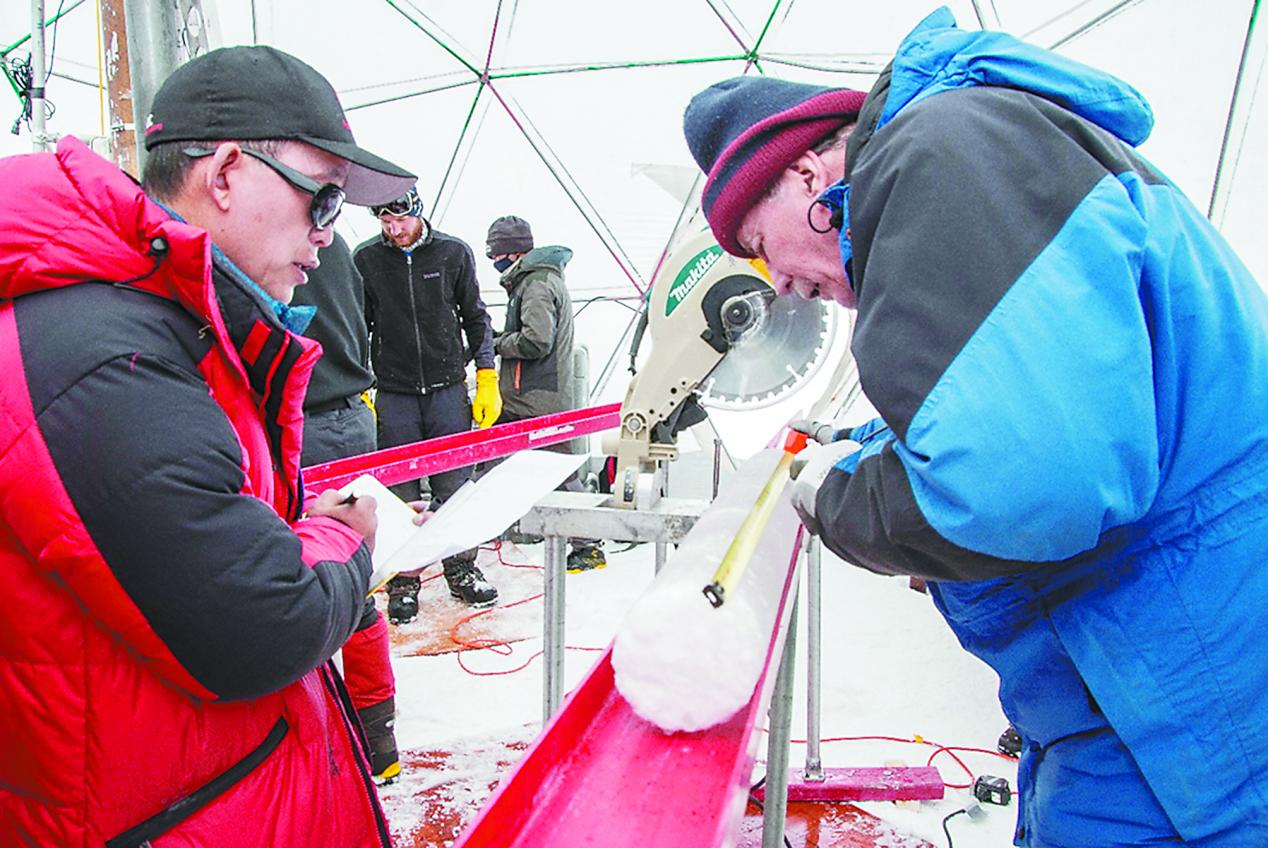
In 2015, Lonnie Thompson (right) and Yao Tandong (left) measure the length of an ice core during a joint five-country expedition at Guliya Glacier. Courtesy of the Institute of Tibetan Plateau Research, Chinese Academy of Sciences
Prof. Thompson holds the distinction of being the first American glaciologist to conduct scientific research on the Qinghai–Xizang Plateau and the first paleoclimatologist to drill ice cores from Himalayan glaciers. Since 1984, he has visited the plateau 29 times for field research and is known among Chinese colleagues as both a "trailblazer" and a "collaborator" in China's glacier scientific expeditions.
In 1987, Prof. Thompson worked with Chinese and Russian scientists, including Prof. Yao Tandong, one of the pioneers in China’s glaciological research, to complete the drilling of the first deep ice core at the Dunde ice cap in the Qilian Mountains in the northwest China. In 1989, the research findings were published in Science, one of the world's leading academic journals, drawing widespread attention from the international science communities.
In 1992, a multinational research team including Chinese and American scientists reached the Guliya ice cap in the west Kunlun Mountains in northwest China and successfully drilled an ice core that set a milestone: at 308.6 meters long, it was then the longest ever retrieved from mid- to low-latitude regions, and it remains the one containing the most extended continuous climate record to date. Spanning over 700,000 years, the core has enabled detailed reconstruction of climatic and environmental changes across multiple timescales since the last interglacial period.
In 1997, on Mount Shishapangma, the 14th-highest mountain in the world in China's Xizang autonomous region, a joint China-U.S. expedition drilled three Dasuopu ice cores with a combined length of 480 meters and a total weight of 5 tons, setting a world record for the highest-altitude ice-core drilling site, at 7,200 meters above sea level.
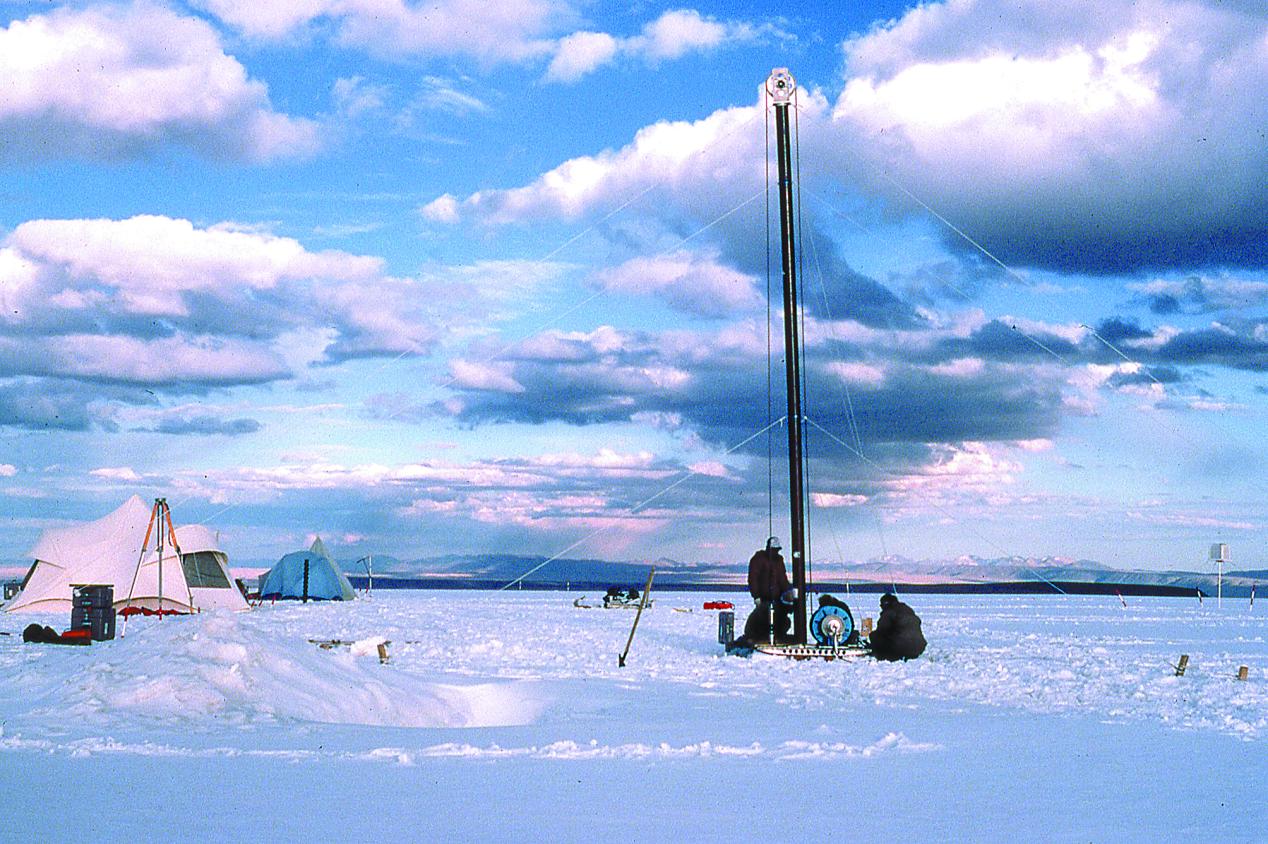
In 1987, members of the China-U.S. joint expedition team were drilling at the Dunde Ice Cap in the Qilian Mountains. Courtesy of the Byrd Polar and Climate Research Center, USA
Through his long-standing collaboration with Chinese scientists such as Prof. Yao, Prof. Thompson became firmly convinced of one fundamental truth: even amidst extreme climatic conditions, scientists from the United States and China share common goals. Science transcends borders. Ultimately, he believes, the global community must unite to confront the shared challenge of climate change.
Since the late 1980s, Prof. Thompson has dedicated portions of his research funding to support Chinese scientists, inviting them for academic exchanges at the Byrd Polar and Climate Research Center in the United States.
Over the following decades, he has co-authored papers with Chinese researchers in internationally renowned journals such as Nature, substantially elevating the global academic profile of Chinese scientists in this field.
Built upon decades of persistent research and accelerated in recent years by major national science and technology programs such as the Second Scientific Expedition and Research to the Qinghai-Xizang Plateau and "Pan-Third Pole Environment Change Study for Green Silk Road Development" project by the Chinese Academy of Sciences -- Chinese scientists have risen to the international forefront of glacier research on the Qinghai-Xizang Plateau.
Prof. Thompson has personally witnessed China's transformative development and observed the government's increasing investment in cultivating young scientific talents and modernizing research infrastructure. He notes that China's ice-core laboratories have grown increasingly sophisticated, with new research campuses established in both Beijing and Lhasa, Xizang autonomous region.
Today, the Qinghai–Xizang Plateau has emerged as a new arena for international ice-core research, alongside the Arctic and Antarctic.
Prof. Thompson remains committed to advancing China-U.S. scientific cooperation in glaciology and to helping China's glacier research integrate more deeply into the international scientific community.
To advance international support for the China-led Third Pole Environment (TPE) program, Prof. Thompson utilized his academic influence to establish a TPE satellite office at The Ohio State University. He has consistently taken part in TPE Workshops, where he urged Earth scientists focusing on the Third Pole research to share their expertise and collaboratively tackle climate change challenges.
Furthermore, he has facilitated visits and coordinated coverage by international media outlets, including The New York Times, to relevant research institutes in China, enabling the world to gain a better understanding of China's glaciological research and effort to combat climate change threats.
Photos




Related Stories
- Residents leap from isolation to prosperity in Yumai Town
- China's Xizang aims for high-quality economic growth in 2026
- First national standard for disease classification and coding in Tibetan medicine released
- Private enterprises drove Xizang's foreign trade in 2025
- China's Xizang sees steady tourism growth in 2025
- Snow scenery of ruins of Guge Kingdom in Zanda county, Xizang
- Healthcare system in China's Xizang continues to improve
- Regional GDP of SW China's Xizang exceeds 300 billion yuan in 2025
- People celebrate farmers' New Year in Xigaze, China's Xizang
- Dingri county in Xizang shows renewed landscape one year after earthquake
Copyright © 2026 People's Daily Online. All Rights Reserved.
