



China builds world's largest express delivery network, fueling dynamic economy
Speed, scale and connectivity are defining features of China's modern logistics system, offering a clear view into the nation's economic vitality.
A case in point is the "cherry express." Riding this dedicated route, a cargo aircraft carrying over 100 tons of fresh cherries can fly from Chile to Ezhou Huahu International Airport in central China's Hubei province in just 25 hours. From there, an integrated rail-road-air transport network swiftly delivers the fruit to destinations across the country.
Such efficiency has become increasingly visible to consumers. Earlier this year, many netizens remarked that even the delivery of Spring Festival goods now comes with "China speed."
This is one snapshot of China's rapidly evolving logistics sector. Behind that speed is the world's largest express delivery network, serving the country's vast population. In 2025, China handled nearly 200 billion parcels, up 13.6 percent year on year, ranking first globally for 12 consecutive years.
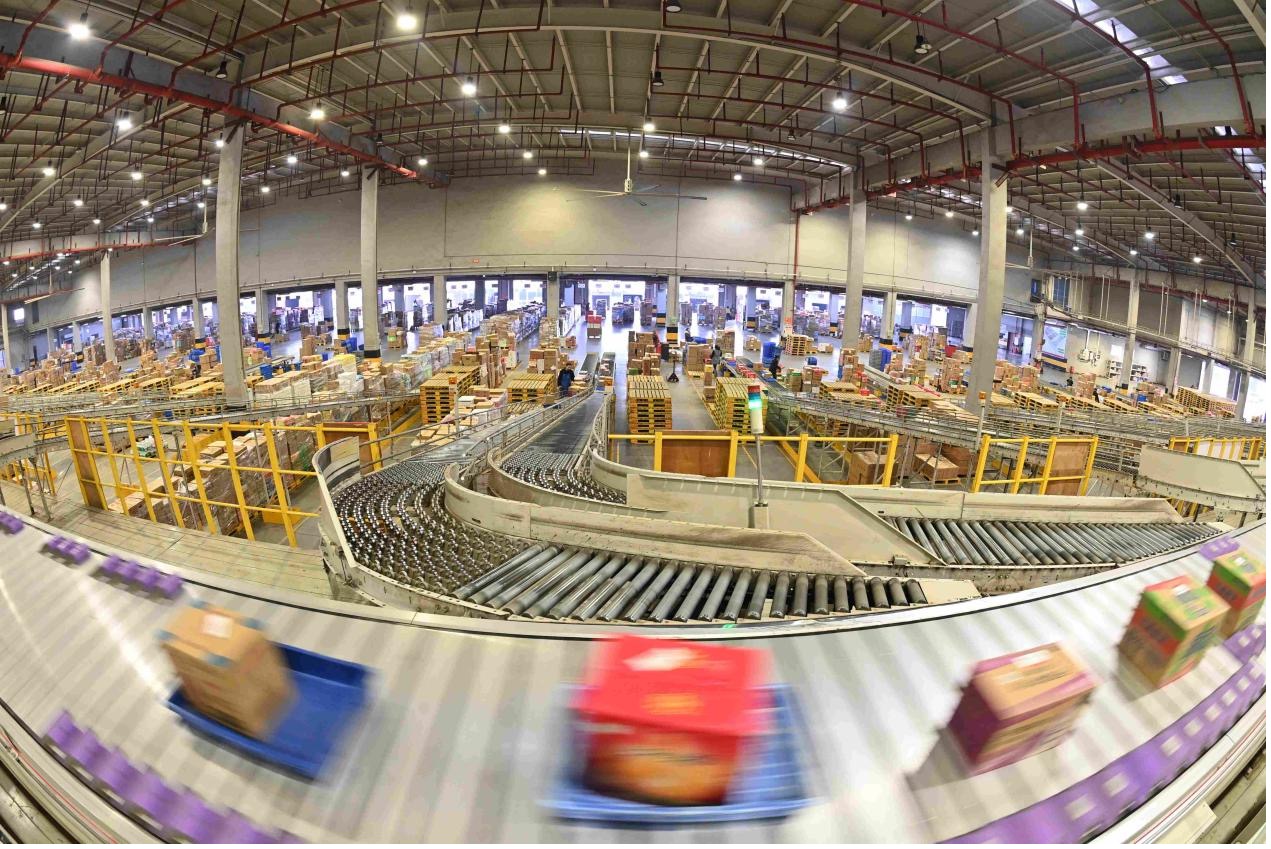
Parcels are automatically sorted at a delivery center of a logistics company in Shapingba district, southwest China's Chongqing municipality. (Photo/Sun Kaifang)
During the 14th Five-Year Plan period (2021–2025), postal coverage in rural and border areas expanded significantly. The number of service outlets increased by nearly 1.5 times compared with five years ago, and all natural villages in border areas now have access to postal services.
Though small in size, parcels connect online and offline markets, link production with consumption, and serve as a barometer of economic vitality. Exploring how China built the world's largest logistics network offers deeper insight into a dynamic and thriving China.
Historically, this achievement demonstrates how China's reform have transformed its economy. The first private express delivery companies emerged in 1993 and developed steadily. A major turning point came in 2009, when revisions to the postal law clarified the legal status of private courier firms.
Major companies accelerated network expansion, seizing the momentum and scaling up rapidly. As a result, China now handles about 10 billion express parcels a month -- roughly what used to be its annual total.
Over more than three decades, China's express delivery sector has repeatedly reached new milestones. Growing alongside the country's reform, the expanding delivery network has become a vivid example of a vibrant China in motion.
From a real-world standpoint, this global lead highlights the advantages of China's super-large market.
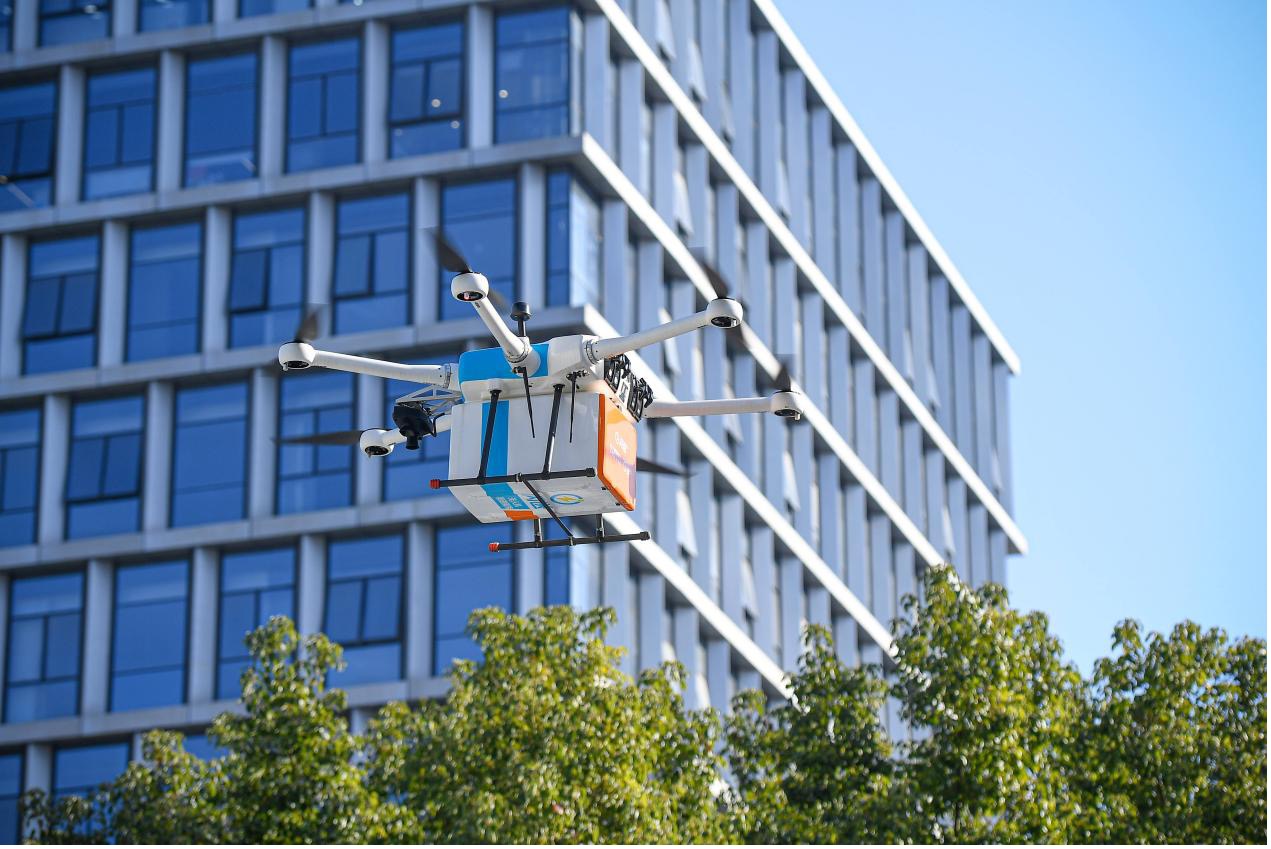
A drone is on a delivery mission in Hangzhou, east China's Zhejiang province. (Photo/Wang Chuan)
Placing orders on a smartphone and receiving parcels at the doorstep has become routine for Chinese consumers. Behind this convenience lies a strong synergy between e-commerce and express delivery. Today, more than 80 percent of China's parcel volume originates from e-commerce transactions. In 2025, the value of physical goods sold online and delivered via express services exceeded 14 trillion yuan ($2.01 trillion).
Growing together, e-commerce and express delivery have effectively unlocked consumption potential. Initiatives like "e-commerce expansion to western regions" have helped break through the "last mile" of consumption, steadily enlarging areas offering free shipping. The advantages of China's vast market continue to emerge. Take Xinjiang Uygur autonomous region in the northwest, for example: since the introduction of free-shipping services, the average daily volume of inbound parcels has risen by nearly 1 million, strongly supporting rapid growth in online retail sales of physical goods.
Looking to the future, this world's largest logistics network is increasingly driven by new quality productive forces.
Handling over 10 billion parcels each month -- equivalent to processing about 6,000 parcels per second -- requires robust technological support to keep such enormous volumes moving smoothly. That support comes from advanced technologies.
In smart warehouses, handling robots glide along tracks while vertical robots move tirelessly between floors. On sorting lines, AI-powered vision systems identify and route parcels with speed and precision. At the last mile, unmanned delivery vehicles work seamlessly alongside couriers to improve efficiency. Across collection, sorting, transportation and delivery, next-generation information technologies are taking effect, making the delivery network denser, smarter and more efficient.
The rapid growth of the express delivery network also mirrors China's broader infrastructure upgrade. Across the country, the world's largest and most advanced high-speed rail network links north and south; the world's largest expressway network serves hundreds of millions of people; and the world's largest 5G network blankets vast urban and rural areas alike. Tangible and intangible networks interweave, infusing a mobile China with renewed vitality.
The road ahead is long, but the stride is steady and confident. As technological innovation and industrial innovation deepen their integration, and as the development of a unified national market advances further, the world's largest express delivery network will become smarter and more accessible, contributing to a more connected future.
Photos




Related Stories
- Revolutionizing river life: drone delivery brings convenience to Yangtze crews
- Booming express delivery industry reflects new drivers of China's economic growth
- China's express delivery sector posts steady growth in first 10 months
- China's express delivery volume rises as services get faster
- China's Cainiao to expand global 5-day delivery service to six more countries
Copyright © 2026 People's Daily Online. All Rights Reserved.
