



Chinese scientists observe tunable prethermal plateau in 78-qubit quantum processor
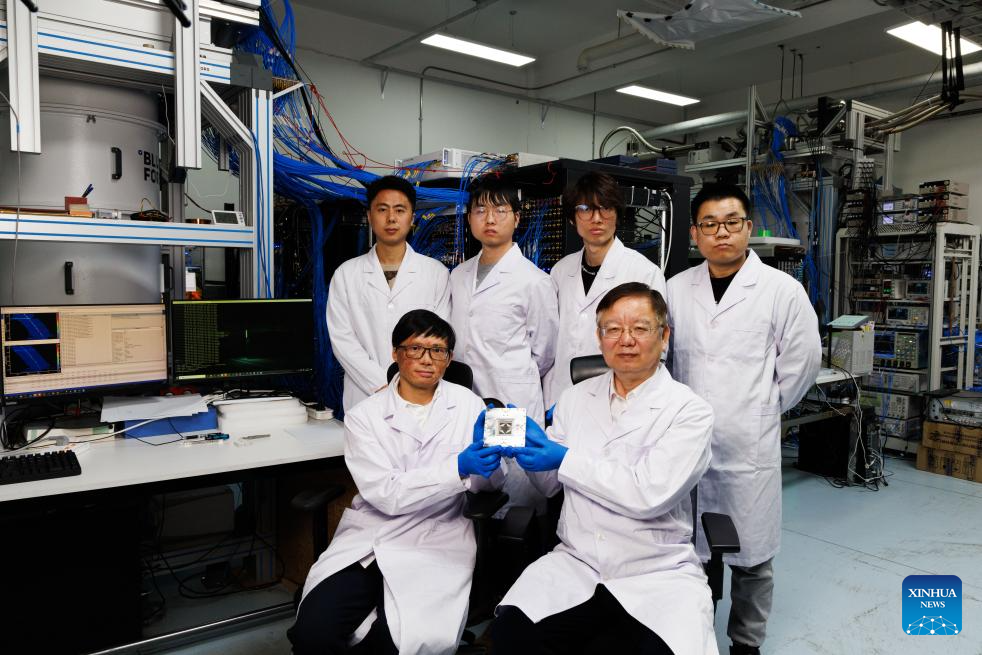
Researchers pose for a group photo with Chuang-tzu 2.0, a two-dimensional superconducting processor consisting of 78 qubits, at a lab in the Institute of Physics under the Chinese Academy of Sciences (CAS) in Beijing, capital of China, Jan. 21, 2026.
Chinese scientists observed a tunable prethermal plateau in a 78-qubit quantum processor, showing how random multipolar driving controls the system's heating before full thermalization.
The study, led by researchers from the Institute of Physics under the CAS and Peking University, was published on Wednesday in the journal Nature. (Xinhua/Jin Liwang)
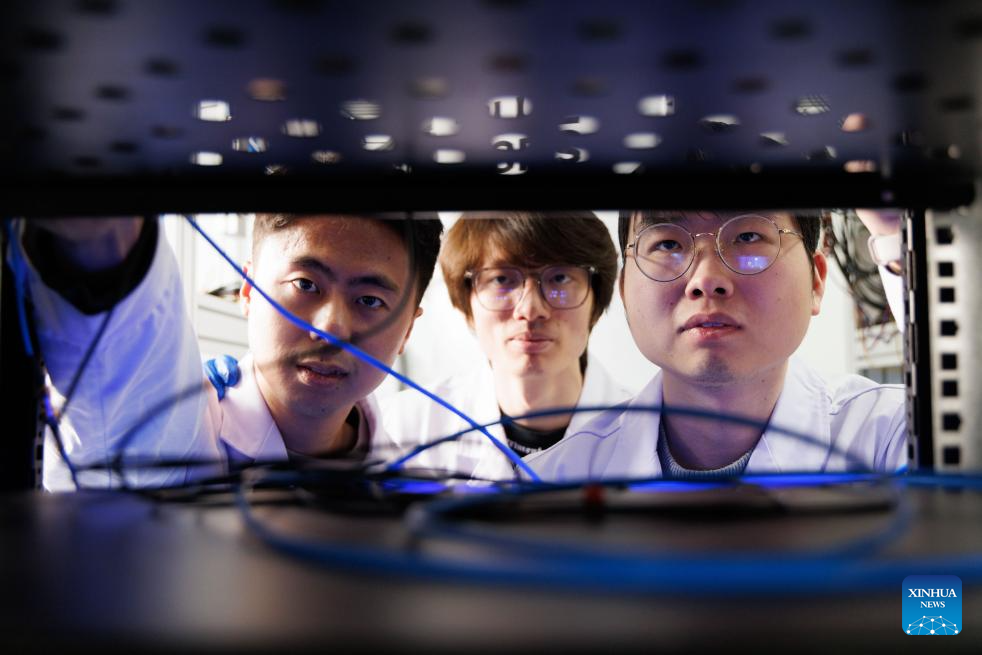
Researchers Liu Zhenghe, Liang Guihan, and Liu Yu (L-R) check data at a lab of the Institute of Physics under the Chinese Academy of Sciences (CAS) in Beijing, capital of China, Jan. 21, 2026.
Chinese scientists observed a tunable prethermal plateau in a 78-qubit quantum processor, showing how random multipolar driving controls the system's heating before full thermalization.
The study, led by researchers from the Institute of Physics under the CAS and Peking University, was published on Wednesday in the journal Nature. (Xinhua/Jin Liwang)
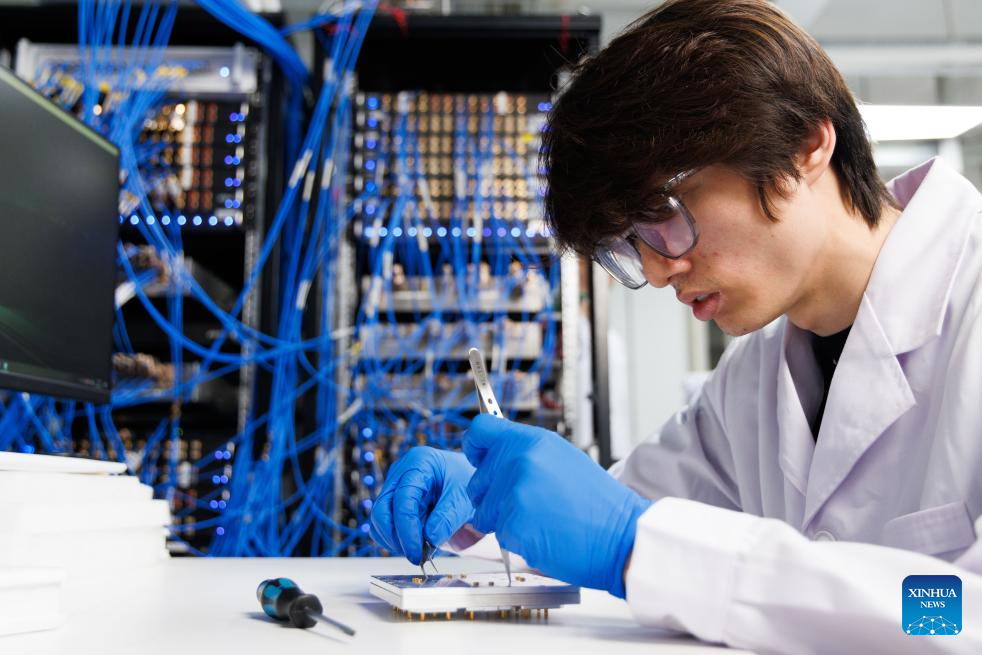
Researcher Liang Guihan attempts to open the back cover of a sample box at a lab of the Institute of Physics under the Chinese Academy of Sciences (CAS) in Beijing, capital of China, Jan. 21, 2026.
Chinese scientists observed a tunable prethermal plateau in a 78-qubit quantum processor, showing how random multipolar driving controls the system's heating before full thermalization.
The study, led by researchers from the Institute of Physics under the CAS and Peking University, was published on Wednesday in the journal Nature. (Xinhua/Jin Liwang)
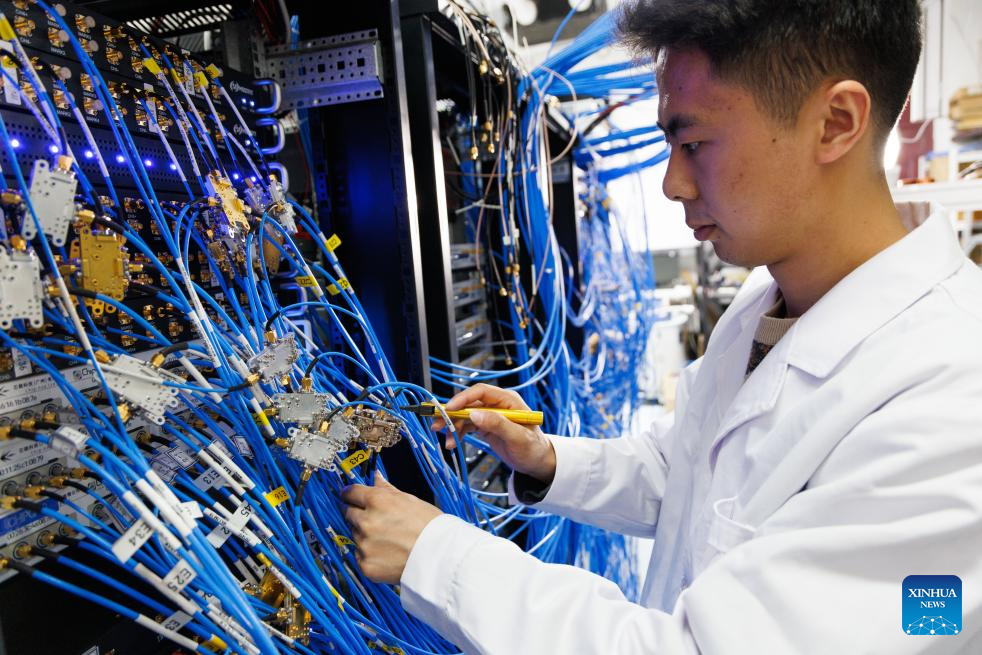
Researcher Liu Zhenghe checks wires at a lab of the Institute of Physics under the Chinese Academy of Sciences (CAS) in Beijing, capital of China, Jan. 21, 2026.
Chinese scientists observed a tunable prethermal plateau in a 78-qubit quantum processor, showing how random multipolar driving controls the system's heating before full thermalization.
The study, led by researchers from the Institute of Physics under the CAS and Peking University, was published on Wednesday in the journal Nature. (Xinhua/Jin Liwang)
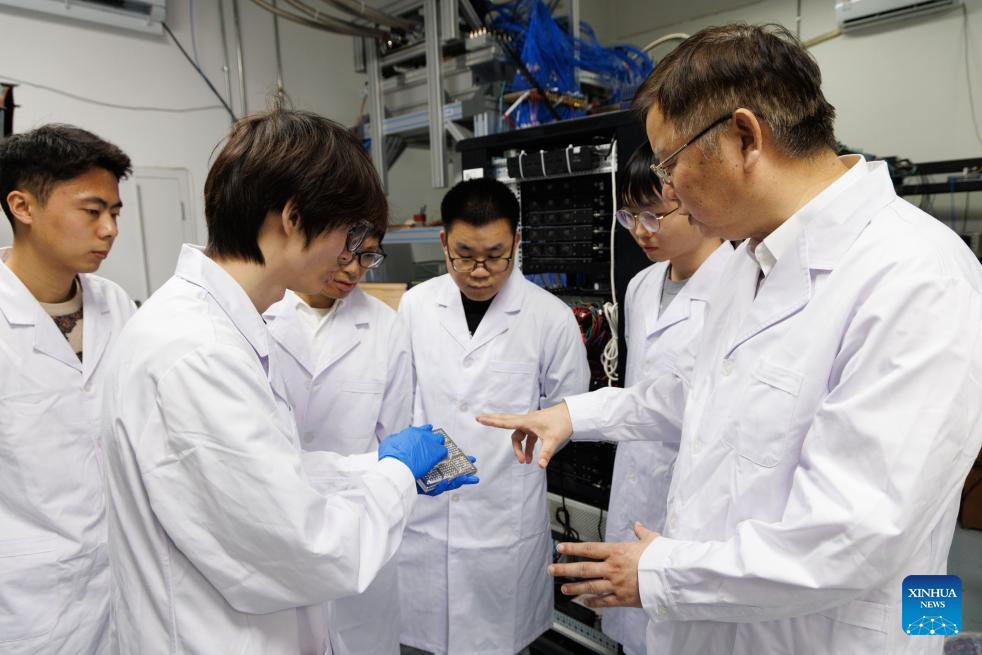
Researchers have a group discussion at a lab of the Institute of Physics under the Chinese Academy of Sciences (CAS) in Beijing, capital of China, Jan. 21, 2026.
Chinese scientists observed a tunable prethermal plateau in a 78-qubit quantum processor, showing how random multipolar driving controls the system's heating before full thermalization.
The study, led by researchers from the Institute of Physics under the CAS and Peking University, was published on Wednesday in the journal Nature. (Xinhua/Jin Liwang)
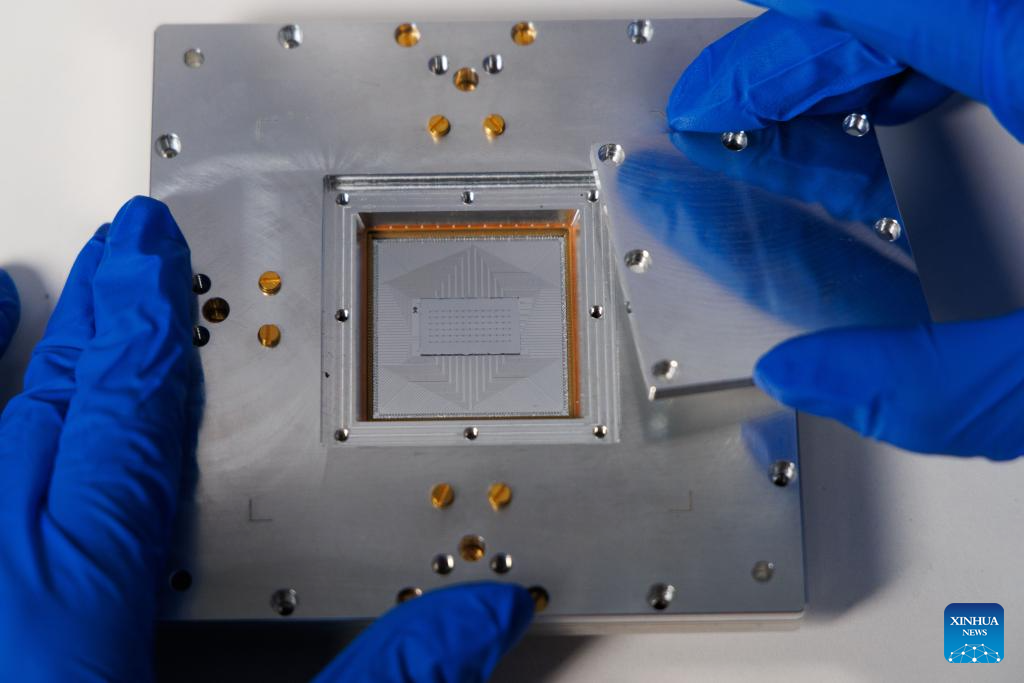
This photo taken on Jan. 21, 2026 shows the Chuang-tzu 2.0, a two-dimensional superconducting processor consisting of 78 qubits, at a lab of the Institute of Physics under the Chinese Academy of Sciences (CAS) in Beijing, capital of China.
Chinese scientists observed a tunable prethermal plateau in a 78-qubit quantum processor, showing how random multipolar driving controls the system's heating before full thermalization.
The study, led by researchers from the Institute of Physics under the CAS and Peking University, was published on Wednesday in the journal Nature. (Xinhua/Jin Liwang)
Photos


Related Stories
- Joint quantum lab takes root in Bangkok, boosting China-Thailand tech ties
- China speeds up quantum tech transfer, building supply chains from lab research
- China's superconducting quantum computer ready for commercial use
- Chinese scientists make progress in quantum friction research
- China races to turn quantum computing into industrial solutions
Copyright © 2026 People's Daily Online. All Rights Reserved.
