



Yakeshi expands beyond skiing to offer diverse winter experiences
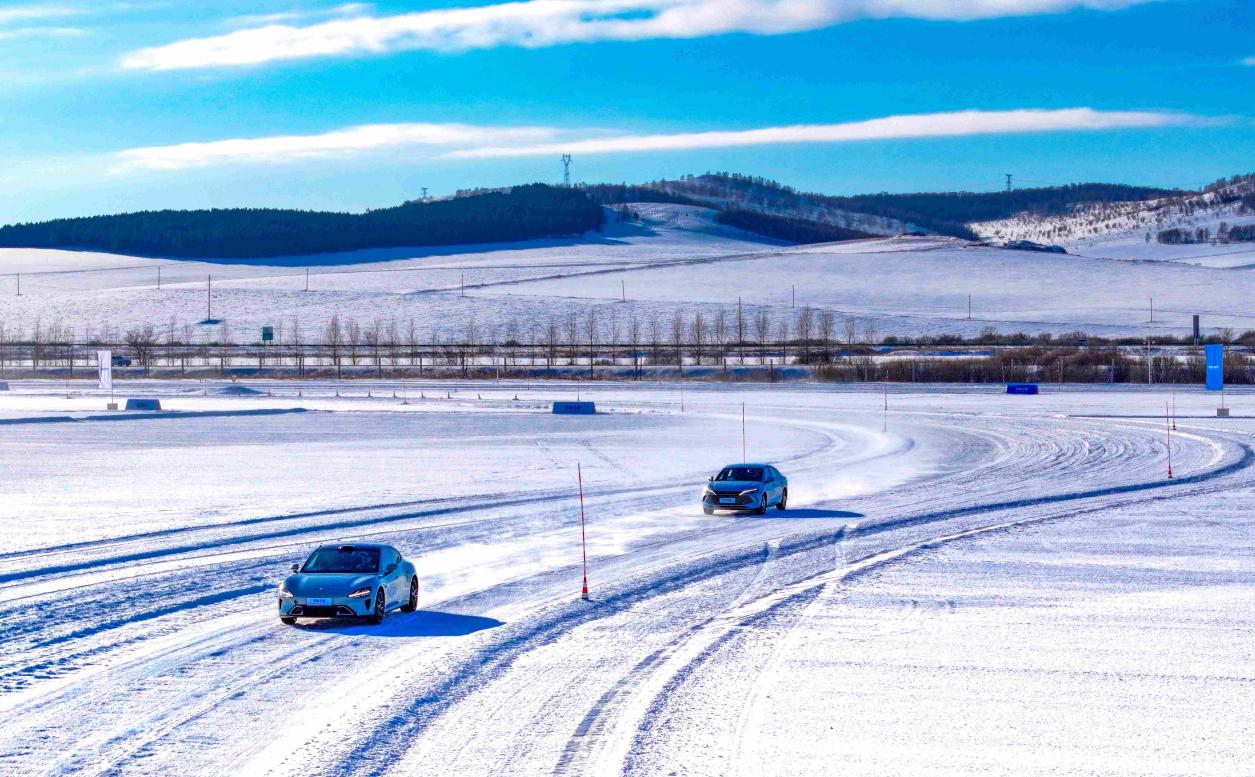
New energy vehicles are having their performance validated at a winter testing base in Yakeshi, Hulun Buir, north China's Inner Mongolia autonomous region, Dec. 8, 2025. (Photo/Wang Zheng)
Yakeshi, a city in the Hulun Buir region of north China's Inner Mongolia autonomous region, is entering its peak season with the arrival of a new arctic cold front.
In recent years, this city—one of China's key bases for automotive winter testing—has been undergoing a transformation from a specialized testing ground into a comprehensive ice-and-snow industry hub, emerging as a new model for economic development in cold-region cities.
The 2025-2026 automotive winter testing season officially commenced in Yakeshi on the morning of December 7, 2025. With the signal flag raised, a diverse fleet of test vehicles -- ranging from electric sedans and high-performance SUVs to luxury sports cars -- began traversing the snow-covered tracks.
"The natural ice surfaces and sustained sub-zero temperatures here provide optimal conditions for validating the performance of new energy vehicles," said Ma Zhanyun, chief engineer in charge of high-altitude, high-temperature, and high-cold tests at Chinese automobile giant BYD.
Ma was overseeing his team at the Hulun Buir winter test site of the China Automotive Technology and Research Center. Their work focused on critical areas like low-temperature driving range and battery thermal management systems, with each dataset providing vital input for product refinement.
Situated at 49 degrees north latitude, Yakeshi experiences an average winter temperature of minus 24 degrees Celsius, with extreme lows reaching minus 50 degrees Celsius. The freezing period lasts up to six months, snow cover extends for nearly 200 days a year, and ice thickness reaches two to four meters.
This natural environment offers vehicles full-scenario testing environments, including extreme cold starts, low-temperature endurance, and handling on ice-and-snow-covered surfaces, allowing reliability under extreme conditions to be verified without artificial simulation.
Since automotive testing was first introduced in 2006, Yakeshi has evolved from a single-purpose testing site for conventional fuel vehicles into a site with a comprehensive testing system covering more than a dozen categories, including new energy vehicles, intelligent connected vehicles, luxury supercars, and special-purpose vehicles.
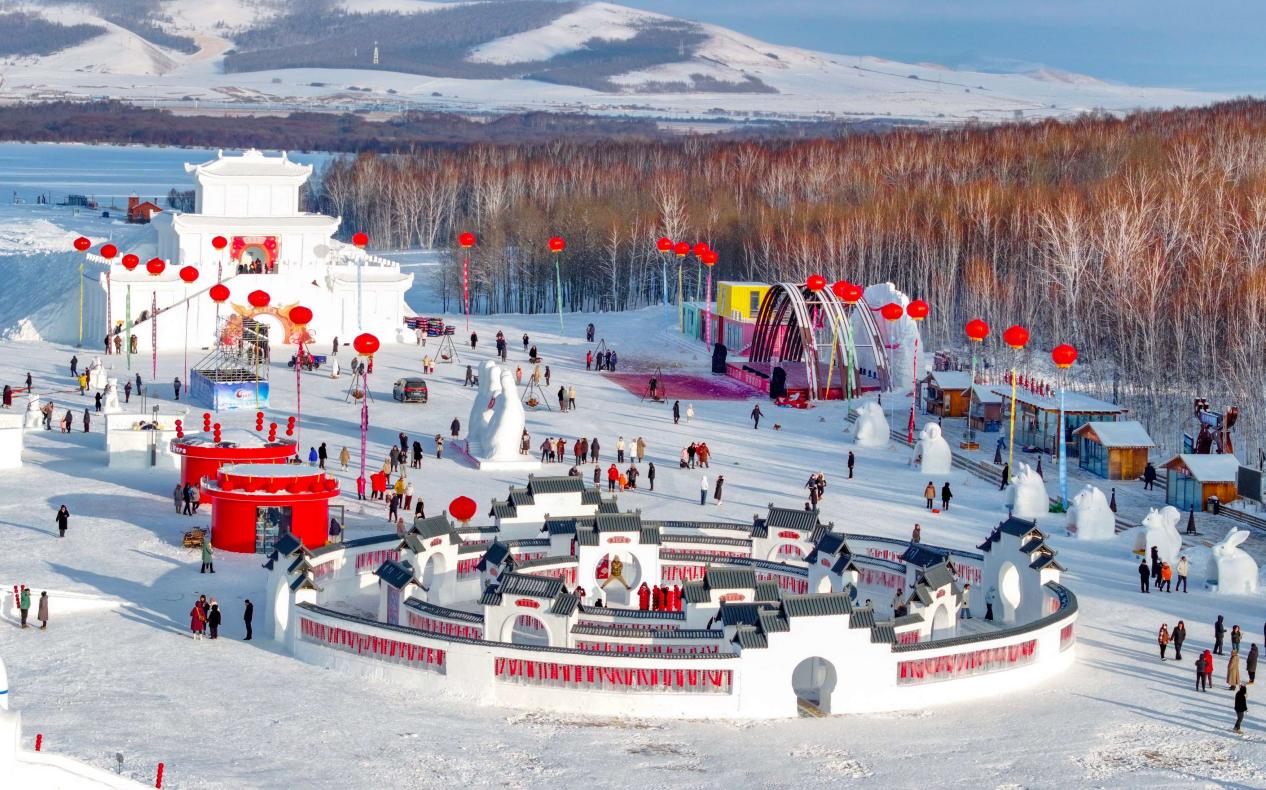
Tourists visit the Phoenix Mountain scenic area in Yakeshi, Hulun Buir, north China's Inner Mongolia autonomous region, Dec. 7, 2025 (Photo/Wang Zheng)
A large number of well-known domestic and international companies have since established a presence there, forming a technology-intensive industrial cluster. To date, Yakeshi has conducted more than 28,000 vehicle test runs, received over 340,000 client visits, served more than 1,400 automakers, and generated total revenue of 1.14 billion yuan ($162.72 million).
As a benchmark base for automotive winter testing in China, Yakeshi is set to reach a new high in testing scale this winter, with an estimated 230 automakers from around the world and more than 2,700 vehicles expected to participate, marking steady growth compared with previous years.
On December 11, 2025, a project to build China's first all-season ice-and-snow testing base for intelligent connected new energy vehicles, with a total investment of 1.039 billion yuan, was officially signed and launched in Yakeshi. Construction is scheduled to begin in May 2026 and be completed in 2028.
Once finished, it will become the world's largest, most comprehensive, and technologically advanced all-season ice-and-snow testing base for new energy vehicles. The project will include the country's first professional testing facility with indoor snowfall scenarios and China's only winter testing site for flying cars, enabling extreme low-temperature testing at minus 40 degrees Celsius throughout the year.
While automotive winter testing is accelerating industrial growth, Yakeshi's ice-and-snow tourism is also constantly reinventing itself.
"Faster! Faster!" Cheers rang out from the snow-slide area at the Phoenix Mountain scenic area. A snow track more than 100 meters long, resembling a white ribbon, wound down a hillside, with a specially designed buffer slope at the end ensuring both excitement and safety.
"It's so much fun! I want to go again!" said Duoduo, a five-year-old visitor from Hangzhou, east China's Zhejiang province.
Yakeshi has moved beyond a single focus on skiing to offer a richer, more immersive ice-and-snow tourism experience.
At a recently launched ice and snow art festival, a "tanghulu tree" -- more than 10 meters tall and decorated with over 10,000 skewers of the traditional Chinese candied hawthorn snack -- has emerged as a popular attraction for visitors.
Ice houses built from 2,200 cubic meters of natural ice gleamed with crystalline clarity, while activities such as a 500-meter-long snow slide, snowmobile rides, and a snow maze added to the fun.
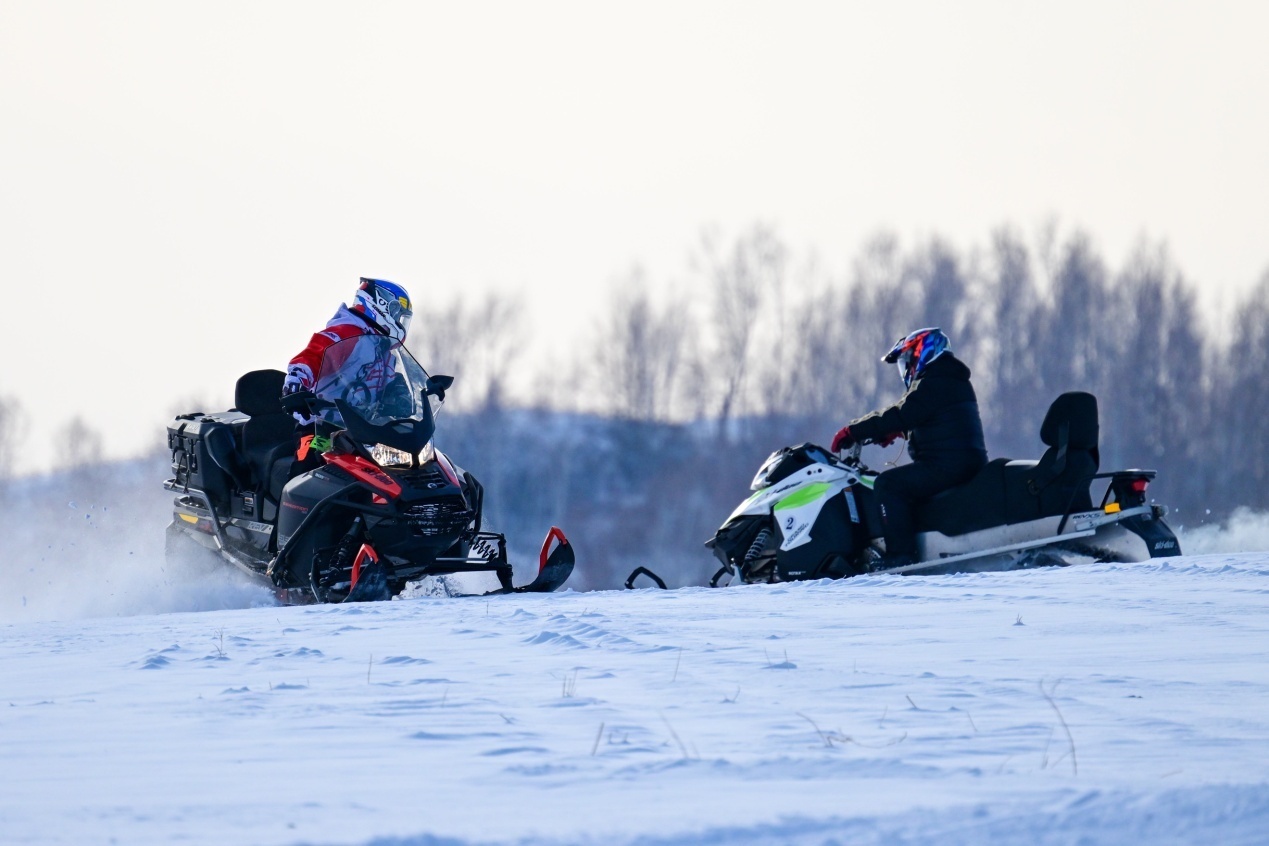
Tourists ride snowmobiles at a ski resort in Yakeshi, Hulun Buir, north China's Inner Mongolia autonomous region, Dec. 22, 2025. (Photo/Wang Xiaobo)
Last winter, the city welcomed 1.3151 million tourists, generating total tourism revenue of 1.587 billion yuan.
Winter testing and winter tourism have together fostered a mutually reinforcing development ecosystem in Yakeshi. The influx of engineers and technical personnel during the testing season has become a stable source of visitors for ice-and-snow tourism, while the steadily improving catering, accommodation, and other supporting services have in turn provided solid backing for the testing industry.
The dividends of this industrial integration benefit local residents. "In the past, winter just meant staying at home. Now winters in Yakeshi are incredibly lively," said a woman surnamed Wang, who runs a restaurant in the city. She told People's Daily that during the testing season and peak tourism periods, her restaurant serves over 100 customers a day, with revenues more than three times higher than usual. "This would have been unimaginable more than a decade ago," she said.
On the extreme cold tracks, rolling wheels are driving industrial upgrading; across the snow-covered landscapes, laughter and joy are unlocking consumption potential. With ingenuity and hard work, this northern Chinese city is turning "cold resources" into a "hot economy," continuously writing its own chapter of high-quality development.
Photos




Related Stories
- The art of ice sculpting in Changchun
- Winter recreation facilities bring joy to people in Changchun, NE China's Jilin
- Ice, snow tourism heats up across China, drawing global visitors
- The ice pillars of Sayram Lake
- Harbin Ice and Snow World opens with expanded park
- Ice floes glitter on Tekes River
- Ice, snow economy heats up in Zhejiang despite lack of natural winter resources
- From 'cold resources' to 'hot industry'
- Breaking the ice: the most challenging part of ice harvesting
- Crystal-like ice spectacle appears on Yichun River
Copyright © 2026 People's Daily Online. All Rights Reserved.
