



New Year holiday ushers in strong consumption vitality in China
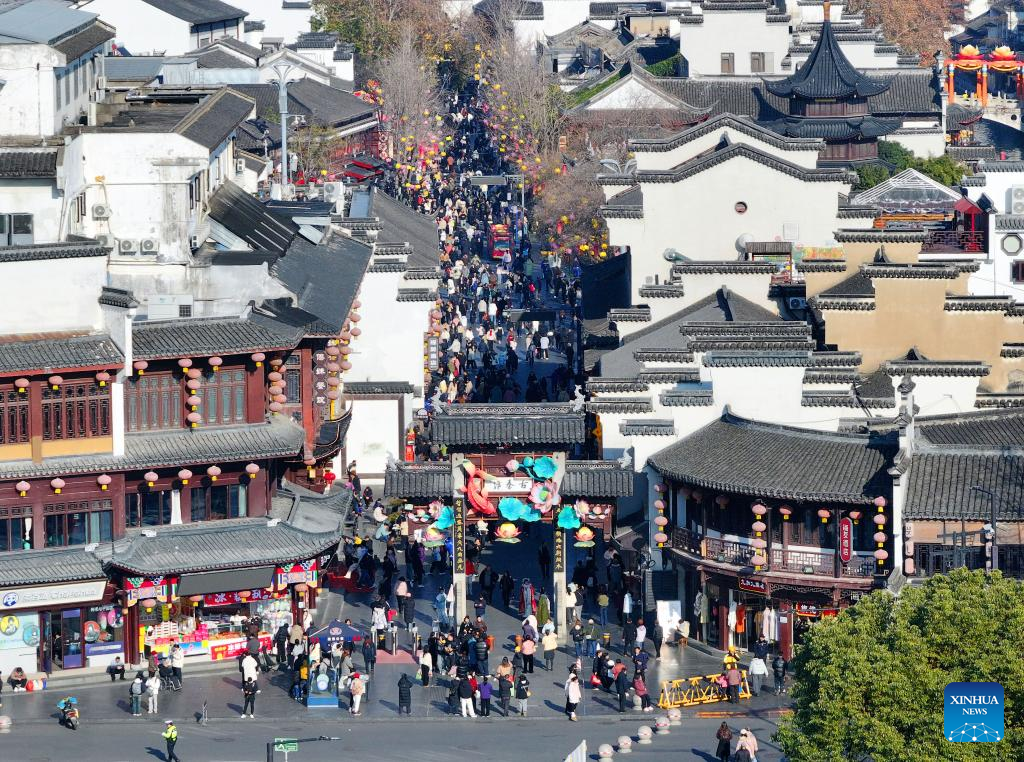
A drone photo taken on Jan. 3, 2026 shows tourists visiting the Confucius Temple scenic area in Nanjing, east China's Jiangsu Province. (Photo by Liu Jianhua/Xinhua)
BEIJING, Jan. 4 (Xinhua) -- The recent three-day New Year holiday showed some promising travel and spending numbers in China, offering a glimpse of resilient and dynamic consumption landscape.
A total of 142 million domestic travel trips were made during the New Year holiday, which ended on Saturday. Additionally, total tourism spending reached nearly 84.8 billion yuan (about 12.1 billion U.S. dollars), the Ministry of Culture and Tourism said on Sunday.
The ministry said that winter-themed tours, sun-seeking getaways, and short-distance excursions enjoyed significant popularity during the holiday, as consumption vitality remained robust and fluid.
Meanwhile, the country recorded more than 6.61 million cross-border trips, with the average daily figure surging by 28.6 percent year on year, according to the National Immigration Administration.
EXPERIENCE-DRIVEN SPENDING
Chinese consumers kicked off the new year with a surge in spending tied to emotional experience and a sense of ritual during the three-day break. Social media platforms were buzzing with feeds of people gathering in malls and public squares for countdowns or taking overnight trains and late-night flights to usher in the year on the move.
Searches for "New Year countdown travel" jumped 125 percent from a year earlier, according to online travel platform Ctrip, while demand rose sharply for theme park fireworks displays and concerts.
Meanwhile, Meituan, a top online lifestyle platform, saw a surge in sales for fresh fruits, flowers, single-serving desserts, and wines leading up to the New Year. These items were a hit among younger shoppers looking for something fresh and fun to brighten up their celebrations.
In Lanzhou in northwest China, florist Ma Lin said daily orders during the holiday were more than double the usual level, with many customers buying small bouquets for themselves. Though priced higher than standard arrangements, the bouquets were popular for their compact design, which made them easy to carry and photograph for social media.
"Young people are paying more attention to the emotional meaning attached to what they buy," Ma said.
According to a report on emotional consumption of Gen Z in 2025 led by a Shanghai-based research institute focused on studying and supporting youth and children development, 56.3 percent of respondents said they were willing to spend on personal enjoyment and interests as well as emotional value, up 16.2 percentage points from 2024.
The growing emphasis on New Year rituals points to more diversified and personalized demand in China's cultural and tourism consumption, and a broader shift from material purchases toward experience-based spending, said Zou Yunhan, a researcher with the State Information Center.
INFLOWING CONSUMERS
Cross-border trips by foreign visitors from Jan. 1 to 3 grew by 29.8 percent from the 2025 figure to reach 828,000, among whom 292,000 were admitted under the country's visa-free policy, up 35.8 percent year on year.
Expanded visa-free entry policies and streamlined departure tax refund services are turning these inbound tourists into a new engine driving China's consumption growth.
During the New Year holiday, Shenzhen's Huaqiangbei, one of the world's largest wholesale electronic products markets, buzzed with international visitors, many arriving with empty suitcases or shopping bags for "Good price" purchases.
Mohammad and his wife, tourists from Iran, shared their haul: "We bought two digital cameras, a compact camera, a hair dryer, and most importantly, a translator device -- we can't go anywhere without it."
Greater facilitation contributes to the consumption boom. Data from the State Taxation Administration showed that the number of designated tax-refund stores nationwide had reached 12,252 by the end of last November.
Over the January to November period, the number of overseas visitors claiming tax refunds surged 285 percent year on year, while sales of tax-refundable goods and total refund amounts both rose 98.8 percent.
Developing Chinese cities into international consumption centers and boosting inbound consumption are key components of China's new five-year development blueprint.
Tao Xidong, a researcher at the Shanghai Academy of Social Sciences, noted that building such cities requires more than just policy tweaks like visa facilitation, multilingual services, or optimized tax refund rules. "We must also adapt to new global consumption trends and demands," he said.
Tao suggested tailored initiatives targeting specific groups, such as overseas teenagers, college students and young couples, including premium products like study tours, educational training and family-friendly travel packages. He also called for targeted marketing campaigns in developed countries to tap new source markets and grow the base of international consumers in China.
Photos



Related Stories
- Easier entry, simplified tax refunds draw foreign tourists to shop in China
- China's booming cycling economy pedals toward "immersive" outdoor consumption
- Ice-and-snow tourism ignites China’s winter consumption during New Year's Day holidays
- China unveils 2026 subsidy scheme for home appliance trade-ins
- China to further boost consumer spending in 2026: official
Copyright © 2026 People's Daily Online. All Rights Reserved.
