



Electrification accelerates China's green transformation
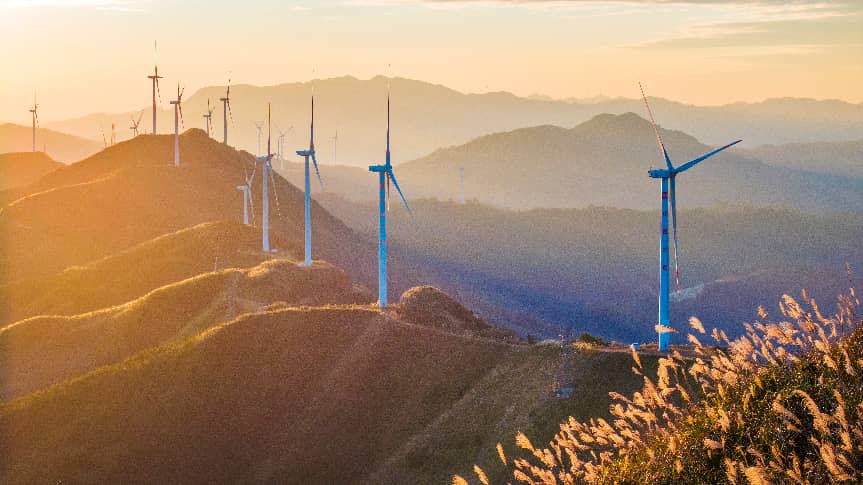
Photo shows a wind farm in Binyang county, Nanning, south China's Guangxi Zhuang autonomous region. (Photo/Zeng Xiangzhong)
Electric vehicles and charging stations are now a common sight on long-distance trips, and during the winter months, heating is increasingly powered by electricity rather than coal. These developments reflect the ongoing transformation of energy consumption across China through electrification.
According to China's recommendations for formulating the 15th Five-Year Plan, the country will increase the proportion of electricity in final energy consumption and encourage green and low-carbon energy consumption.
"Final energy consumption" refers to the energy used in everyday activities and industrial production. Experts note that increasing the proportion of electricity in final energy consumption is not only a crucial pathway to achieving China's carbon peaking and carbon neutrality goals but also an important indicator of rising productivity and industrial upgrading.
Why is the shift from fossil fuels to electricity in final energy consumption being encouraged?
On the one hand, traditional energy sources such as fossil fuels are non-renewable and have significant environmental impacts. Electricity, however, can be generated from a variety of cleaner sources, including hydropower as well as renewable resources such as wind and solar energy.
On the other hand, expanding electricity use in final energy consumption helps ensure a stable energy supply across all sectors of the economy and society.
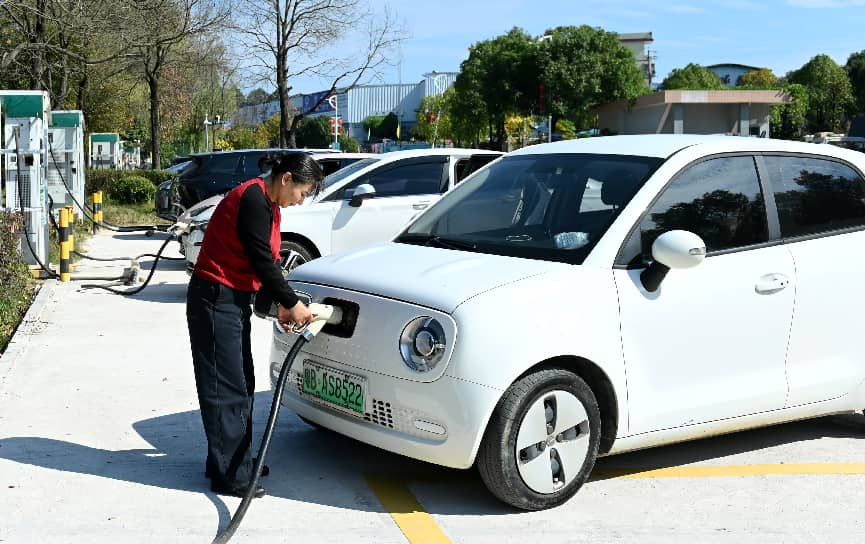
A woman charges her electric vehicle at a public charging station in Dongkou county, Shaoyang, central China's Hunan province. (Photo/Teng Zhizhong)
Yang Kun, executive vice chairman of the China Electricity Council, explained that increasing electricity's share in final energy consumption encourages greater reliance on electricity by enterprises and households, making its use safer, greener, more efficient, more economical, and more intelligent. This shift enhances universal power access and modern electricity services.
The annual report on electrification development in China compiled by the China Electricity Council revealed that the country's electrification rate reached 28.8 percent in 2024, a 0.9 percentage point increase over the previous year, already surpassing many major developed economies in Europe and North America.
"To some extent, the electrification level is often indicative of a country's advanced productive forces and modernization," Yang noted.
As electricity use expands in energy-intensive sectors such as steel, building materials, petrochemicals and chemicals, coupled with an increasing share of green electricity, China's industrial products are becoming more globally competitive. This is particularly relevant as carbon footprints and green production standards are being more closely scrutinized internationally.
Yang also highlighted that emerging industries, including next-generation information technology, artificial intelligence, biotechnology, new energy vehicles and new materials, are highly electricity-dependent. "In this context, a higher share of electricity in final energy consumption signals a leap in overall productivity," Yang said.
Increasing electricity's share in final energy consumption is a complex, system-wide endeavor that requires coordinated efforts across both the supply and demand sides. In this regard, China has accumulated valuable experience.
The industrial electrification efforts in Taigu district, Jinzhong, north China's Shanxi province, serve as a prime example. The local malleable iron casting industry, which emerged in the late 1970s, once relied entirely on coal-fired cupola furnaces. Following stricter air pollution control measures in 2017, local enterprises began replacing coal with electricity, shifting to electric induction furnaces.
An executive from State Grid Jinzhong Power Supply Company noted the benefits of this transition. "By implementing tailored solutions, such as reactive power compensation optimization and peak-valley electricity adjustments for Shanxi Longcheng Malleable Iron Co., Ltd., we helped the company cut electricity costs by approximately 6 percent while maintaining the same production capacity," said the executive.
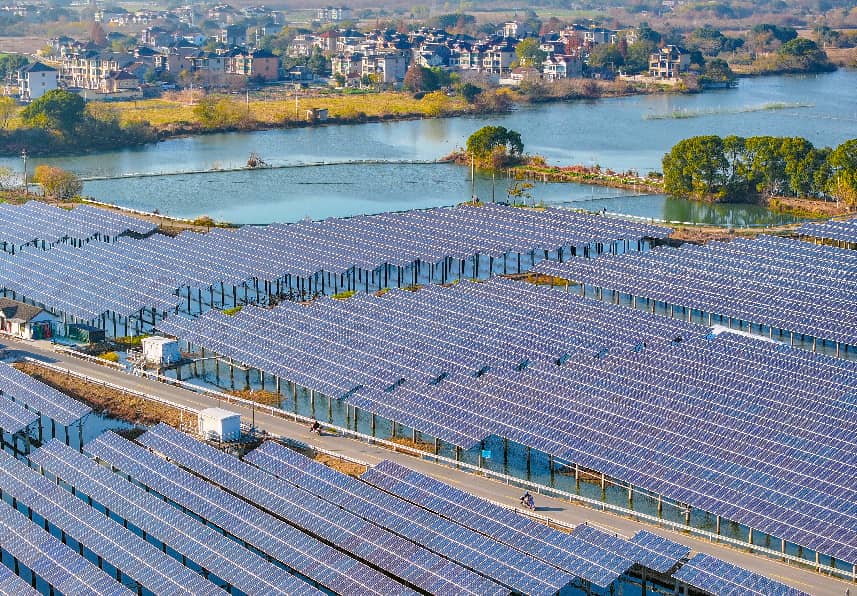
Photo shows a fishery-solar power integration project in Gulong village, Changxing county, Huzhou, east China's Zhejiang province. (Photo/Chen Haiwei)
Zhang Tianguang, president of the Electric Power Development Research Institute under the China Electricity Council, noted that China has introduced a dual-control system covering both total carbon emissions and emission intensity. Additionally, China has developed mechanisms to promote green and low-carbon energy consumption, with clear carbon-reduction responsibilities for key sectors including power, steel, nonferrous metals, building materials, petrochemicals, chemicals and machinery.
At the same time, China has strengthened the supply side by rapidly developing non-fossil energy sources and coordinating electrification with power supply security. During the 14th Five-Year Plan period (2021-2025), China built the world's largest and fastest-growing renewable energy system, with renewable power accounting for around 60 percent of installed generation capacity, providing strong support for electrification.
Zhang also noted that despite significant fluctuations in global energy and electricity prices, China has consistently worked to improve its market-based electricity pricing mechanisms, ensuring the stability of average end-user electricity prices over the long term. Both residential and industrial-commercial electricity prices remain relatively low by international standards, creating a favorable environment for the increased use of electricity in final consumption.
"Through innovations such as green power trading and more rapid integration of renewable energy into the market, China is better positioned to meet the growing demand for clean electricity while providing institutional support for low-carbon electrification," he said.
Yang further highlighted that China's total electricity consumption is expected to exceed 13 trillion kilowatt-hours by 2030, with an average annual increase of about 600 billion kilowatt-hours during the 15th Five-Year Plan period (2026-2030). During that period, the share of electricity in final energy consumption is expected to rise steadily by about one percentage point per year, reaching approximately 35 percent by 2030.
Photos




Related Stories
- China's reforestation leads to habitat expansion for 73.6 pct of forest bird species: study
- China's commitment to green transition recognized as COP30 opens in Brazil
- Chinese innovation acts as positive asset of global green transformation
- Nation's green initiatives a catalyst for global change
- Chinese e-bike firms expand global investments, driving green mobility, job growth
- China's National Day holiday travel goes green as charging network expands
- Twenty Years of Green Progress: A safari through Sanjiangyuan
- 20 years on, China's "two mountains" concept proves significant in green development
- Hydrogen energy fuels China's green shift
- From trash to treasure, green revolution wins over households
Copyright © 2026 People's Daily Online. All Rights Reserved.
