



Bay Area Council's new CEO looks to China visit to deepen local ties
Libby Schaaf, the former mayor of Oakland and newly appointed president and CEO of the Bay Area Council, plans to lead a delegation of California business representatives to China in November, with a stop at the ninth China International Import Expo in Shanghai.
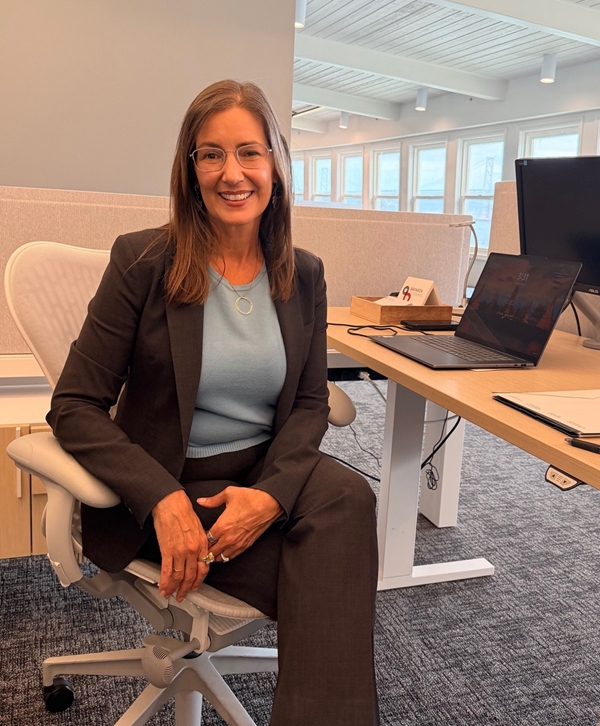
Libby Schaaf, president and CEO of the Bay Area Council. (People's Daily Online/Wei Deng)
"I'm really looking forward to it," she said, expressing interest in seeing how China has changed and identifying areas for further cooperation.
A regional voice with longstanding China ties
The Bay Area Council works on economic and public-policy issues across the nine-county San Francisco Bay Area, a region encompassing 101 cities and a concentration of leading technology companies, universities and ports. Schaaf said the scope of her new role is substantially broader than that of running a single city.
"I used to manage one city. Now I'm looking at nine counties and 101 cities," she said.
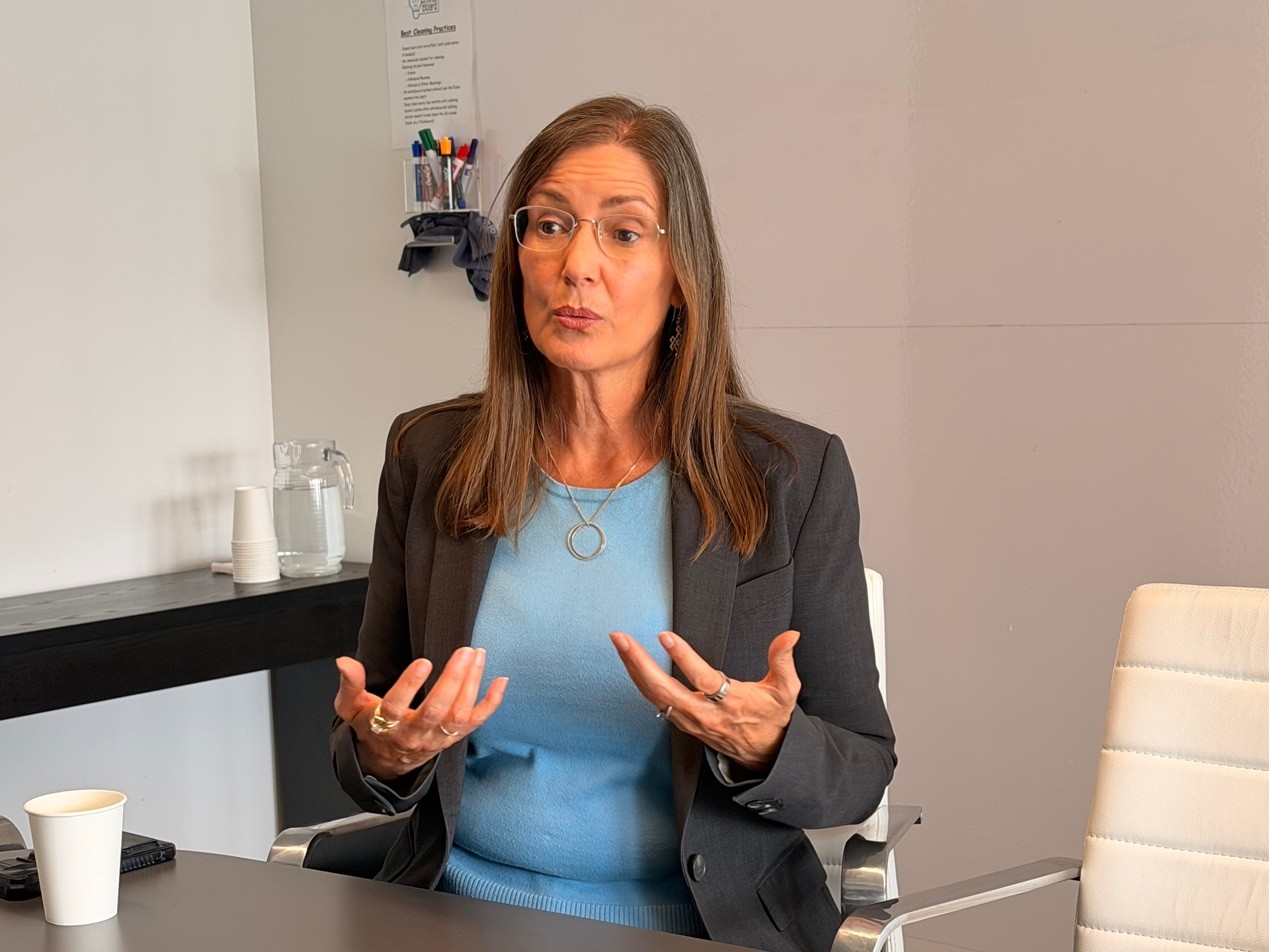
Libby Schaaf speaks with People's Daily Online during an interview. (People's Daily Online/Wei Deng)
The council has maintained business ties with China for years, with offices in Shanghai and Beijing and a history of organizing trade missions. It has also helped California businesses participate in the China International Import Expo, including through a California exhibition area. The ninth expo is scheduled for Nov. 5 to 10 in Shanghai.
The council's activities at the 2025 expo included a California–Shanghai Cooperation Forum focused on sectors such as life sciences, advanced manufacturing and green logistics.
Schaaf's interest in China dates back to at least 2019, when she participated in a delegation trip that included visits to Shanghai, Dalian, Guangdong and Hong Kong. That experience helped shape her view that ties among cities, companies and institutions can remain valuable.
"Business-to-business relationships, port-to-port relationships — those are very important," she said.
Common challenges for two bay areas
Schaaf sees particular potential for exchanges between Northern California and the Guangdong–Hong Kong–Macao Greater Bay Area. Both are densely developed coastal regions with major ports, strong technology sectors and pressing infrastructure needs.
Climate adaptation is one area where the regions could share experience. Rising sea levels threaten coastal communities, businesses and transportation networks on both sides of the Pacific, while ports face pressure to reduce emissions without sacrificing efficiency.
Schaaf pointed to cleaner fuels, lower-emission port equipment and green shipping as areas where environmental and commercial interests can reinforce each other.
"I love that kind of cooperation because it's not only good for both economies, it's good for the climate of the whole world," she said.
The people who connect economies
Schaaf emphasized that international students and researchers are central to the Bay Area's innovation ecosystem. After leaving the Oakland mayor's office, she taught at the University of California, Berkeley, where she said Chinese students contributed meaningfully to classroom discussion and the learning experience of their peers.
"They made tremendous contributions to my classroom and enriched the educational experience for everyone," she said.
For Schaaf, restrictions on the movement of talented people can carry consequences not only for individual students but also for American universities and the broader economy.
She argued that cooperation need not require the U.S. and China to adopt identical approaches to economic development. Cities, universities and businesses can learn from one another while addressing shared problems in different ways.
"This is not a zero-sum game," she said. "We have to recognize that when we all do better, everyone benefits."
A bridge across the Pacific
The interview took place in the Bay Area Council's office overlooking the Bay Bridge, which links San Francisco and Oakland. The view offered an apt image for a conversation about connections across borders.
Asked whether she wanted the council to serve as a bridge between the U.S. and China, Schaaf turned toward the window.
"Yes, just like the bridge we look out at from our office," she said.
Her planned November visit will test how those connections can translate into tangible work among companies, ports, research institutions and cities — and whether longstanding local relationships can help sustain cooperation across the Pacific.
Photos



Related Stories
- China firmly opposes U.S. blacklisting of Chinese firms: commerce ministry
- Commentary: Washington's proposed new China curbs could deal costly blow for U.S. businesses
- China, U.S. educational exchange, cooperation benefit both sides: spokesperson
- China's top diplomat calls for China-U.S. joint efforts on AI development, governance
Copyright © 2026 People's Daily Online. All Rights Reserved.
