



From smart glasses to exoskeletons: How technology is creating new consumer demand in China
Climbing Mount Tai, one of China's most famous mountains, can be a test of endurance, especially on its steep stone steps. Now, some visitors have a new kind of assistance: wearable exoskeleton devices that provide extra power with every step, helping them conserve energy as they make their way uphill.
For many middle-aged and older visitors, reaching the summit can be a challenge. "By introducing exoskeleton robots, we hope to use digital and intelligent technologies to help change this situation while also giving younger visitors a chance to experience cutting-edge technology," said Wang Houzhe, deputy Party chief of the Taishan Cultural Tourism Group, in an interview with Dazhong Daily.
"I would have had to turn back halfway if I had climbed on my own. With the exoskeleton, climbing the steps feels almost effortless," one visitor said.
Initially, 100 exoskeletons were deployed at the scenic area, recording over 3,000 service visits within three months, with visitors aged 60 and above making up more than half of all users. The scenic area later added another 400 devices.
The experience illustrates how emerging technologies can address practical needs while creating new consumer offerings. What was once specialized equipment can become a service that visitors rent to make a demanding activity more accessible.
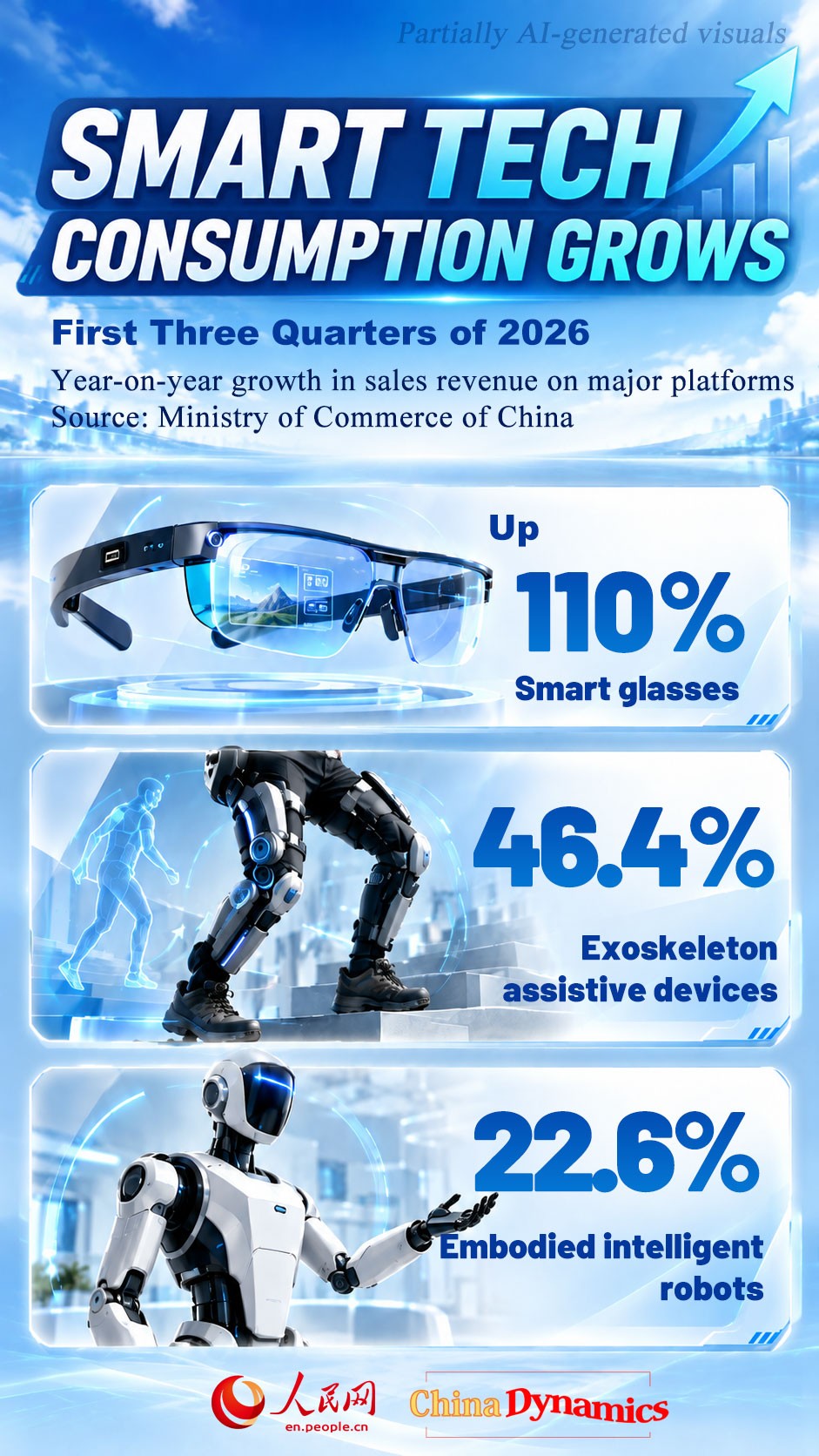
The growing interest in such products is reflected in China's consumption figures. During the 2026 National Day holiday, from Oct. 1 to 6, sales revenue of embodied intelligent robots on major platforms rose 130 percent year on year, while smart glasses sales revenue doubled and that of exoskeleton assistive devices increased 12.8 percent, according to the Ministry of Commerce.
The trend was also evident in the first three quarters of the year. Sales revenue of smart glasses on major platforms rose 110 percent year on year, while that of exoskeleton assistive devices increased 46.4 percent and embodied intelligent robots grew 22.6 percent, the ministry data showed.
Beyond the sales figures, these products are creating new ways for people to experience everyday life, from travel and shopping to recreation and entertainment.
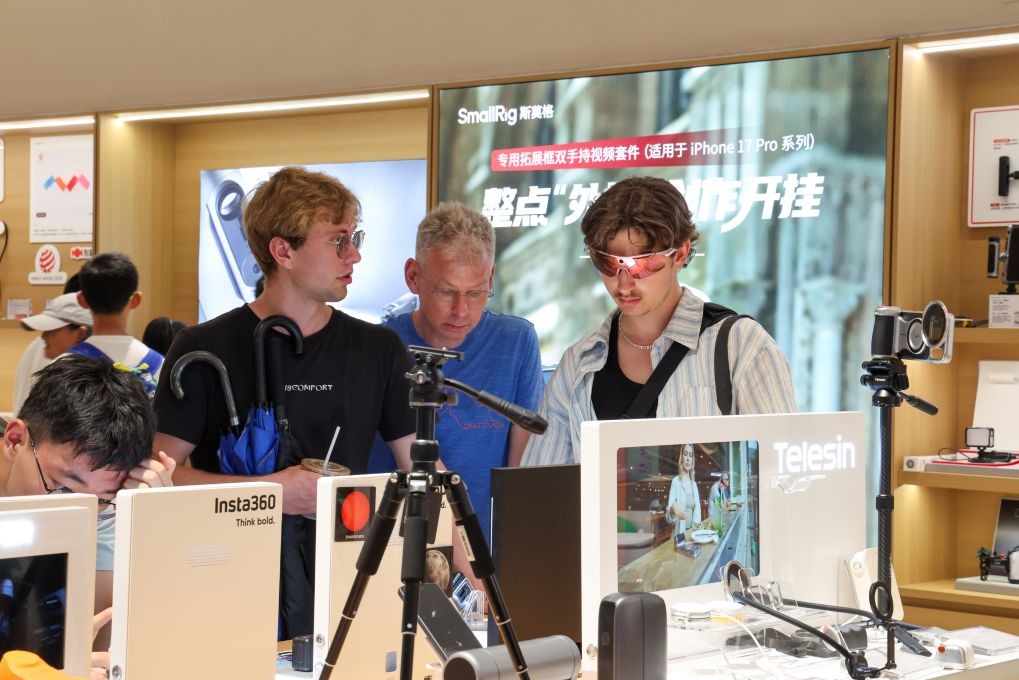
Foreign tourists shop for AI-powered sports camera glasses in Shenzhen, south China's Guangdong Province, Aug. 3, 2026. (Xinhua/Liang Xu)
At Huaqiangbei, Shenzhen's mega electronics marketplace, foreign visitors have become a familiar sight, browsing shelves and snapping up the latest tech gadgets. The bustling shopping hub offers a glimpse of international tourists' growing interest in China's smart technology products.
Among them was a visitor from South Africa trying on a pair of AI glasses. "With the AI glasses on, I can record videos while having a conversation, and the translated audio goes straight into my ears," he said.
The appeal is reflected in market figures. Sales of AI products across Huaqiangbei rose more than 55 percent year on year in the first seven months of 2026, while sales of AI glasses doubled, according to Xinhua News Agency.
By integrating functions such as voice interaction, visual recognition and translation into wearable devices, smart glasses offer new ways to access information and interact with the world. For international visitors, they can help bridge language barriers while traveling and shopping. For other users, hands-free access to information can make everyday activities more convenient.
Intelligent robots are creating another category of consumer experience. Robot dogs, for instance, combine interactive technology with entertainment and companionship. Some consumers are drawn to them not simply because they are technologically novel, but because they offer an alternative form of interaction for people who may be unable to keep conventional pets, including those with allergies.
The growing popularity of these products reflects China's broader efforts to translate technological innovation into practical applications and new drivers of economic growth.
"The focus of AI competition is shifting from foundational models to industrial applications. China's rich pool of application scenarios, particularly in manufacturing, gives the country an advantage in translating technological capabilities into industrial strengths," said Dai Jianjun, deputy director of the Innovation and Development Research Department at the Development Research Center of the State Council, in an interview with the China Economic Times.
As smart technologies find wider applications in everyday life, they are creating new consumer experiences while opening up opportunities for related services and industries.
"Industrial application scenarios and terminal devices should drive the iteration of AI technologies, turning technological innovation into new quality productive forces," said Dai.
Photos


Related Stories
- China harnesses smart technologies to power transport upgrade
- China uses digital technology to bring Long March history to life
- Cutting-edge tech powers smart National Day travel in China
- Advanced technologies deliver dazzling experiences at tourist destinations across China during National Day holiday
- How can China and the world build a shared future through technology?
Copyright © 2026 People's Daily Online. All Rights Reserved.
