



Shenzhen ready to welcome APEC
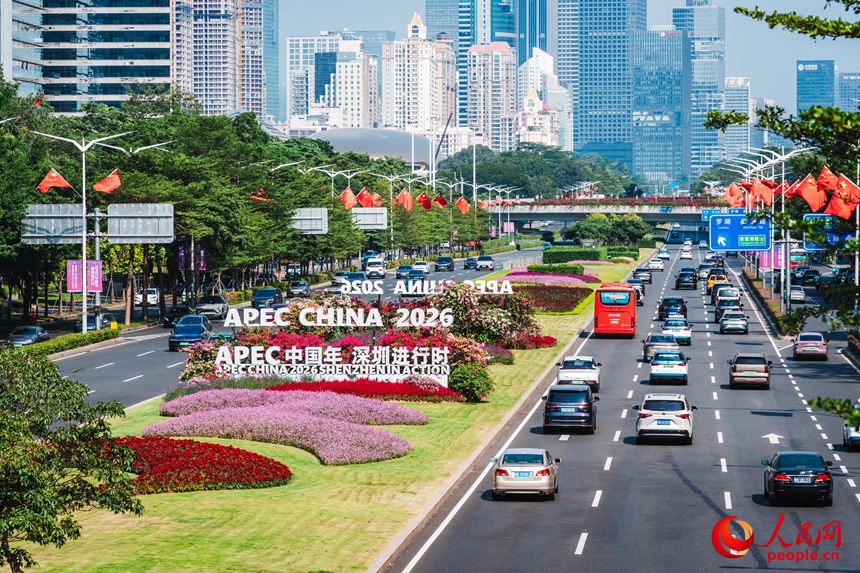
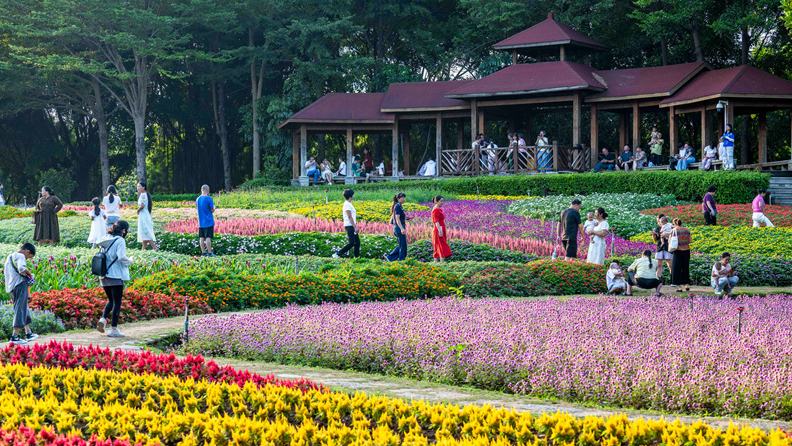
The atmosphere for the major APEC event builds in Shenzhen. (People's Daily Online/Wang Xing)
The 33rd Asia-Pacific Economic Cooperation (APEC) Economic Leaders' Meeting will be held in Shenzhen, south China's Guangdong Province, on Nov. 18 and 19. It will be the third time China hosts the event. Shenzhen is stepping up preparations in areas ranging from border crossing and public services to public participation, aiming to make travel and daily life more convenient for delegates and international visitors.
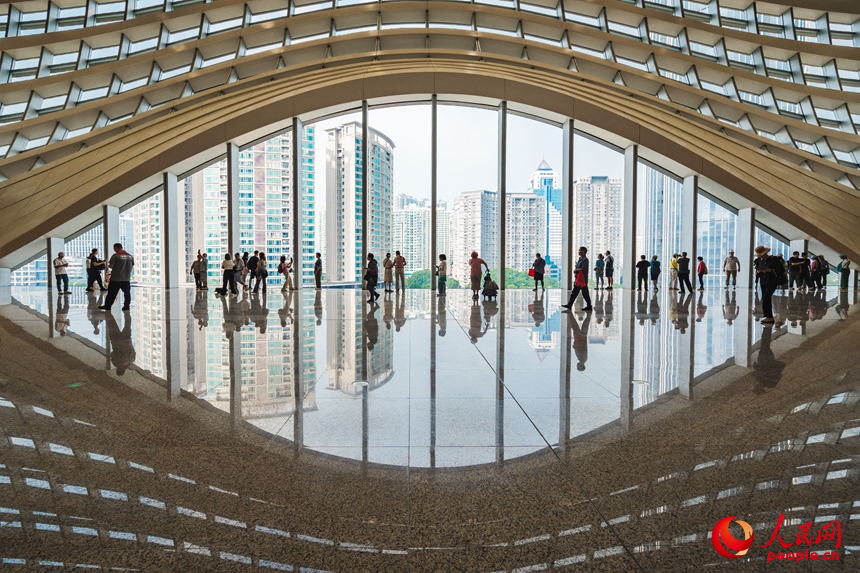
The Huanggang Port Joint Inspection Building begins operation. (People's Daily Online/Wang Xing)
Upgraded ports of entry improve travel efficiency
On Oct. 12, the redeveloped Huanggang Port, China's largest single port building and the world's largest land port complex, officially opened for operations. The port implements the colocation arrangement and the novel "collaborative inspection and joint clearance" mode, offering round-the-clock clearance services for cross-border passengers and vehicles. On its first day of operation, the facility handled 79,500 passenger crossings.
Shenzhen Bao'an International Airport is piloting an advance screening procedure that has cut passenger entry clearance time during peak periods from 45 minutes to under 15 minutes. Nearly 400 new signs in Chinese, English, Japanese, Korean and other languages have also been installed.
As of early September, the number of foreign passenger trips through the airport from APEC member economies this year had exceeded one million, a record for the same period. The airport operates more than 30 passenger routes to key APEC cities, with over 700 inbound and outbound flights scheduled each week.
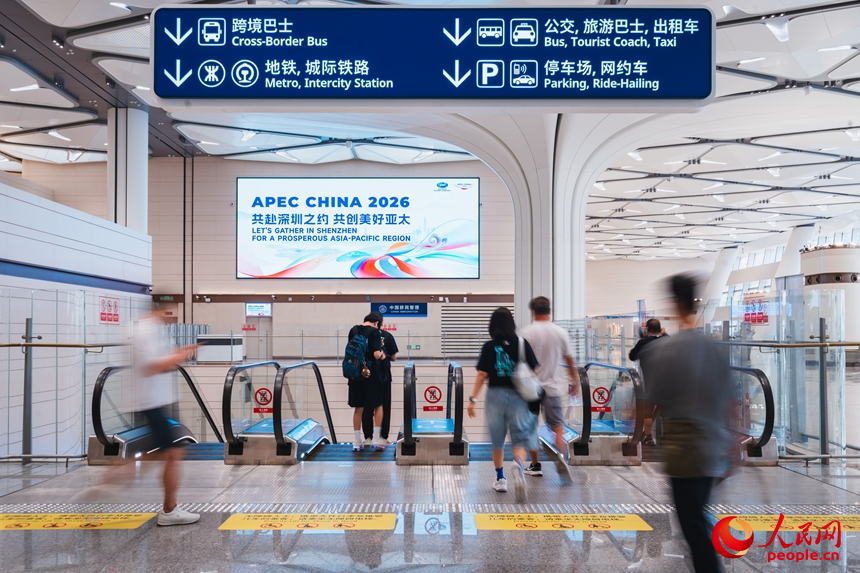
Photo shows a Chinese-English public sign in Shenzhen. (People's Daily Online/Wang Xing)
Better services make Shenzhen more accessible to international visitors
Shenzhen is continuing to improve services for international visitors, including foreign-language signage, transportation, payment and tax refunds. Effective Oct. 1, regulations on the standardized use and management of foreign-language public signs set out requirements for signage in eight categories of public places, helping create a more accessible language environment.
More than 7,000 smart translation devices have been deployed at bus and subway stations, government service halls, cultural venues and sports facilities across Shenzhen. Over 5,000 taxis are equipped with AI-powered devices that support real-time voice translation in more than 140 languages. English names are available at all 11,000 bus stops across the city, and passengers can scan QR codes on bus-stop signs to access route information in English and real-time arrival updates.
For payments, all 17 metro lines and 432 stations in the city accept contactless payments with overseas bank cards. As of July, 41,000 merchants across the city accepted overseas bank cards, supported by 51,000 point-of-sale terminals. From January to August, foreign nationals made 143 million transactions in Shenzhen, totaling 21.09 billion yuan ($3.15 billion), up 18.64 percent and 26.58 percent year on year, respectively.
Shenzhen is also expanding services such as departure tax refunds and currency exchange at its airport and in commercial districts. Hospitals, hotels, tourist attractions and legal service providers are working to improve their services for international visitors and clients.
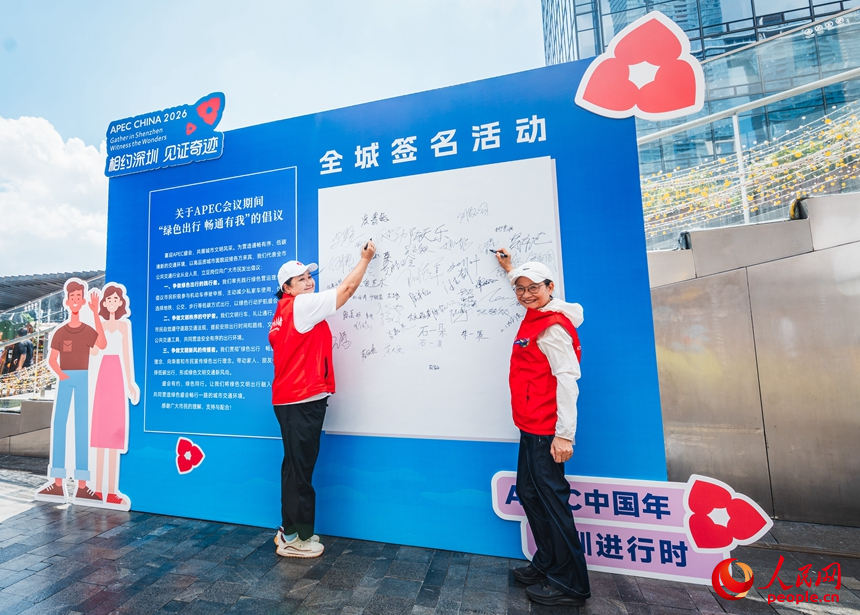
Shenzhen residents sign their names on a signature board to show support for green mobility. (People's Daily Online/Wang Xing)
Residents join preparations to welcome the Asia-Pacific gathering
On Oct. 15, Shenzhen launched a green mobility initiative encouraging residents to reduce or suspend private car use during APEC meeting week. Within three hours of the initiative's launch, more than 20,000 car owners had registered to keep their vehicles off the road. By the morning of Oct. 17, the number had exceeded 230,000.
Fourteen universities in Shenzhen, including Shenzhen University and the Southern University of Science and Technology, have established volunteer teams for APEC-related services. International volunteers are active in markets and communities, while student volunteers from Shenzhen Foreign Languages School have been helping foreign visitors navigate Shenzhen North Railway Station and answering their questions. Civil servants are also taking part in safety inspections at the community level, promoting orderly traffic, guiding visitors at venues and supporting international exchange activities.
Freight drivers have formed a city volunteer service team, while couriers and food delivery riders are attending classes to learn basic foreign languages and protocol for interacting with international visitors.
From border clearance and everyday public services to green mobility and volunteer assistance, Shenzhen is continuing to improve its international services as it prepares to host the APEC meeting.
Photos

Related Stories
- In pics: flower decoration themed on 2026 APEC "China Year" in Shenzhen
- One month to go: APEC CEO Summit 2026 to help promote cooperation, prosperity
- China's finance ministry outlines key agenda items for APEC Finance Ministers' Meeting
- APEC CEO Summit draws strong global interest with U.S. firms leading registration: spokesperson
- Chinese state councilor calls for joint efforts to advance human resources development at APEC ministerial meeting
- APEC Young Entrepreneurs Conference held in Hangzhou
- Greater Bay Area development creates new opportunities for Asia-Pacific
- APEC cooperation benefits people in their daily lives
- China willing to help advance global energy security, sustainable development: vice premier
- APEC CEO Summit 2026 to be held in Shenzhen from Nov. 17 to 18
Copyright © 2026 People's Daily Online. All Rights Reserved.
