



A high-speed railway traces the legacy of the Long March
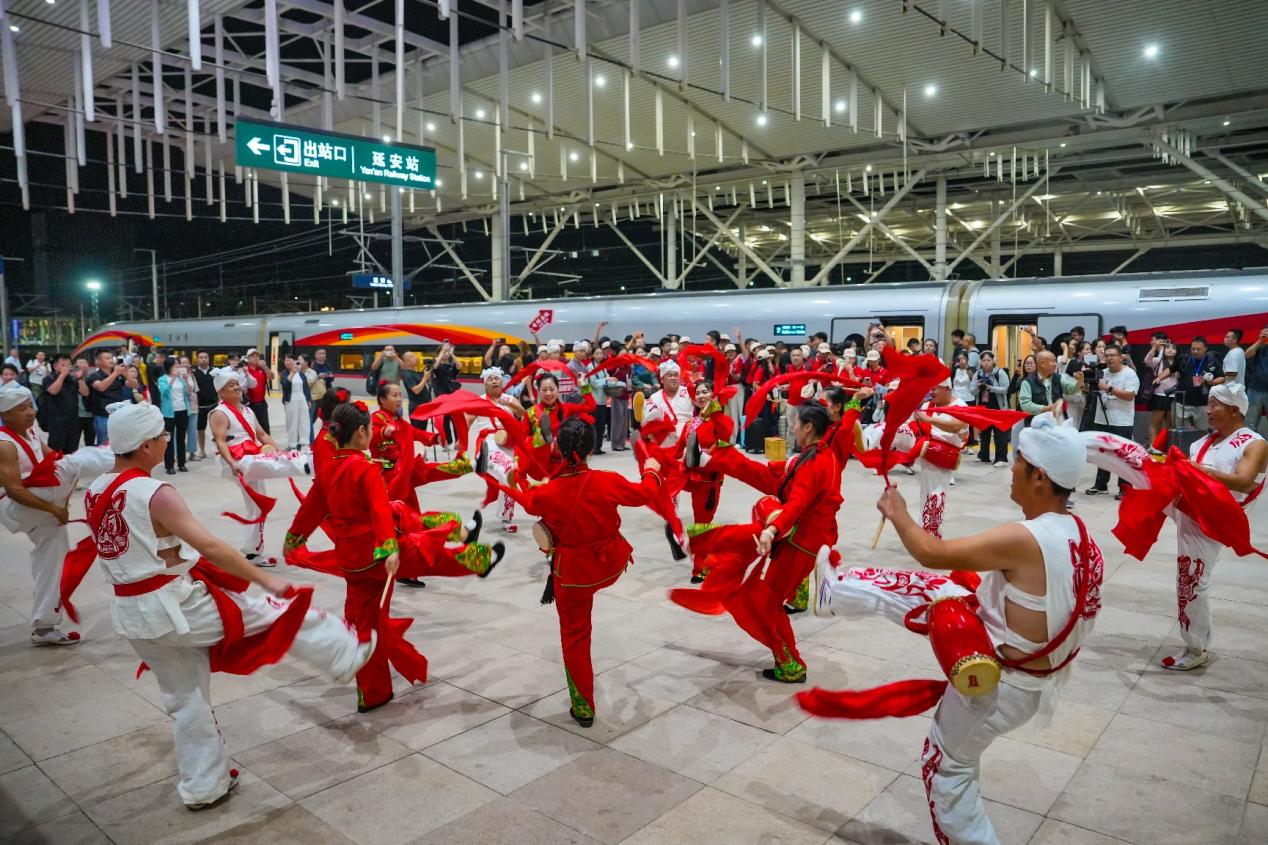
At Yan'an Railway Station, an Ansai waist drum troupe welcomes the launch of a direct high-speed rail service linking Ruijin in east China's Jiangxi province and Yan'an in northwest China's Shaanxi province on Sept. 6, 2026. (Photo/Liu Yijiang)
The journey from Ruijin in east China's Jiangxi province to Yan'an in northwest China's Shaanxi province has changed dramatically over time.
In the past, the Chinese Workers' and Peasants' Red Army soldiers, driven by a profound sense of mission, trekked roughly 12,500 kilometers across China wearing straw sandals, forging a path to survival through the arduous Long March. Today, the two cities are directly linked by a high-speed railway. The 1,857-kilometer journey takes just 11 hours and 32 minutes, offering a smooth and efficient travel experience.
This year marks the 90th anniversary of the successful conclusion of the Long March. A single train ticket now bridges not only two distant cities but also two distinct eras. The transformation from a desperate struggle for survival to an ongoing drive for regional revitalization mirrors the sweeping transformations China has experienced.
Aboard the train are descendants of Red Army soldiers, carrying straw sandals and certificates commemorating fallen martyrs as they travel to Yan'an on behalf of relatives who sacrificed their lives during the Long March. Other passengers, inspired by the Long March spirit, have embarked on this red-themed journey across thousands of kilometers.
During the Long March, both Ruijin and Yan'an served as vital centers of China's revolutionary cause. The Red Army soldiers crossed snow-capped mountains and vast grasslands, broke through successive enemy blockades and paved the way forward with blood and sacrifice. They fought to save a war-torn China and secure a life of independence and happiness for the people.
Today, those simple aspirations of earlier days have come to fruition. The poverty and isolation that once defined these regions have given way to vibrant communities and renewed economic vitality.
Ruijin has steadily cultivated distinctive industries, including precision manufacturing, design-focused toy production, and textiles, while continuously improving public services and living standards. In Yan'an, apple cultivation has evolved from a modest agricultural activity into a major economic pillar. Environmental restoration has accompanied this growth, lifting fruit farmers out of poverty and transforming the city into a thriving community characterized by ecological health, industrial vitality, and improved livelihoods. The development of Ruijin and Yan'an offers a vivid example of how former revolutionary base areas are revitalizing.
This transformation extends far beyond the two cities. Jinggangshan, an old revolutionary base in Jiangxi, has shaken off poverty by developing red tourism and leveraging its ecological resources. Xibaipo, also an old revolutionary base in north China's Hebei province, is promoting the integrated development of agriculture, culture, and red tourism, improving the quality of life for residents. In the Dabie Mountains, seven counties and county-level cities across three provinces have formed an alliance to develop red tourism, charting a new course for regional growth. Across China, former revolutionary base areas are steadily advancing toward shared prosperity.
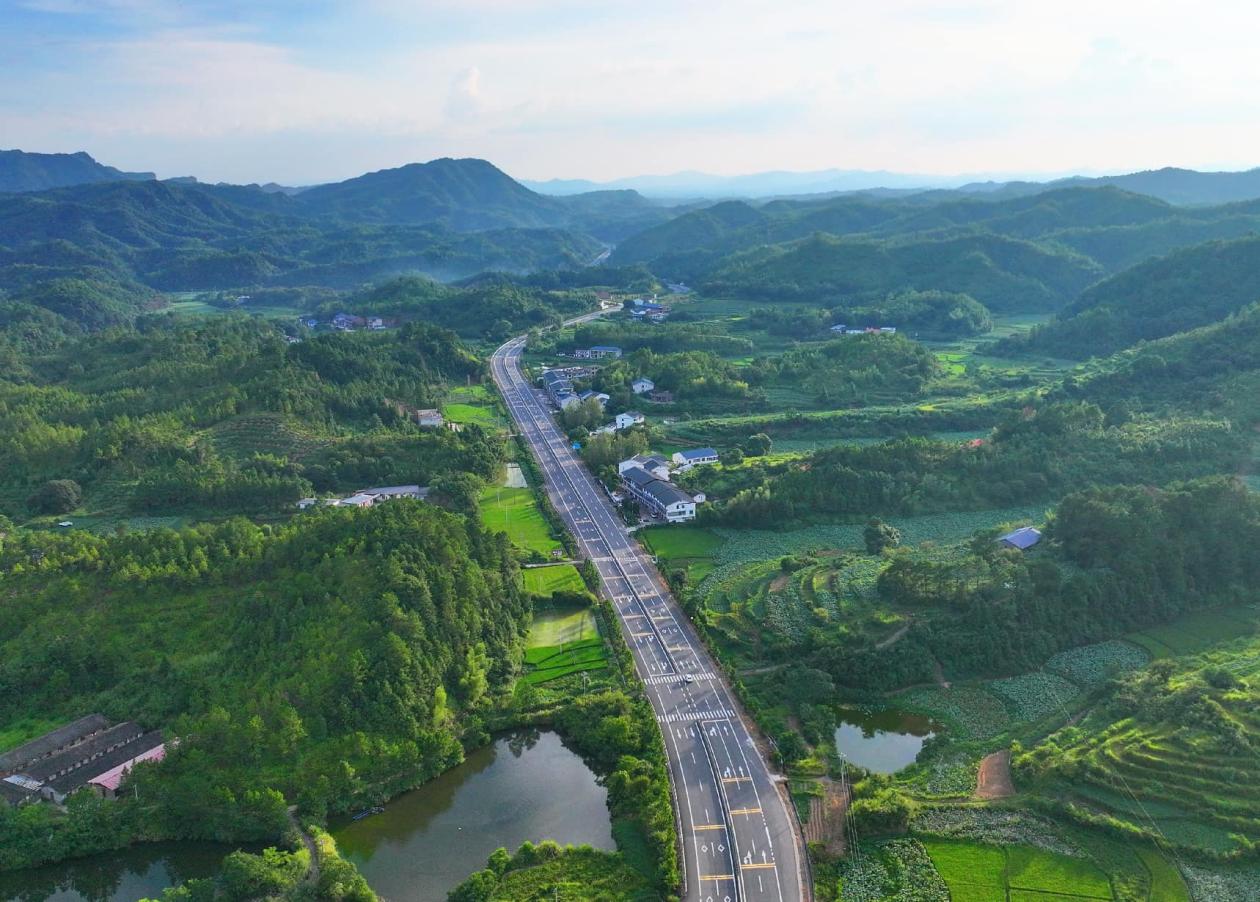
Photo shows a rural road in Ridong township, Ruijin, east China's Jiangxi province. (Photo/Zhu Haipeng)
What has driven these transformations? The answer may lie in the roads themselves. A road construction plan dating back to 1933, preserved in Ruijin, reflects revolutionary forebears' hopes for roads that would connect communities and bring peace and prosperity.
Today, an extensive network of national transportation corridors connects urban and rural areas and links mountains with the sea, reaching major revolutionary landmarks such as Ruijin, Zunyi in Guizhou province, and Yan'an. The vision of convenient travel for people and smooth flows of goods is steadily becoming a reality.
The transformation from having no way forward to a vast network of well-connected roads reflects more than improvements in physical infrastructure. At its heart is the vitality of the path China has chosen: one rooted in the country's realities, attuned to the needs of the times and supported by its people. This path provides a solid foundation for revitalizing former revolutionary base areas and advancing national rejuvenation.
The roads have been paved, yet the march continues. China is embarking on a "new Long March," with new challenges to overcome: repeated setbacks in laboratories, critical technological bottlenecks across industrial supply chains, and the many risks and challenges on the path to high-quality development.
The tougher the challenges, the more important it is to draw strength from the spirit of the Long March, a precious spiritual legacy. The Long March National Cultural Park extends across 15 provincial-level regions along the route of the epic expedition, bringing history to life at former revolutionary sites and helping visitors connect with Long March stories.
Here, history is no longer confined to static exhibits; it has become a living source of inspiration. By inspiring people through red-themed resources and passing the revolutionary legacy down through generations, China is forging a profound connection between the aspirations of the past and the achievements of today, drawing lasting spiritual strength for the "new Long March."
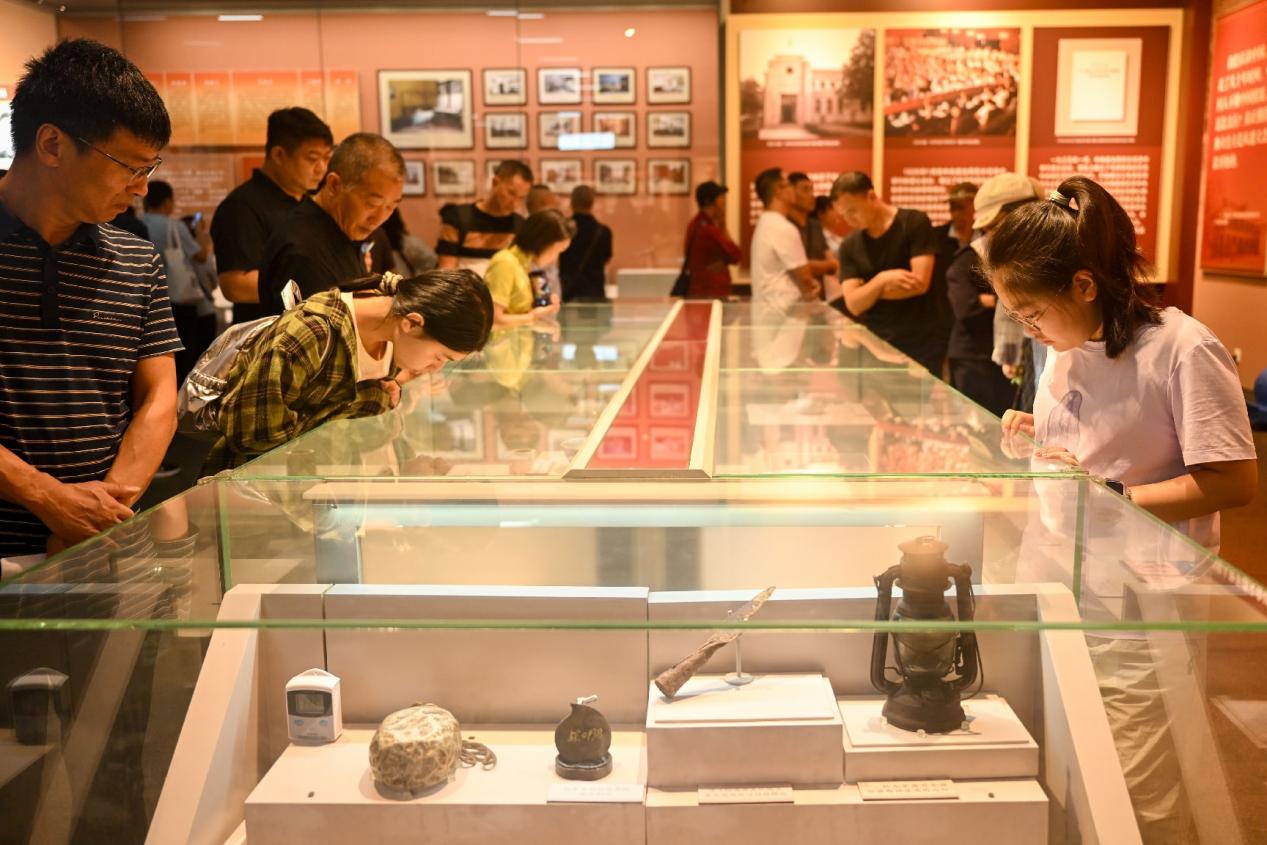
Tourists visit an exhibition hall for the Zunyi Meeting in Zunyi, southwest China's Guizhou province. (Photo/Yuan Fuhong)
Photos


Related Stories
- China railway passenger trips hit record high in first three quarters
- Nantong-Ningbo high-speed railway starts track laying in China's Jiangsu
- China unveils railway sci-tech innovation plan for 2026-2030
- China's railways see holiday return peak amid vibrant tourism market
- China's railway passenger trips hit record single-day high
- Railway culture and art week kicks off in Beijing
- China's northernmost high-speed railway opens in Heilongjiang
- High-speed rail line through mountainous central China region opens to traffic
- China's northernmost high-speed railway starts service
- China railway passenger trips hit record high in first eight months
Copyright © 2026 People's Daily Online. All Rights Reserved.
