



From strangers to brothers at a Xinjiang wedding
At the airport in Urumqi, capital of northwest China's Xinjiang Uygur Autonomous Region, a family I had never met stood holding handmade signs, looking to welcome us to their home.
We were a small "UN delegation" of people from four different countries, my wife and I among them, flying in on different days at different times.
The invitation came from Lucas, the man I affectionately call my "Xinjiang little brother." We met in 2014, when I arrived from the U.S. to study Chinese for a year at Beijing Language and Culture University and joined a student organization of Chinese and international students.
Over the years I've visited him in Japan and Thailand, where he worked, but this time he was bringing us to the place he calls home. The occasion was the wedding of his younger brother, Ferdon, and his bride, Xayida. Lucas saw it as the perfect chance to gather his old friends from Beijing and show us a part of the world we had never seen. Joining us were our Korean big sister, a group of Japanese students from Renmin University of China, and a couple of Chinese friends.
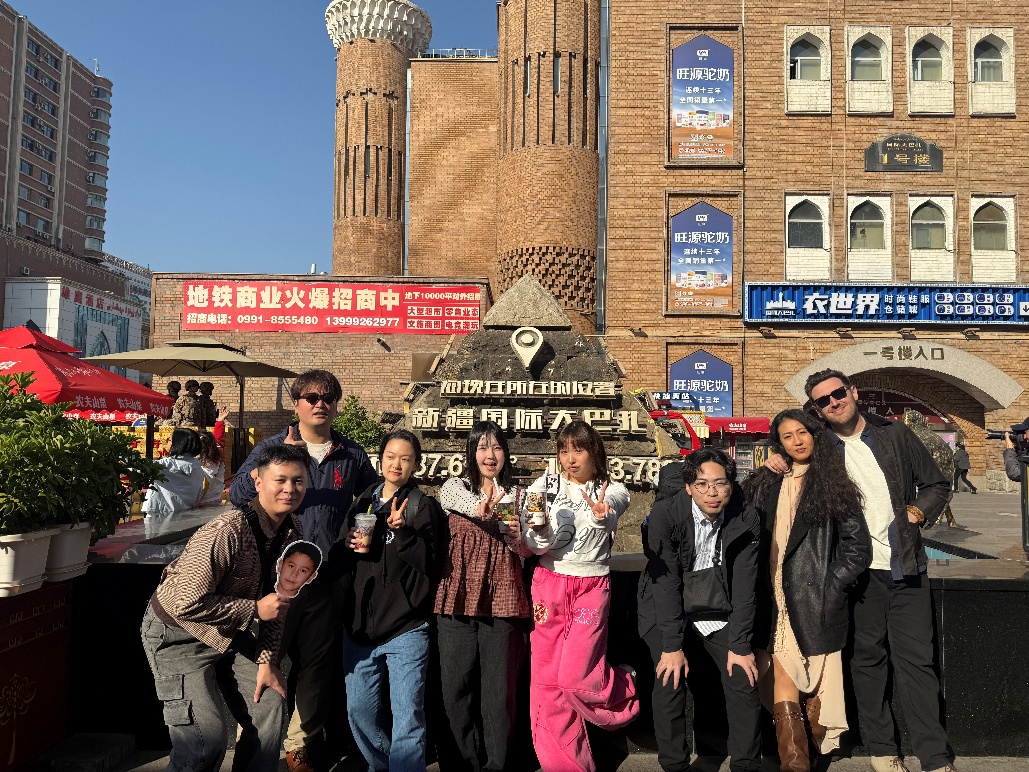
Our group visits the Grand Bazaar in Urumqi, northwest China's Xinjiang Uygur Autonomous Region. The groom makes a speech during the first part of the wedding proceedings. (Photo provided by Michael Kurtagh)
The night before the wedding, our group had dinner together, and Lucas ran us through the itinerary. It started at 1 p.m. and would most likely end in the wee hours of the next morning. First came a "warmup" for the young people only, with the men and women separated. Then both sides would come together at another location to celebrate, and finally we would all gather with the rest of the guests for the wedding ceremony itself, at night. Eating, drinking and dancing were essential at all three stops.
I asked Lucas whether it was appropriate for us to join the earlier events when we weren't close to either the bride or groom. He looked at me as if I had asked if the sky was green.
At the first location, we were greeted by Lucas' older cousin, who organized the first two parts of the day. "Eat well, drink well, celebrate well," he told us. It wasn't a reassurance so much as an instruction. The tables were covered with fruits, nuts and sweet treats, which were eventually replaced by plates of Xinjiang specialties like rice pilaf and oven-baked lamb-filled buns, and at the front of the room a live band waited.
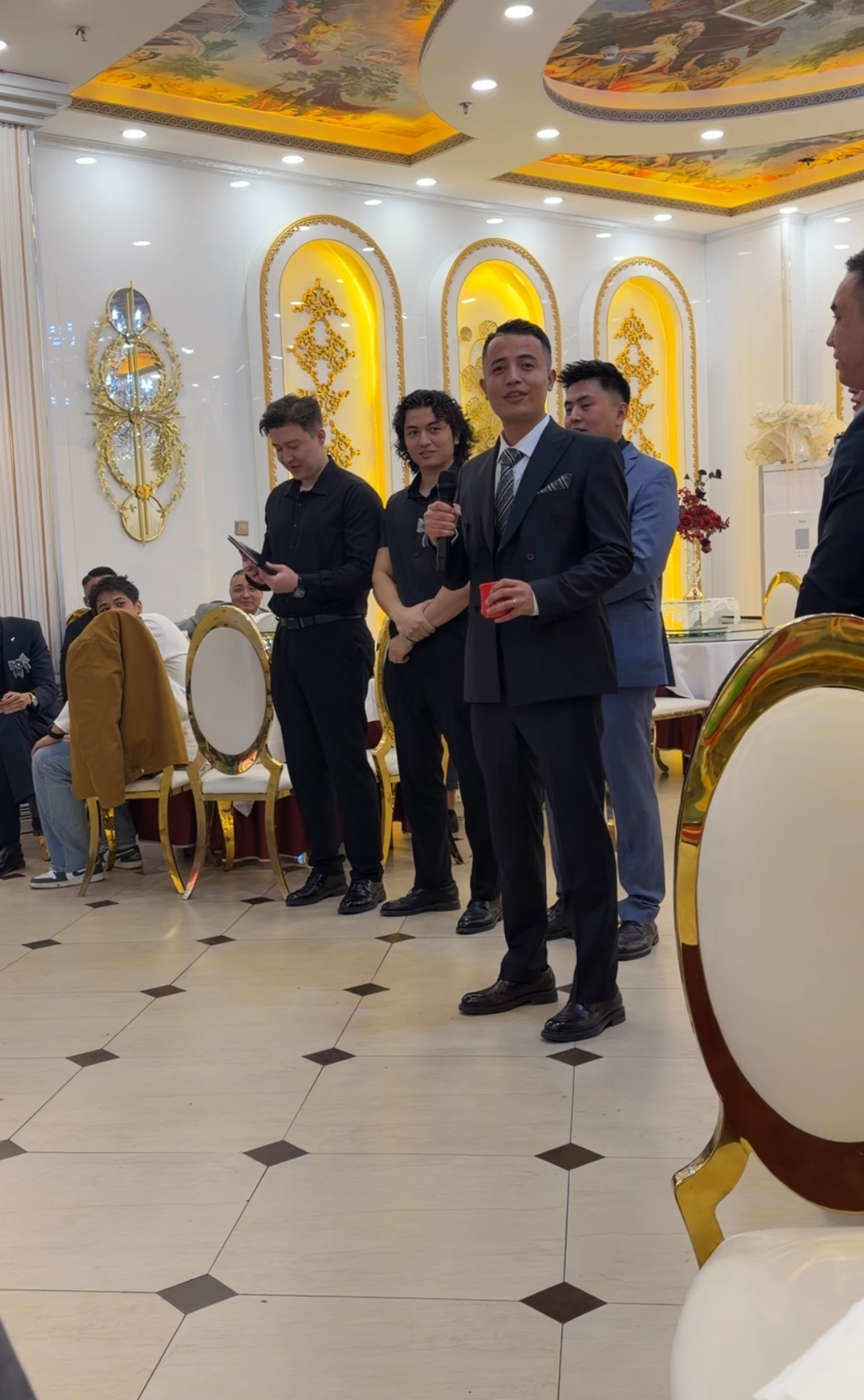
The groom makes a speech during the first part of the wedding proceedings. (Photo provided by Michael Kurtagh)
Any awkwardness vanished after the first groomsman's speech. It was in the Uygur language, which I didn't understand, but a tablemate translated in my ear, the room erupted in cheers, and worries about things getting lost in translation went with them.
Speeches turned to music and singing, and then to dancing. Everyone moved as if they had been dancing since childhood, and then there were the awkward foreigners. That was no excuse. We were pulled straight into the fray, and I even found myself dancing one-on-one with the groom. With cheers and hugs from the other guests, and a bit of liquid encouragement, we were soon joining in willingly.
The second stop was a nightclub, the kind of place I might have frequented in years past but had never visited in the middle of an afternoon. Here the two halves of the party finally came together, and it turned into pure fun. There was dancing and drinking, and a game I had never seen. A single 100-yuan bill was placed on the floor, and everyone danced in a circle around it, trying to pick it up with their mouths, no hands allowed. The last person left holding the bill kept the money, and the game seemed to end the same way every time, with either the bride or the groom winning.
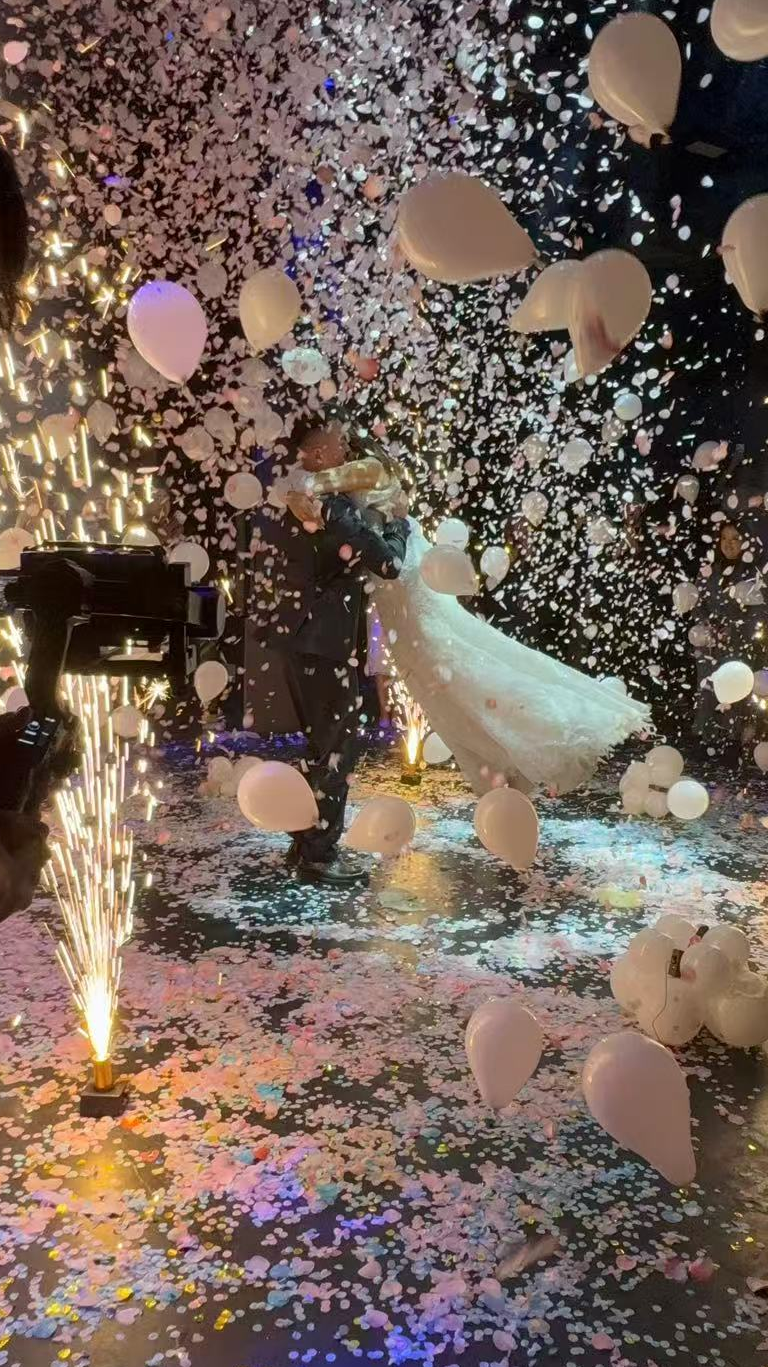
The groom dances with the bride during the second part of the wedding proceedings. (Photo provided by Michael Kurtagh)
Everything built toward the first dance of the bride and groom, which brought on the first of many damp eyes, not least their own. Confetti, sparklers and balloons framed a scene straight out of a movie, with the groom twirling the bride in his arms.
Then we moved on to the main event. We seemed to be the last guests to arrive, and the venue, with its 30 or 40 tables, was already packed. We found our seats and waited, and we were greeted not as outsiders being hosted but as fellow celebrants, there to share in a treasured moment between family and friends.
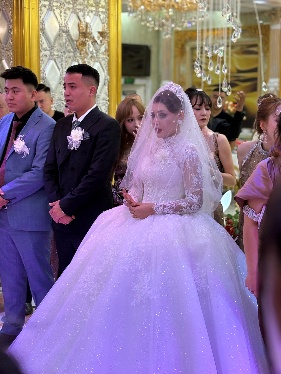
The bride and groom prepare to meet their families during the third part of the wedding proceedings. (Photo provided by Michael Kurtagh)
Xayida and Ferdon made their entrance to raucous cheers and applause. The bride was stunning in a white wedding dress, one of several she changed into throughout the day. The wedding was held jointly by the bride's and groom's families, and the ceremony was built around giving. The families came forward and placed scarves on the couple themselves, then presented Ferdon with a traditional skullcap, or doppa, and the couple with gifts including a watch and rings. Tears of happiness rained through the room.
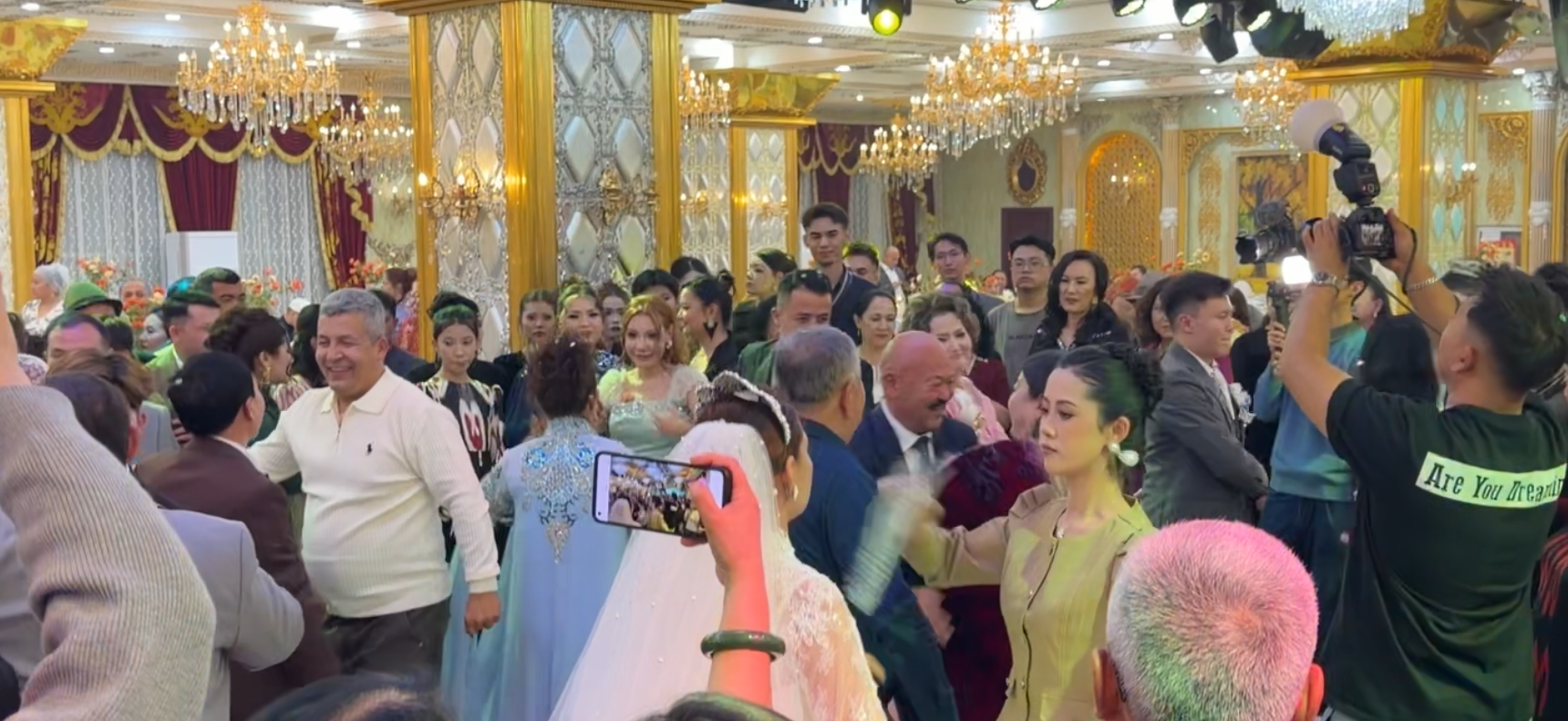
Attendees take to the dance floor during the third part of the wedding proceedings. (Photo provided by Michael Kurtagh)
And then it was back to celebrating. Groups took turns on the floor, the bride's family, the groom's, youth, elders, each dancing with the support of those standing at the sides. Money was slipped to people as they danced, and when one of Lucas' younger cousins sang, the guests tipped her too. Near the end, the couple stepped out for one more dance together. What began as a slow, romantic twirl shifted as the music did, and soon the whole room had joined in. The groom's aunts pushed me onto the floor while my wife was swept away by Lucas' two cousins, who had looked after us from the moment the trip was planned and all through the night. Someone placed a doppa on my head, the same kind the groom had received. When the groom's father saw me wearing it, he let out a hearty laugh and embraced me. He was simply thrilled that we had come, and his pride shone on his face for all to see.
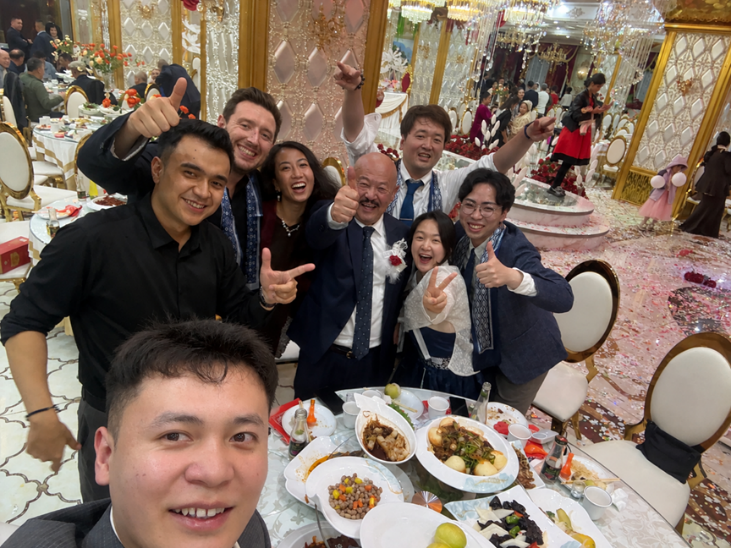
A group photo with the father of the groom during the third part of the wedding proceedings. (Photo provided by Michael Kurtagh)
One small moment stood out above the rest. As we left, saying our goodbyes, Lucas' older cousin grabbed me. He had planned the first two stops of the day, and we had shared drinks and danced together all day long. More than once I had heard his hoarse voice calling for me to join him. Now he took my wrist, pressed his own against it, vein to vein, and declared that we were brothers now. We promised to see each other again.
I'm not sure whether it's a local custom, a family tradition or simply his own way of saying it, but the meaning was clear and mutual. It was a day of celebration that crossed borders and ethnicities and turned strangers into brothers. A new bond between two people and two families had, for one night, made room for all of us.
Photos


Copyright © 2026 People's Daily Online. All Rights Reserved.
