



A continuously innovating China is a land of opportunity
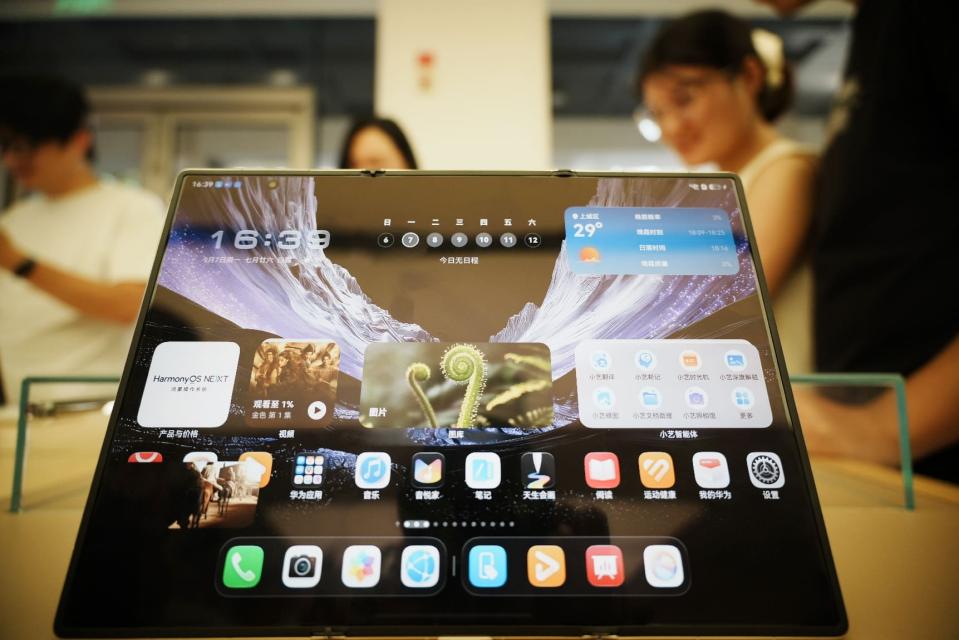
A customer tries out a new-generation tri-fold smartphone by Chinese tech firm Huawei, the Mate XT 2, at a Huawei store in Hangzhou, east China's Zhejiang province, Sept. 7, 2026. (Photo/Long Wei)
Chinese brands are increasingly capturing global attention in the consumer electronics sector.
Early this September, they took center stage at IFA Berlin, the world's leading consumer electronics trade show. On display were Chinese humanoid robots advancing into real-world application scenarios and smart home products featuring proactive sensing and collaborative AI services.
Not long ago, the smartphone industry saw a "super release week" for foldable phones. Huawei, Xiaomi, and Apple unveiled their respective flagship products within 72 hours, putting leading Chinese and international brands against each other in the same product category and sparking widespread discussion.
Such moments are no longer outliers; they reflect a broader industrial shift.
Decades ago, China's manufacturing base was comparatively underdeveloped. Across many sectors, the country started late, trailing global leaders in advanced technologies, standard-setting influence, and even foundational design concepts.
Its early path forward relied heavily on imitation and incremental improvement. Today, that narrative has reversed. From artificial intelligence and new energy vehicles to robotics and aerospace reusability, China now competes on equal footing -- or leads -- in numerous domains. In previously uncharted territories, it has emerged as both a pioneer and a rule-maker.
These breakthroughs stem from the cumulative power of scientific and technological innovation. Take the smartphone industry as an example. Ultimately, it is exclusive cutting-edge technologies that have empowered Chinese brands to march into the high-end market. Breaking free from the lower rungs of industrial and value chains represents an arduous uphill growth, as well as the continuous forging of brand competitiveness and technological "moats."
None of this would have been possible without a highly coordinated innovation ecosystem.
The numbers tell a clear story. The World Intellectual Property Organization recently released its report on the world's top 100 innovation clusters as part of the Global Innovation Index 2026. China, with 25 of the world's top 100 innovation clusters, maintained its position as the economy with the largest number of listed clusters for the fourth consecutive year. The Shenzhen-Hong Kong-Guangzhou cluster ranked first for the second consecutive year. As a cornerstone of China's national innovation ecosystem, the vigorous development of these regional innovation clusters mirrors the steady rise of the country's sci-tech innovation strength.
Progress is driven by clear strategic priorities: state support for sci-tech advancement, the cultivation of advanced, locally adapted industrial capabilities, and targeted policy incentives.
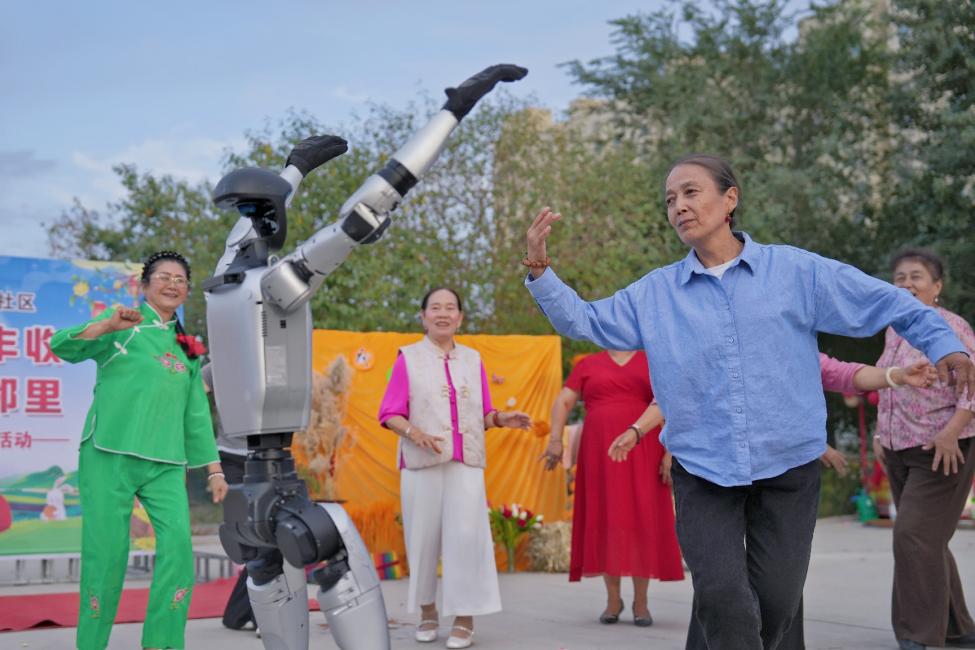
A robot dances with residents in Taoyuan subdistrict, Shawan, northwest China's Xinjiang Uygur autonomous region. (Photo/Yang Wenxiu)
Equally important is the sheer scale and dynamism of the country's domestic market, which generates rich application scenarios for iterative testing and commercialization.
Underpinning both is a deepening talent pool, fueled by tighter integration across education, research, and industry -- a virtuous cycle that continually upgrades the quality and distribution of skilled professionals.
All these efforts to enrich the soil nurture the seeds of innovation and creativity, unleashing the momentum of high-quality development.
Yet a clearer understanding of how China's innovation-driven model works also makes it harder to sustain certain misconceptions.
For some time, politicians and media in some countries have been keen on hyping the so-called "China Shock 2.0", attributing China's progress in high-end manufacturing to industrial subsidies, and thereby stoking anxiety.
In practice, as one international observer noted, China operates like "the world's toughest gym." Competition and innovation are embedded in its development model. Rooted in innovation, China's development brings the world not a "shock" but opportunity, not a "squeeze" but empowerment.
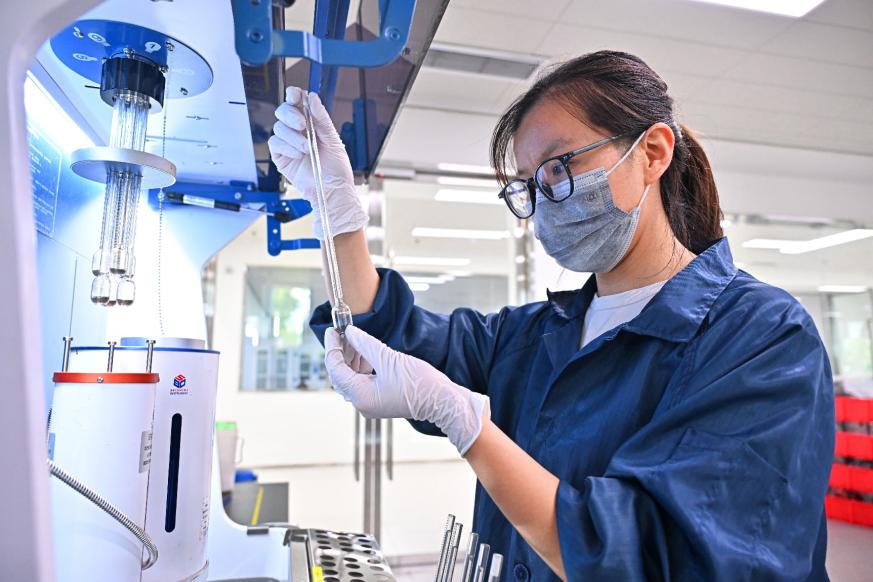
A technician conducts tests on new materials at a research institute of storage materials in Meishan, southwest China's Sichuan province. (Photo/Pan Shuai)
The evidence is mounting. Volkswagen has adjusted its R&D plans at its headquarters in Wolfsburg based on the model of its R&D center in Hefei, east China's Anhui province. Chinese AI models have ranked first for 20 consecutive weeks in terms of weekly global usage among large AI models.
As a new round of scientific and technological revolution and industrial transformation converges with China's historic transition in its development model, China is pressing ahead with innovation and working to build itself into a global source of scientific and technological innovation. With such fertile ground for development, China is set to continue surprising the world with innovation.
Photos


Related Stories
- Road map set for ramping up development
- China issues guidelines on developing new quality productive forces
- A more stable U.S.-China relationship matters for the world, says U.S. expert
- Chinese embassy in U.S. holds reception celebrating 77th founding anniversary of PRC
- Xi calls for translating new vision of China-U.S. relationship into action
- Full text: Xi's remarks at arrival ceremony at the White House
- Sci-tech innovation propels China's services trade
- Over 200 million green mobility trips made daily in China
- China's Shenzhen-Hong Kong-Guangzhou remains world's biggest innovation cluster: report
- Chengdu, Italy explore new cooperation at Milan tech matchmaking event
Copyright © 2026 People's Daily Online. All Rights Reserved.
