



Panda conservation strengthens global ties
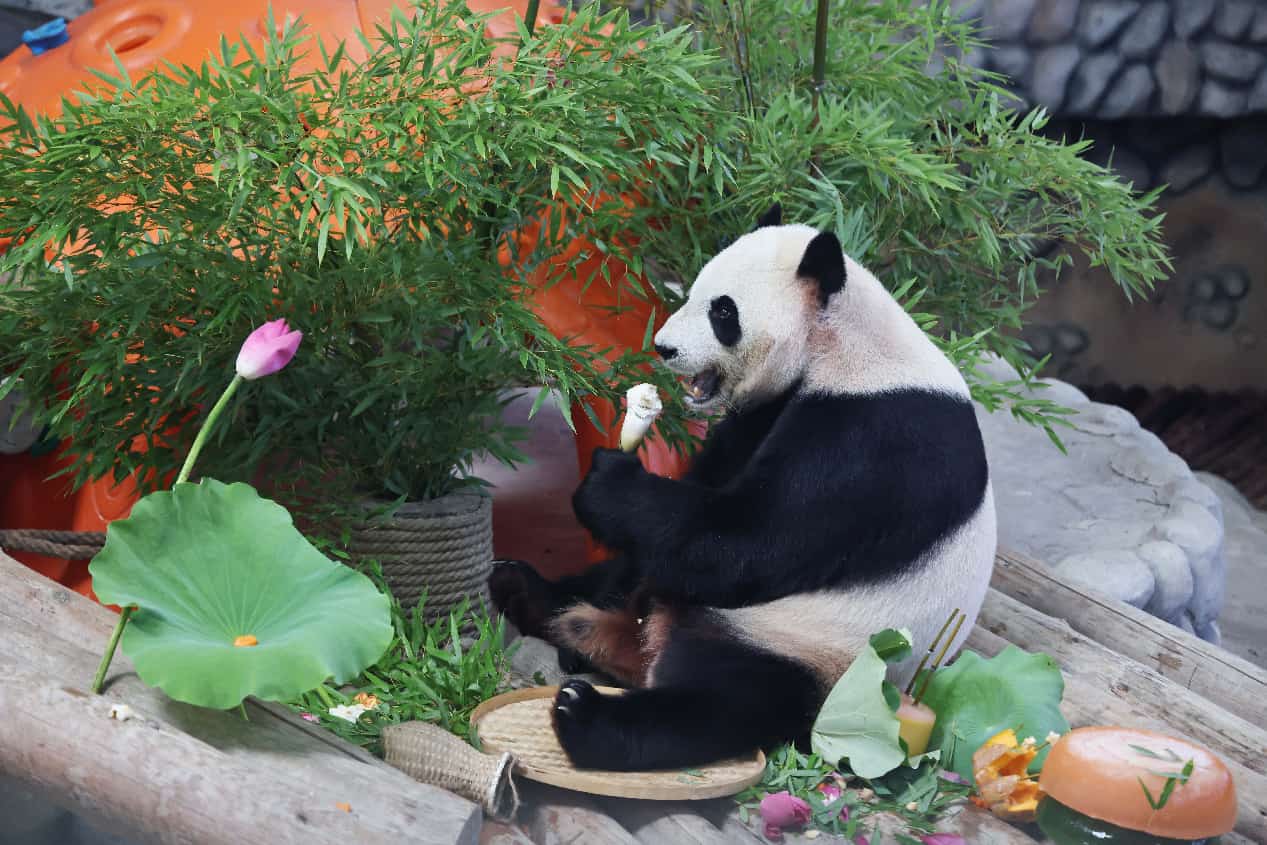
Giant panda Xing Hui enjoys its "birthday feast" at Nantong Forest Safari Park in east China's Jiangsu province, Aug. 9, 2026. (Photo/Xu Peiqin)
On September 27, giant pandas Ping Ping and Fu Shuang arrived safely at Zoo Atlanta, marking the beginning of a decade-long conservation partnership between China and the United States. The pair departed from the Chengdu Research Base of Giant Panda Breeding in southwest China's Sichuan province, landing at 8:55 a.m. U.S. Eastern Time after a carefully coordinated transpacific journey.
China and the United States will expand collaboration across multiple fronts, including giant panda breeding and husbandry, disease prevention and treatment, scientific research, public education, and the conservation of wild populations and their habitats.
The giant panda is a species unique to China and a rare, flagship and iconic species in global biodiversity conservation. Since 1994, China has steadily carried out long-term international cooperative programs focused on giant panda conservation and research. These initiatives have strengthened domestic expertise while fostering mutual understanding between China and partner nations. Moreover, they have offered a replicable "China solution" for multinational efforts to protect endangered species and preserve ecological diversity.
China-U.S. cooperation on giant panda conservation stands as one of China's longest-running international wildlife cooperation programs, involving the largest number of partner institutions and delivering broad, lasting impact.
The roots of this partnership trace back to April 1972, shortly after U.S. President Richard Nixon's historic visit to China. Two giant pandas, Ling Ling and Xing Xing, were sent to the United States as gifts. Their arrival drew thousands of visitors, including over 8,000 Americans who waited in the rain to greet them. Within their first month on public display, more than 1 million people came to see the pair, cementing the pandas' role as enduring symbols of China-U.S. goodwill.
Scientific and breeding collaboration formally began on September 10, 1996, when Bai Yun and Shi Shi arrived at the San Diego Zoo. This was followed by the arrival of Lun Lun and Yang Yang at Zoo Atlanta in 1999, and Tian Tian and Mei Xiang at the Smithsonian's National Zoo in Washington, D.C., in 2000. Beyond capturing the hearts of the American public, each pair has served as a living testament to the resilience and depth of China-U.S. cooperation on giant panda conservation.
In 2024, the previous generation of cooperative pandas completed their terms and returned to China. Today, Ping Ping and Fu Shuang have crossed the Pacific to continue the story of cooperation on giant panda conservation.
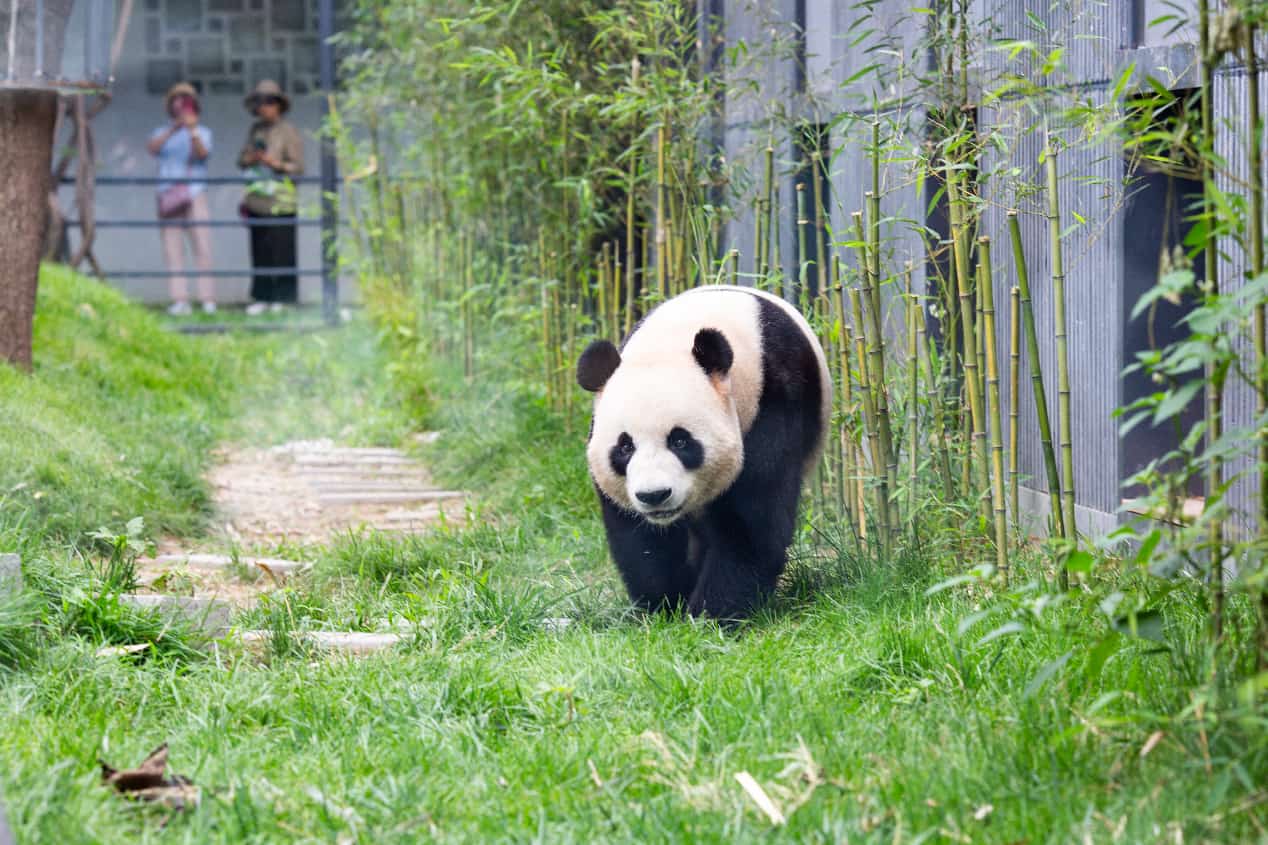
A giant panda strolls in the outdoor enclosure of a giant panda house at Beijing Zoo, July 16, 2026. (Photo/Zhang Lixin)
According to representatives from the Chengdu Research Base of Giant Panda Breeding, the U.S. side has undertaken extensive preparations to ensure the pandas' health and welfare throughout their stay. These efforts include comprehensive renovations and upgrades to enclosure facilities, creating a safer and more enriched environment tailored to the needs of the new cooperative pair.
Chinese conservation experts have shared detailed technical guidelines with U.S. zoological staff, establishing rigorous standards for habitat design, daily husbandry, nutritional planning, and veterinary care.
In 1994, two giant pandas from Chengdu became the first to travel to the Adventure World wildlife park in Shirahama, Wakayama Prefecture, Japan, as "ambassadors for scientific research and exchanges," marking the beginning of long-term international cooperation on giant panda conservation research.
Since then, China has conducted cooperative research on giant pandas with dozens of countries, including the United States, South Korea, Germany and Singapore.
"The purpose of these cooperative programs is to advance scientific research and public education, foster greater public awareness and engagement in wildlife conservation, and ultimately improve the protection of endangered species," said a representative of the China Wildlife Conservation Association.
An executive from the Chengdu Research Base of Giant Panda Breeding explained that giant pandas bound for overseas zoos go through a customized "preparation course" before their departure. This includes adapting to transportation, cooperating during physical check-ups and acclimatizing to new surroundings.
Before departure, they also undergo a month-long quarantine in isolation. Sufficient food is prepared for them to eat during the flight and any transit stops.
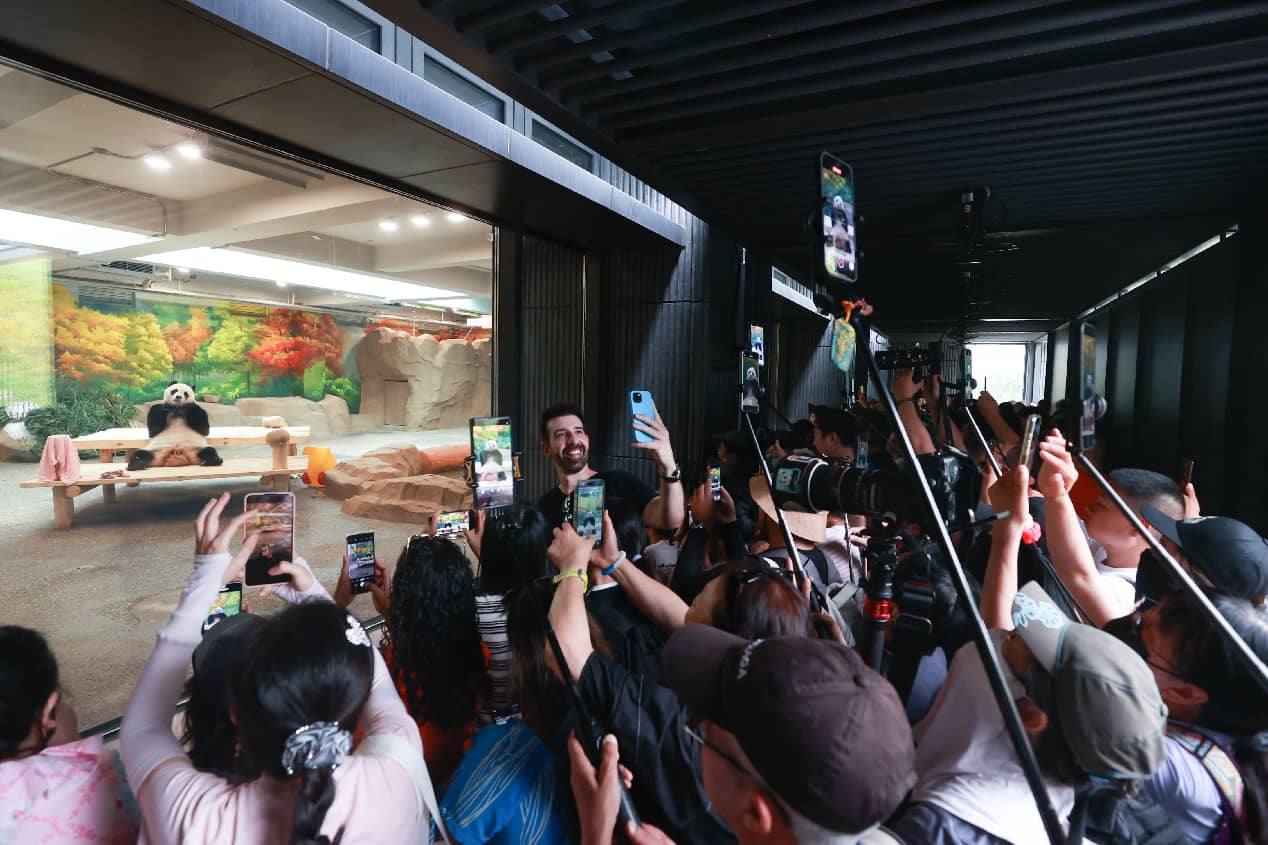
Visitors take photos of giant pandas at Beijing Zoo, July 17, 2026. (Photo/Chen Xiaogen)
Chinese panda keepers and veterinary teams also travel with the pandas to their overseas destinations. They are responsible for daily health monitoring, blood sampling and other routine care, remaining on-site until the pandas have adapted to their new environment.
To date, China has established scientific research partnerships with 26 zoos in 20 countries. A total of 69 giant pandas have been sent overseas for international cooperation. Since these partnerships began, 45 litters comprising 73 cubs have been successfully bred and raised. The cooperation has made important contributions to pooling research resources, improving scientific research capabilities, promoting species conservation and strengthening people-to-people exchanges.
In 2016, the International Union for Conservation of Nature changed the giant panda's conservation status from "endangered" to "vulnerable." The change reflected the positive results achieved by China's giant panda conservation efforts and represented international recognition of China's achievements in protecting the species.
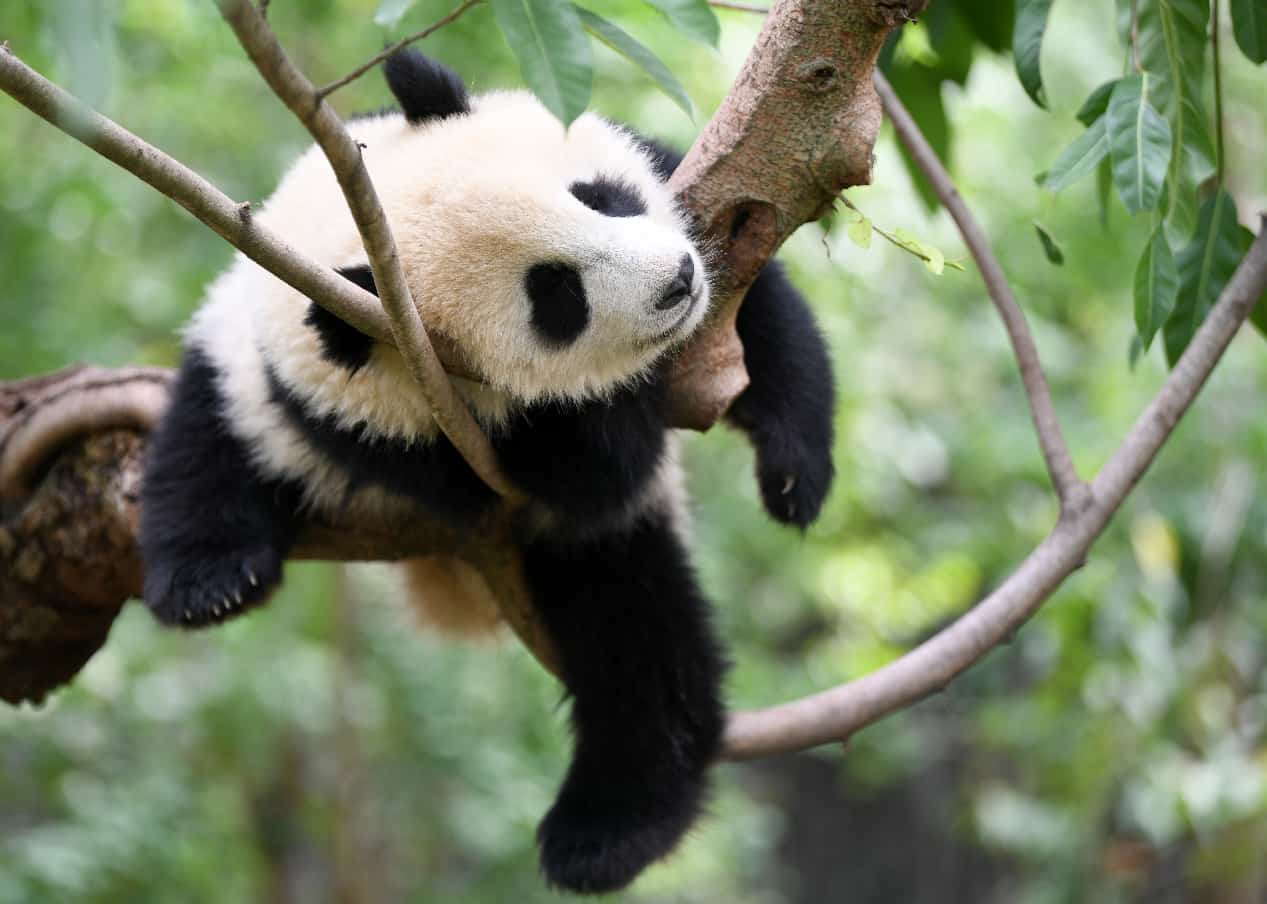
A giant panda cub sleeps in a tree at the Chengdu Research Base of Giant Panda Breeding in Chengdu, southwest China's Sichuan province, May 13, 2026. (Photo/Hu Guolin)
Photos
 Redeveloped port opens for easier cross-border travel between China's Shenzhen, Hong Kong
 Xi'an-Ankang high-speed railway boosts tourism in Ankang, China's Shaanxi
 Tourists enjoy sunrise at Mount Tai in China's Shandong
 Basha Village in China's Guizhou draws tourists with charming scenery and folk customs
Related Stories
- Cui Tiankai in conversation with Graham Allison: Decoding the new vision for China-US relations
- Strong demand in China boosts US exporters
- China firmly opposes U.S. arms sales to China's Taiwan region: spokesperson
- Pair of Chinese giant pandas arrives in U.S. city Atlanta
- Xi returns to Beijing after state visit to U.S.
- Xi, Trump honor history of China-U.S. joint fight against Japanese aggression in WWII
- Xi wraps up state visit to U.S.
- 6th birthday party of giant panda couple Jin Xi, Zhu Yu held at Madrid Zoo
- First-ever orthodontic treatment restores giant panda's normal bite in China
- 5th birthday party of giant panda Qing Bao held in Washington, D.C.
Copyright © 2026 People's Daily Online. All Rights Reserved.
