



China's Lijian-2 rocket rolls off production line, poised to accelerate LEO constellation deployment
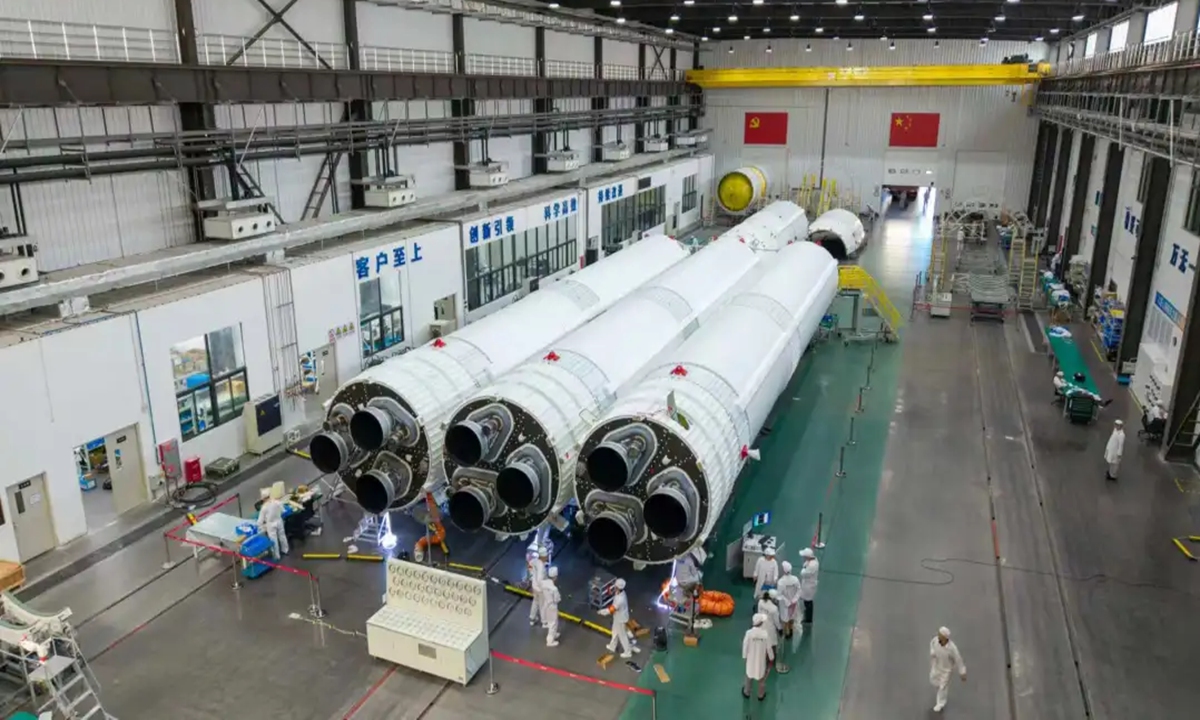
Photo: Screenshot from CAS Space's official WeChat account.
China's commercial rocket developer CAS Space has completed production and pre-launch testing of its Lijian-2 Y2 carrier rocket, the country's first launch vehicle featuring a "universal booster-core" configuration, marking another step toward faster, more standardized deployment of large low-Earth-orbit (LEO) constellations.
The rocket has passed its final pre-launch review, with all functional and performance indicators meeting mission requirements. It is now ready to be transported to the launch site and is scheduled for launch in October, according to CAS Space.
According to the Guangzhou Municipal Science and Technology Bureau, Guangzhou, South China's Guangdong Province, is leveraging its well-established advanced manufacturing base, strong scientific and technological resources and comprehensive industrial support capabilities to provide full-chain support for the commercialization and industrialization of the commercial space sector, Wang Yingcheng, executive deputy dean of the Innovation Research Institute of CAS Space, said.
Wang said CAS Space has established a coordinated industrial layout across Guangzhou's Huangpu, Nansha and Conghua districts, with each playing a differentiated role. The company has built a full-process commercial space system covering R&D, manufacturing and testing, while the coordinated development of the three districts will help improve the efficiency of R&D commercialization, mass production and testing and validation.
Designed as a major workhorse for large-scale constellation deployment and low-cost space transportation, Lijian-2 can carry up to 8 tons of payload to a 500-kilometer Sun-synchronous orbit and 12 tons to a 200-kilometer low Earth orbit.
The rocket is designed to combine high payload capacity with reliability, manufacturability and simplified operations, while leaving room for future expansion and reusability. It is expected to support the deployment of large LEO constellations, low-cost cargo transportation to space stations and launches of scientific satellites.
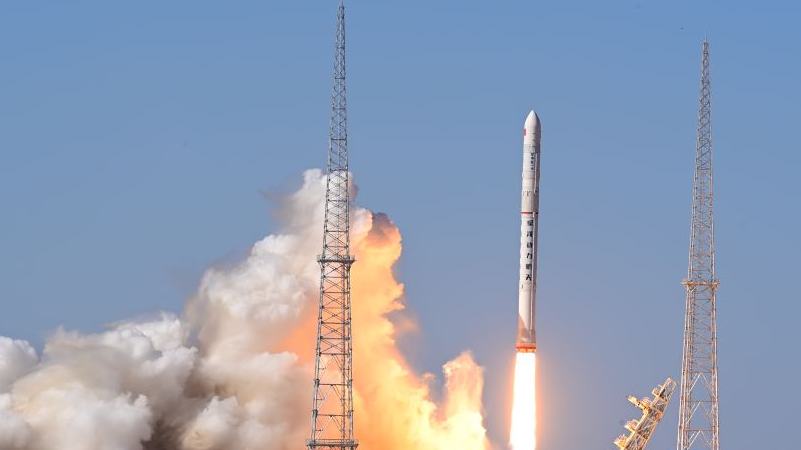
The Lijian-2 Y1 completed its maiden flight on March 30, successfully placing the Qingzhou prototype test spacecraft and two satellites into their designated orbits. The mission delivered 4.2 tons of payload into orbit, validating the rocket's key technologies and demonstrating its performance in a major space mission.
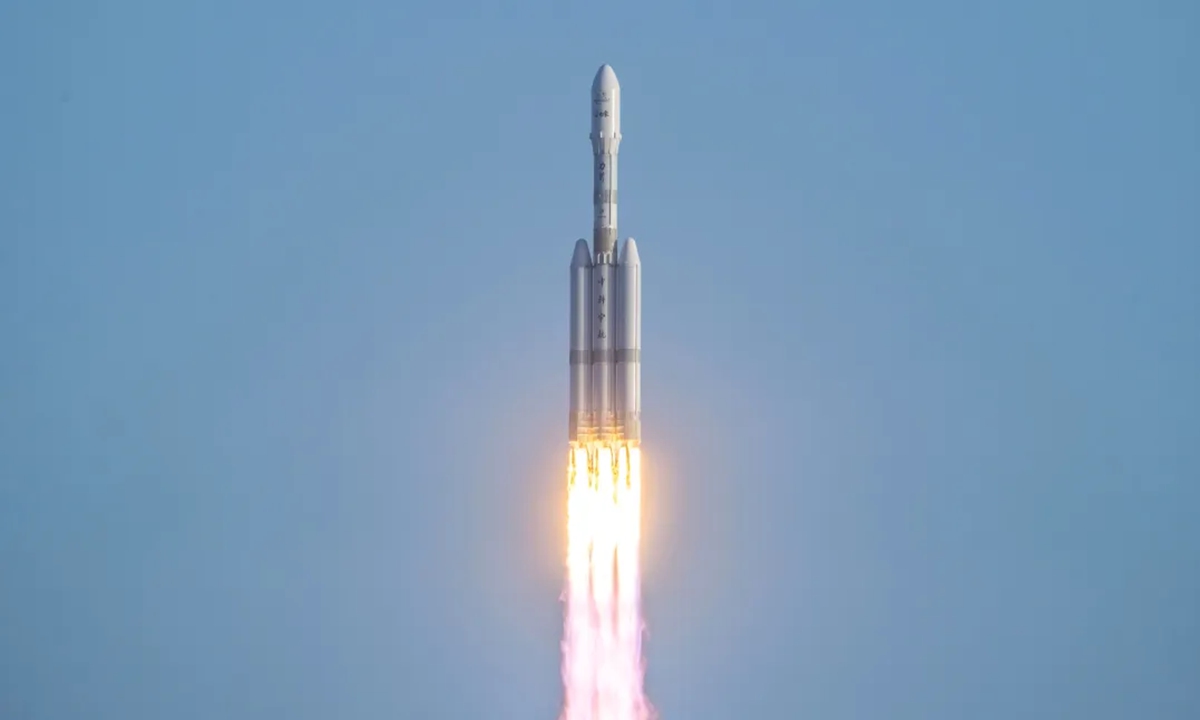
Photo: Screenshot from CAS Space's official WeChat account.
The rapid turnaround of the Y2 rocket also highlights CAS Space's push toward standardized and batch production. Building on the mature technologies and standardized assembly and testing procedures developed for the Lijian rocket series, the company has streamlined production, assembly and testing processes, shortening the overall preparation cycle compared with the maiden flight.
At the heart of the Lijian-2 design are standardized propulsion systems, clustered recovery, modular configurations and expandable upper stages. Together, these technologies are intended to create a family of launch vehicles capable of covering a broad range of orbital and payload requirements.
The approach reflects a broader shift in China's commercial space sector — from responding to individual launch missions to developing more regular, airline-like launch services, with higher launch frequency, standardized production and intelligent operations.
CAS Space said it has a strong order book and a busy development schedule, with its launch service business continuing to grow rapidly. Multiple rocket missions are currently being prepared in line with the company's annual launch plan, as it seeks to contribute to the development of China's commercial space industry and the country's broader space ambitions.
Photos


Related Stories
- Shenzhou-23 crew reaches 60-day orbital mark with multiple science tasks
- China's new Long-March 6 carrier rocket completes maiden flight
- China's Long March carrier rocket family completes 400 missions
- China's commercial carrier rocket to make maiden flight in H1
- China's first privately-developed carrier rocket fails to enter orbit
Copyright © 2026 People's Daily Online. All Rights Reserved.
