



Young people build careers by reviving Li brocade
Visitors to a Li brocade workshop in Wuzhishan city, south China's Hainan Province, are greeted by adorable dolls, stylish and practical bags, jewelry, scarves and other creative cultural products lining the shelves.
Patterns once embroidered only on traditional garments are now being incorporated into all aspects of everyday life, thanks to the ingenuity of young inheritors and entrepreneurs.
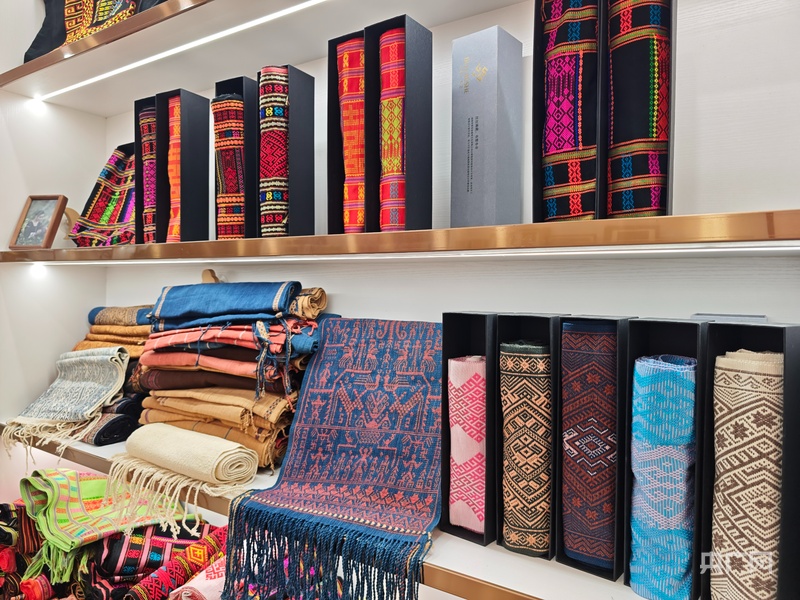
Photo shows Li brocade featuring rich patterns and vibrant color combinations. (CNR.cn/Cai Wenjuan)
Li brocade has evolved from a museum artifact into something young people are willing to buy, use and even build a career around.
The traditional spinning, dyeing, weaving and embroidering techniques of the Li ethnic group are used by Li women in Hainan to make clothing and other everyday items from natural fibers such as cotton. Their representative product, known as Li brocade, has a history of more than 3,000 years and is hailed as a "living fossil" of China's textile history.
The techniques were officially inscribed on the UNESCO Representative List of the Intangible Cultural Heritage of Humanity on Dec. 5, 2024.
However, Li brocade was once held back by three major constraints. Its use was limited, typically to festive attire. Its high price put it beyond the reach of ordinary consumers. And it was usually taught within families, with the craft passed down from mother to daughter. As the older generation of weavers grew smaller, few young people were willing to take it up.
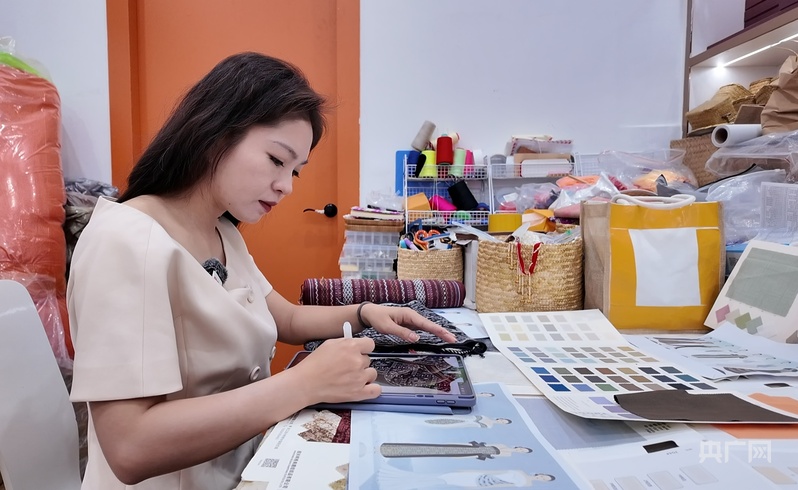
Chen Mengli incorporates Li brocade patterns into modern clothing design. (CNR.cn/Cai Wenjuan)
Bringing this millennia-old tradition out of exhibition halls and into everyday life became a shared challenge for its inheritors.
"Plant dyes and totemic patterns are the foundation and soul of Li brocade," said Chen Mengli, a Li woman born in the 1990s and a municipal-level representative inheritor of Li ethnic clothing, a national intangible cultural heritage item. "We cannot abandon tradition, but if we want it to become part of people's everyday lives, we have to combine it with modern design, making it affordable and something people want to use."
Young inheritors therefore began with design. They deconstructed and reworked the complete patterns traditionally featured on large garments, extracting distinctive motifs with clear meanings and adapting them for everyday products such as necklaces, canvas bags, notebook covers, phone cases and travel souvenirs.
Huang Yangwei, a municipal-level representative inheritor of the techniques, has challenged the long-held belief that brocade weaving is women's work. Moving beyond the traditional black-and-red color scheme, he has developed products such as men's vests, briefcases and bicycle helmets, tapping into a male consumer market that had long been overlooked.
Today, Li brocade has expanded beyond clothing into more than 100 types of creative cultural products. Rooted in tradition while reflecting modern aesthetics, these products have quickly won over young consumers, helping Li brocade become part of contemporary life.
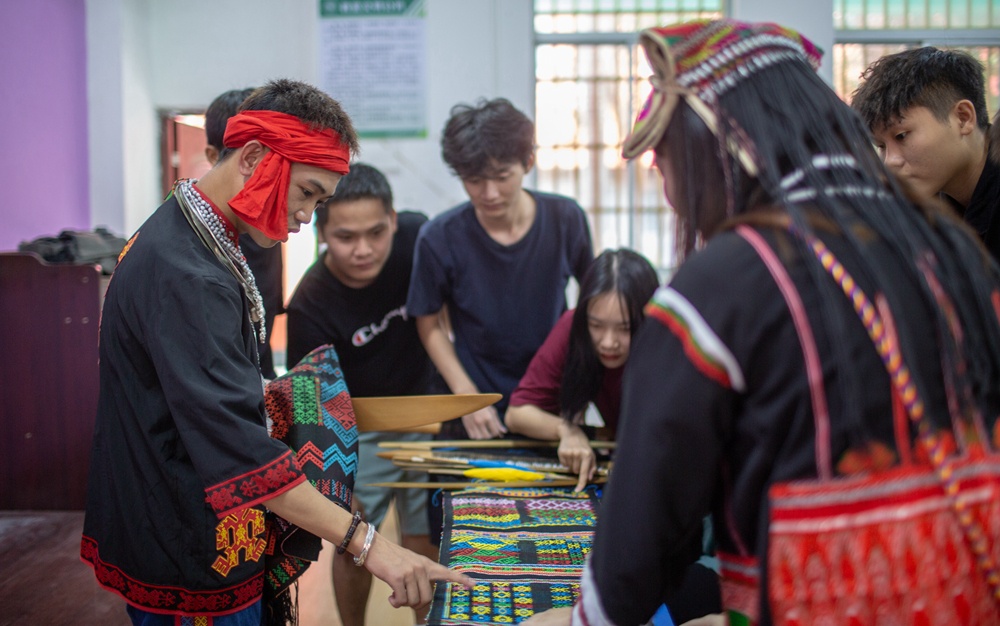
Huang Yangwei introduces Li brocade patterns to young people. (Photo courtesy of the interviewee/CNR.cn)
"Some customers send us their needs and ideas and ask for customized products," Chen said. "Others have suggested turning pieces of Li brocade fabric into luggage tags. That would make them 'walking postcards' of Li culture."
As the range of products has expanded, Li brocade has gradually reached a wider market. Rising orders have enabled Li women skilled in traditional weaving to work from home and earn a steady income.
In recent years, Wuzhishan has placed greater emphasis on training intangible cultural heritage practitioners. The city has established 22 training and practice centers and seven intangible cultural heritage workshops. It has also created a development pathway covering early education for children, dedicated training for young people and master-apprentice programs.
So far, more than 5,400 people in the city have acquired Li brocade weaving skills. More than 20 leading practitioners have emerged, with over 100 master-apprentice pairings established. A tiered pool of practitioners spanning older, middle-aged and younger generations is gradually taking shape, with more young people taking up the craft.
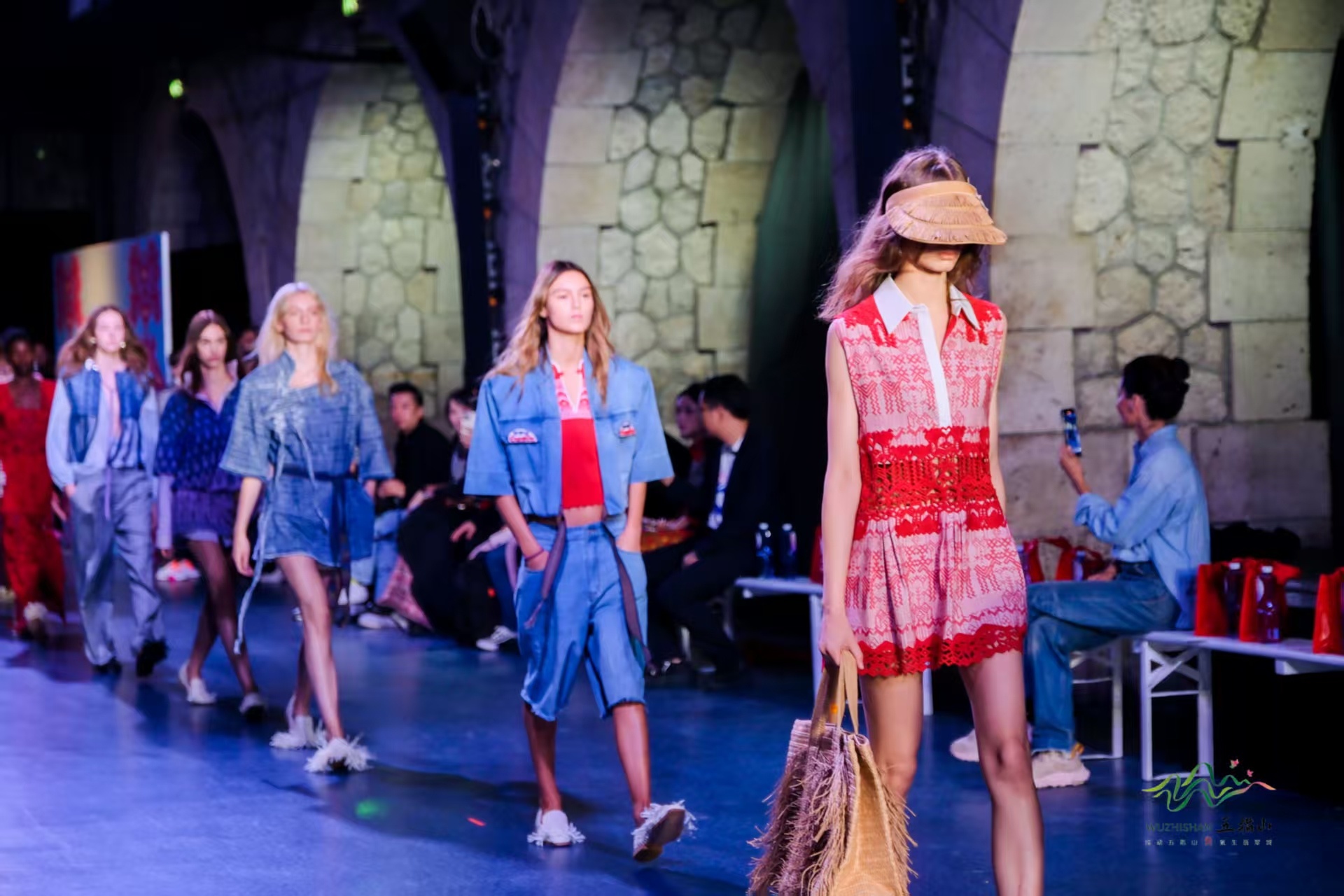
Li brocade makes an appearance at Paris Fashion Week. (Photo courtesy of the interviewee/CNR.cn)
Since 2021, Li brocade has appeared on the runways of fashion weeks in China and abroad, where young inheritors have showcased their creations and drawn attention from the international fashion industry. Wuzhishan partnered with Italian fashion and design school Istituto Marangoni in August 2023 to launch an international training program for Li brocade practitioners, selecting skilled weavers for further study.
Photos




Related Stories
- The art of the reveal
- Zhuang brocade weaving thrives through innovation in China's Guangxi
- Exhibition of intangible cultural heritage opens to visitors during Summer Davos in China's Dalian
- Dragon boat festival intangible cultural heritage fair held in Nairobi, Kenya
- Ceremony worshiping Fuxi held in Tianshui, China's Gansu
Copyright © 2026 People's Daily Online. All Rights Reserved.
