



JD.com launches 24-hour unmanned coffee shop in Beijing, serving 202 cups in one hour
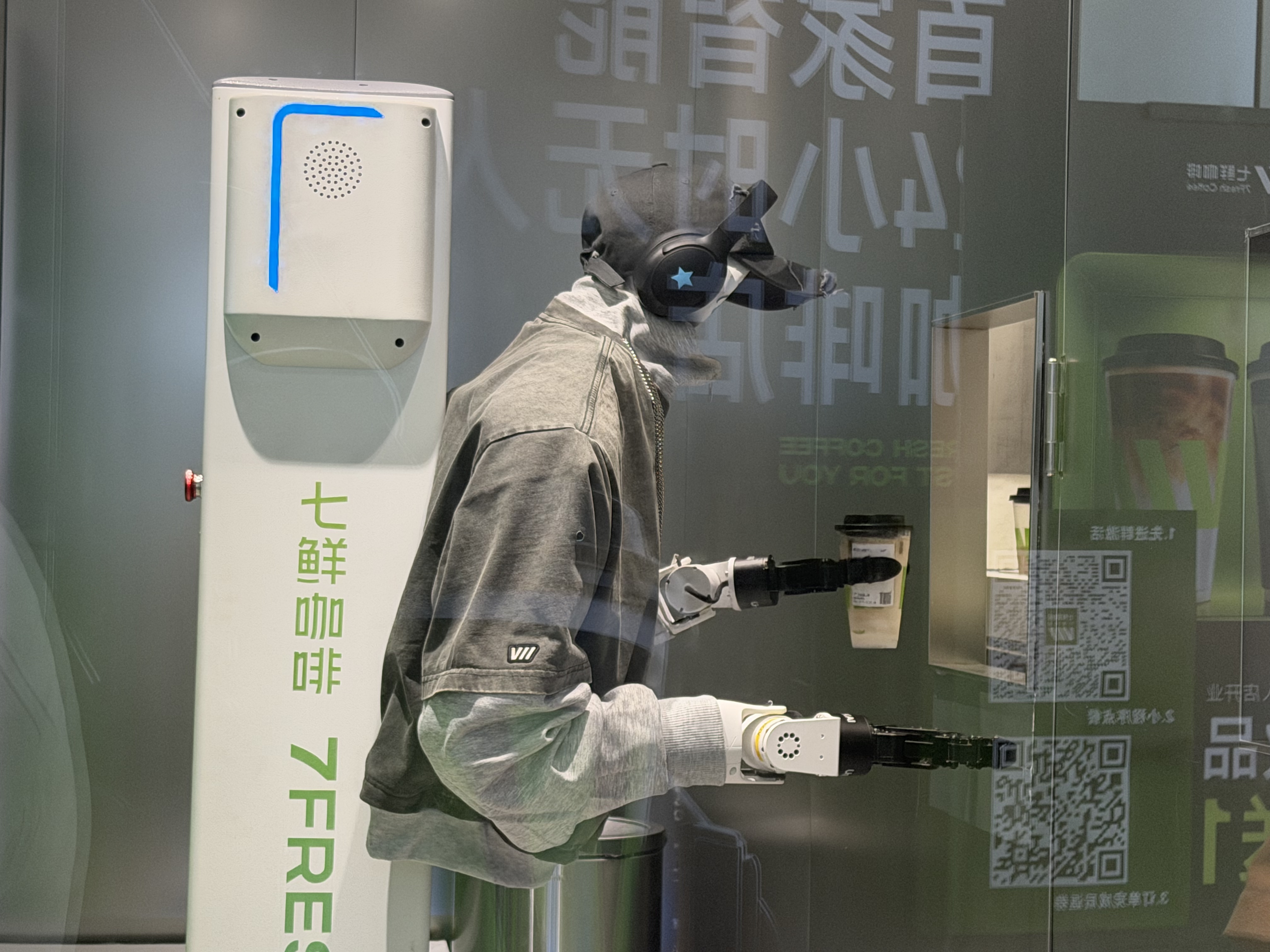
A robot makes coffee at 7 Fresh Coffee’s 24-hour intelligent unmanned coffee shop at Galaxy SOHO in Beijing, on August 17, 2026. Photo: Zhang Weilan/GT
Behind a glass service window, a humanoid robot wearing a gray jacket and headset carefully grips a disposable coffee cup with its mechanical arm, ready to hand over the order at an automated coffee pickup station in downtown Beijing on Monday.
This sleek, futuristic, and minimalist scene has quickly drawn customers, offering a striking example of how China is turning artificial intelligence (AI) and robotics into everyday consumer services.
On Sunday, 7Fresh Coffee, a beverage brand under JD.com, opened what it calls the world’s first 24-hour intelligent unmanned coffee shop at Galaxy SOHO in Beijing.
At the store, the entire coffee-making process — from grinding beans and extracting espresso to blending, pouring and serving — is completed by robots. The shop operates 24 hours a day.
This innovative store marks the first of its kind, operating 24 hours and featuring robotic coffee preparation, a staff member from7 Fresh Coffee surnamed Wu told the Global Times on Monday.
The debut offers a glimpse of how China’s advanced technologies are being transformed into consumer service.
Customers can place orders either through an in-store self-service kiosk or via the JD App. Once an order is received, the system automatically assigns it to the production line.
The drink is then prepared by a fully automated brewing system and delivered to a pickup window, where a robotic grips the cup and places it into a collection cabinet for the customer.
Drinks can be completed in as little as 20 to 30 seconds, and the production line can handle seven to eight drinks at the same time, according to Wu.
Notably, the store completed 202 cups in one hour ahead of its official launch on Sunday, successfully setting a Guinness World Record for continuous operation.
“I was really impressed when I walked in,” one customer told the Global Times on Monday. “It feels so futuristic and efficient. Watching the robot make the coffee step by step — from grinding and brewing to mixing and serving — was surprisingly fun. I also like the self-service ordering system because it’s quick and convenient. It’s not just about getting a cup of coffee; it’s more like experiencing a new way of enjoying coffee.”
According to Wu, the store attracted steady foot traffic throughout its opening day, with many curious customers lining up to try the automated experience. Live streams from the scene also sparked online buzz, with many viewers asking when the concept would expand to other cities.
The 7Fresh Coffee’s unmanned coffee shop offers a variety of beverages, including coffee, sparkling water, tea, and probiotic juice, with prices ranging from 15 yuan ($2.2) to 20 yuan.
In addition, the store is expected to introduce an AI feature that will provide personalized caffeine intake recommendations based on consumers’ health conditions, said a company representative.
One of the shop’s eye-catching features is its DIY customization system. Before placing an order, customers can adjust sweetness, coffee strength, and juice concentration with fine precision, from 1 percent to 100 percent. They can also name their drink and generate a personalized card to share on social media.
According to the company representative, the store is designed to solve long-standing pain points in the café business, including unstable quality control, high labor costs and limited operating hours. By integrating JD’s large AI models with embodied intelligence, 7Fresh Coffee has standardized and automated a process that has traditionally depended heavily on human baristas.
The opening marks another example of how tech and e-commerce companies are venturing into the automated retail sector. It also underscores the rapid advancement of China’s AI-driven retail innovation, said Zhong Xiangyun, a humanoid robot industry observer, in an interview with the Global Times on Monday.
Beyond the novelty, it addresses real business challenges such as labor costs, consistency, and 24-hour operation, while also injecting vitality into the city’s night economy, and offering a highly customizable customer experience.
“If the model proves reliable and scalable, it could become a preview of the future of retail in many places and cities.”
Photos



Related Stories
- Beijing shuts tourist sites, suspends bus routes as rain continues
- Beijing launches flood response as heavy rain looms
- So, You're Interested in China? | Your Beijing summer eats guide
- State Grid's Beijing branch guarantees stable power supply for residents
- So, You're Interested in China? | Beijing's real summer games happen after dark
Copyright © 2026 People's Daily Online. All Rights Reserved.
