



Interview: China emerging as key driver of global robotics, AI innovation, Malaysian tech observer says
KUALA LUMPUR, Aug. 7 (Xinhua) -- China is developing the capacity to lead industrial innovation in several emerging sectors, a Malaysian technology observer said.
Serm Teck Choon, a renowned technology commentator and former president of the Malaysian Digital Association (MDA), said China's evolving role in global science and technology is reflected in measurable industrial development and market performance.
"I agree with the assessment that China is accelerating its transformation from a participant and contributor in global science and technology into a pioneer and leader," Serm said in a recent interview with Xinhua.
Having long observed technological and industrial interaction between Southeast Asia and China, Serm pointed to the humanoid robotics industry as an example.
Global shipments of humanoid robots reached around 13,000 units in 2025, while Chinese companies occupied a dominant position among the world's leading manufacturers, he said.
"This is no longer an achievement at the level of participation. It reflects structural advantages in the completeness of supply chains, cost control and the speed of mass production," Serm said.
"These developments show that China is not only an important participant in the global technology industry, but is also gradually developing the capacity to lead industrial development in certain frontier fields," he added.
Serm attributed China's rapid progress partly to what he described as a complete innovation cycle linking research and development, industrial supply chains, application scenarios and market feedback.
China has established a comprehensive manufacturing ecosystem spanning consumer electronics, new energy vehicles and intelligent robots, with capabilities extending from core components to complete products and real-world applications, he said.
At the same time, the country's large market enables emerging technologies to be rapidly tested, improved and deployed on a large scale, with experience gained from commercial applications feeding back into scientific research and technological innovation.
Looking ahead, Serm expressed hope that China will further deepen international technological cooperation, particularly with Southeast Asian countries in areas such as robotics, drones and intelligent manufacturing.
Southeast Asia is at a critical stage of industrial upgrading and digital transformation, while China's technologies and industrial experience are highly complementary to regional demand in manufacturing, agricultural modernization and logistics infrastructure, he said.
Greater cooperation would enable China and Southeast Asian countries to leverage their respective strengths, pursue joint innovation, promote regional industrial upgrading and inject new momentum into global technological cooperation.
"The next important steps will be to further strengthen original innovation, expand the application of technology in the real economy and social development, and continue deepening international technological cooperation," he said.
Photos
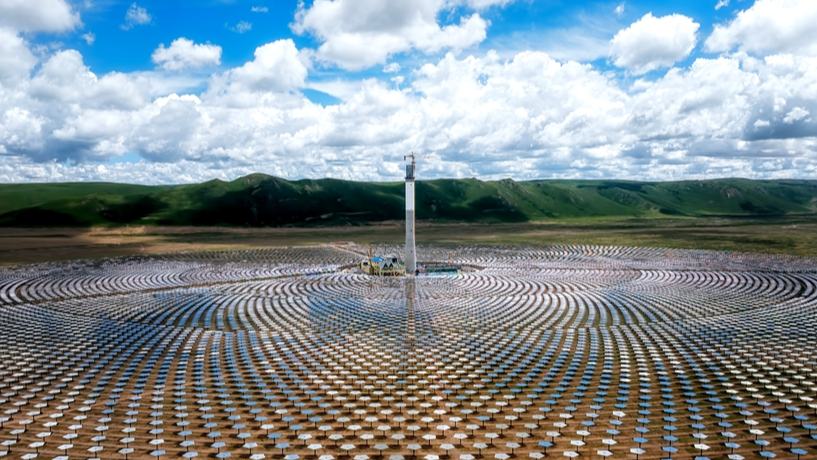 World's highest-altitude solar thermal power plant completes heliostat installation in SW China's Xizang
 Immersive experiences increasingly popular amid China's summer travel boom
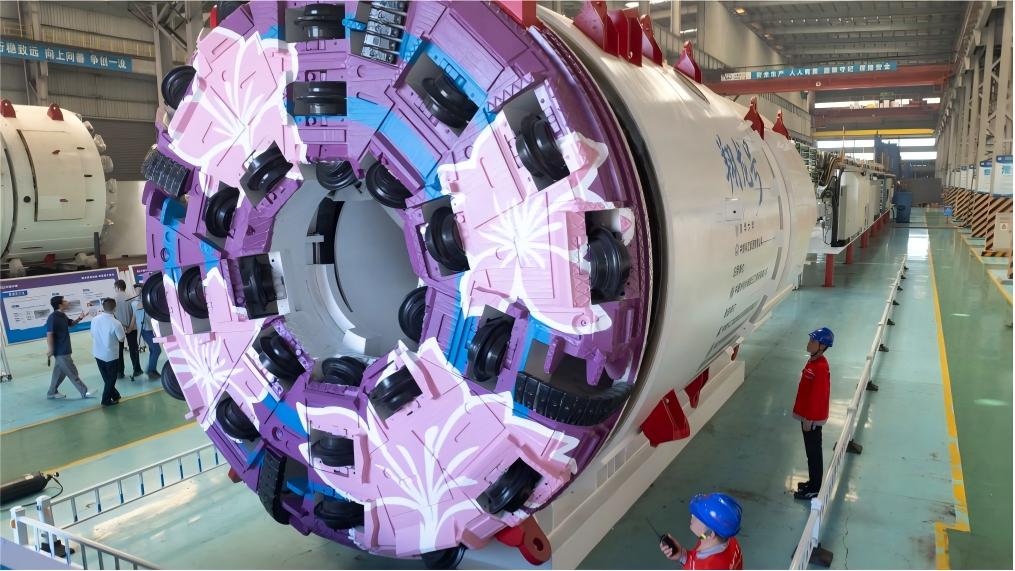 China's first boring and blasting machine rolls off production line in Wuhan, China's Hubei
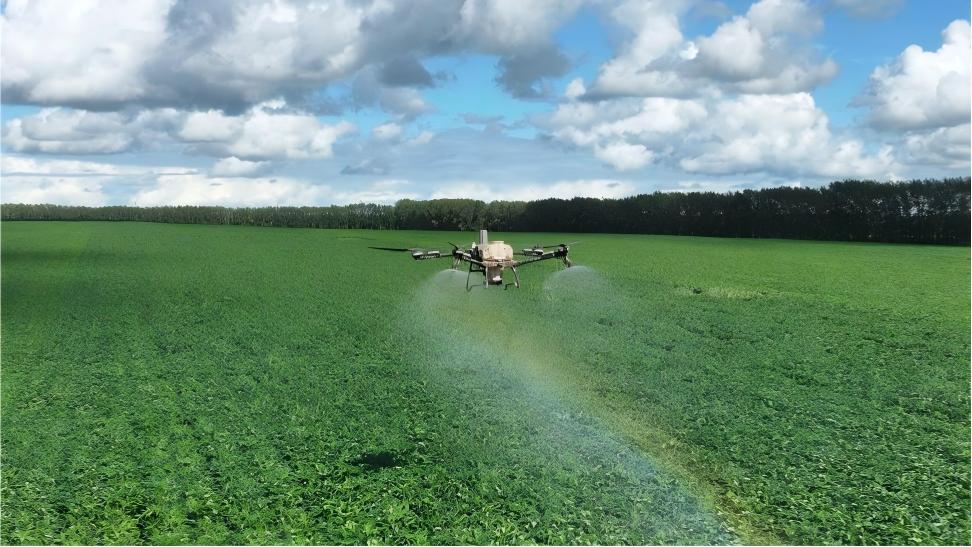 Aerial crop protection operations launched in fields of NE China's Heilongjiang
Related Stories
- A glimpse of AI products at experience center in Hefei, China's Anhui
- Chinese tech giants widen AI talent hunt as industry shifts from model breakthroughs to real-world use
- China's AI-driven MAZU platform boosts Africa's weather forecasting amid climate change
- China empowers Global South nations through AI technology
- AI computing power boom rippling up industrial chain
Copyright © 2026 People's Daily Online. All Rights Reserved.
