



People visit exhibition exposing crimes by Japanese Unit 731 during World War II in Harbin, NE China
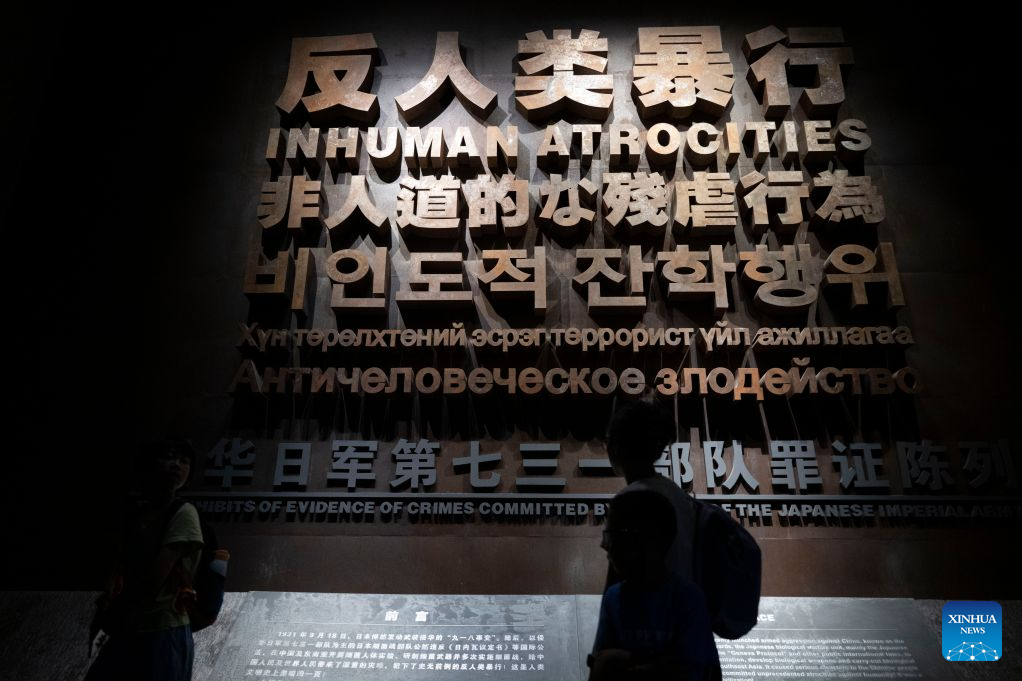
People visit the Exhibition Hall of Evidences of Crime Committed by Unit 731 of the Japanese Imperial Army in Pingfang District of Harbin, northeast China's Heilongjiang Province, Aug. 4, 2026. During the summer vacation, the Exhibition Hall of Evidences of Crime Committed by Unit 731 of the Japanese Imperial Army has greeted lots of visitors.
People tour the exhibition hall to view archival evidence exposing the germ warfare crimes perpetrated by notorious Japanese Unit 731 during World War II.
Unit 731 was a top-secret biological and chemical warfare research base established as the nerve center for Japanese biological warfare in China and Southeast Asia during WWII. At least 3,000 people were used in human experiments conducted by Unit 731, and more than 300,000 people in China were killed by Japan's biological weapons. (Xinhua/Zhang Tao)
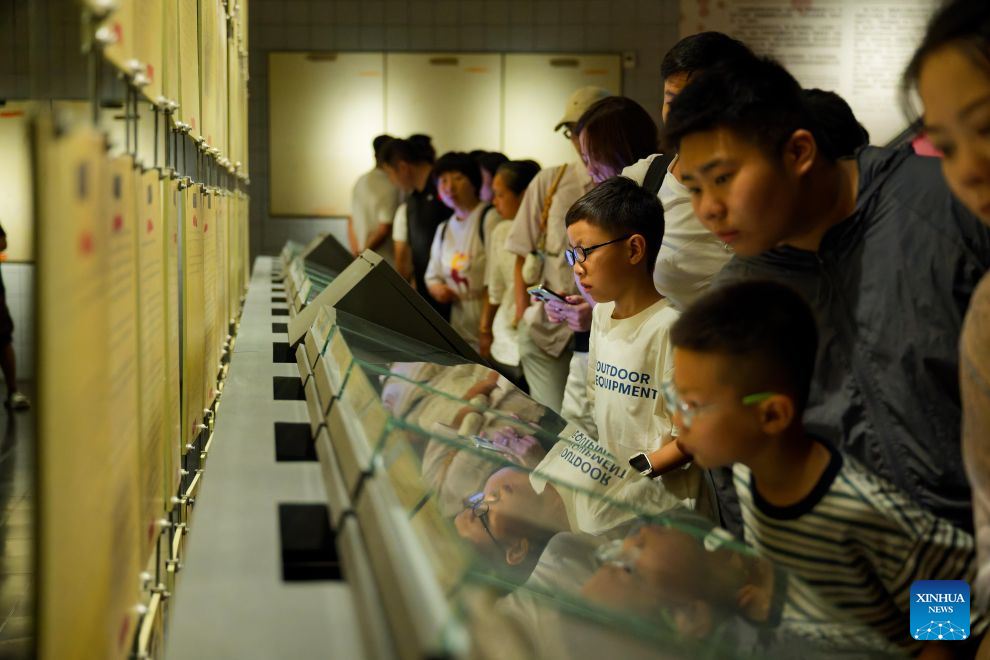
People visit the Exhibition Hall of Evidences of Crime Committed by Unit 731 of the Japanese Imperial Army in Pingfang District of Harbin, northeast China's Heilongjiang Province, Aug. 4, 2026. During the summer vacation, the Exhibition Hall of Evidences of Crime Committed by Unit 731 of the Japanese Imperial Army has greeted lots of visitors.
People tour the exhibition hall to view archival evidence exposing the germ warfare crimes perpetrated by notorious Japanese Unit 731 during World War II.
Unit 731 was a top-secret biological and chemical warfare research base established as the nerve center for Japanese biological warfare in China and Southeast Asia during WWII. At least 3,000 people were used in human experiments conducted by Unit 731, and more than 300,000 people in China were killed by Japan's biological weapons. (Xinhua/Zhang Tao)
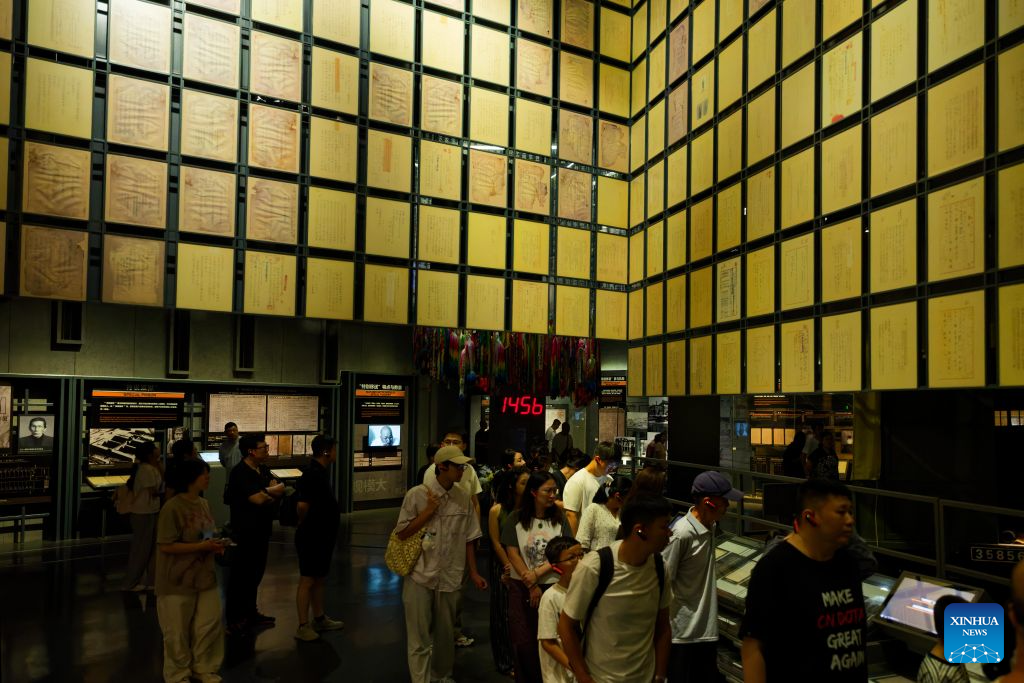
People visit the Exhibition Hall of Evidences of Crime Committed by Unit 731 of the Japanese Imperial Army in Pingfang District of Harbin, northeast China's Heilongjiang Province, Aug. 4, 2026. During the summer vacation, the Exhibition Hall of Evidences of Crime Committed by Unit 731 of the Japanese Imperial Army has greeted lots of visitors.
People tour the exhibition hall to view archival evidence exposing the germ warfare crimes perpetrated by notorious Japanese Unit 731 during World War II.
Unit 731 was a top-secret biological and chemical warfare research base established as the nerve center for Japanese biological warfare in China and Southeast Asia during WWII. At least 3,000 people were used in human experiments conducted by Unit 731, and more than 300,000 people in China were killed by Japan's biological weapons. (Xinhua/Zhang Tao)
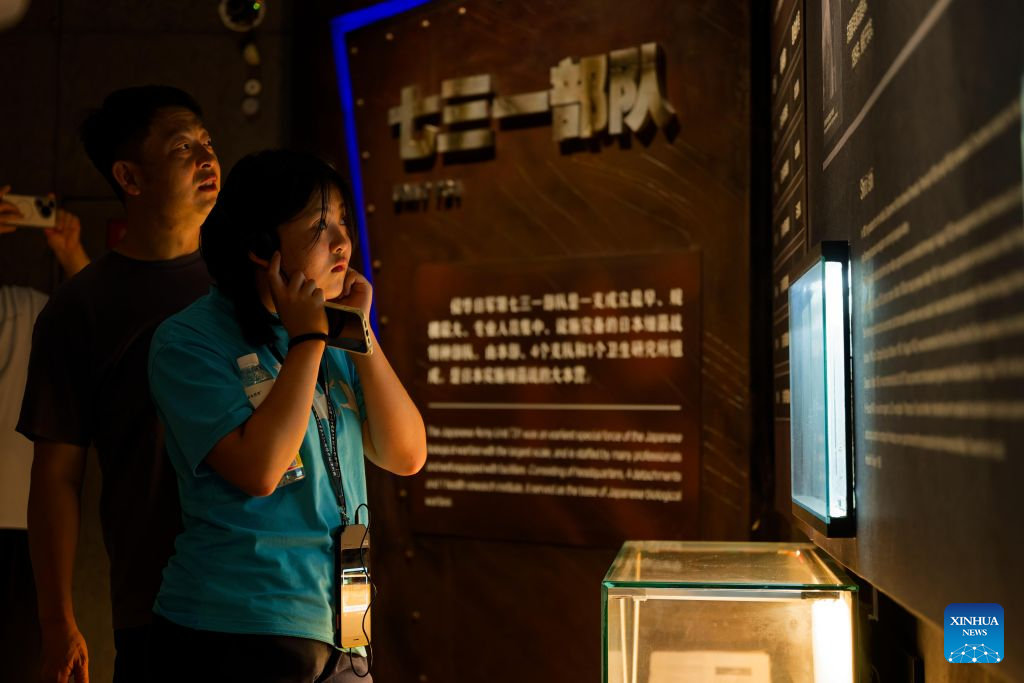
People visit the Exhibition Hall of Evidences of Crime Committed by Unit 731 of the Japanese Imperial Army in Pingfang District of Harbin, northeast China's Heilongjiang Province, Aug. 4, 2026. During the summer vacation, the Exhibition Hall of Evidences of Crime Committed by Unit 731 of the Japanese Imperial Army has greeted lots of visitors.
People tour the exhibition hall to view archival evidence exposing the germ warfare crimes perpetrated by notorious Japanese Unit 731 during World War II.
Unit 731 was a top-secret biological and chemical warfare research base established as the nerve center for Japanese biological warfare in China and Southeast Asia during WWII. At least 3,000 people were used in human experiments conducted by Unit 731, and more than 300,000 people in China were killed by Japan's biological weapons. (Xinhua/Zhang Tao)
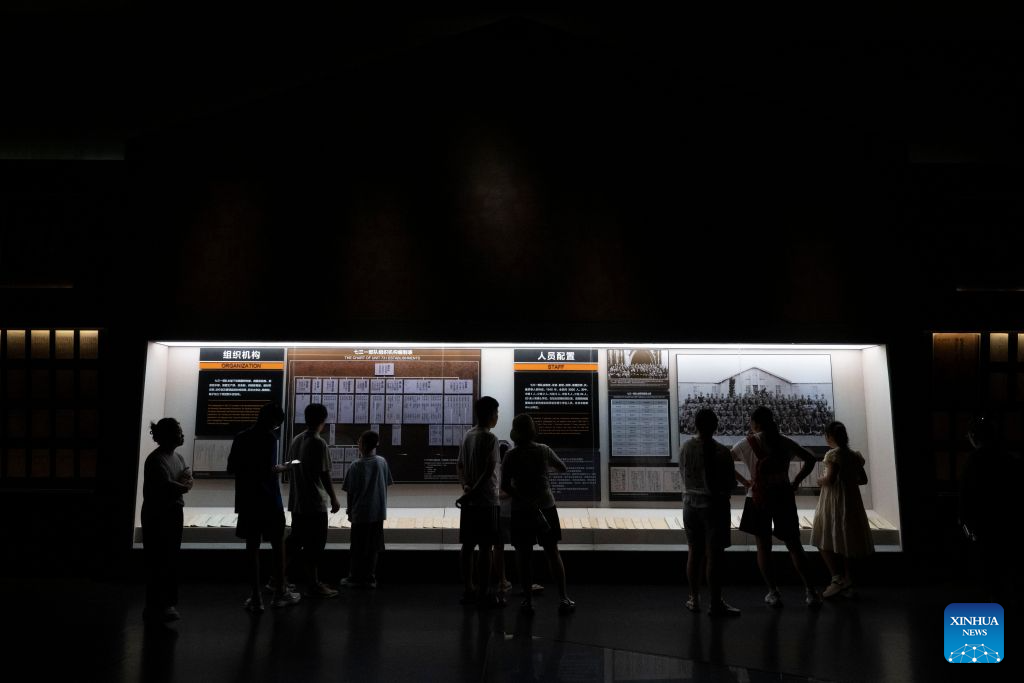
People visit the Exhibition Hall of Evidences of Crime Committed by Unit 731 of the Japanese Imperial Army in Pingfang District of Harbin, northeast China's Heilongjiang Province, Aug. 4, 2026. During the summer vacation, the Exhibition Hall of Evidences of Crime Committed by Unit 731 of the Japanese Imperial Army has greeted lots of visitors.
People tour the exhibition hall to view archival evidence exposing the germ warfare crimes perpetrated by notorious Japanese Unit 731 during World War II.
Unit 731 was a top-secret biological and chemical warfare research base established as the nerve center for Japanese biological warfare in China and Southeast Asia during WWII. At least 3,000 people were used in human experiments conducted by Unit 731, and more than 300,000 people in China were killed by Japan's biological weapons. (Xinhua/Zhang Tao)
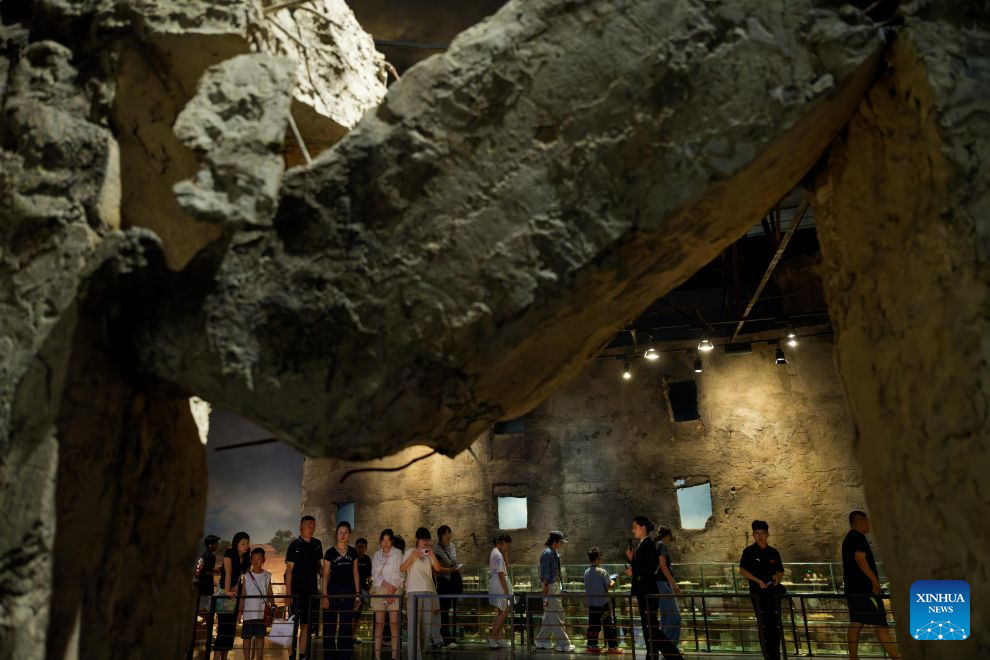
People visit the Exhibition Hall of Evidences of Crime Committed by Unit 731 of the Japanese Imperial Army in Pingfang District of Harbin, northeast China's Heilongjiang Province, Aug. 4, 2026. During the summer vacation, the Exhibition Hall of Evidences of Crime Committed by Unit 731 of the Japanese Imperial Army has greeted lots of visitors.
People tour the exhibition hall to view archival evidence exposing the germ warfare crimes perpetrated by notorious Japanese Unit 731 during World War II.
Unit 731 was a top-secret biological and chemical warfare research base established as the nerve center for Japanese biological warfare in China and Southeast Asia during WWII. At least 3,000 people were used in human experiments conducted by Unit 731, and more than 300,000 people in China were killed by Japan's biological weapons. (Xinhua/Zhang Tao)
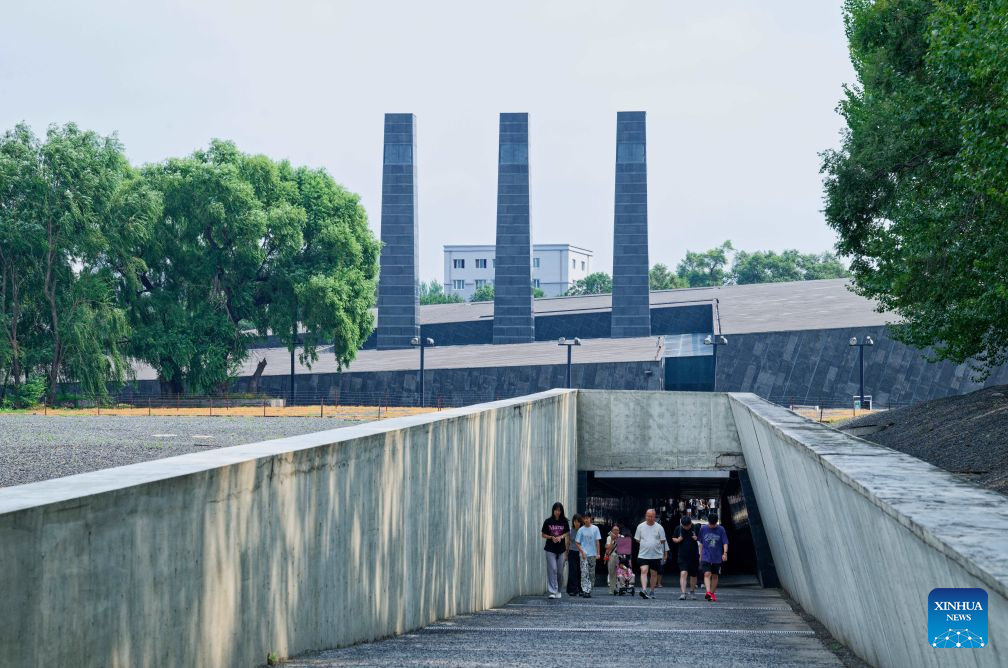
People walk out of the Exhibition Hall of Evidences of Crime Committed by Unit 731 of the Japanese Imperial Army in Pingfang District of Harbin, northeast China's Heilongjiang Province, Aug. 4, 2026. During the summer vacation, the Exhibition Hall of Evidences of Crime Committed by Unit 731 of the Japanese Imperial Army has greeted lots of visitors.
People tour the exhibition hall to view archival evidence exposing the germ warfare crimes perpetrated by notorious Japanese Unit 731 during World War II.
Unit 731 was a top-secret biological and chemical warfare research base established as the nerve center for Japanese biological warfare in China and Southeast Asia during WWII. At least 3,000 people were used in human experiments conducted by Unit 731, and more than 300,000 people in China were killed by Japan's biological weapons. (Xinhua/Zhang Tao)
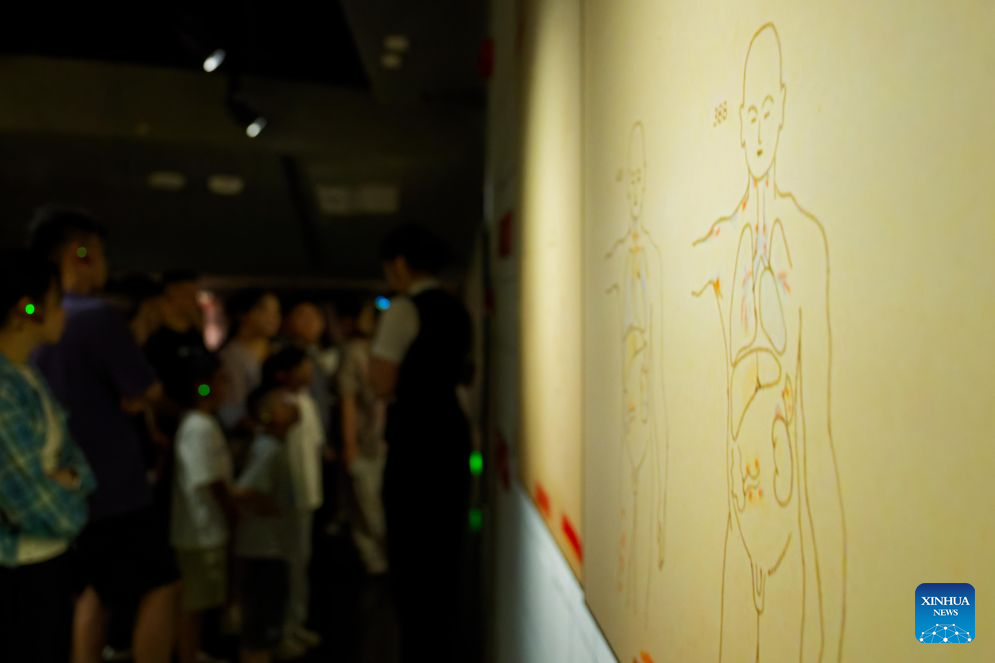
People visit the Exhibition Hall of Evidences of Crime Committed by Unit 731 of the Japanese Imperial Army in Pingfang District of Harbin, northeast China's Heilongjiang Province, Aug. 4, 2026. During the summer vacation, the Exhibition Hall of Evidences of Crime Committed by Unit 731 of the Japanese Imperial Army has greeted lots of visitors.
People tour the exhibition hall to view archival evidence exposing the germ warfare crimes perpetrated by notorious Japanese Unit 731 during World War II.
Unit 731 was a top-secret biological and chemical warfare research base established as the nerve center for Japanese biological warfare in China and Southeast Asia during WWII. At least 3,000 people were used in human experiments conducted by Unit 731, and more than 300,000 people in China were killed by Japan's biological weapons. (Xinhua/Zhang Tao)
Photos
 Immersive experiences increasingly popular amid China's summer travel boom
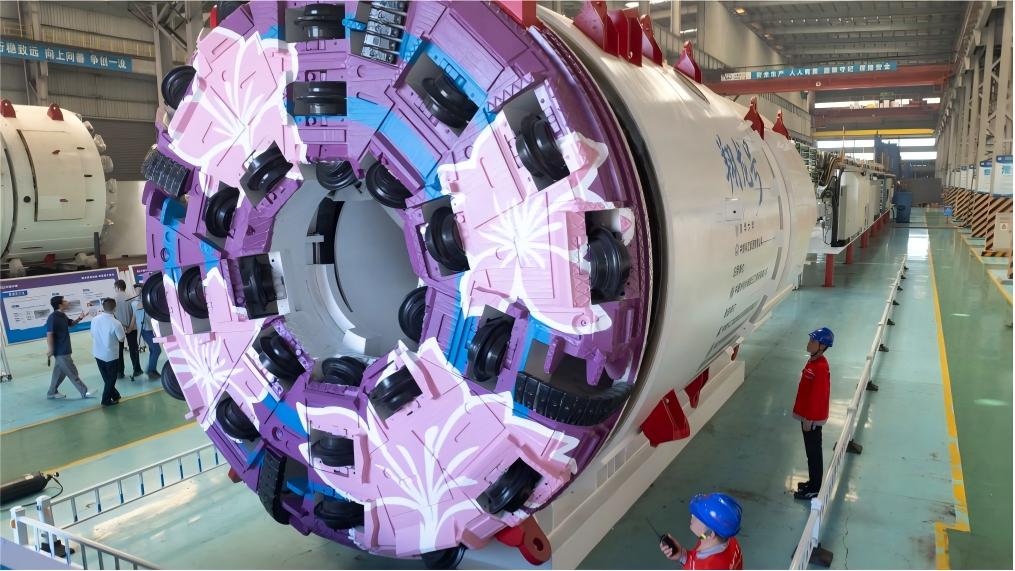 China's first boring and blasting machine rolls off production line in Wuhan, China's Hubei
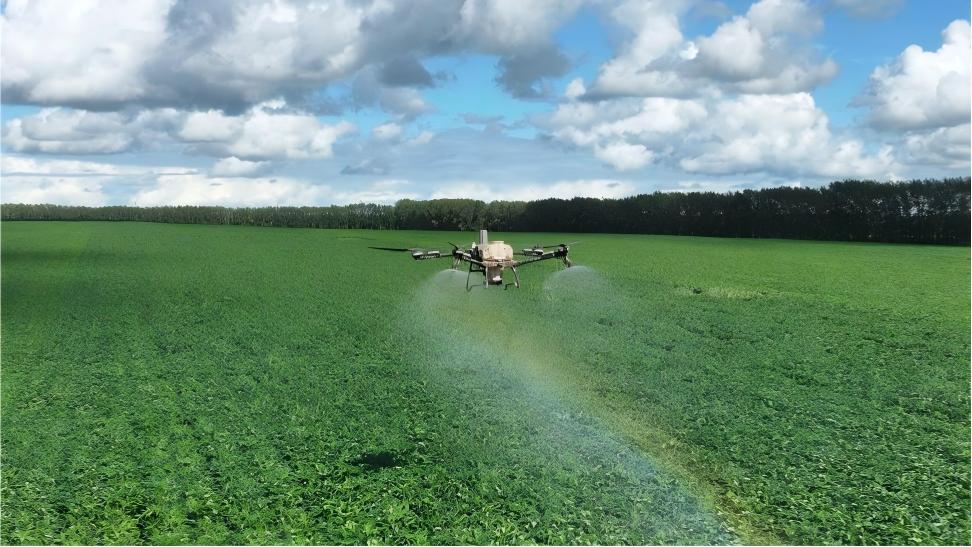 Aerial crop protection operations launched in fields of NE China's Heilongjiang
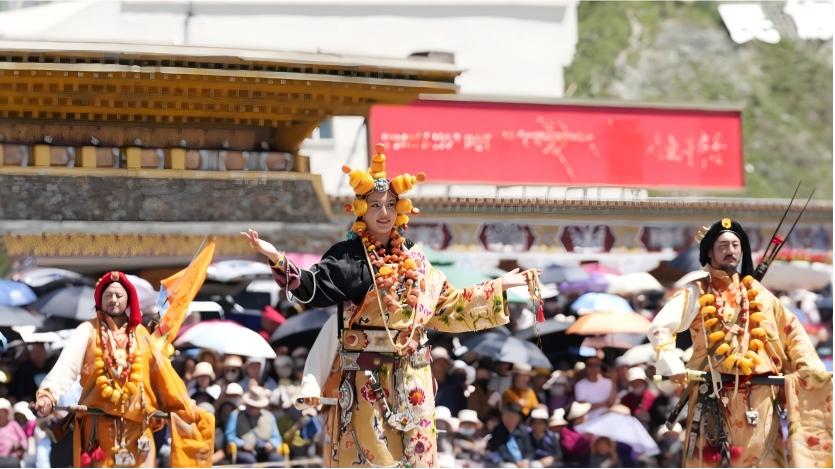 Parade celebrating intangible cultural heritage held in Yushu, NW China's Qinghai
Related Stories
- Feature: At the gateway to China's resistance, war scars remain as life blooms
- At center of China's WWII memory, history lives on
- Survivor of Japan's "comfort women" system dies, leaving 6 on Chinese mainland
- New book published on germ warfare crimes of notorious Japanese Unit 731 during WWII
- Chinese museum reveals Japanese atrocity of transfusing animal blood into humans during WWII
- Video evidence adds details of Japan's germ-warfare crimes in China
Copyright © 2026 People's Daily Online. All Rights Reserved.
