



Pairing assistance brings industries, jobs to remote area in SW China's Xizang
At an altitude of more than 2,000 meters, Lebugou remains quiet before the sun rises above the mountain peaks. Yet Dawa Butri has already spent two hours working in the tea fields of Simu village, Gongri township, Cona, a county-level city under Shannan in southwest China's Xizang Autonomous Region.
"I earn 200 yuan (about $29.43) a day, and there will also be dividends at the end of the year," she said. In the past, she could only stay at home during this season.
More than 30 kilometers away in downtown Cona, Lozang works in the workshop of Xizang Gemei Energy-Saving Equipment Co., Ltd., tightening screws on a batch of energy-efficient equipment bound for the Yangtze River Delta. Just three months earlier, he was a farmer in Xiaozhen town, relying on occasional construction work for an unstable income during the farming off-season.
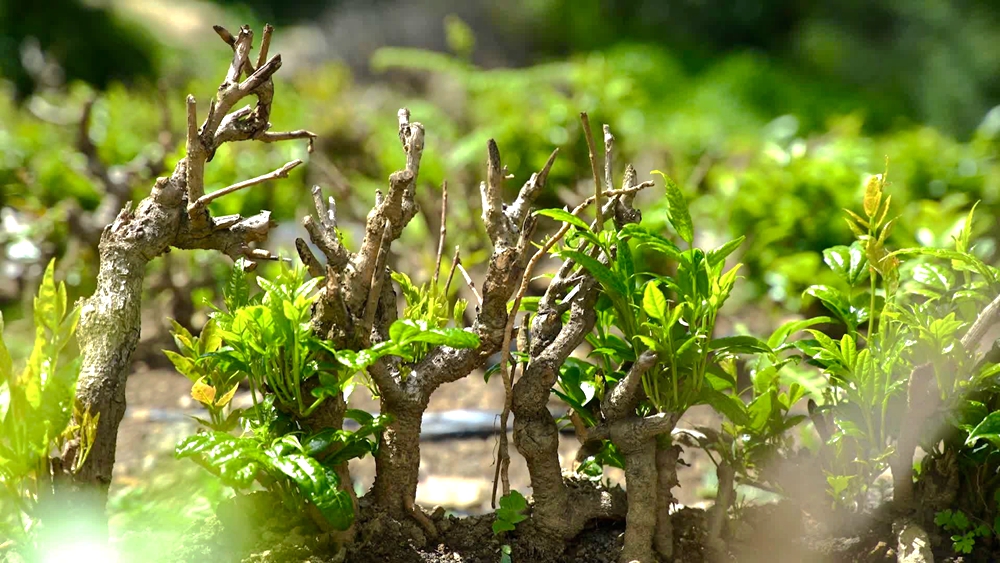
Photo shows vine tea trees introduced from east China's Anhui Province, in Lebugou in Cona, a county-level city under Shannan, southwest China's Xizang Autonomous Region. (Photo/Wang Haicheng)
The changes in their lives began with a group of people who traveled more than 4,000 kilometers to this remote region.
In 2022, an assistance team from east China's Anhui Province drew on the region's tea-growing tradition and encouraged local residents to develop vine tea cultivation.
The local farmland is scattered across mountain slopes. For years, villagers had mainly grown highland barley and picked locally grown tea, with little knowledge of vine tea. The assistance team brought local soil samples and climate data back to Anhui for analysis and comparison. After extensive research, they selected vine tea seedlings for trial planting in Lebugou.
After the first batch of 20,000 vine tea seedlings was planted, the survival rate reached 90 percent. Today, a 150-mu (10 hectares) tea plantation stretches across the mountain slopes, with a small tea processing workshop built at the village entrance.
Working at the planting base brings Dawa Butri around 10,000 yuan a year, while dividends from the cooperative add several thousand yuan more to her family's income.
By showcasing local vine tea products at tea expos in Anhui and agricultural fairs in the Yangtze River Delta, the assistance team helped take a product once sold only locally onto supermarket shelves outside the region.
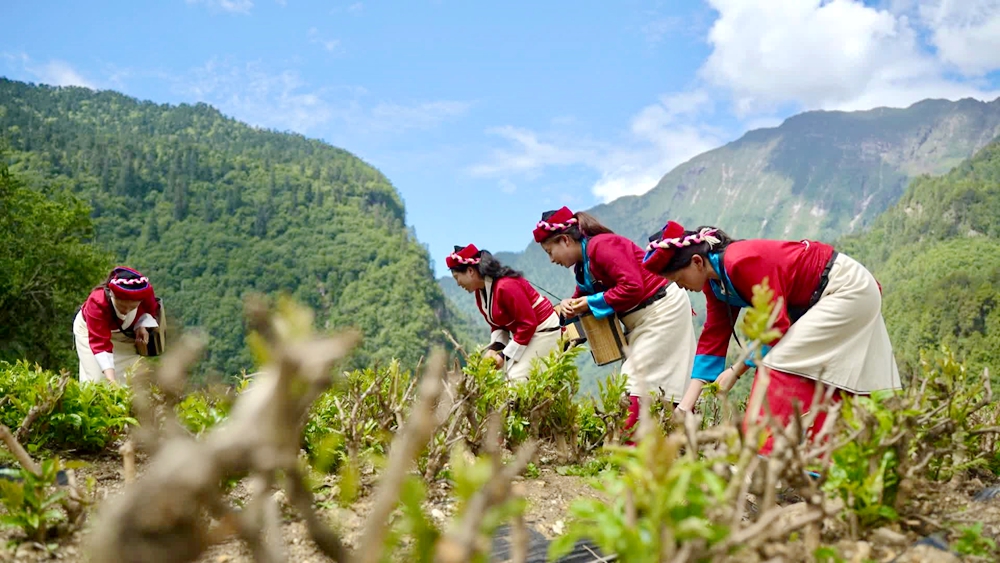
Women of the Monpa ethnic group pick tea leaves at a vine tea garden in Simu village, Gongri township, Cona, a county-level city under Shannan, southwest China's Xizang Autonomous Region. (Photo/Wang Haicheng)
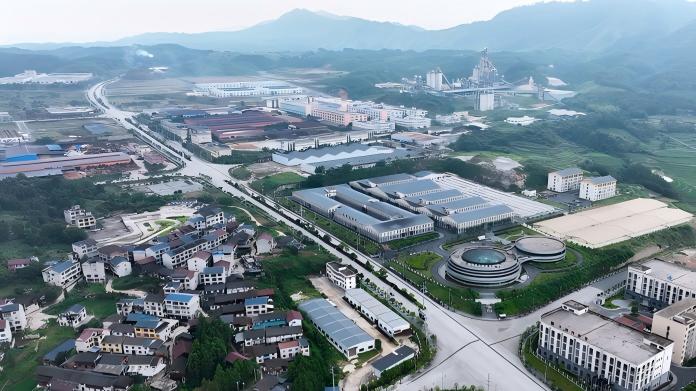
The assistance team also helped connect local communities with a company in Anhui, facilitating the establishment of a branch company in Cona.
"We give priority to hiring people from formerly impoverished households, border villages and returning young workers," said Wei Lun, general manager of the company.
That was how Lozang joined the factory. After three months of training, he progressed from learning basic screw-tightening tasks to independently completing production procedures. With a stable monthly salary, meal subsidies and dormitory accommodation provided by the factory, he no longer needs to rely on temporary jobs during farming off-seasons.
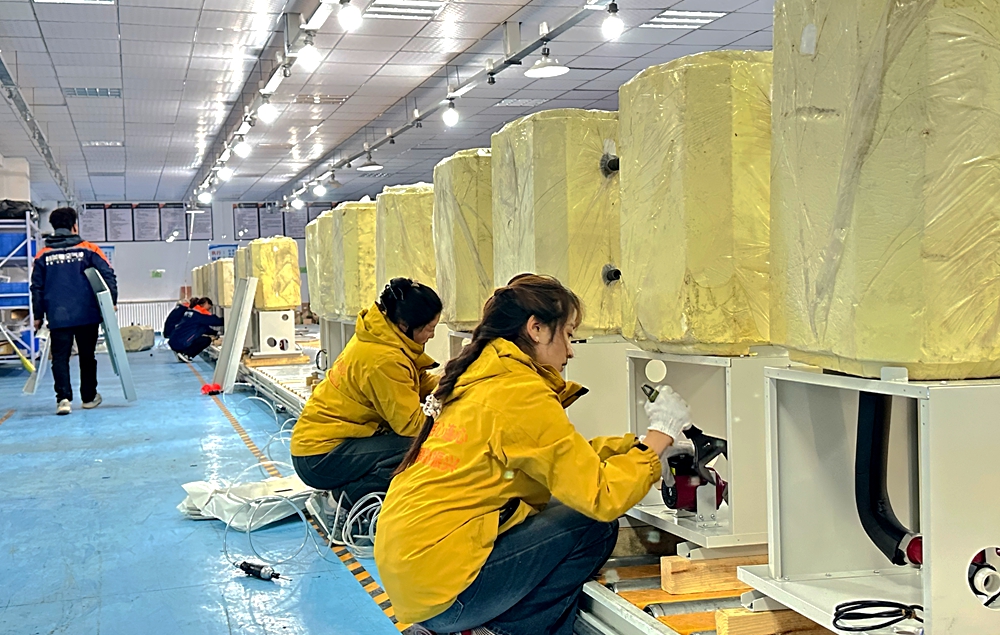
Workers fulfill an order in the production workshop of Xizang Gemei Energy-Saving Equipment Co., Ltd. in Cona, a county-level city under Shannan, southwest China's Xizang Autonomous Region. (Photo/Wu Yangjin)
The Anhui assistance team has also supported a range of distinctive local industries. These projects are spread across different townships and towns and may be modest in scale individually, but together they have created multiple channels for local residents to increase their incomes.
Photos


Related Stories
- Pulu weaving tradition thrives in Kyimxi township, SW China's Xizang
- Beyond pilgrimage, Lhasa looks to a broader future on "roof of the world"
- Lhasa-Nyingchi Railway: Five years fueling prosperity and development in Xizang
- Young woman modernizes pulu weaving in SW China's Xizang
- A taste of Xizang: Russian visitor harvests honey in Shannan
- Qinghai-Xizang Railway brings great changes to China's snowy plateau
- Qinghai-Xizang Railway links ethnic groups, boosts local life
- Qinghai-Xizang Railway transports 100 million passenger trips in two decades
- Tibetan street dance blends beats with traditional forms
- Senior Chinese official refutes foreign reports claiming boarding schools in Xizang as 'forced assimilation'
Copyright © 2026 People's Daily Online. All Rights Reserved.
