



Violin manufacturing generates wealth in Huangqiao town, E China's Jiangsu
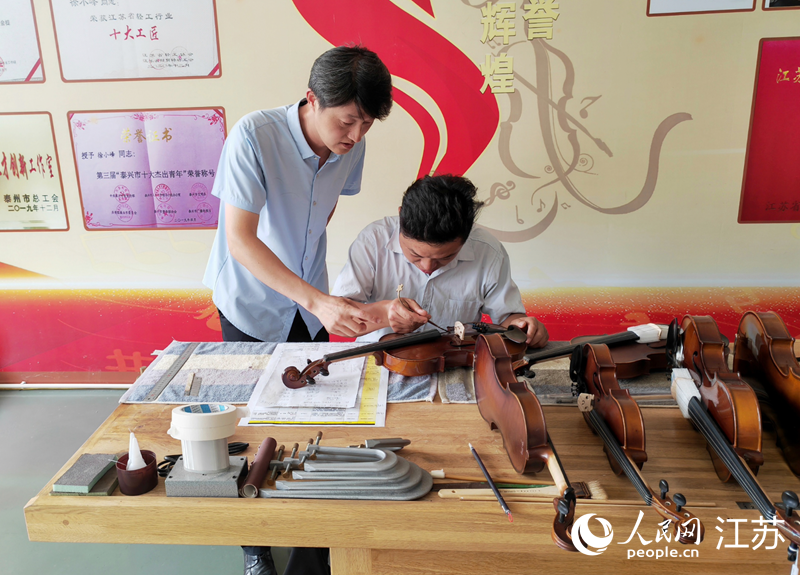
Xu Xiaofeng (left) instructs Weng Zhenhong in violin assembly at the Xu Xiaofeng Violin Studio in Huangqiao town, Taixing city, east China's Jiangsu Province. (People's Daily Online/Wang Dandan)
The air was filled with the scent of wood at the Xu Xiaofeng Violin Studio in Huangqiao town, Taixing city, east China's Jiangsu Province. Trainee Weng Zhenhong worked with full concentration, carefully holding a slender sound post and easing it into the violin body, while Master Xu Xiaofeng stood by, offering occasional hands-on guidance.
Xu and his apprentice were busy preparing for the opening ceremony of the 2026 Make Music Day, with Huangqiao serving as the main venue in China. The event has been held in Huangqiao for 10 consecutive years.
Huangqiao produces 70 percent of China's violins and 40 percent of the world's total. Sixty years ago, it was only a workshop supplying parts to Shanghai violin manufacturers. In the 1980s, local industry leaders standardized 197 violin-making processes, and violin making gradually became a way for locals to make a living.
Xu recalled that the violin makers themselves didn't play the violin. The instruments looked fine, but in the hands of experts they sounded like wooden blocks — devoid of any musical soul.
In 2001, Xu was admitted to the Shanghai Conservatory of Music and later studied for a year at the Central Conservatory of Music. This experience transformed him into a formally trained violin maker. In 2005, after completing his studies, he joined local leading firm Jiangsu Fengling Musical Instrument Group.
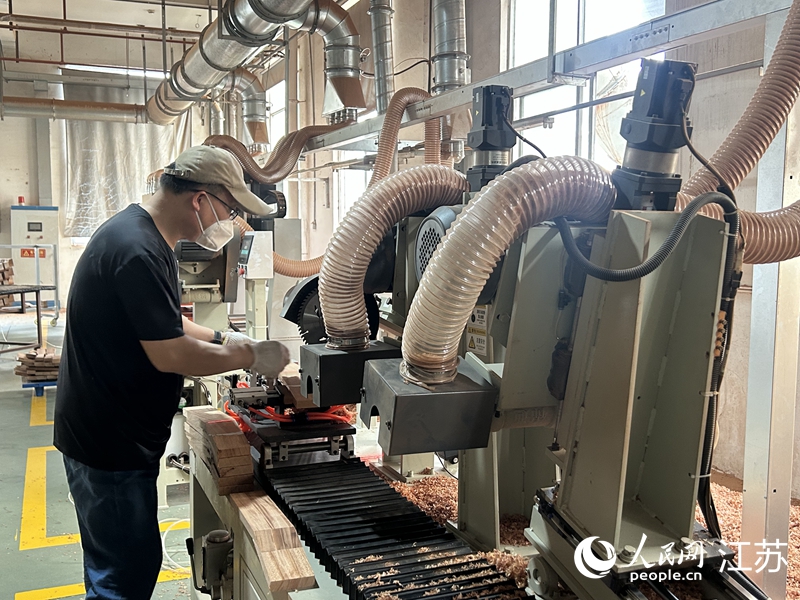
A worker makes violins at Jiangsu Fengling Musical Instrument Group in Huangqiao town, Taixing city, east China's Jiangsu Province. (People's Daily Online/Wang Dandan)
As head of the company's master violin-making team, Xu selected more than 10 skilled workers to handle every stage of violin-making, from start to finish. He also developed a microbial wood-treatment technique that significantly improved tonal clarity and balance. After years of refinement, his violins began winning international awards, helping put Huangqiao instruments on the global stage.
A decade ago, Xu, already a national senior violin maker, founded his own studio. Over the years, he has mentored nearly 60 craftsmen, trained more than 2,500 farmers in violin-making skills, and helped 56 low-income households with employment guidance.
Yin Ping was among the first to join the master violin-making team, where she received systematic training in the full production process. She now works as a quality inspector at a local instrument company. "The solid skills I gained in the team gave me real competitiveness in the job market, and my annual income is now close to 100,000 yuan ($14,700)," she said.
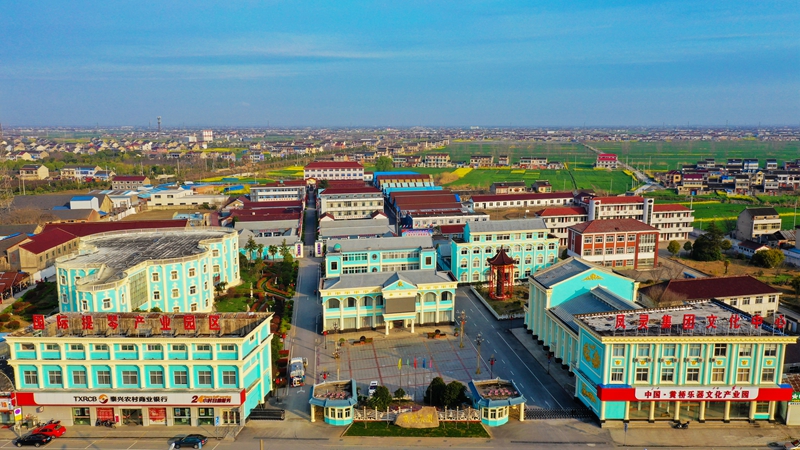
Photo shows a bird's-eye view of the Huangqiao Music Instrument Cultural Industrial Park in Huangqiao town, Taixing city, east China's Jiangsu Province. (Photo courtesy of the media convergence center of Taixing city)
Today, Huangqiao hosts more than 220 violin and supporting enterprises, producing over 1 million violins and more than 1 million accessory sets annually. In 2025, the town's musical instrument industry generated 2.45 billion yuan in sales, with nearly 30,000 people working in violin-related industries.
Photos

Copyright © 2026 People's Daily Online. All Rights Reserved.
