



Shared factories boost efficiency, reduce costs in Urumqi, NW China's Xinjiang
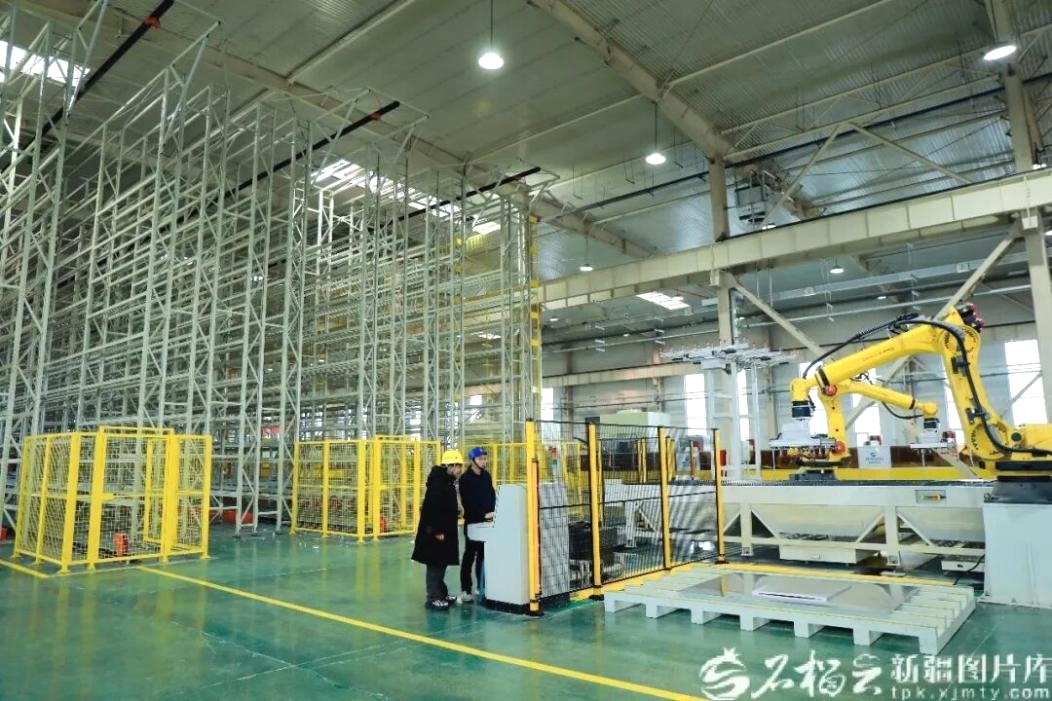
Staff members monitor the automated operation of equipment at the stamping mold shared factory at the Lianghe High-end Manufacturing Technology Industrial Park in the Urumqi Economic and Technological Development Zone (Toutunhe District) in Urumqi, northwest China's Xinjiang Uygur Autonomous Region. (Photo courtesy of Xinjiang Dadao Industrial Investment Co., Ltd.)
At the Lianghe High-end Manufacturing Technology Industrial Park in the Urumqi Economic and Technological Development Zone (Toutunhe District) in Urumqi, northwest China's Xinjiang Uygur Autonomous Region, steel plates move swiftly through intelligent production lines. Here, they are transformed into essential components for trucks and heavy machinery, such as cargo boxes and subframes.
This facility operates differently from traditional factories. It utilizes a "shared manufacturing" model. In this setup, multiple companies consolidate their orders and share access to factory space, equipment, and production lines -- a strategy designed to boost efficiency and reduce costs.
Recent years have seen strong demand in Xinjiang for trucks, dump trucks, and mining vehicles, alongside rapid growth in equipment exports. However, the prevalent "small-batch, multi-variety" production model in the region's equipment manufacturing sector has led to budget constraints and low equipment utilization for many businesses.
To address these challenges, Xinjiang Dadao Industrial Investment Co., Ltd. partnered with Urumqi Economic and Technological Development Zone Construction and Development State-owned Capital Investment & Operation (Group) Co., Ltd. jointly invested in building the shared factory.
"Xinjiang's equipment manufacturing industry covers four major sectors: commercial vehicles, special-purpose vehicles, construction machinery, and agricultural and animal husbandry machinery, supported by ten key enterprises," explained Yang Sen, Chairman of Xinjiang Dadao Industrial. "Yet, high transportation costs and insufficient local parts supply have severely limited production capacity."
The shared factory for medium- and heavy-plate vehicle components officially began operations in October 2025. So far, it has secured orders worth 1.457 billion yuan (about $215 million) and established partnerships with eight vehicle manufacturers and two construction machinery companies across five Central Asian countries. Orders this year are expected to exceed 3.5 billion yuan.
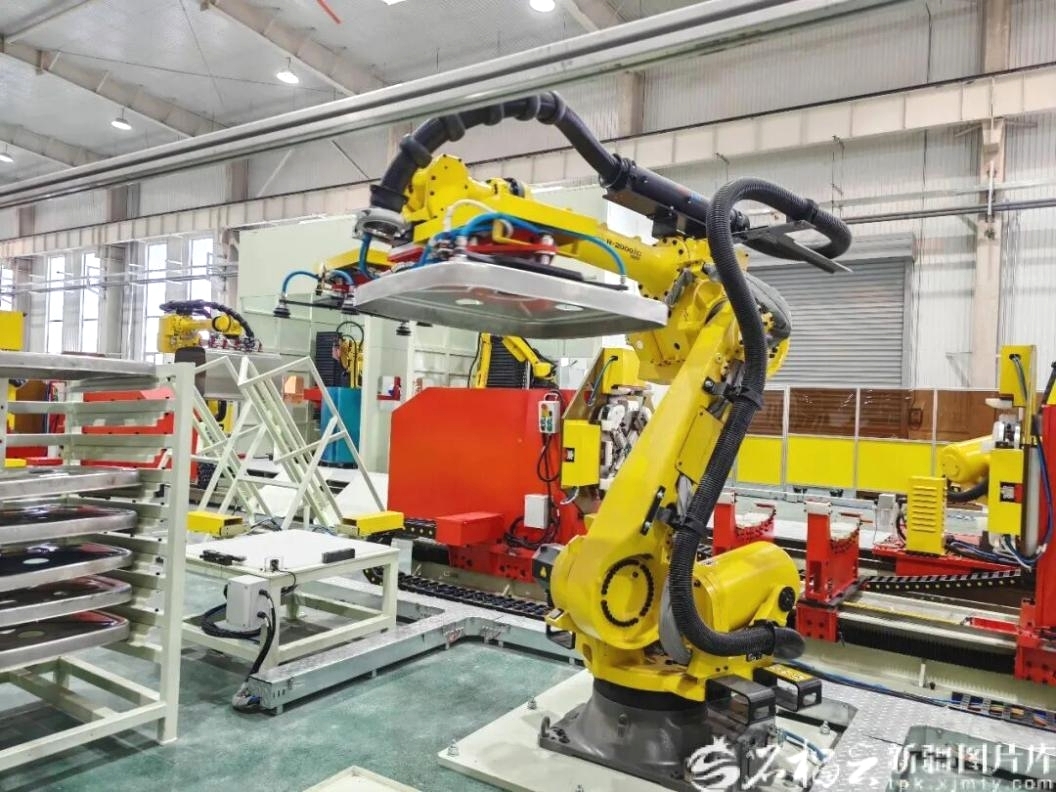
Automated equipment is in operation at the stamping mold shared factory at the Lianghe High-end Manufacturing Technology Industrial Park in the Urumqi Economic and Technological Development Zone (Toutunhe District) in Urumqi, northwest China's Xinjiang Uygur Autonomous Region. (Photo/Guo Honglei)
Previously, the Xinjiang branch of Shaanxi Automobile Group mainly relied on either shipping vehicle parts to Xinjiang for assembly or transporting assembled vehicles to Xinjiang for domestic sales and transit exports. Logistics costs significantly squeezed profit margins.
"Take heavy-duty truck cargo compartments as an example. By producing them through the shared factory, we can save several million yuan in transportation costs alone each year," said Yang Xiaolong, director of the operations center at the Xinjiang branch of Shaanxi Automobile Group.
Beyond reducing costs, the shared factory has improved production efficiency. The facility includes one laser cutting line, one plasma cutting line, three uncoiling and leveling lines, six welding lines, and 55 welding robots. Estimates suggest that independently building an intelligent production line would increase heavy-asset investment by about 60 percent, while pushing equipment payback periods beyond 15 years.
"Through the shared model, more companies can operate with a lighter financial burden. We plan to build eight shared factories in total. The shared factory for medium- and heavy-plate vehicle components and the stamping mold shared factory are already in operation, while additional shared factories for machining, cotton picker spindle manufacturing, and other processes are expected to come online this year. Together, they could generate an annual output value of more than 20 billion yuan," said Yang Sen.
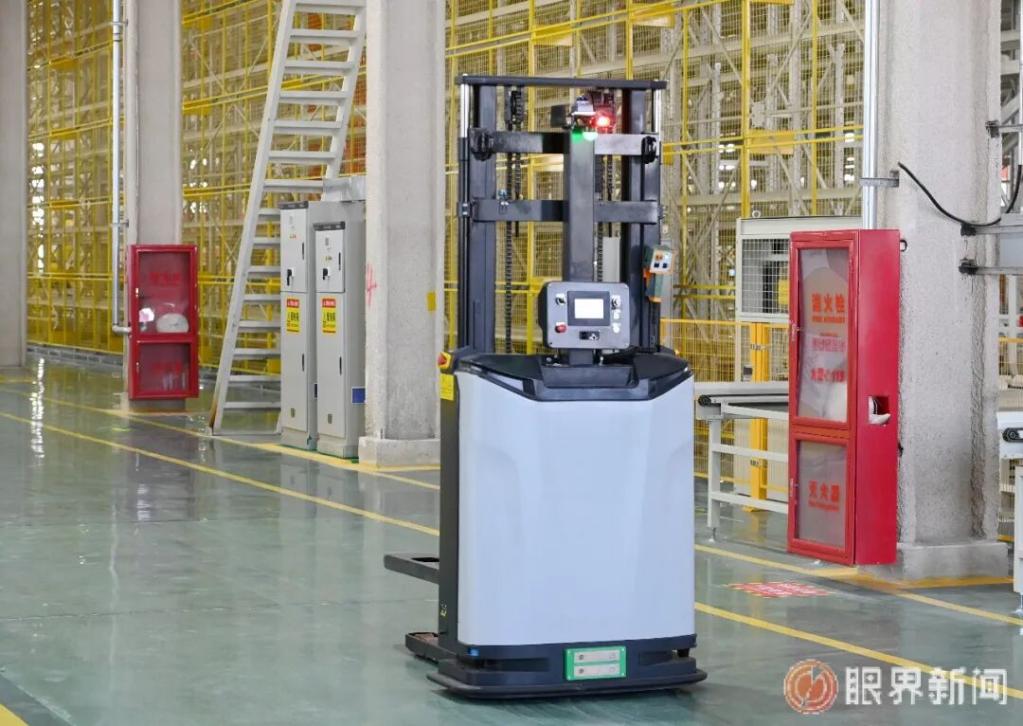
A stacker-type laser-guided automatic guided vehicle has been put into use, enabling intelligent operations at the stamping mold shared factory at the Lianghe High-end Manufacturing Technology Industrial Park in the Urumqi Economic and Technological Development Zone (Toutunhe District) in Urumqi, northwest China's Xinjiang Uygur Autonomous Region. (Photo/Chen Yan)
Going forward, the company plans to work with enterprises through three cooperation models: order-based production, customized R&D and manufacturing, and collaborative development based on shared big-data resources and digital models, Yang Sen added. These efforts are expected to raise the local sourcing rate in Xinjiang's equipment manufacturing industry from less than 10 percent to 70 percent.
Attracted by the shared-factory ecosystem, more than 30 vehicle and modified-vehicle manufacturers have already established operations in the Lianghe High-end Manufacturing Technology Industrial Park.
Photos

Copyright © 2026 People's Daily Online. All Rights Reserved.
