



Chemical park transformed into green intelligent manufacturing hub, attracting rare birds in E China's Zhangjiagang
Early one morning along the Yangtze River in Zhangjiagang, east China's Jiangsu Province, birdwatcher Deng Yu spotted a yellow-breasted bunting, a bird species under national first-class protection in China, fluttering across farmland near a former industrial zone.
"In recent years, I've observed yellow-breasted buntings regularly in this area," Deng noted.
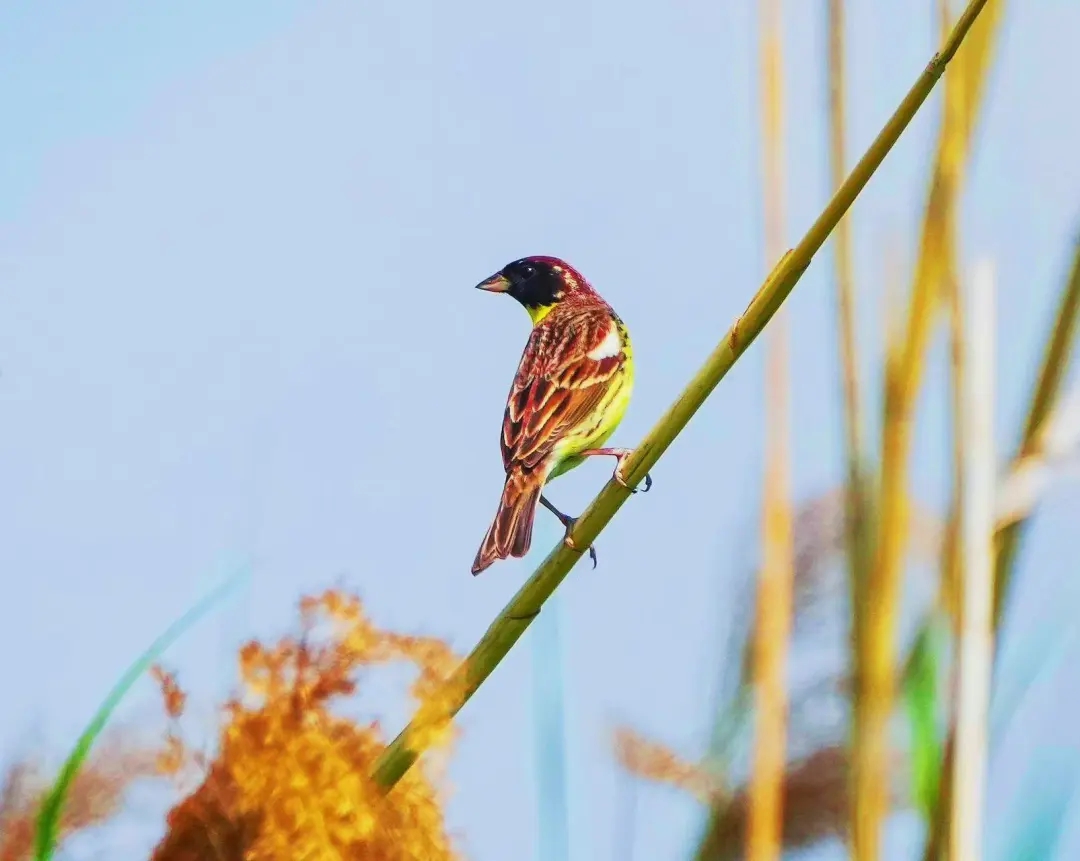
Photo shows a yellow-breasted bunting, a bird species under national first-class protection in China, on a plot of farmland near a former chemical park in Zhangjiagang city, east China's Jiangsu Province. (Photo/Deng Yu)
The return of rare bird species reflects more than ecological recovery. It mirrors the transformation of local industry and lifestyle in Nanfeng township, Zhangjiagang.
For decades, the land along the southern bank of the Yangtze River was dominated by the Dongsha Chemical Industrial Park, a cluster of 37 chemical companies that generated combined annual sales revenue of up to 2.8 billion yuan ($410 million).
However, as time went by, the park's outdated environmental facilities and aging infrastructure increasingly posed serious environmental and safety risks.
Built in 1993, the park, located in the Dongsha community, Nanfeng township, sat just 4 kilometers from the Yangtze River.
Residents of Dongfeng village, a nearby village, recall heavy truck traffic, strong odors, and road dust stirred up by passing trucks.
By 2013, recognizing the urgent need to protect the Yangtze River ecosystem and improve local people's living environment, local authorities launched a comprehensive shutdown and relocation project.
A special task force was set up to supervise the project, communicating with enterprises one by one, face to face, to explain relevant policies, according to Zou Jiang, a local official who was then the head of Nanfeng's economic service center.
Over 3,000 workers faced job displacement, which was the toughest issue for the task force.
Together with staff members from relevant government departments, Zou worked on-site for three consecutive months to help address challenges faced by companies and their employees.
"We are not here to shut down your factories; we are here to help everyone relocate," Zou assured company leaders during the shutdown and relocation efforts.
He recalled organizing 12 dedicated job fairs, which matched over 2,800 positions with local companies during the period.
The task force also arranged free skills training for technical workers, and assisted three key enterprises in relocating and upgrading their production lines, according to Zou.
By December 2017, the park was fully decommissioned, marking the first proactive chemical park closure in Jiangsu Province.
"We didn't just dismantle factories; we changed a development model," Zou noted.
The shutdown was closely followed by a comprehensive environmental restoration program with a series of targeted measures.
Workers removed nearly 48,000 square meters of abandoned structures, enhanced 30,000 square meters of green spaces, rehabilitated 11.2 kilometers of riverbanks and slopes, constructed 2,900 meters of ecological wooden pile embankments, dredged 2,168 meters of old riverways, built a new culvert, and upgraded the local river regulation and drainage gates and stations.
The efforts yielded rich fruits. By 2019, the main local rivers flowing into the Yangtze River all reached "fairly good" surface water quality, at or above Grade III in the country's five-tier water quality system, transforming what was once a polluted site into today's thriving ecological riverside.
The impact has been visible. Over 10 bird species under national first-class protection in China, including spoon-billed sandpiper, Siberian white crane, and curly-headed pelican, have returned to the area.
"I remember seeing a large flock of egrets fishing in the shallows the winter following the chemical park's shutdown. I was so excited," Li Xiuying, a former worker at the chemical park who now works as a volunteer river ranger, told People's Daily.
"Today, the crystal-clear water in the river makes me feel happier with each passing day," Li said.
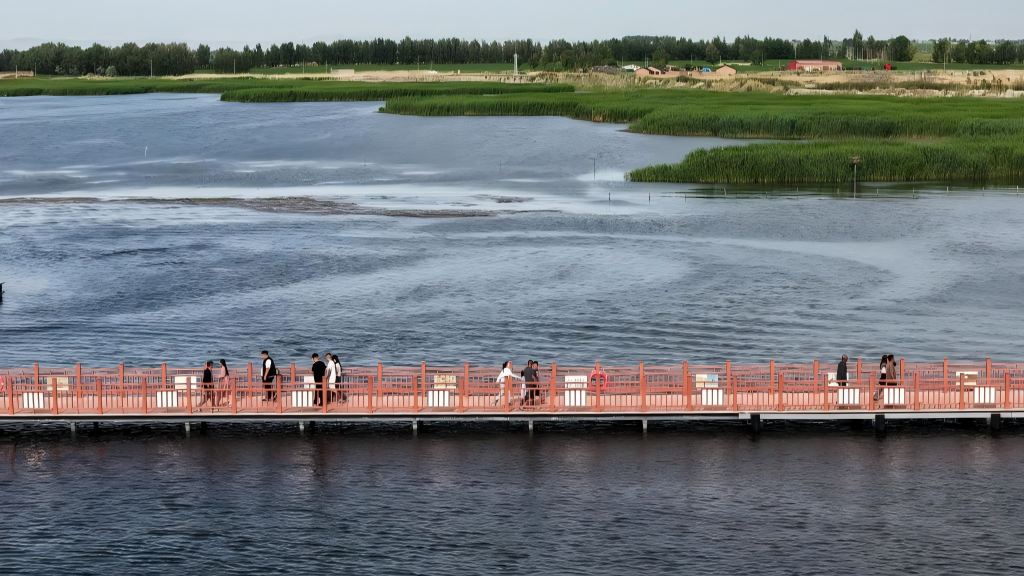
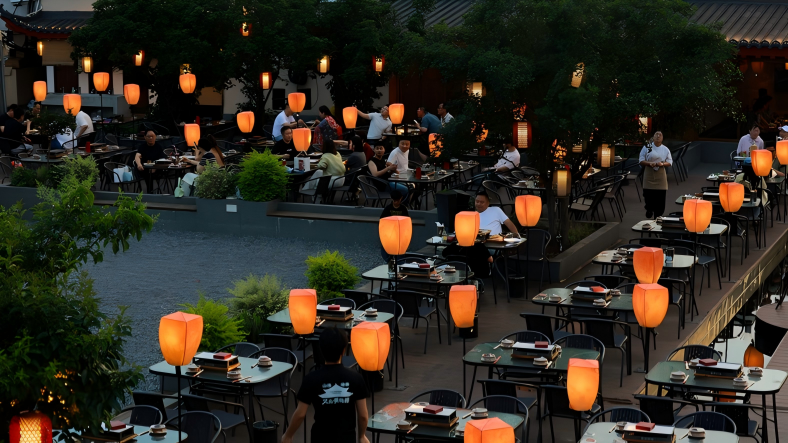
Li's delight is shared by local residents. With cleaner air and water, the local community spaces have become vibrant centers for recreation and family life.
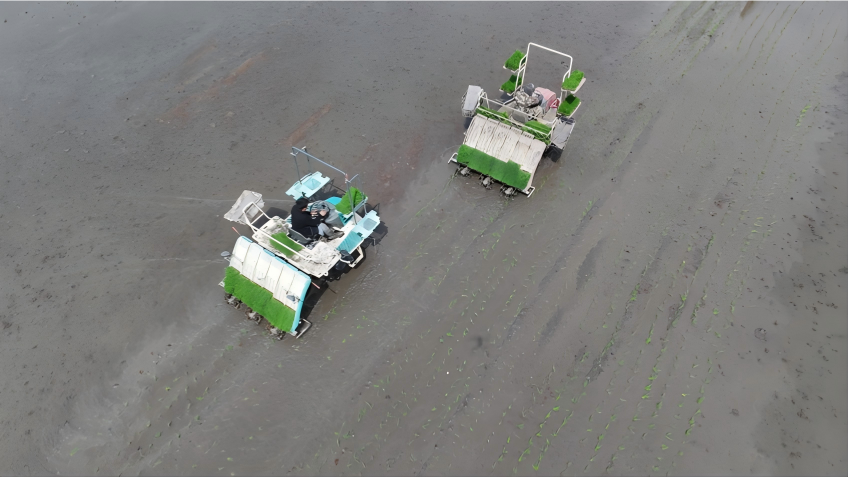
Industrial development in the region has also undergone a major transformation. The original site of the chemical park, covering 3,000 mu (200 hectares), has been redeveloped into an eco-friendly intelligent manufacturing hub, with a focus on advanced equipment, new materials, and renewable energy.
Strict environmental standards have been established to govern all incoming projects, while an industrial chain-based investment strategy has been implemented, strengthening the industrial chain by attracting upstream and downstream companies around its anchor firms.
A wholly-owned subsidiary of Zhangjiagang Haiguo New Energy Equipment Co., Ltd., a local anchor firm, has invested 1 billion yuan in an equipment manufacturing project in the hub, attracting suppliers and reinforcing the industrial chain.
Currently, the park hosts four projects worth over 1 billion yuan each and 15 projects worth over 100 million yuan each.
While ample space has been reserved for future development, the hub's resident enterprises have achieved an annual output value of 3 billion yuan, surpassing the park's scale a decade ago.
"To achieve high-quality development here, we need to make the area attractive for residents and appealing for enterprises," Zou said, watching cargo ships on the Yangtze River and birds circling above.
Photos
Copyright © 2026 People's Daily Online. All Rights Reserved.
