



Village in E China's Shandong produces 100M kites annually as industry goes global
In spring, Wangjiazhuangzi village in the Fangzi Industrial Development Zone of Weifang, east China's Shandong Province, comes alive with the hum of sewing machines. Inside the workshops of Weifang Hongxin Kite Co., Ltd., workers race to fulfill orders, packaging brightly colored kites for markets at home and abroad.
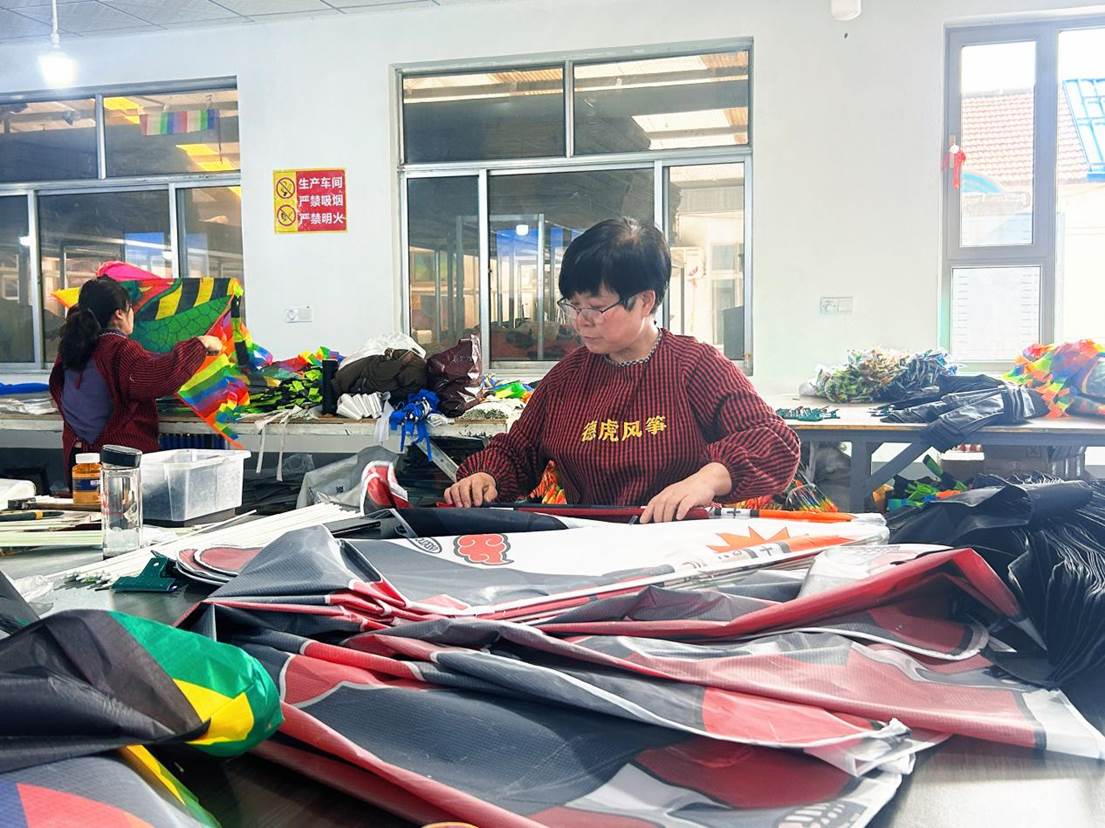
A worker makes a kite at Weifang Hongxin Kite Co., Ltd. in Wangjiazhuangzi village, located in the Fangzi Industrial Development Zone of Weifang, east China's Shandong Province. (Photo/Liu Tong)
With a population of just over 4,700, more than half of the village's residents are engaged in kite-making, producing nearly 100 million kites annually. The village's kite craft tradition dates back to the Song Dynasty (960-1279).
Weifang kites are renowned for mastery of four key techniques: frame-making, covering, painting and flying. Artisans use moso bamboo to build flexible frames, carefully apply silk or paper coverings, and decorate them with vivid designs rooted in local folk traditions. Skilled craftsmen can even determine a kite's balance instinctively, ensuring stable flight.
The industry's modern transformation began in 1984 with the launch of the Weifang International Kite Festival, which opened the door to large-scale production.
However, rapid growth also brought challenges, including fragmented operations and intense price competition.
To address these issues, 48 key enterprises came together in 2024 to establish a modern kite cooperative under a unified development model. "The cooperative takes an integrated approach to kite design, production and sales," said Wang Tieyuan, secretary-general of the cooperative.
It has built a comprehensive service system centered on key areas such as securing domestic and international orders, stabilizing raw material supply, developing e-commerce channels and promoting kite culture, Wang added.
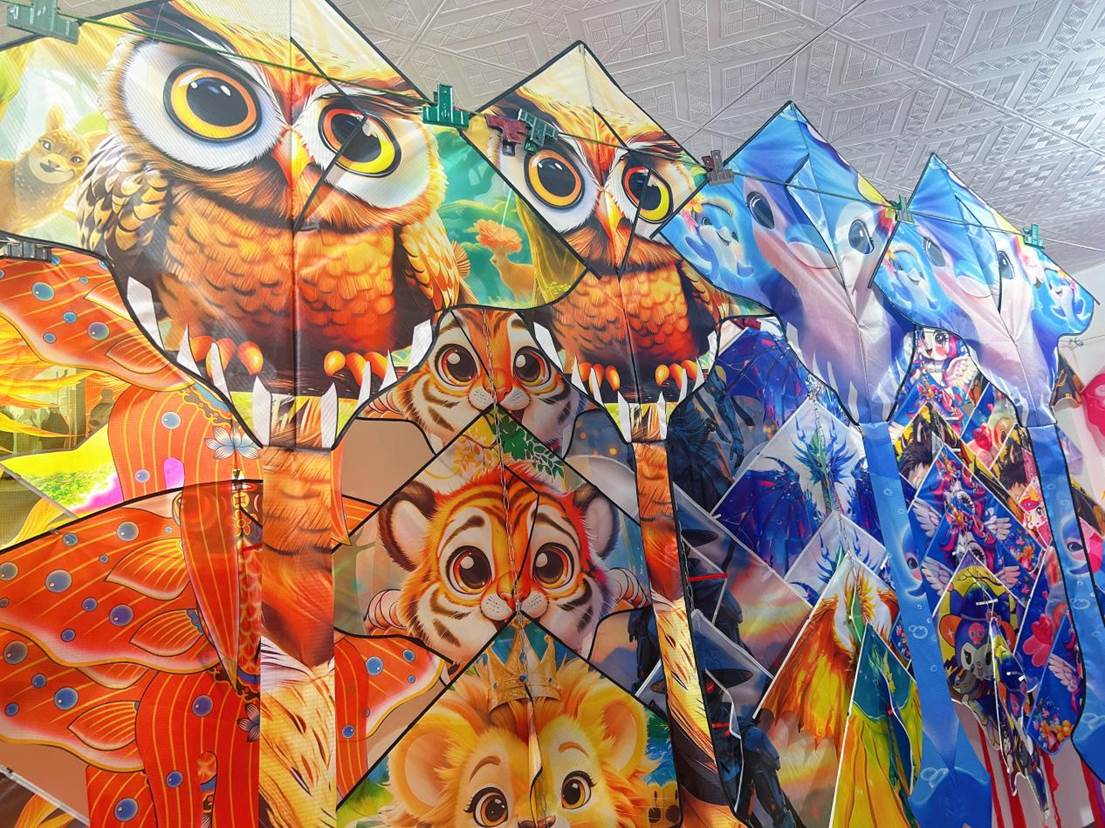
Photo shows kites in a showroom in Weifang, east China's Shandong Province. (Photo/Liu Tong)
Innovation is now driving the sector forward. Alongside traditional dragon and phoenix designs, new kites feature popular cultural themes such as Ne Zha, Chinese mythology's rebellious young deity. Technologies like 3D printing and eco-friendly materials have significantly increased product value. Smart and AI-powered kites have also been introduced.
In 2025, Weifang accounted for 85 percent of the global kite market, with more than 600 related enterprises and jobs created for over 100,000 people.
Today, a complete industrial chain spanning research and development, production, sales and cultural tourism has taken shape in Weifang. By blending traditional craftsmanship with modern technology, Weifang's kite industry continues to soar.
Photos
Related Stories
Copyright © 2026 People's Daily Online. All Rights Reserved.
