



Chinese Academy of Sciences unveils AI model system for scientific research
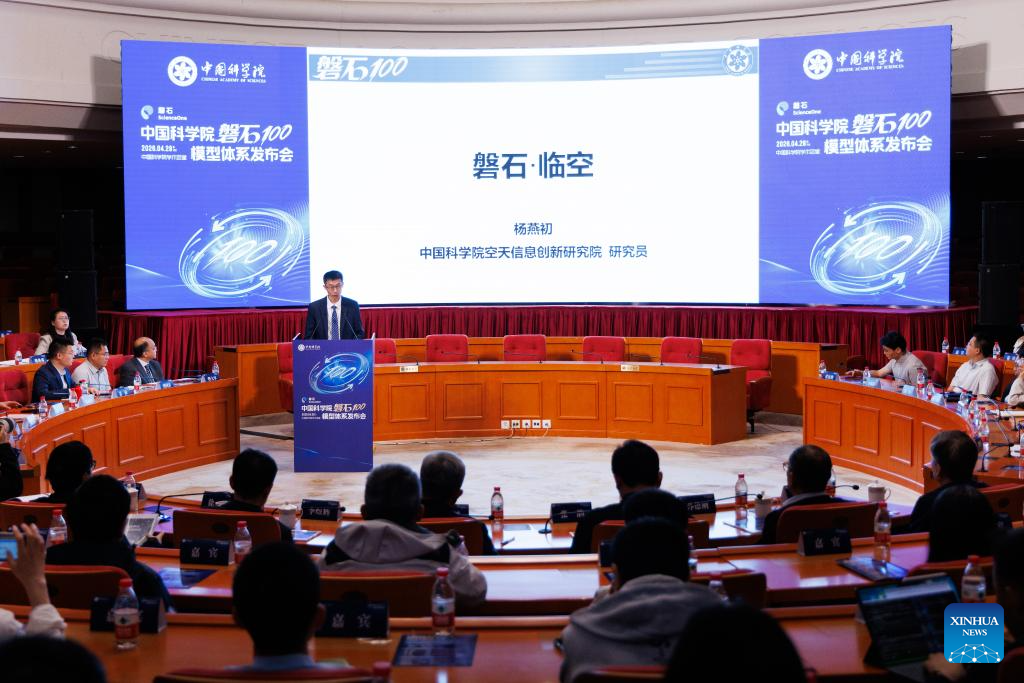
Researcher Yang Yanchu at the Aerospace Information Research Institute of the Chinese Academy of Sciences (CAS) reveals an AI model in Beijing, capital of China, April 28, 2026. (Xinhua/Jin Liwang)
BEIJING, April 28 (Xinhua) -- The Chinese Academy of Sciences (CAS) on Tuesday revealed an artificial intelligence (AI) model system supporting scientific research, empowering multiple scientific domains including mathematics, physics and biology. This marks a transition in AI-driven scientific research from fragmented and isolated exploration toward collaborative, efficient and platform-based innovation.
Named ScienceOne 100, the model system has been built on the basis of the scientific foundation model ScienceOne, with a cluster of multidisciplinary domain-specific large models. ScienceOne provides three core functions: literature compass, innovation evaluation and agent factory, empowering the entire research and innovation workflow.
ScienceOne was released in 2025 and trained on professional scientific corpus and data. Its latest version has achieved flagship-level performance for scientific knowledge and agentic long-horizon reasoning, and has attained state-of-the-art results in terms of multiple benchmarks related to scientific image understanding and manipulation.
Literature compass provides in-depth literature reading and autonomous review writing as its core functions, enhancing the work efficiency of researchers.
Innovation evaluation can perceive cutting-edge dynamics in the scientific community and industry, helping researchers efficiently identify key scientific problems and potential innovation directions.
The agent factory, meanwhile, has achieved autonomous closed-loop agent toolchains and intelligent assisted generation, offering over 2,000 research tools and supporting more than 10 research domains.
The model system currently comprises eight domain-specific large models, covering mathematics, physics, materials science, astronomy, environmental science, aerospace, geosciences and biology.
The system has already been deployed and applied across over 50 CAS institutes, covering more than 100 research scenarios. It has demonstrated tremendous potential in typical applications such as high-speed rail flow field reconstruction, spectral identification, materials discovery, adjuvant design, astronomical observation, Qinghai-Tibet Plateau scientific expedition, marine forecasting and ecological research.
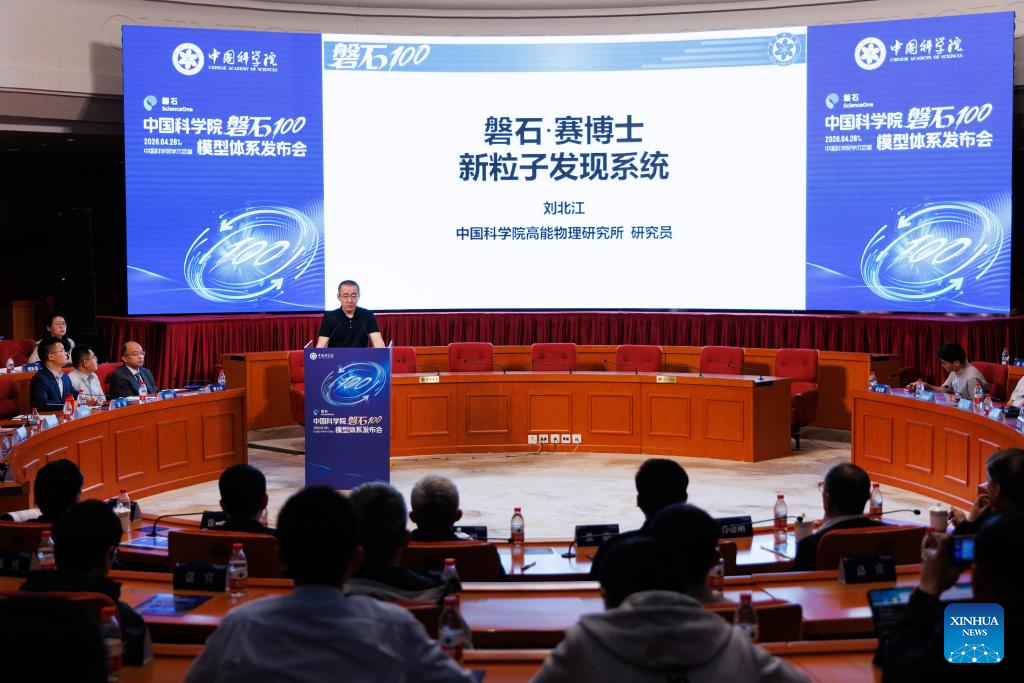
Researcher Liu Beijiang at the Institute of High Energy Physics of the Chinese Academy of Sciences (CAS) reveals an AI model in Beijing, capital of China, April 28, 2026. (Xinhua/Jin Liwang)
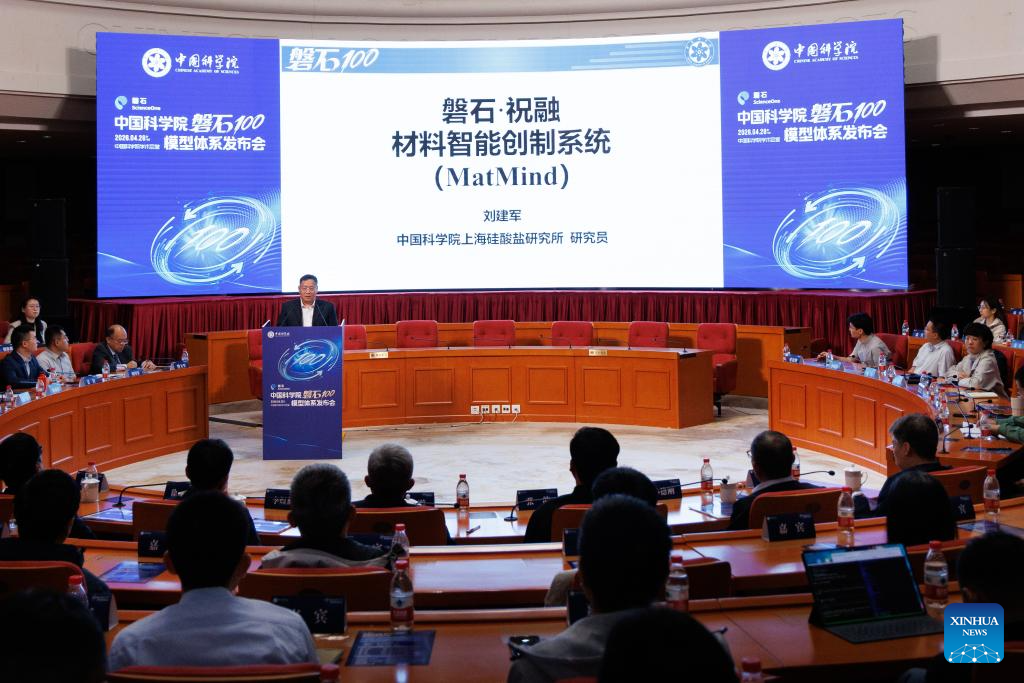
Researcher Liu Jianjun at the Shanghai Institute of Ceramics of the Chinese Academy of Sciences (CAS) reveals an AI model in Beijing, capital of China, April 28, 2026. (Xinhua/Jin Liwang)
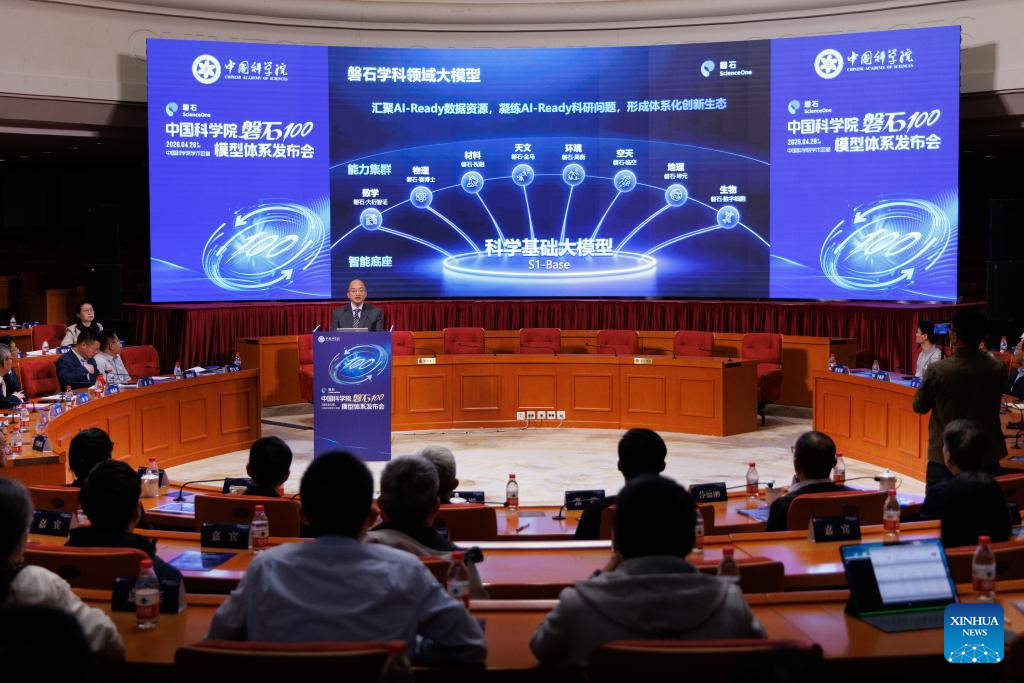
This photo taken on April 28, 2026 shows a scene at the launching ceremony of ScienceOne 100, an artificial intelligence (AI) model system by the Chinese Academy of Sciences, in Beijing, capital of China. (Xinhua/Jin Liwang)
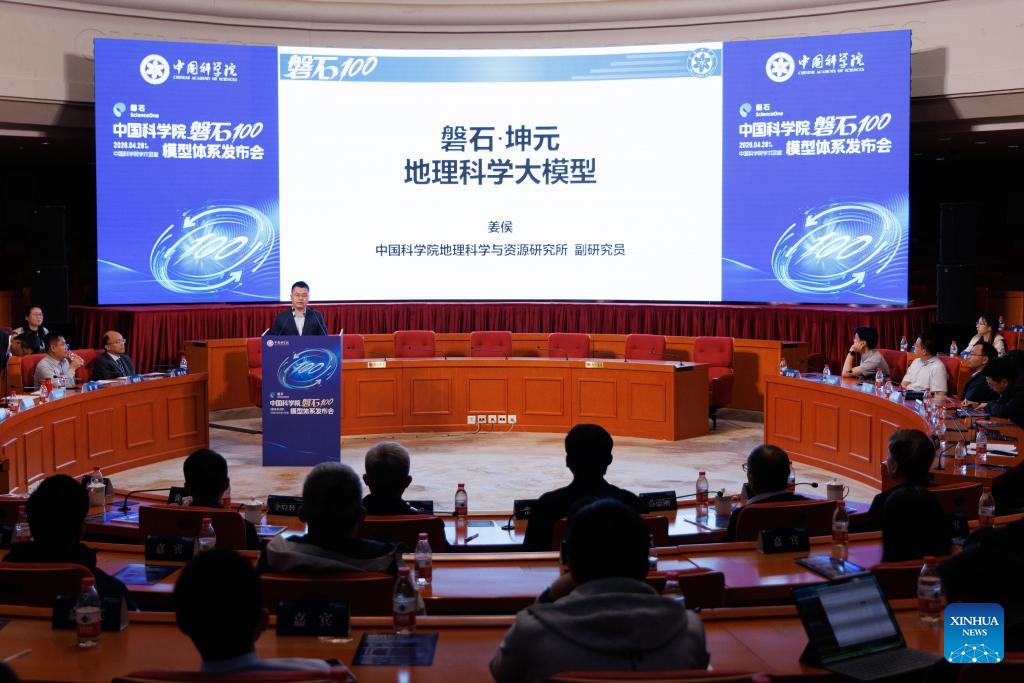
Associate researcher Jiang Hou at the Institute of Geographic Sciences and Natural Resources Research of the Chinese Academy of Sciences (CAS) reveals an AI model in Beijing, capital of China, April 28, 2026. (Xinhua/Jin Liwang)
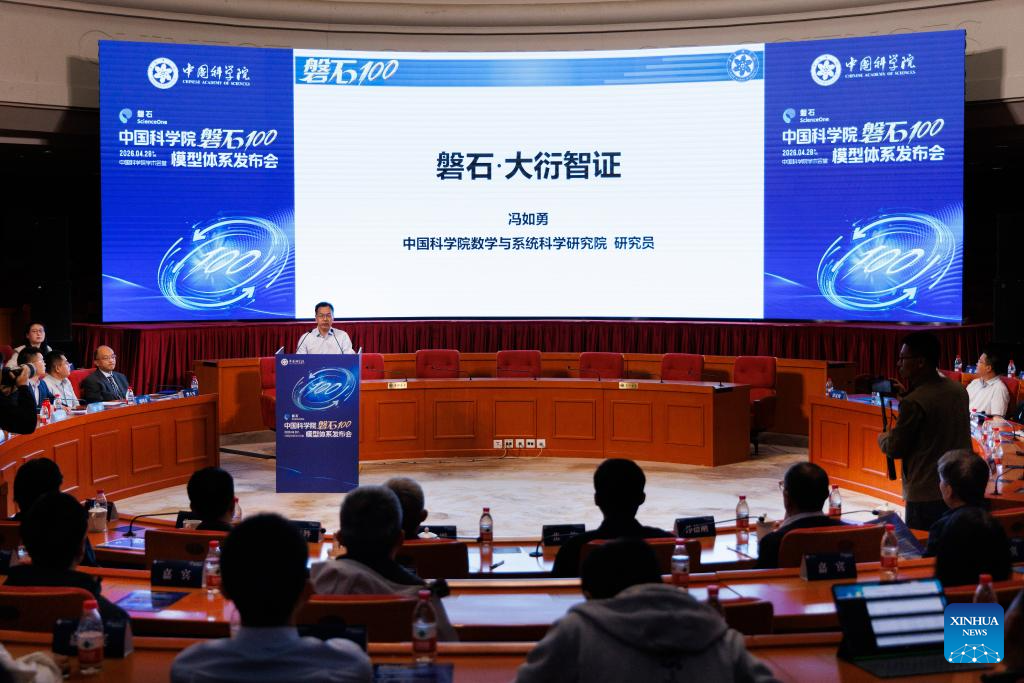
Researcher Feng Ruyong at the Academy of Mathematics and Systems Science of the Chinese Academy of Sciences (CAS) reveals an AI model in Beijing, capital of China, April 28, 2026. (Xinhua/Jin Liwang)
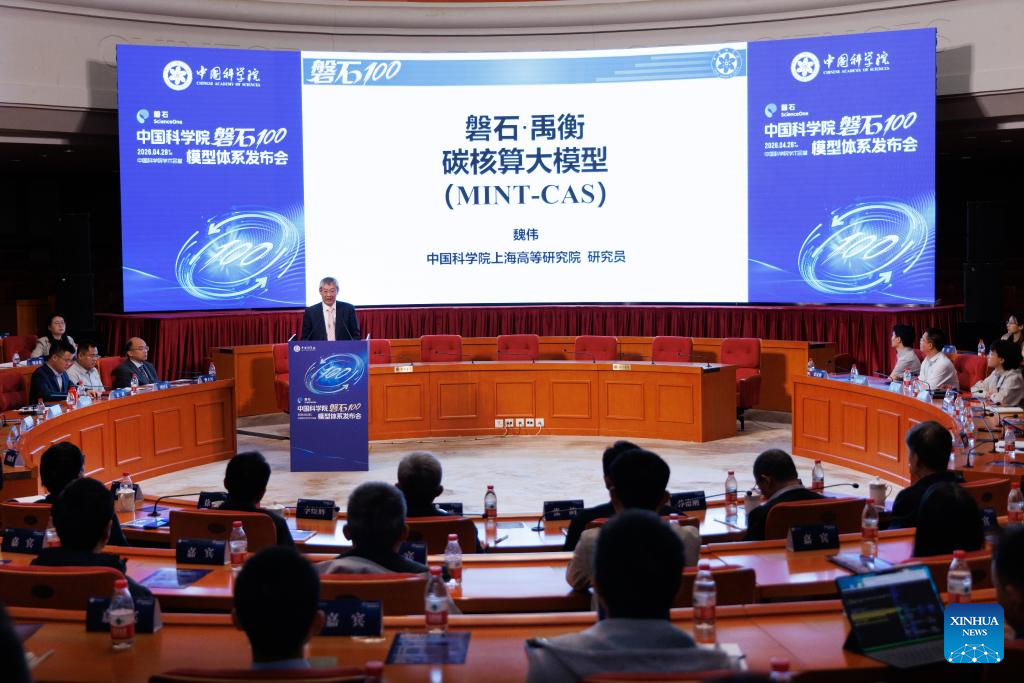
Researcher Wei Wei at the Shanghai Advanced Research Institute of the Chinese Academy of Sciences (CAS) reveals an AI model in Beijing, capital of China, April 28, 2026. (Xinhua/Jin Liwang)
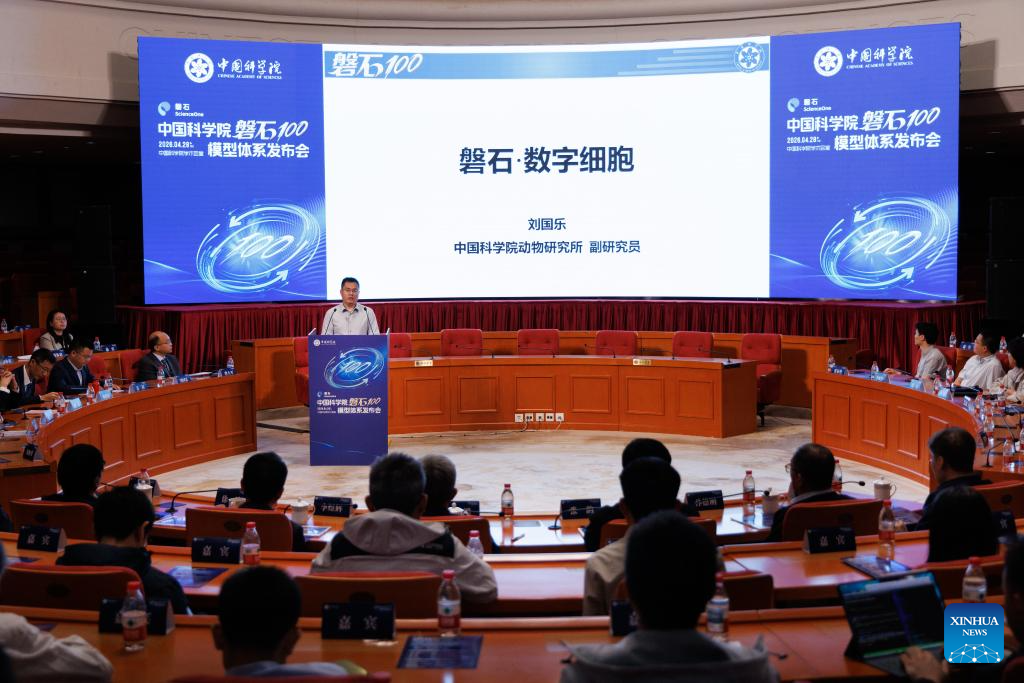
Associate researcher Liu Guole at the Institute of Zoology of the Chinese Academy of Sciences (CAS) reveals an AI model in Beijing, capital of China, April 28, 2026. (Xinhua/Jin Liwang)
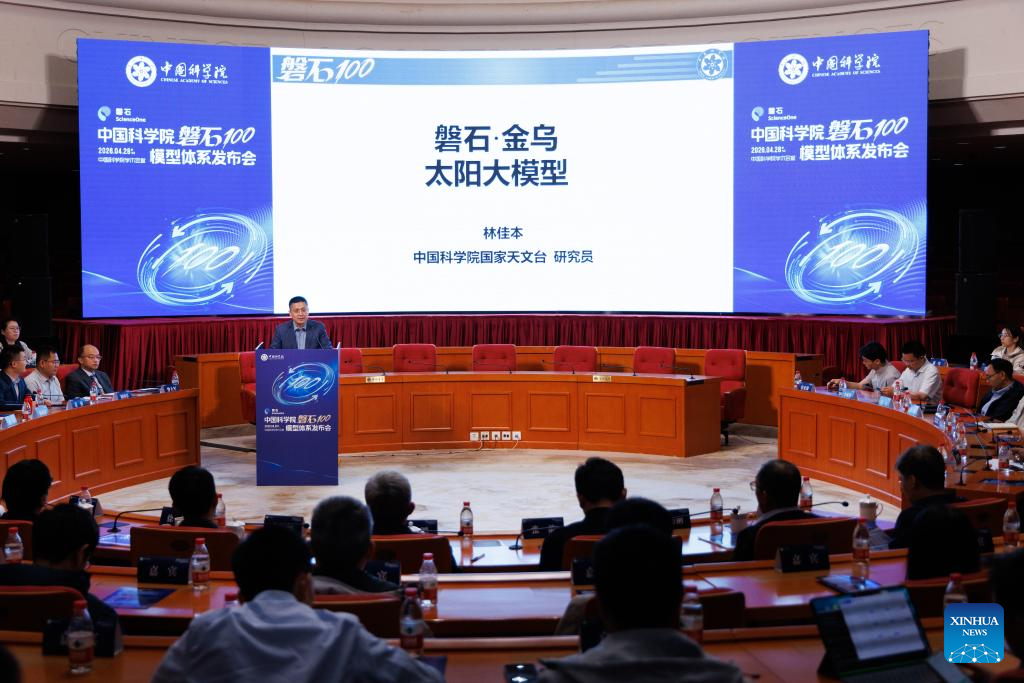
Researcher Lin Jiaben at National Astronomical Observatories of the Chinese Academy of Sciences (CAS) reveals an AI model in Beijing, capital of China, April 28, 2026. (Xinhua/Jin Liwang)
Photos



Related Stories
- AI market kicks off ahead of 9th Digital China Summit in China's Fujian
- AI-powered toys entering Chinese children's playrooms
- Interview: From "Made in China" to "Innovated in China," Saudi strategist eyes deeper technological ties with China
- How should we view China’s decision to halt the Manus acquisition?
- Embodied AI makes quantum leap in China
Copyright © 2026 People's Daily Online. All Rights Reserved.
