



Chinese doctors in Sierra Leone save patient from possible amputation
The 27th Batch Chinese Medical Team stationed in Sierra Leone has successfully performed its first major surgical operation at the Sierra Leone-China Friendship Hospital, just 10 days after arriving in the country—marking a significant milestone in ongoing medical cooperation between Sierra Leone and China.
The landmark procedure, carried out on March 17, involved a 42-year-old male patient who had suffered a severe open fracture and dislocation of his left ankle following a road traffic accident. The patient, identified as Mike Foday Baryoh, sustained the injury during a crash involving a commercial tricycle, locally known as a "Keke," which left his ankle badly damaged, with bone protruding through the skin and the foot severely twisted.
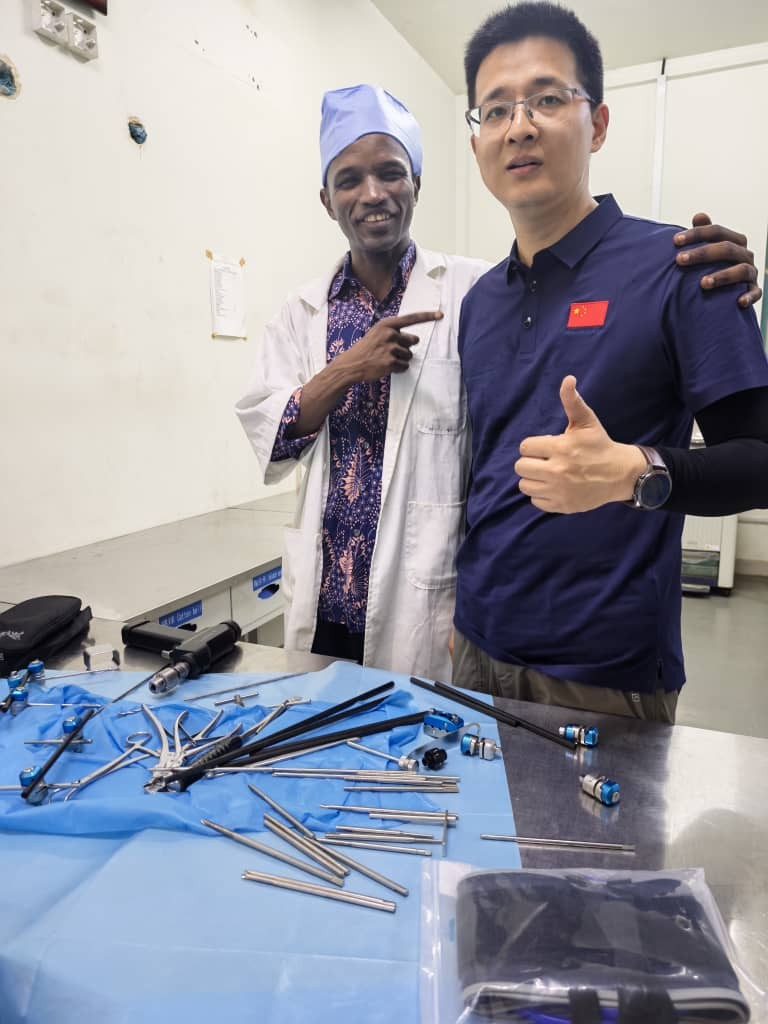
(Photo provided to People's Daily Online)
Medical experts revealed that the injury had gone untreated surgically for eight days due to limited resources and technical constraints within local facilities. By the time the Chinese team intervened, the wound had already shown signs of infection and tissue necrosis, placing the patient at high risk of losing his limb.
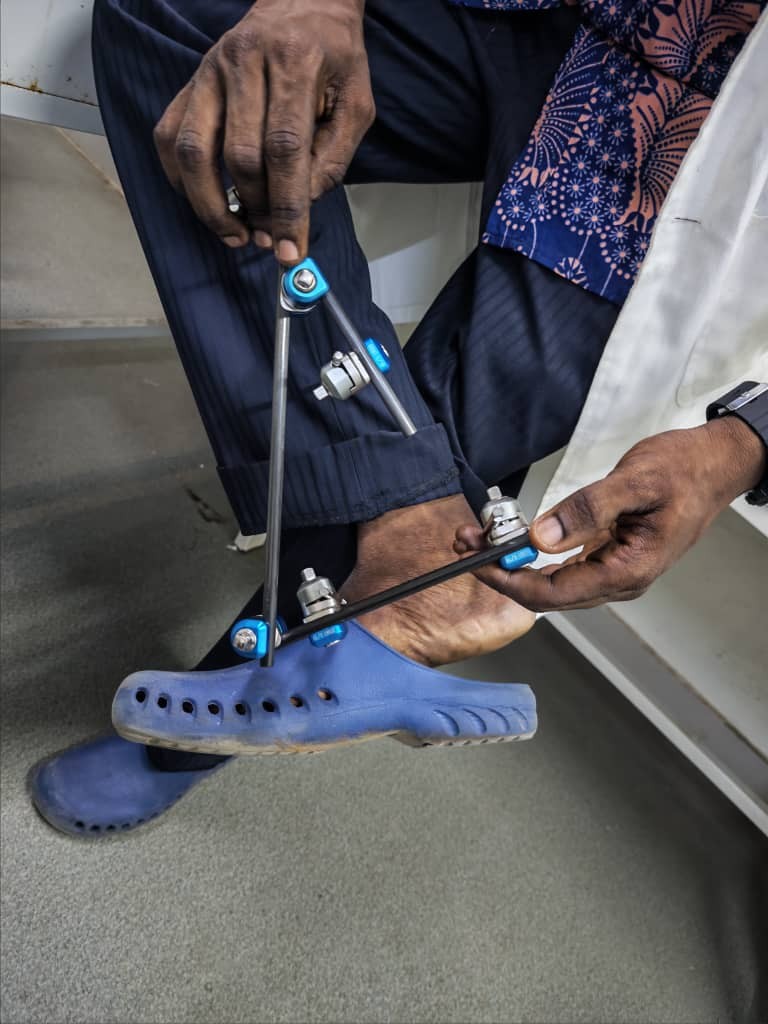
The operation, which combined expertise from the Chinese specialists and local medical personnel, including Dr. Abdulai Bah, focused on salvaging the limb and preventing amputation. According to the team, the procedure involved thorough debridement to remove infected and dead tissue, realignment of the fractured bones, and the installation of an external fixation frame to stabilize the ankle.
"The patient had a complex open fracture with infection, and immediate intervention was necessary to save the limb," explained Dr. Huang Xianzhe, an orthopedic specialist and lead surgeon on the case. "We used an external fixation system to realign the ankle while allowing continued access to treat the wound and prevent further infection."
The surgery lasted approximately one and a half hours and was successfully completed under challenging conditions. Medical personnel described the procedure as not only life-saving but also a demonstration of effective collaboration and knowledge transfer between Chinese and Sierra Leonean healthcare professionals.
Inside the operating theatre, the exercise doubled as a practical training session. Dr. Wang Xitang, an anesthesiologist, guided local doctors step-by-step through the administration of anesthesia, explaining techniques and dosages while ensuring the patient remained pain-free throughout the procedure. Nurses from both countries also worked closely together, ensuring smooth coordination and patient care.
Prior to the surgery, efforts were made to calm the patient, who had grown increasingly anxious after days of uncertainty. Tan Yan, a senior nurse from the Chinese team, communicated with him in simple English, helping ease his fears. Witnesses said the patient’s tension gradually subsided, and he eventually expressed confidence in the team.
(Photo provided to People's Daily Online)
Following the operation, the patient was reported to be in stable condition and is currently receiving post-operative care at the hospital. Doctors confirmed that the external fixation device will help stabilize the bones and support healing, while further procedures may be conducted to close the wound once the infection is fully controlled.
"There is a strong prospect that the ankle will be fully restored," Dr. Huang noted. "Our immediate goal was to prevent amputation, and we are optimistic about his recovery."
Medical experts indicated that within three months, the patient could regain significant function of his limb, provided there are no complications. The entire procedure, including follow-up care, has been offered free of charge—an aspect that the patient described as both surprising and deeply appreciated.
Speaking after the surgery, Mr. Baryoh expressed gratitude to the Chinese medical team, noting that he had feared the worst before their intervention. "I thought my foot would be amputated because there were no resources to treat me," he said. "But since the Chinese doctors came, there has been a big improvement."
Local surgeon Dr. Abdulai Bah praised the collaboration, highlighting the benefits of working alongside the Chinese specialists. "We have a very good working relationship with them," he said. "Even though we lack some equipment and facilities, they are helping us build capacity through skills transfer."
The Chinese team emphasized that their mission goes beyond performing surgeries. According to Dr. Huang, they are also introducing standardized operating procedures, strengthening infection control practices, and sharing expertise in managing complex medical conditions.
"This operation reflects not just technical success, but also the spirit of cooperation and compassion," he said. "From communication with the patient to the final suturing, every step demonstrates the commitment of our team to saving lives."
The successful surgery has been widely seen as a symbol of the enduring partnership between China and Sierra Leone in the health sector. It underscores the critical role of international medical cooperation in addressing gaps in healthcare delivery, particularly in resource-limited settings.
Hospital officials noted that this first procedure sets the tone for many more interventions expected from the newly arrived medical team. With a focus on both treatment and training, the team is expected to significantly enhance surgical capacity and patient outcomes in the country.
As the patient continues his recovery, his case stands as a powerful example of hope, resilience, and the life-changing impact of timely medical intervention. For many observers, it also highlights the importance of sustained investment in healthcare systems and the value of global partnerships in improving lives.
Photos


Copyright © 2026 People's Daily Online. All Rights Reserved.
