



Coffee industry prospers in Lincang, SW China's Yunnan
Located in the global golden belt for coffee cultivation, Lincang city in southwest China's Yunnan Province had a coffee planting area of 290,000 mu (about 19,333 hectares) by the end of 2025, accounting for 19.82 percent of the province's total.
Last year marked the largest annual increase in Lincang's coffee planting area in recent years. Coffee bean production was expected to reach 25,000 tonnes, representing 18 percent of Yunnan's output, with a total value of 992 million yuan (about $144 million). Fifty-one related enterprises cover the full spectrum from premium green coffee beans to roasted beans, liquid coffee, capsule coffee and coffee cherry tea, forming a complete coffee industrial chain.
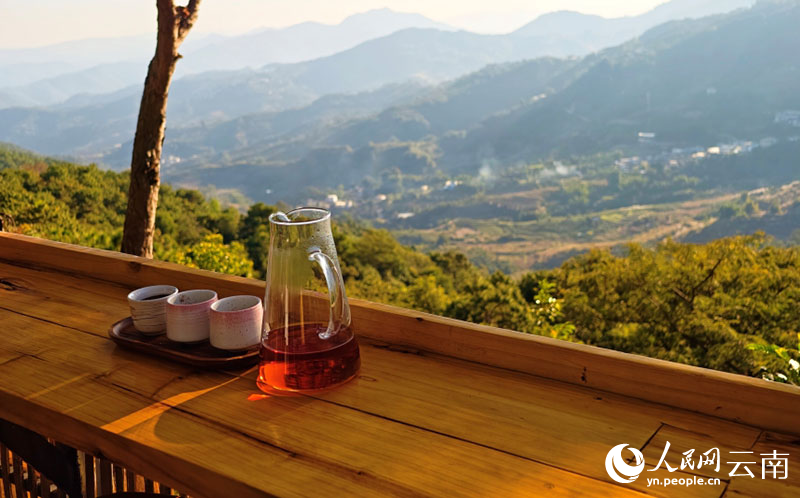
Photo shows a view from Xigui coffee estate in Xigui village, Bangdong township, Linxiang district, Lincang city, southwest China's Yunnan Province. (People's Daily Online/Yin Xin)
Zhu Hong, head of Xigui coffee estate in Xigui village, Bangdong township, Linxiang district, Lincang, comes from a family that has been making tea for generations. After years of working elsewhere, he returned to his hometown in 2008, determined to do something different from what his ancestors had done.
In 2009, he began promoting coffee cultivation among villagers, taking willing volunteers to Dehong Dai and Jingpo Autonomous Prefecture to learn planting techniques while providing free seedlings and fertilizer. What followed, unexpectedly, was a decade of consecutive losses.
"During those years, I relied entirely on income from the tea factory to cover the deficit," Zhu said. Despite the losses, he kept researching which coffee varieties would suit Lincang best.
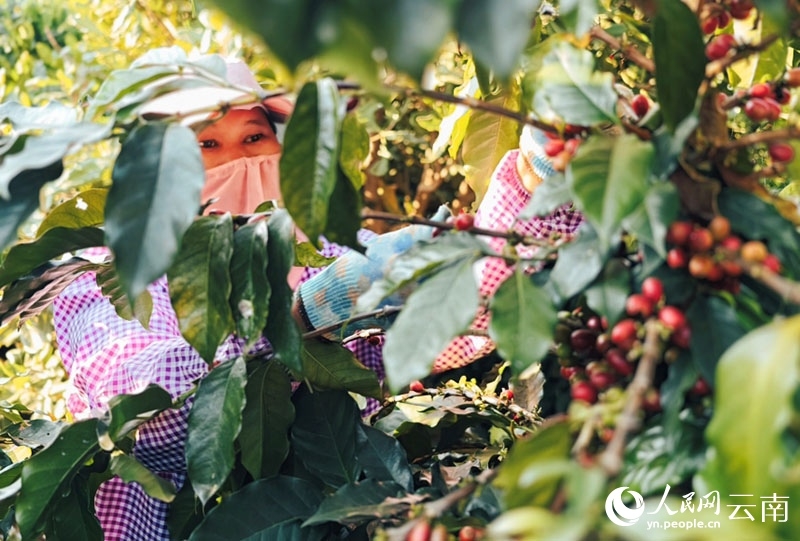
A farmer picks fresh coffee cherries in Lincang city, southwest China's Yunnan Province. (People's Daily Online/Yin Xin)
Starting with the village's geographical conditions, Zhu observed how the coffee trees grew while exchanging knowledge with peers both at home and abroad.
"I first opened a cafe, then learned to roast coffee beans. After returning, I studied the processing of coffee beans, and over the past two years, I've focused mainly on soil. Only by figuring things out step by step did I learn how to plant and manage properly," he said. This hands-on approach led to steady improvements in coffee bean quality.
In September 2021, Xigui coffee estate's processing plant was completed. The plant continuously trains coffee technicians and new-type professional farmers, driving steady improvements in cultivation skills and product quality throughout Bangdong township. In 2025, the plant processed 800 tonnes of fresh coffee cherries, producing 160 tonnes of finished coffee beans valued at 9.6 million yuan.
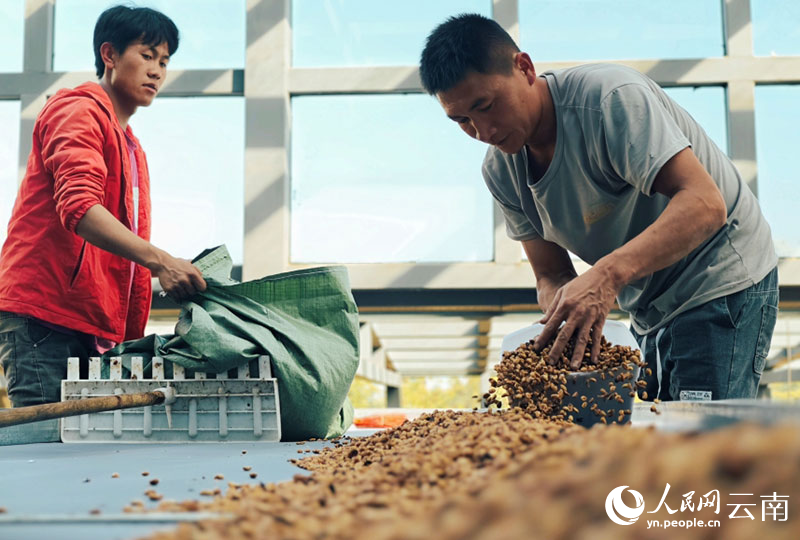
Workers package dried coffee beans at Xigui coffee estate in Xigui village, Bangdong township, Linxiang district, Lincang city, southwest China's Yunnan Province. (People's Daily Online/Yin Xin)
According to Zhu, the township now has around 3,027 mu of coffee trees planted, with his own plantation covering over 600 mu. During the 2024-2025 harvest season, he purchased 1,200 tonnes of fresh coffee cherries, with specialty beans accounting for roughly two-thirds of the total.
"In recent years, domestic coffee consumption has grown at an average annual rate exceeding 15 percent, with annual demand reaching 350,000 tonnes," said Yang Shiping, a researcher at the Lincang municipal bureau of agriculture and rural affairs. "However, Yunnan's total output is only about 150,000 tonnes, leaving nearly 200,000 tonnes dependent on imports. This is precisely Lincang coffee's opportunity."
He noted that past concerns about finding buyers have vanished, as quality beans now sell easily.
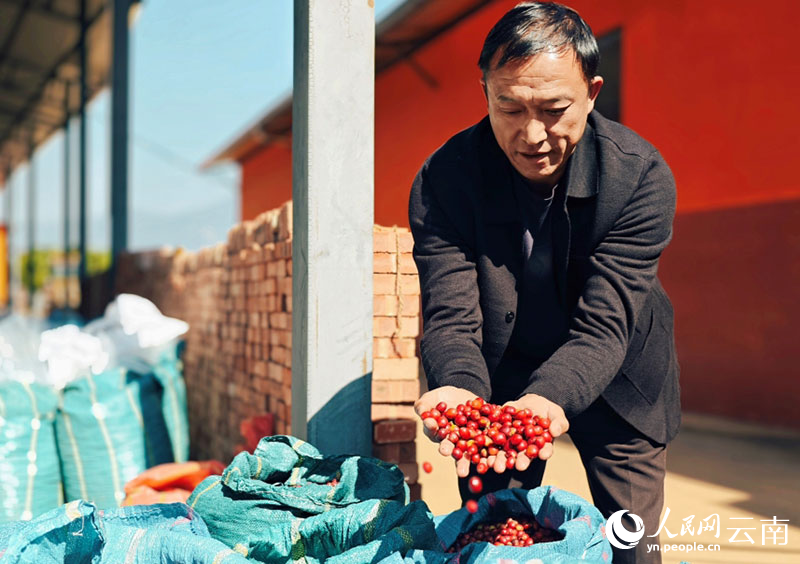
A man showcases fresh coffee cherries in Lincang city, southwest China's Yunnan Province. (People's Daily Online/Yin Xin)
"We now work directly with roasters and end customers. Our order book is full," said Tang Xiaoyan, deputy general manager of Lincang Qiupo coffee estate. Through cross-border e-commerce, Lincang coffee products reach the U.S., South Korea, Singapore, Malaysia and other countries. As a new coffee-producing region, Lincang is gaining recognition among an increasing number of consumers worldwide.
In late January at Rongkangda coffee estate in Shuangjiang county, Lincang city, the harvest was in full swing. Luo Xiaofang, 48, picked over 60 kilograms of fresh coffee cherries daily and earned more than 100 yuan per day.
Currently, Shuangjiang county has 31,000 mu of coffee plantations. During the 2024-2025 harvest season, the county's total coffee bean output exceeded 8,100 tonnes, with an agricultural output value of more than 73 million yuan. Per capita income for coffee farmers increased by more than 6,600 yuan. Coffee has become a key pillar of local farmers' income growth.
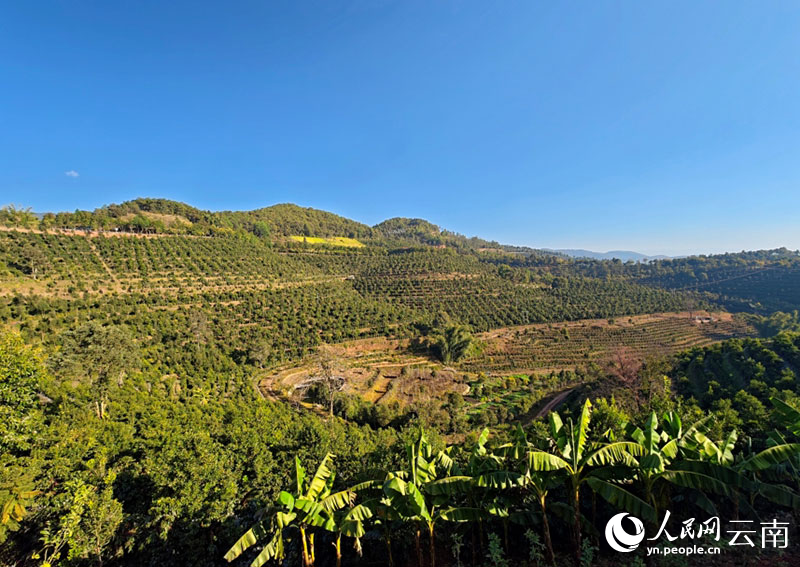
Photo shows Rongkangda coffee estate in Shuangjiang county, Lincang city, southwest China's Yunnan Province. (People's Daily Online/Yin Xin)
Rongkangda coffee estate exemplifies this success. The estate manages 1,500 mu of coffee on its own land while mobilizing over 300 households from 14 villager groups across three villages to jointly cultivate more than 2,000 mu.
By pioneering premium varieties like Geisha and Typica, the estate has lifted per-mu output value from several thousand yuan for traditional varieties to a maximum of 30,000 yuan. The estate's own land generates overall per-mu returns of 100,000 yuan, while cooperative farmers earn 10,000 to 20,000 yuan per mu. In November 2022, it was named one of "Yunnan's 10 premium coffee estates."
At the 2025 First Gems of Yunnan Green Coffee Competition (Yunnan CoE Pilot Program), coffee beans from Lincang won the championship and sold for 13,150 yuan per kilogram. Lincang coffee beans have now won seven international competitions, earning recognition in the global specialty coffee market.
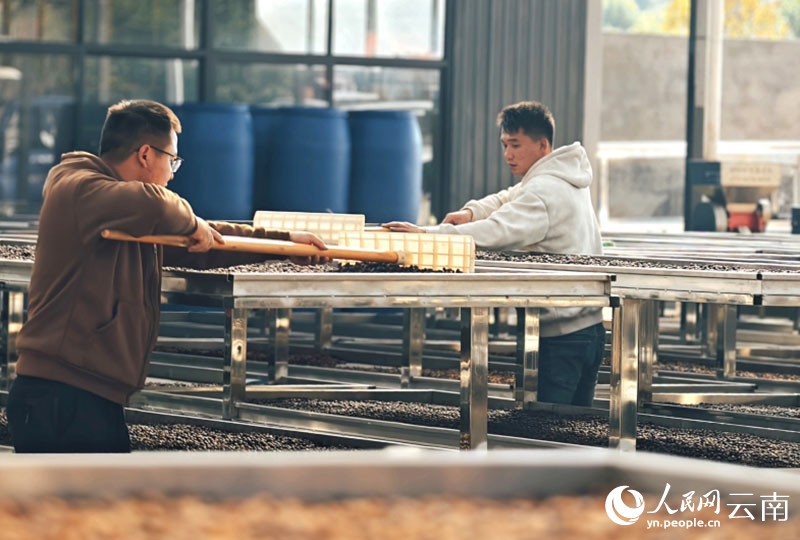
Workers dry coffee beans at Rongkangda coffee estate in Shuangjiang county, Lincang city, southwest China's Yunnan Province. (People's Daily Online/Yin Xin)
Hong Zongmei, deputy director of the Lincang municipal bureau of agriculture and rural affairs, said the city plans to build modern processing parks during the 15th Five-Year Plan period (2026-2030), aiming to raise the deep-processing rate for coffee beans to 80 percent. The city has also introduced 11 supportive policies centered on developing new varieties, technologies and equipment.
Yang Xiongfei, a barista with six years of experience from Qujing city, arrived last August in Wanyao village, Boshang town, Linxiang district, Lincang, to explore new possibilities in coffee-making. Each day at the newly opened cafe in the village, he slowly roasts coffee beans in traditional clay pots.
The village has a long history of pottery making, and in recent years has integrated this tradition with leisure tourism and cultural experiences.
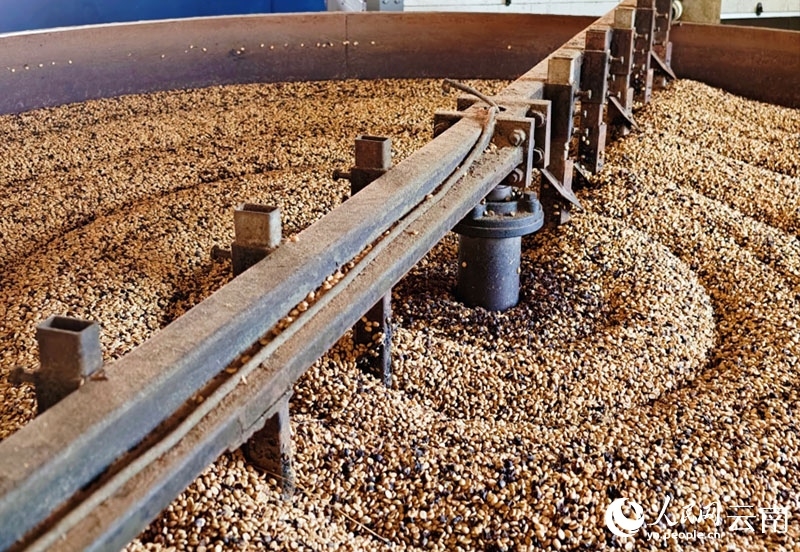
Coffee beans are dried by machine in Lincang city, southwest China's Yunnan Province. (People's Daily Online/Yin Xin)
"We're integrating Wanyao village's two signature elements: clay pottery and coffee," said Yan Ping, an official with Boshang town.
Through a cooperation model involving companies, village collectives, and farmers, the town has attracted returning youth and entrepreneurial teams, successfully incubating new businesses, including rural cafes, handicraft workshops and village cultural stores. This has transformed villagers into baristas, housekeepers and tour guides, allowing them to share in value-added benefits right at their doorsteps.
Like Wanyao village, a growing number of coffee estates across Lincang are leveraging cultural branding to drive rural revitalization.
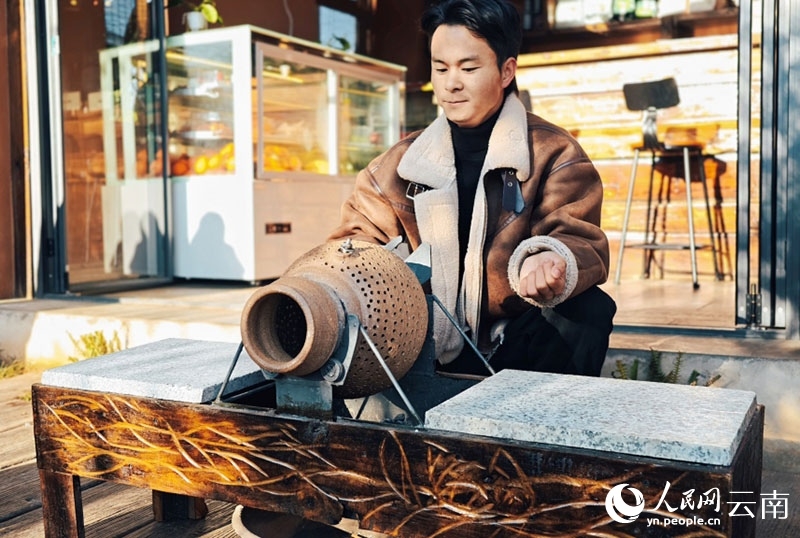
Yang Xiongfei roasts coffee beans in a clay pot at Wanyao village, Boshang town, Linxiang district, Lincang city, southwest China's Yunnan Province. (People's Daily Online/Yin Xin)
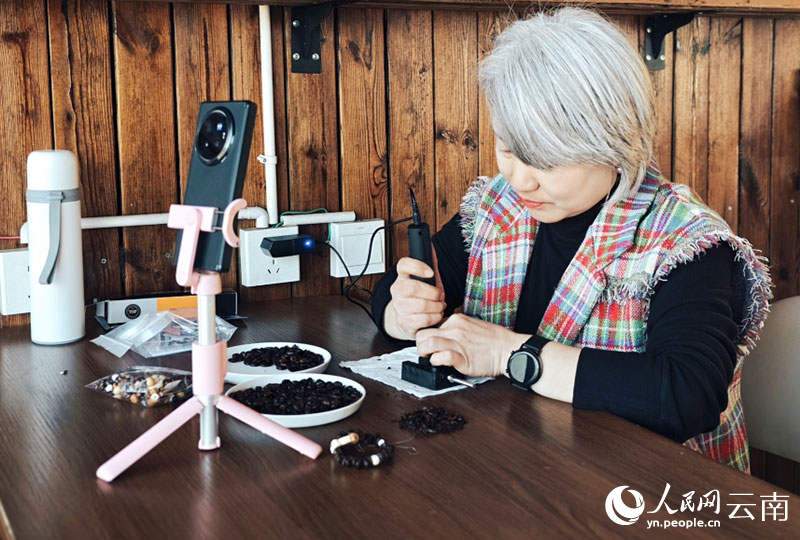
A staff member makes a bracelet with coffee beans during a livestream session at Yunjia coffee estate in Lincang city, southwest China's Yunnan Province. (People's Daily Online/Yin Xin)
Photos




Related Stories
Copyright © 2026 People's Daily Online. All Rights Reserved.
