



China's urban economies scale new heights in 2025
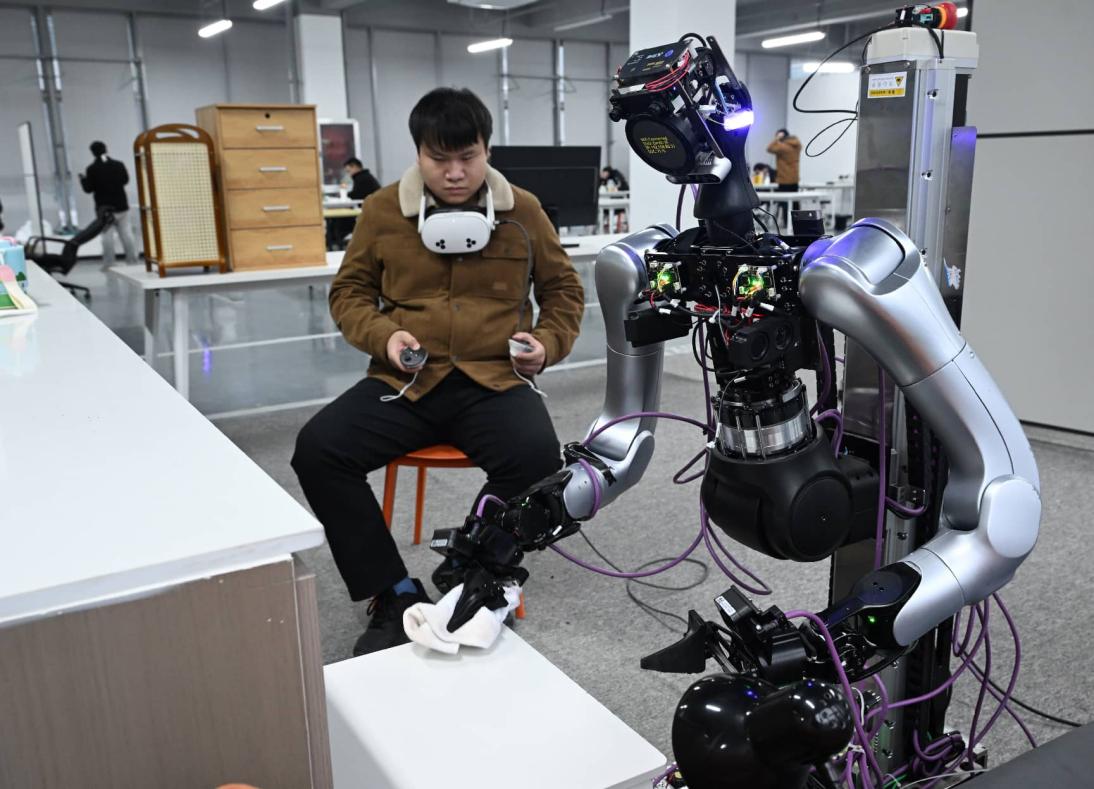
An engineer trains a robot in a robot data collection center in Hefei, east China's Anhui province. (Photo/Zhang Dagang)
Recent reports on China's 2025 economic performance reveal significant milestones. As China's total economic output surpassed the 140-trillion-yuan ($20.18 trillion) mark, many Chinese cities also achieved fresh breakthroughs in economic scale.
Data released by local authorities shows that 29 Chinese cities recorded a GDP exceeding 1 trillion yuan in 2025. These cities include Beijing, Shanghai, Tianjin, Chongqing, Shenzhen, Ningbo, Qingdao, Dalian, Guangzhou, Chengdu, Wuhan, Hangzhou, Nanjing, Changsha, Zhengzhou, Hefei, Fuzhou, Jinan, Xi'an, Suzhou, Wuxi, Nantong, Changzhou, Foshan, Dongguan, Quanzhou, Yantai, Tangshan, and Wenzhou.
Notably, Dalian in Liaoning province and Wenzhou in Zhejiang province became new members of the "trillion-yuan GDP club."
What development drivers lie behind these cities?
From a regional perspective, roughly 1/3 of the cities with GDP exceeding 1 trillion yuan are concentrated in the Yangtze River Delta region; four are located in the Guangdong-Hong Kong-Macao Greater Bay Area; three are in the Beijing–Tianjin–Hebei region; and two belong to the Chengdu–Chongqing economic circle. The growing importance of coordinated regional development is increasingly evident.
"The 2025 'trillion-yuan GDP club' includes municipalities, provincial capitals, cities under separate state planning, and prefecture-level cities. The landscape is no longer dominated by provincial capitals alone, reflecting the diversified development of China's urban economy," said Pan Helin, a member of the Ministry of Industry and Information Technology's Expert Committee for Information and Communication Economy.
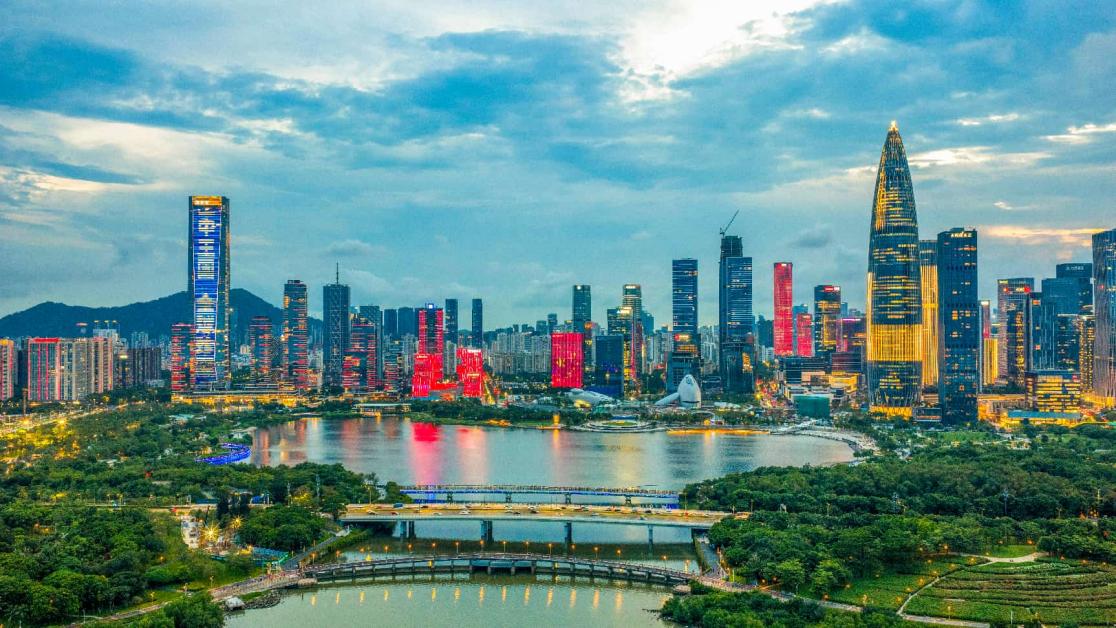
Photo shows a cityscape of Shenzhen, south China's Guangdong province. (Photo/Leng Wen)
China's "trillion-yuan GDP club" is no longer the exclusive domain of traditional first-tier or central cities. Instead, growth is being driven by city clusters, expanding in a ripple effect from cores to wider regions. This pattern of coordinated regional development underscores the robust vitality and immense potential of China's urban economy.
Analyzing a city's economic progress requires examining both quantitative expansion and qualitative enhancement. In 2025, Beijing's GDP exceeded 5 trillion yuan for the first time, making it the second Chinese city after Shanghai to surpass this threshold.
As a mega-city, Beijing has in recent years adhered to a "reduction-oriented development" approach -- cutting back where needed while upgrading its economic structure. Over the past five years, the city has relocated or upgraded more than 594 general manufacturing enterprises, demolished 120 million square meters of illegal buildings, and reclaimed 117 square kilometers of land.
This strategic downsizing has not hindered growth. Moving away from traditional expansion models, Beijing's current economic growth is increasingly driven by emerging technologies and high-value-added industries. The information services sector, the financial sector, and industry together contributed more than 80% to the city's economic growth.
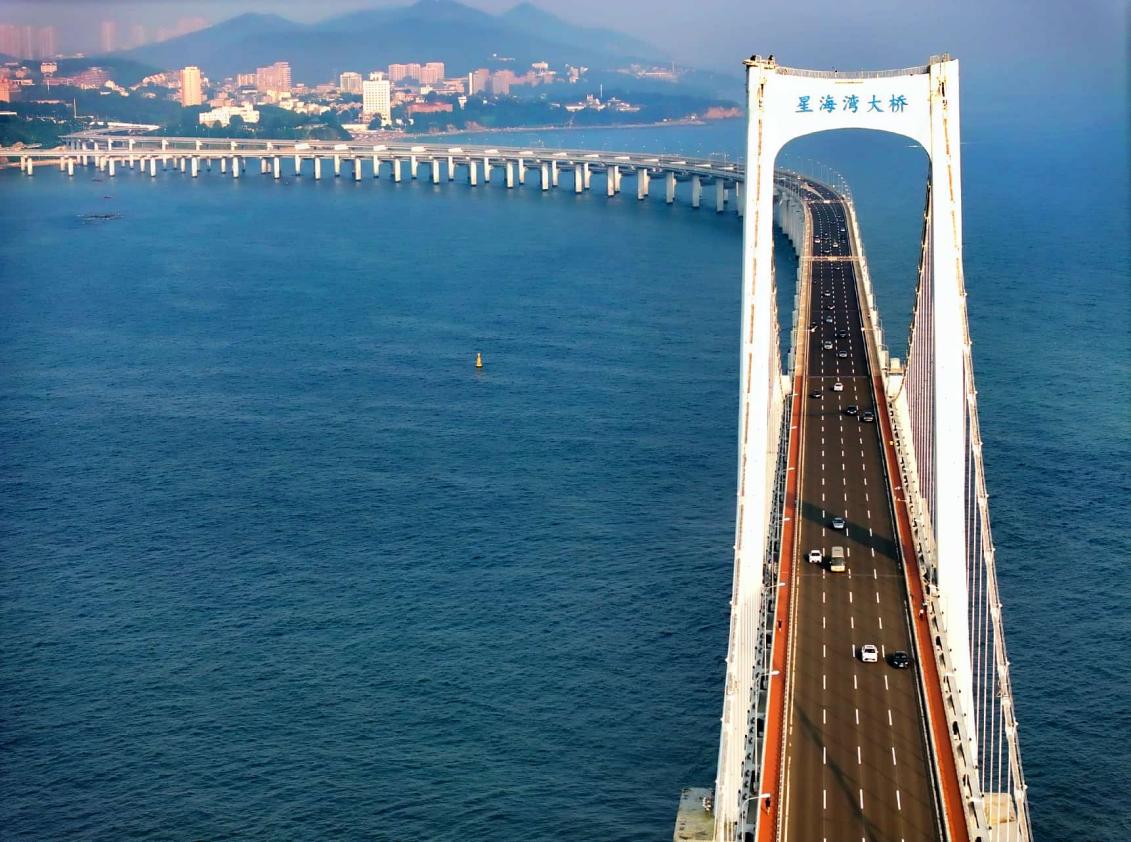
Photo shows Xinghai Bay Cross-Sea Bridge in Dalian, northeast China's Liaoning province. (Photo/Guo Xingcheng)
Integration between technological innovation and industrial innovation is also accelerating: R&D spending among large and medium-sized key enterprises rose by 7.1% in 2025, with both industrial enterprises and technology service firms increasing their R&D investment by more than 10%.
Optimizing structure, driving growth through innovation, strengthening industries, and attracting talent--similar development experience can also be observed in Nanshan district of Shenzhen, Guangdong province. In 2025, Nanshan's GDP surpassed 1 trillion yuan, making it the first county-level administrative region in China to reach the trillion-yuan level.
A review of Nanshan's economic performance highlights innovation as its defining feature. Data show that the district holds more than 860 invention patents per 10,000 people, about 22.9 times the national average. Well-known companies such as Tencent, Huawei, and DJI all got their start here.
Commenting on the district's industrial development, Guo Wanda, executive vice president of the Shenzhen-based China Development Institute, said the city's competitiveness lies in the integration of manufacturing and services, the integration of technological and industrial innovation, and the coordinated development of talent, capital, innovation, and industrial chains. Such integration has already expanded across the Guangdong-Hong Kong-Macao Greater Bay Area, helping drive coordinated regional development.
Dalian, a newcomer in the 2025 "trillion-yuan GDP club" and seen as a traditional "old industrial base," once faced challenges from limited growth drivers.
Dalian became the first city in northeast China to hit the 1-trillion-yuan mark by strengthening its industrial base. In 2025, value added in the city's secondary industry grew by 7.7%, while value-added output from industrial enterprises above designated size rose 11.7% year on year, driven largely by the equipment manufacturing sector.
"Building on its solid industrial base, Dalian has strengthened high-tech manufacturing and expanded opening up by leveraging its port advantages. As a result, the city has not only expanded its economic scale but also made progress in industrial upgrading, improving the business environment, and developing itself into an open gateway hub," Pan said.
A closer look at China's "trillion-yuan GDP club" cities reveals their industrial strengths: Quanzhou in textile and apparel, Nantong in construction and shipbuilding, Fuzhou in electronics and information technology, and Hefei in sci-tech innovation.
As Pan pointed out, by concentrating on these competitive sectors, these cities are driving high-quality growth. They increase R&D investment, optimize the business environment, and facilitate the efficient flow and aggregation of resources -- strategies that collectively enhance both the scale and quality of their economic development.
Photos
Related Stories
- China's urban-rural income gap narrows
- From abandoned factories to cultural landmarks, China's urban renewal energizes new consumption
- China spends big on urban renewal in 2025
- Chinese researchers reveal how urban heat sources intensify extreme heat events
- Internet fame turns street stalls into urban landmarks
- China launched renovation projects at 25,100 urban residential communities from Jan.-Oct.
- Chinese premier calls for implementation of new urbanization strategy to boost social, economic development
- Unremitting high-quality urban renewal, a practice of China's people-centered development
- East China's Shanghai offers wisdom for nationwide urban renewal
- China's old neighborhood renovation balances livelihoods, heritage protection: scholar
Copyright © 2026 People's Daily Online. All Rights Reserved.
