



Martial arts meets technology: How a young Chinese influencer makes "flying sword" a reality
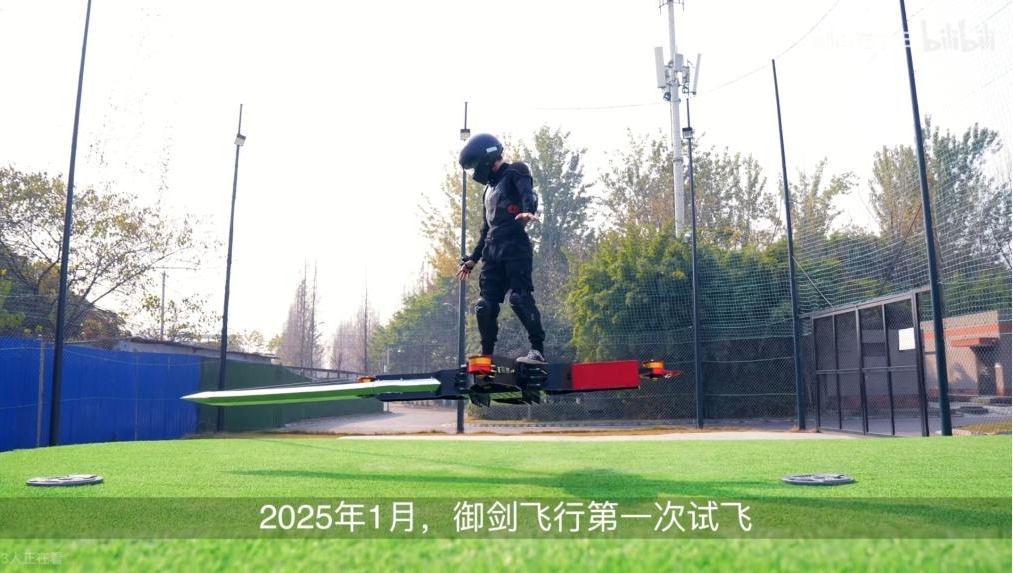
Fan Shisan rides a flying sword. (Screenshot of a Fan Shisan video)
Chinese online creator Fan Shisan has always harbored a dream inspired by wuxia (martial arts) fiction: a sword that leaps from its scabbard at a flick of the wrist, obeying its wielder's command—capable not only of being carried, but also of communicating with its master. For Fan, such scenes are no longer confined to the pages of novels.
Born in the 1990s, Fan runs a tech studio in Pidu district, Chengdu, southwest China's Sichuan province. More than 40 swords and blades of different shapes and materials line the walls of the studio. Formulas are written on a whiteboard, while team members gather around, animatedly discussing how to generate the "sword qi"—an inner energy in Chinese martial arts fiction that can be channeled through, or even projected beyond, a sword.
"I grew up reading wuxia novels," Fan, dressed in black and carrying a long sword, has cultivated a distinctive personal image. "I have always wanted to bring those moves into the real world—not with special effects, but through science," he said.
He began turning this dream into reality in 2020. At the time, Fan was working at a hotel in Chengdu and teaching himself video production in his spare time. His sword-themed videos gradually gained traction, earning him more than 1 million followers.
In one of his videos, balloons at an amusement park stall burst one after another as a wooden sword is drawn. By assembling multiple ducted fan engines, he demonstrates "flying sword" -- hovering in mid-air while holding a sword. Concepts in wuxia fiction such as the "flame blade," "ice sword," and "lightning edge" are no longer purely fictional, but visually striking creations captured on camera.
"Once awakened, that childhood wuxia dream only grows more vivid," Fan said.
His studio now has six members. From filming and blueprint design to prop-making and technical guidance, the young team shares a passion for traditional martial arts and combines their professional expertise to turn imagination into reality.
"We have members who studied electrical engineering and fine arts," Fan explained. "I majored in physics and chemistry. Everyone has a clear role, and our skills complement each other perfectly."
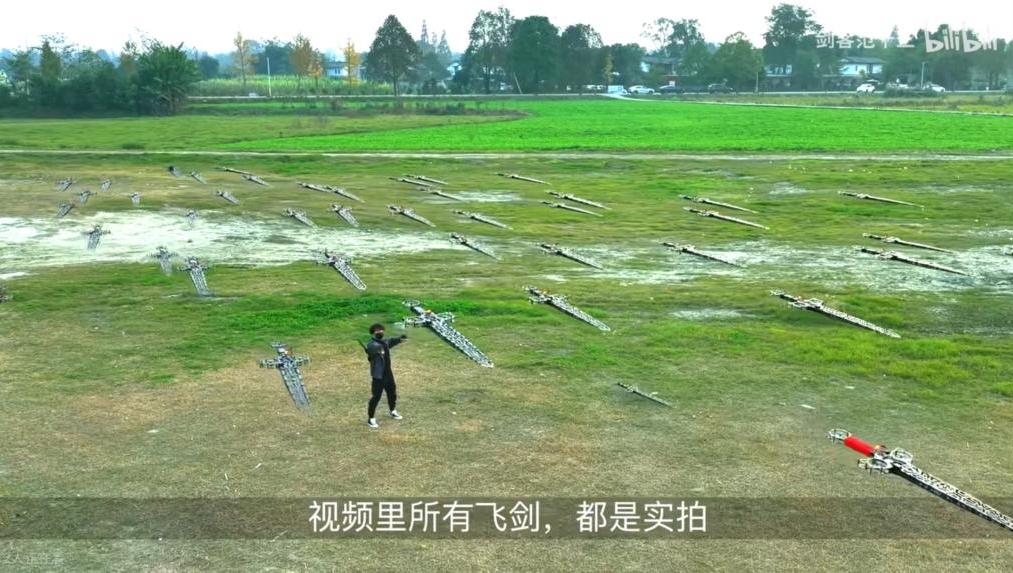
Fan Shisan controls a sword array. (Screenshot of a Fan Shisan video)
To realize the extraordinary vision of making unconventional swords truly "fly," Fan sought guidance from aviation experts, integrating flight mechanisms into the sword blades and conducting extensive test flights. His pursuit of "sword qi" led him to collaborate with researchers at the School of Science, Xihua University, utilizing advanced technologies such as a schlieren imaging system and an ultra-high-speed camera capable of capturing up to 130,000 frames per second. This collaboration enabled him to visually document the elusive phenomenon of "sword qi," transforming it from a fictional concept into a reality.
From lightning-fast feats to flying swords, Fan constantly pushes boundaries with the support of modern technology. "Daring to imagine, daring to act, and pressing forward despite difficulties -- this is also the spiritual strength conveyed by traditional Chinese martial arts," he said.
By dissecting each martial arts move into its underlying physical principles and exploring the discipline through engineering and mechanics, Fan breathes fresh life into the aesthetics of traditional kung fu.
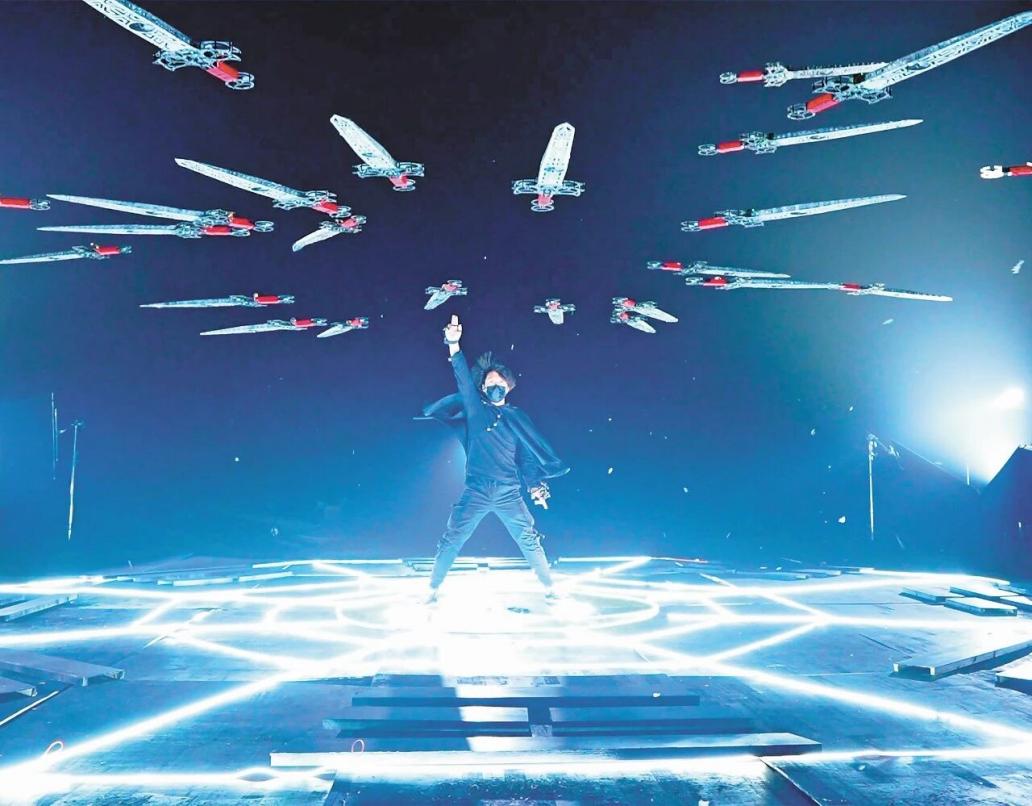
Fan Shisan is filmed in a scene featuring the "Bagua Charging Formation." (Photo/Nie Shuqi)
Swords carry the weight of Chinese aesthetics, evoking an ancient yet enduring Chinese style. For instance, a miniature flying sword features patterns inspired by artifacts unearthed at the Sanxingdui Ruins. Another blade mirrors the form of the famed Longquan sword.
"Perhaps everyone carries a wuxia dream," Fan shared, "What I want to do is to be more courageous and make that dream real—and to express a uniquely Chinese sense of romance."
Photos




Related Stories
- Young martial arts enthusiast showcases impressive spear skills
- Wudang Mountain attracts foreign martial arts apprentices
- Prize-winners of men's games of martial arts at China Ethnic Games
- Tajiao Master: Ma Rongtang
- Chinese martial art serves as magnet which brings people together
- China hosts world martial arts championships to promote culture
- Martial arts school starts soccer team
Copyright © 2026 People's Daily Online. All Rights Reserved.
