



At 5,000-year-old Liangzhu, cultural heritage is integrated into community life
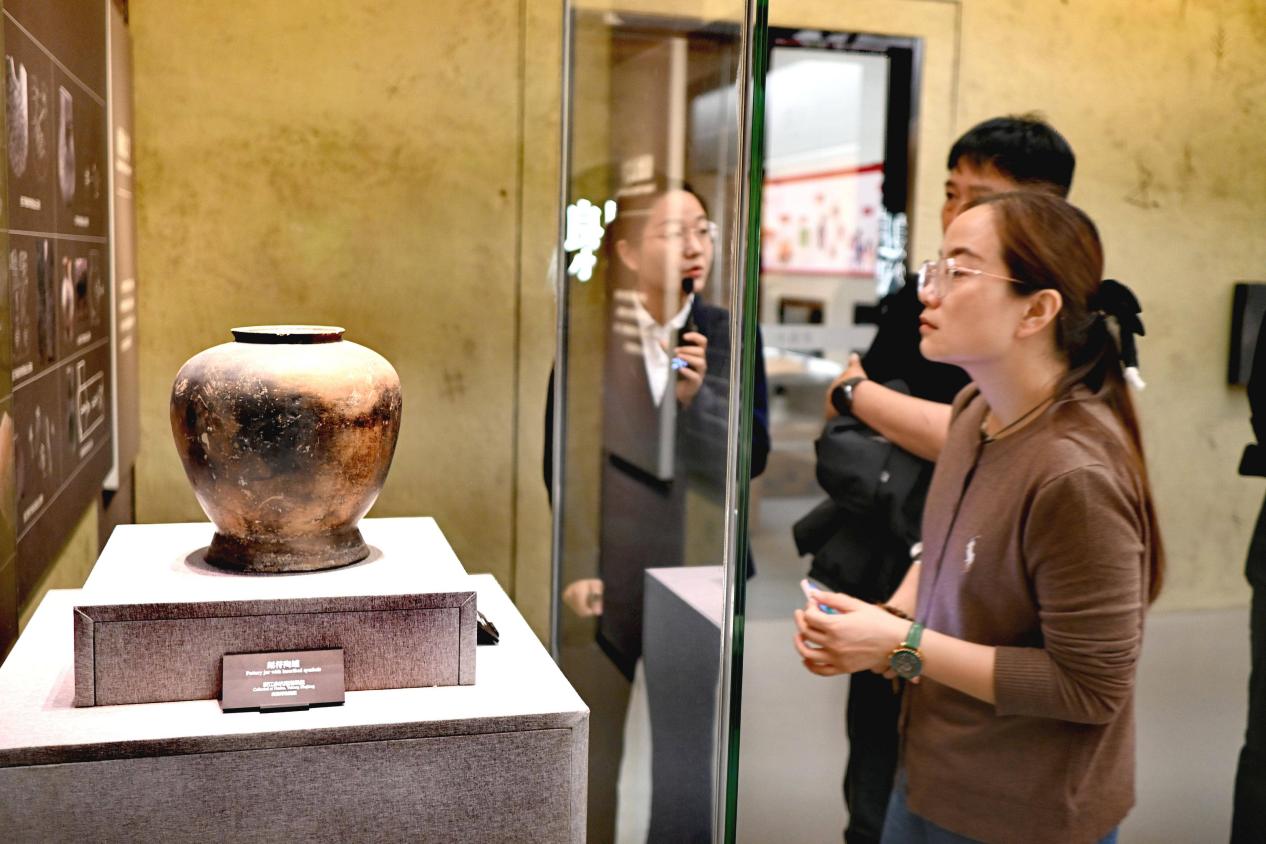
People visit the Liangzhu Museum in Yuhang district, Hangzhou, east China's Zhejiang province. (Photo/Xu Aihua)
Cultural heritage is a vital carrier of human civilization. Yet in the course of cultural heritage protection and development, a seeming paradox often arises: isolating heritage sites for protection risks disconnecting from social development, while unchecked commercialization can compromise their authenticity. How can this dilemma be resolved?
Practice shows that deep community participation holds the key. When residents shift from passive onlookers to active contributors, heritage conservation and community development can reinforce each other, paving the way for sustainable outcomes. This approach has proven successful across China, with the Archaeological Ruins of Liangzhu City standing out as a particularly compelling case study.
The Archaeological Ruins of Liangzhu City, a major archaeological discovery of the 20th century in China, was inscribed on the UNESCO World Heritage List in 2019. Featuring a vast ancient city, a sophisticated hydraulic system, and tiered burial sites, including altars, the site provides compelling evidence of the remarkable achievements of rice-based agriculture in prehistoric societies along the Yangtze River basin some 5,000 years ago. It represents an outstanding example of early urban civilization in human history.
Located in Yuhang district of Hangzhou, east China's Zhejiang province, the core area of the Liangzhu site sits at the intersection of robust economic development and exemplary heritage conservation.
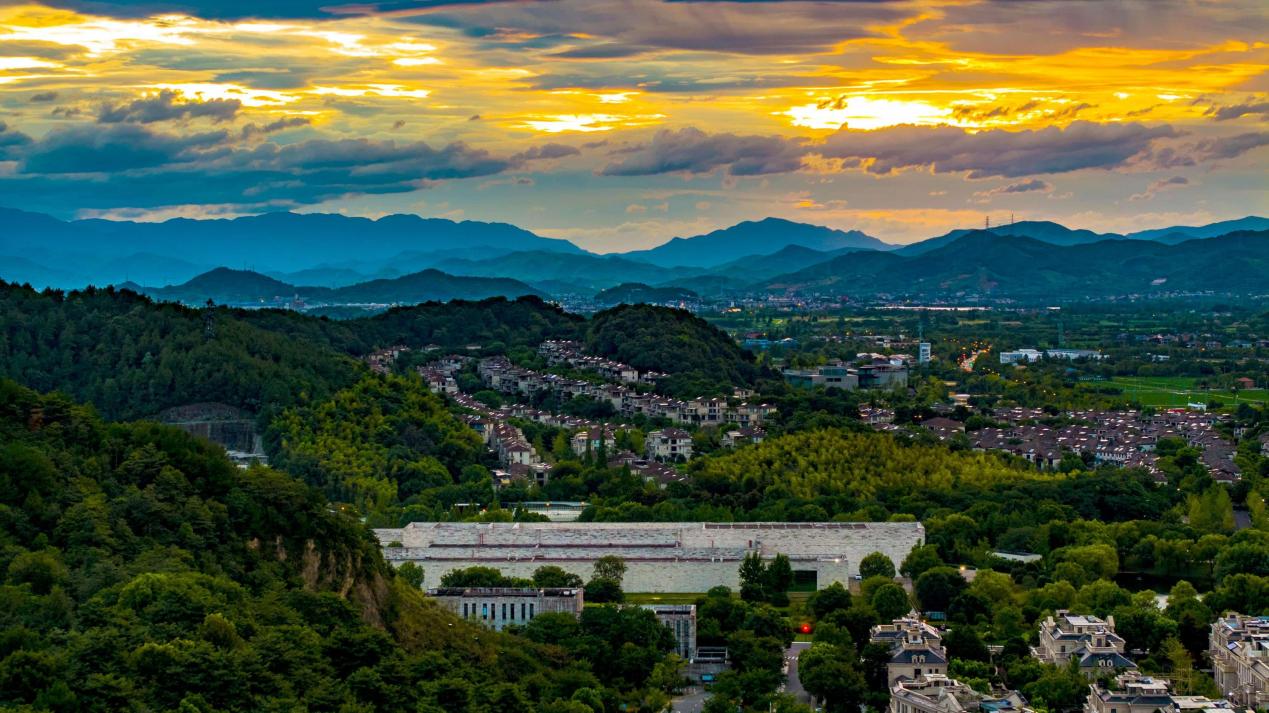
Photo shows the Liangzhu Cultural Corridor in Hangzhou, east China's Zhejiang province. (Photo/Ji Haixin)
By adopting a development model that combines an ecological park with a vibrant living environment, the site has explored ways to "develop through protection and protect through development."
Rather than sealing the ruins off from the world, relevant authorities have harnessed technology to enhance conservation and activated cultural resources to energize the community, enabling ancient civilization and contemporary life to coexist in harmony and nourish each other.
Great emphasis has been placed on fostering cultural identity and encouraging resident participation. In 2011, 3,931 households in the Liangzhu Cultural Village, a community developed adjacent to the Archaeological Ruins of Liangzhu City that integrates cultural heritage presentation with eco-friendly living and leisure functions, jointly formulated a residents' charter comprising 26 civic commitments, helping to build a close-knit, trust-based community and strengthen residents' sense of belonging.
Building on this foundation, the Liangzhu Ancient City Ruins actively promoted community co-creation, cultivating a sustainable mechanism for cultural development. An innovative governance model implements a community deliberation system using online forums and offline meetings, resolving over 95% of resident issues while enhancing local governance.
An innovative institutional framework has been established to balance site safety with improvements to people's livelihoods. Under a "categorized, phased, and collective application" mechanism, townships make unified housing construction plans, residents submit applications collectively, and the government covers archaeological-related costs, ensuring both heritage protection and residential stability.
For the 14 villages in the protected zone, a spatial arrangement has been put in place whereby development complexes outside the core heritage area, effectively separating conservation from development in an orderly manner.
In terms of industrial development, the Liangzhu site management area is working to transform cultural resources into drivers of growth.
On the one hand, cultural and creative industries have been leveraged to empower heritage conservation. Through a "Liangzhu MEI" lifestyle aesthetics initiative, the site has partnered with universities and other institutions to form a lifestyle aesthetics alliance, developing more than 600 cultural and creative products. In 2024, sales reached 270 million yuan ($38.7 million), with a number of blockbuster products emerging.
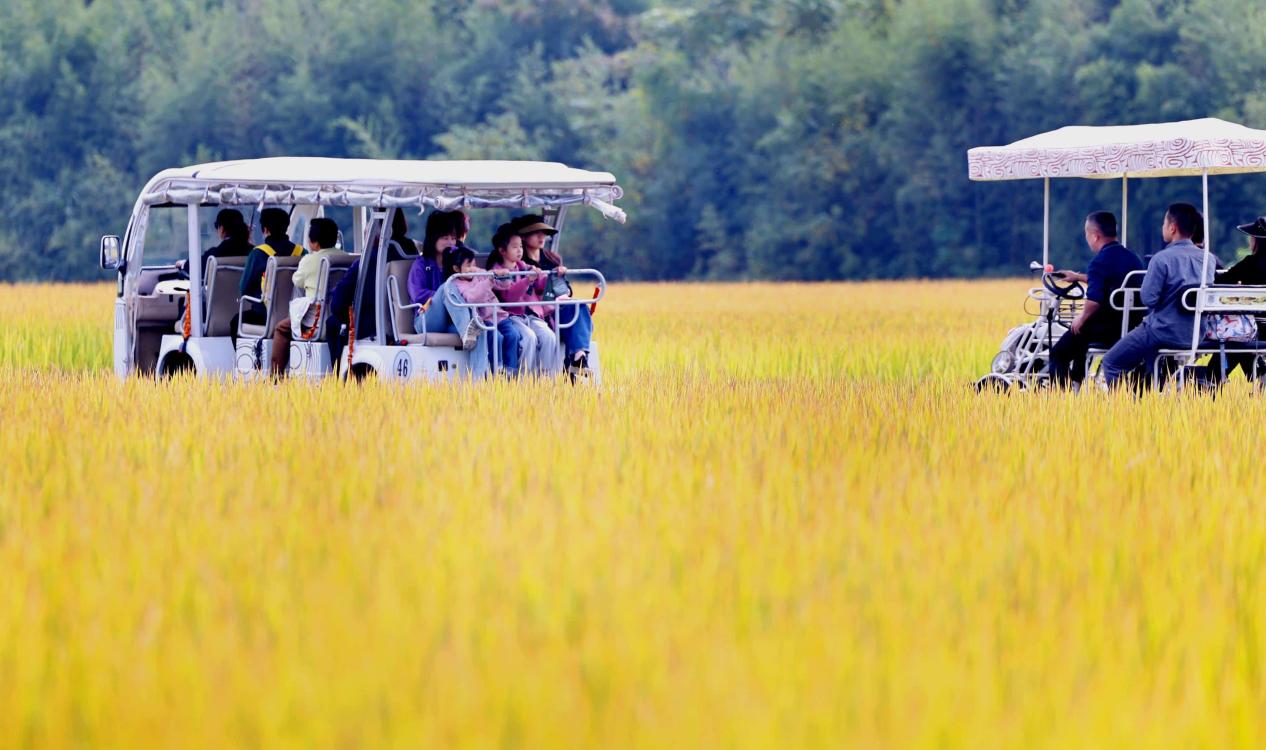
Visitors tour the rice fields at the Liangzhu Ancient City Ruins Park. (Photo/Zhou Fangling)
On the other hand, industrial clustering has fostered a vibrant cultural hub. The Liangzhu Cultural Corridor connects diverse cultural resources and clusters more than 1,000 enterprises at or above the designated size, or those with annual main business revenue of 20 million yuan or more, demonstrating distinct advantages in sectors such as digital content, animation, and gaming. Supported by these distinctive industries, the area promotes all-around rural revitalization, allowing villagers to live and work happily in their hometown.
Experience shows that heritage conservation and community development can be mutually reinforcing. The crucial shift from static preservation to living heritage transmission revitalizes dormant sites, integrating them into modern life as cultural anchors.
Simultaneously, it has made the crucial shift from isolated conservation to integrated planning, weaving heritage protection into the broader economic and social development framework to achieve both minimal intervention and sustainable progress.
Many similar examples can be found across China. Chengdu in southwest China's Sichuan province has transformed a downtown football stadium into an open archaeological park; Luoyang in central China's Henan province has built an archaeological research and study base across 20 square kilometers of heritage sites; and residents living along the Ancient Shu Road in Sichuan province have become "tour guides" for visitors. Behind these successes lies a distinctly Chinese approach to sustainable development.
Ultimately, the sustainable development of cultural heritage means making it an indispensable and vibrant part of everyday community life. When communities benefit from protection and, in turn, empower it, conservation ceases to be an external imposition and becomes an internalized cultural commitment. This is precisely the wisdom China offers the world in the field of cultural heritage protection.
(Zhang Jin is the director of the Heritage Protection and Adaptive Reuse Branch, Tsinghua Tongheng Urban Planning and Design Institute.)
Photos
Copyright © 2026 People's Daily Online. All Rights Reserved.
