



Ancient bamboo slips emerge from silence through restoration
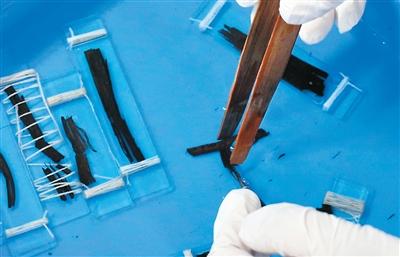
A restorer works on a bamboo slip at the Changsha Jiandu Museum in Changsha, central China's Hunan Province. (Photo/Yang Siying)
Bamboo slips served as the primary medium for recording written information from the pre-Qin period (pre-221 B.C.) through the Wei and Jin dynasties (220–420). According to current data, archaeological excavations across China have uncovered more than 300,000 inscribed bamboo slips.
The Changsha Jiandu Museum in Changsha, central China's Hunan Province, as the country's first museum dedicated exclusively to bamboo slips, houses a collection exceeding 100,000 pieces, representing roughly one-third of all slips unearthed nationwide. These bamboo slips, long dormant beneath the soil, are now being painstakingly restored to life by dedicated conservators.
Newly excavated bamboo slips bear little resemblance to what most people imagine: they may be waterlogged, pliable, curled, or fragmented into dozens or even hundreds of pieces, often caked with soil. Their fiber structures are extremely fragile—the slightest bit of carelessness can destroy them.
"Restoring bamboo slips requires above all else patience," said Li Weijun, a post-90s restorer at the Changsha Jiandu Museum.

A restorer cleans bamboo slips at the Changsha Jiandu Museum in Changsha, central China's Hunan Province. (Photo/Yang Siying)
The first step alone presents considerable challenges: returning the artifact to a workable state without altering its authentic condition.
Professional restorers begin by training for "steady hands," a process that takes half a year. Gripping a single strand of hair without trembling, setting down tweezers without a sound—these constitute the restorer's most fundamental skills. Even more demanding is training the eye—discerning text calls for patience, and diagnosing a slip's "condition" requires experience.
The appeal of bamboo slips displayed at the Changsha Jiandu Museum lies in their documentation of everyday life in ancient times—what common people ate, where they lived and how they traveled—offering an authentic portrait of life more than 1,000 years ago.
Reading these texts feels like hearing ancient voices, and they represent the most original records of governance at the grassroots level of society, according to restorers.
"Here we can see how a state functioned, how society was administered. We're not just restoring pieces of bamboo—we're preserving China's spiritual traditions," Li said.
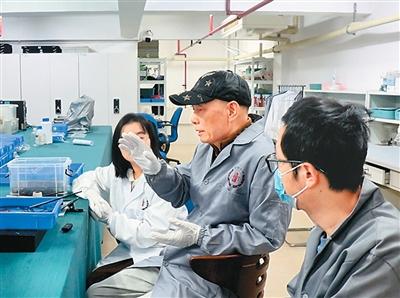
A senior expert imparts his experience of recognizing bamboo slips to young restorers at the Changsha Jiandu Museum in Changsha, central China's Hunan Province. (Photo/Yang Siying)
The museum maintains a restoration workshop where visitors can observe the process through glass panels.
Museum staff frequently say that restoration isn't about reviving the past—it's about preserving the ability to understand it for the future. This view reflects a crucial shift in contemporary heritage conservation philosophy—from relying on artisan expertise for "rescue-based protection" to embracing technology-enabled "preventive protection."
The most delicate stage in traditional restoration—separating adhered slip fragments—can now be guided by CT scanning, which reveals internal structure and layering in advance.
Currently, vast numbers of excavated bamboo slips are being scanned, modeled and entered into a database piece by piece. High-resolution 3D models allow researchers to study characters on bamboo slips onscreen rather than traveling long distances to view the originals.
"Digitization isn't about creating attractive models—it's about making a backup for the future," said Ma Daizhong, curator of the Changsha Jiandu Museum.
In recent years, the museum has experimented with short videos, livestreams and illustrated books to engage the public. An interactive mini-program adapted from authentic bamboo slip content encourages young people to actively explore ancient documents, while AI-generated animated simulations help students understand the actual community-level governance in ancient times.
Photos



Copyright © 2026 People's Daily Online. All Rights Reserved.
